“Song Sung Blue” – Movie Review

Directed by:  Craig Brewer

Written by:  Craig Brewer, based on Greg Kohs 2008 documentary

Starring:  Hugh Jackman, Kate Hudson, Fisher Stevens, Jim Belushi, King Princess, Ella Anderson, Hudson Hensley, and Michael Imperioli

Runtime:  133 minutes

 ‘Song Sung Blue’:  Jackman and Hudson are ‘So Good!  So Good!  So Good!’ 

Neil Diamond, 84, has sold over 130 million albums worldwide, and this singer-songwriter legend has countless hits to his name, including, “Song Sung Blue”, “Cracklin’ Rosie”, “You Don’t Bring Me Flowers”, “America”, “Cherry, Cherry”, “Holly Holy”, and, of course, “Sweet Caroline”.

Neil retired from touring in 2018, but his music continues to thrive in the public consciousness, on music streaming services, in local pubs, and sports stadiums (i.e., “Sweet Caroline”).  

On the West Coast, a Neil Diamond tribute band, Super Diamond, out of Northern California, has been playing live for decades, and this critic finally began to appreciate Mr. Diamond after first catching this band live during the late 90s/early 00s.   

(Yes, Mom and Dad, you were right.  Sorry for arriving late to the party.) 

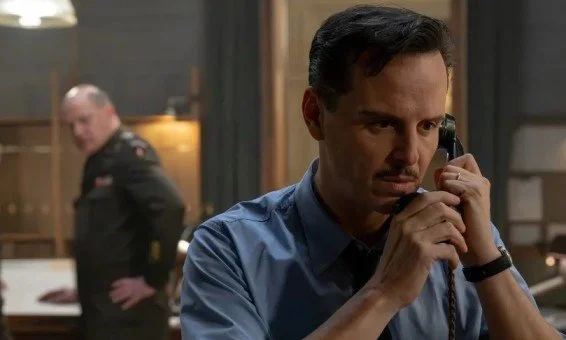
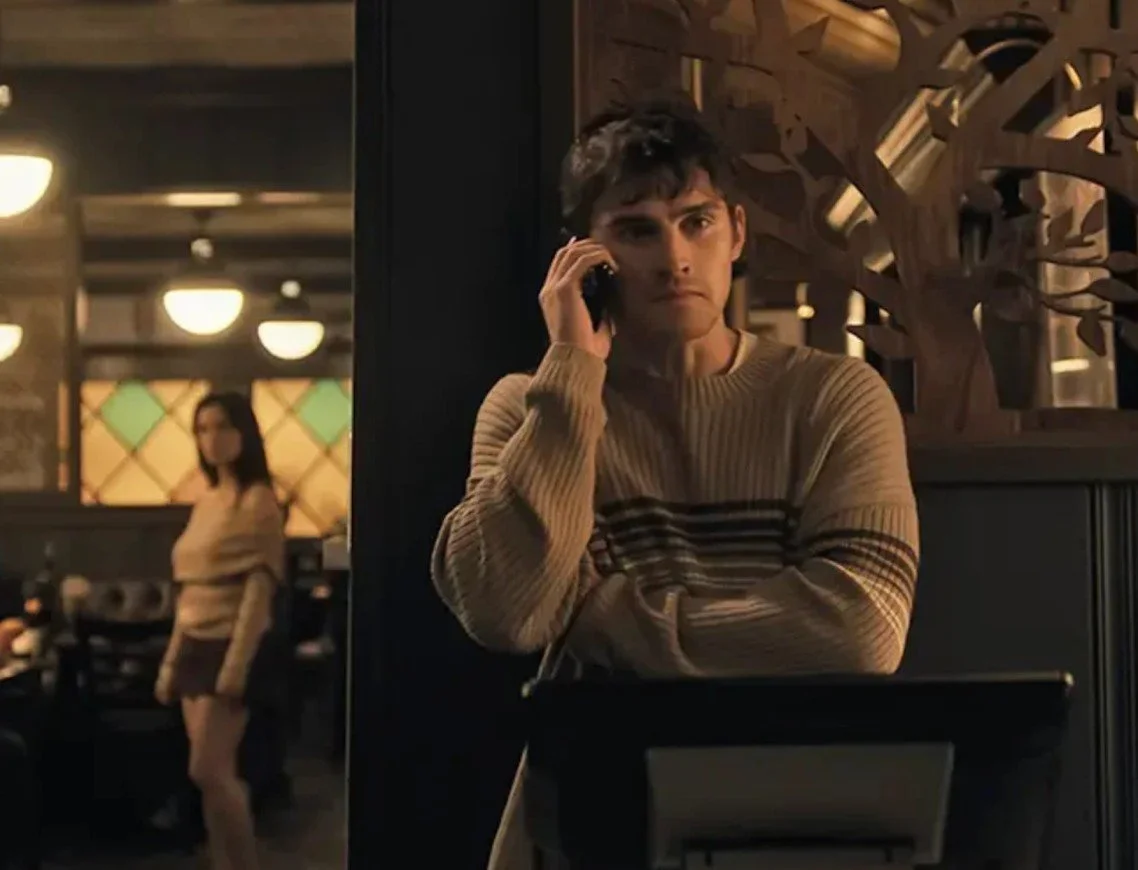
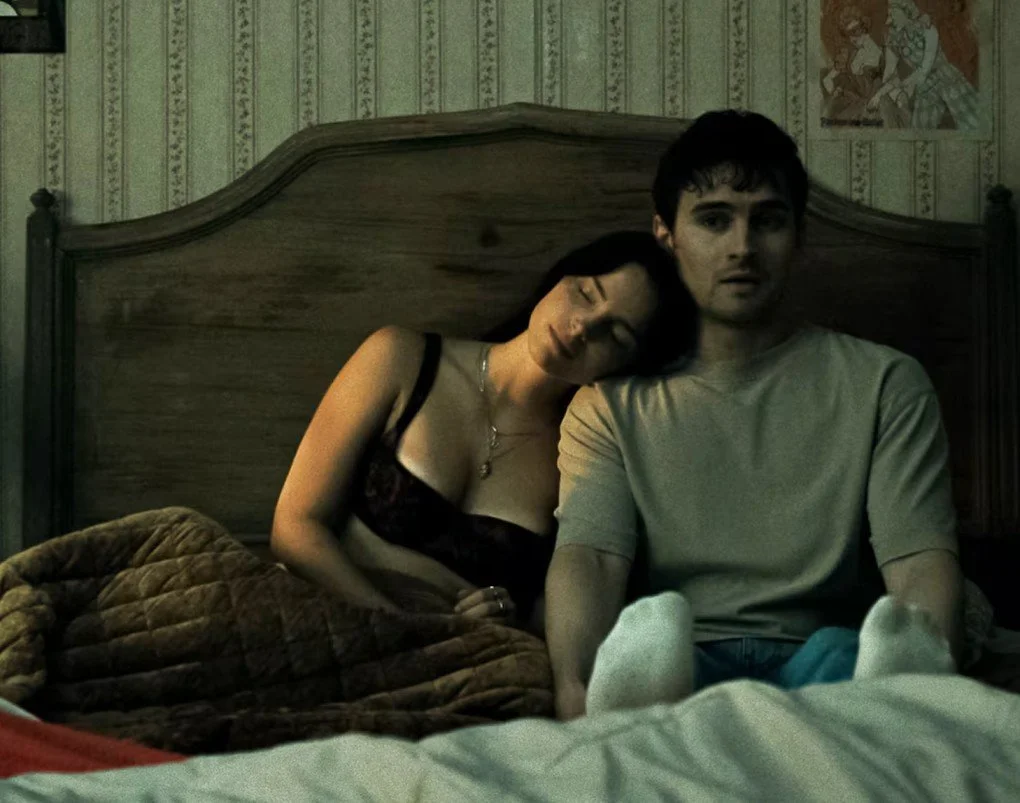
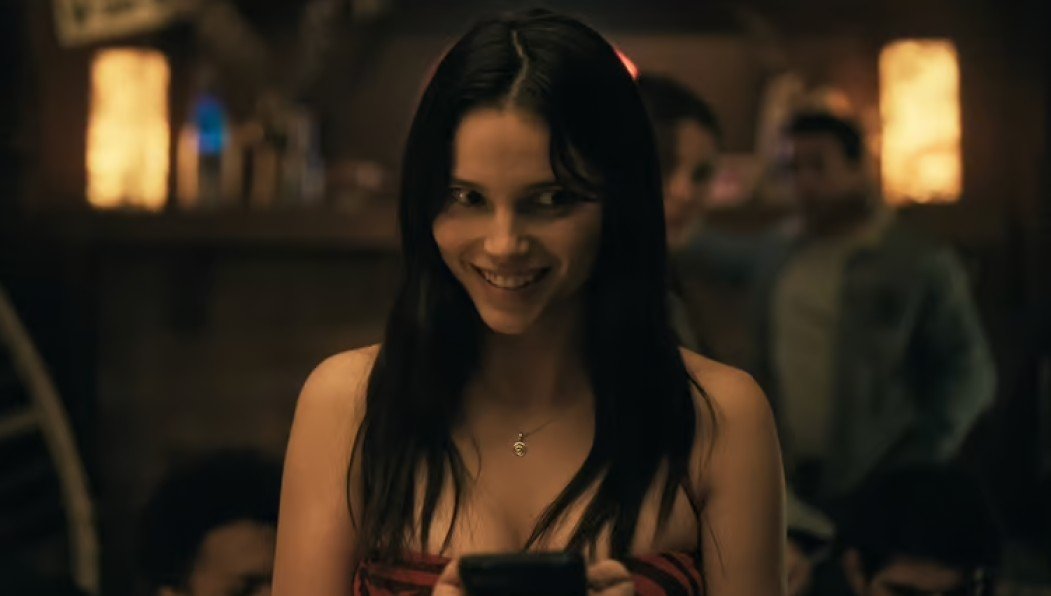
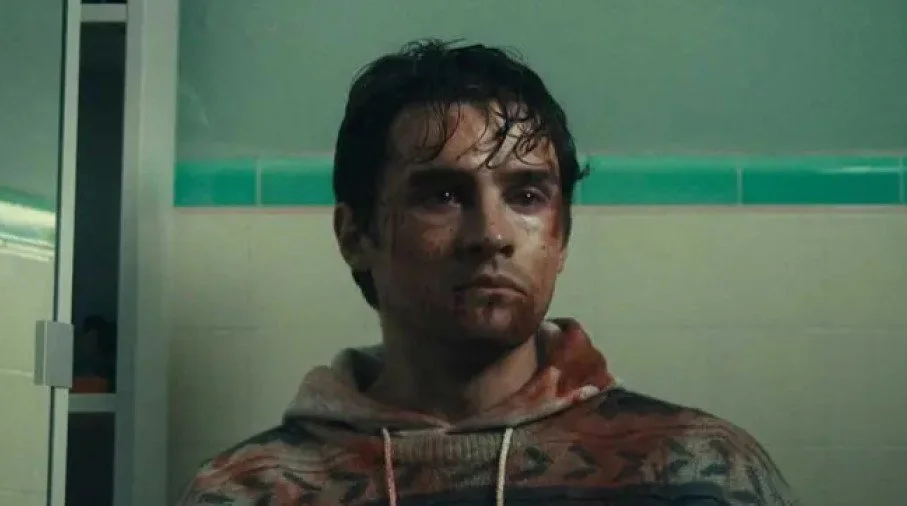
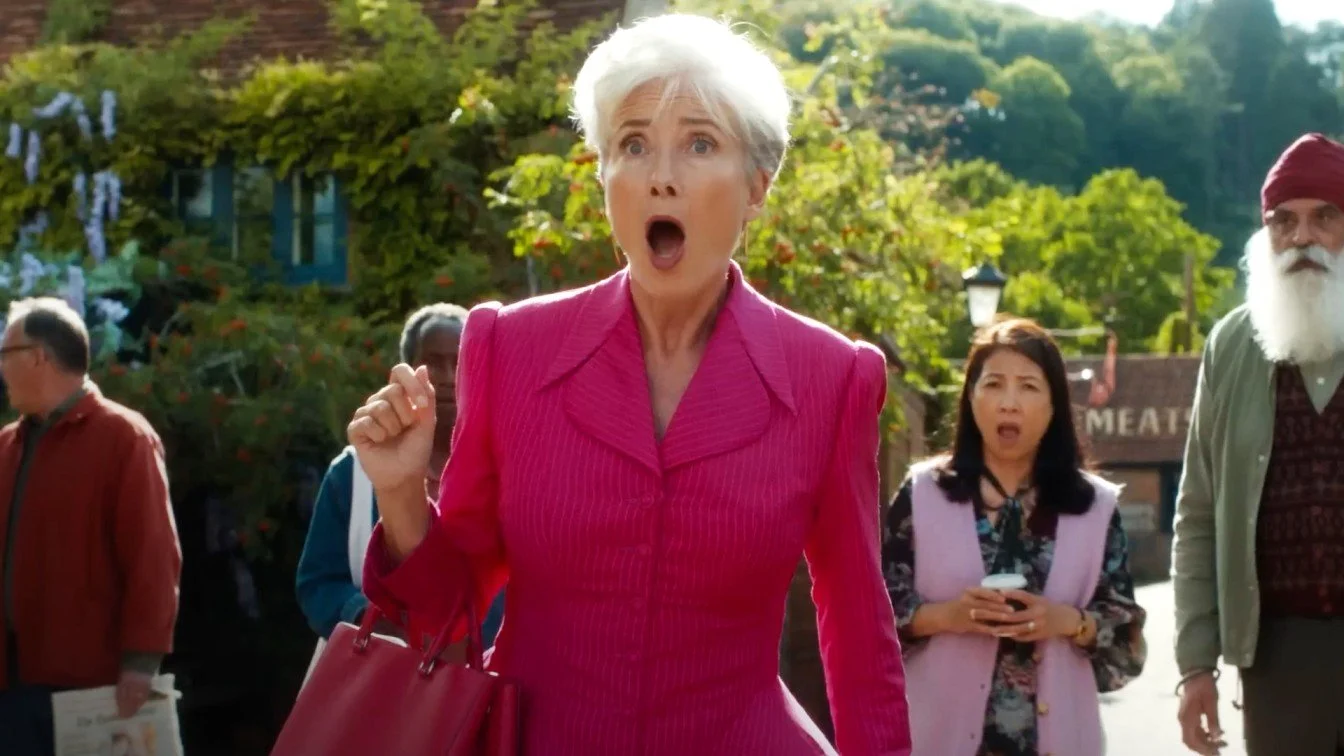
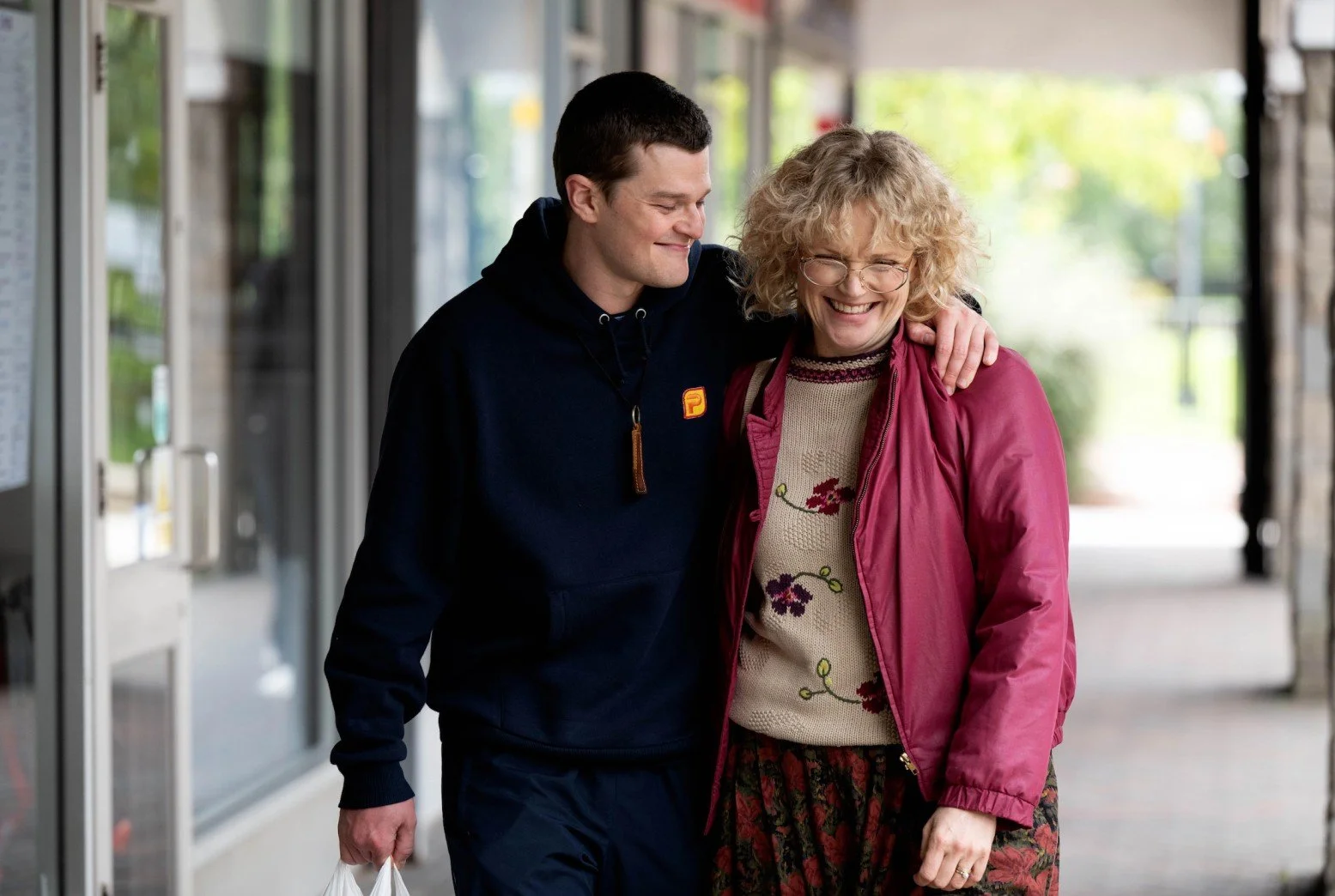
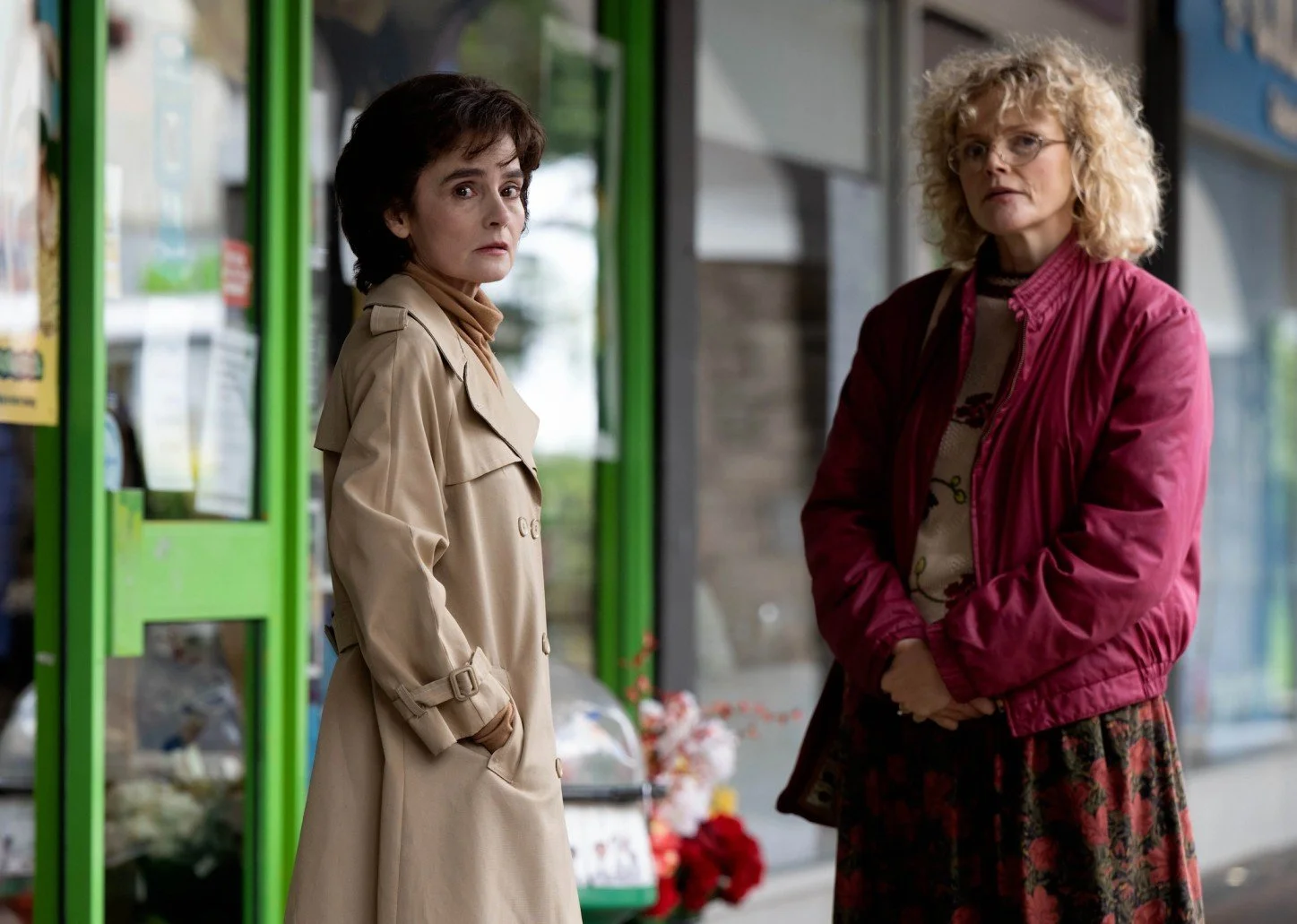
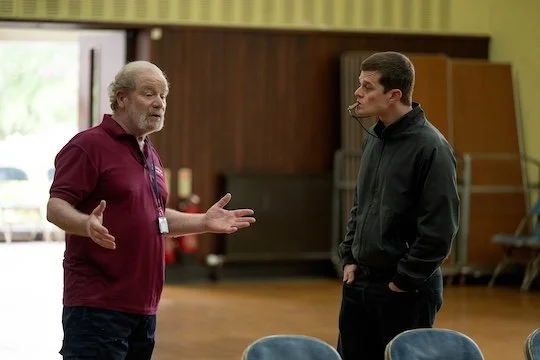
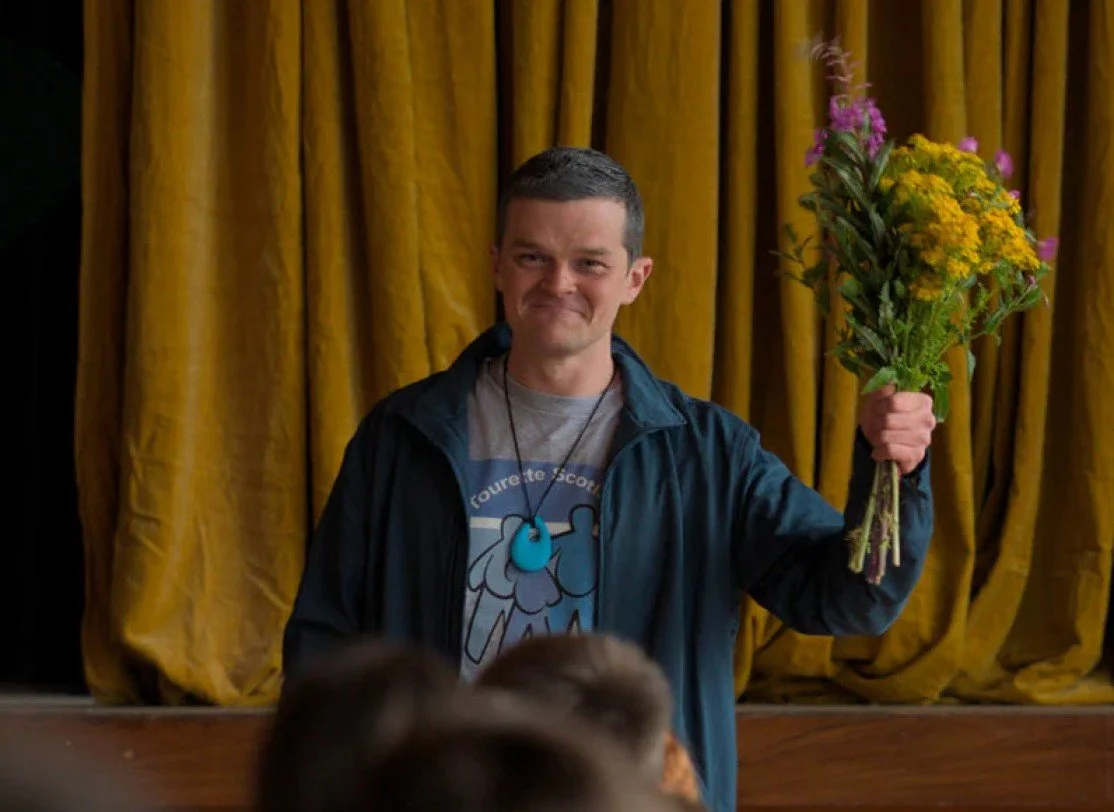
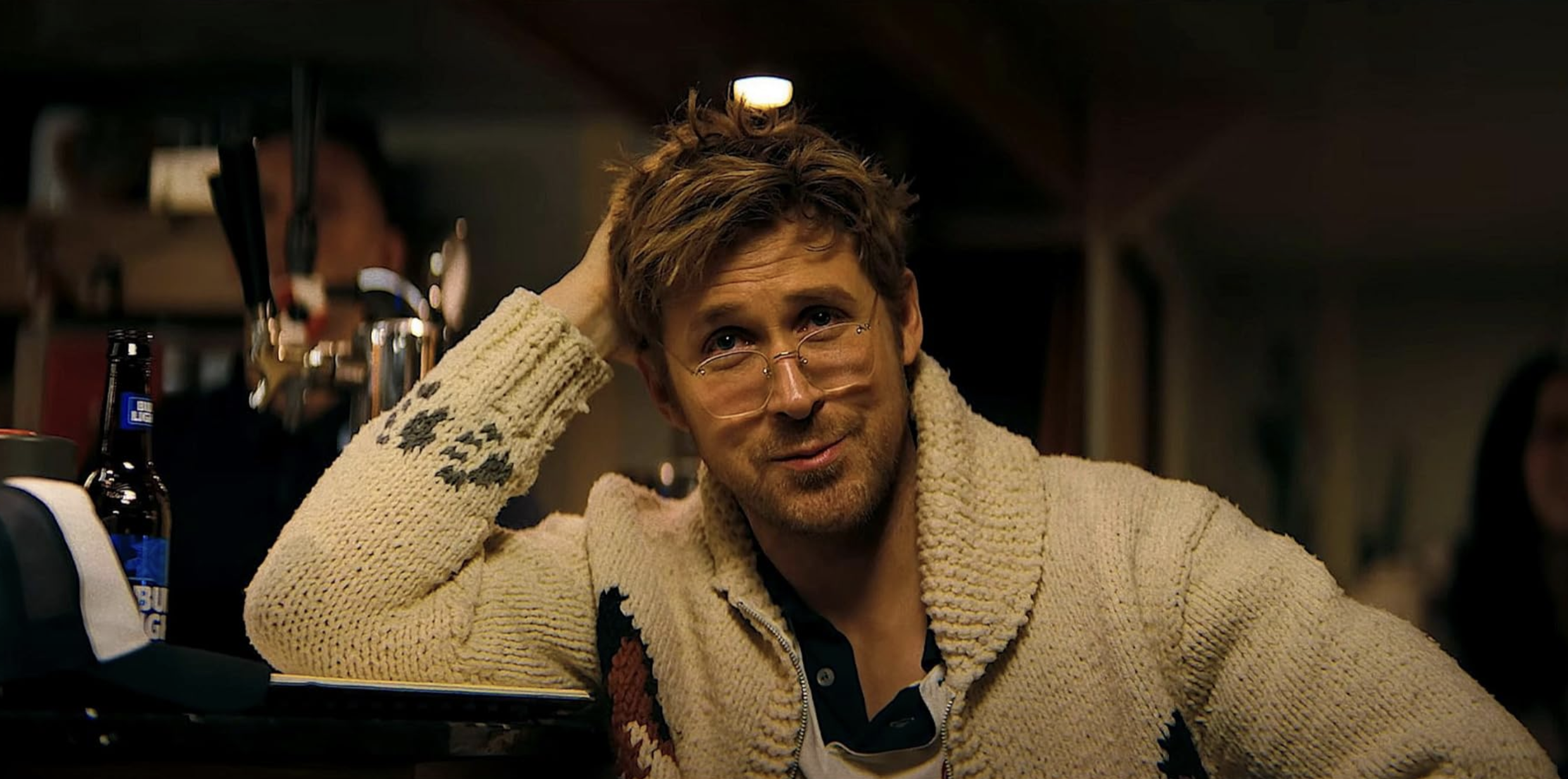
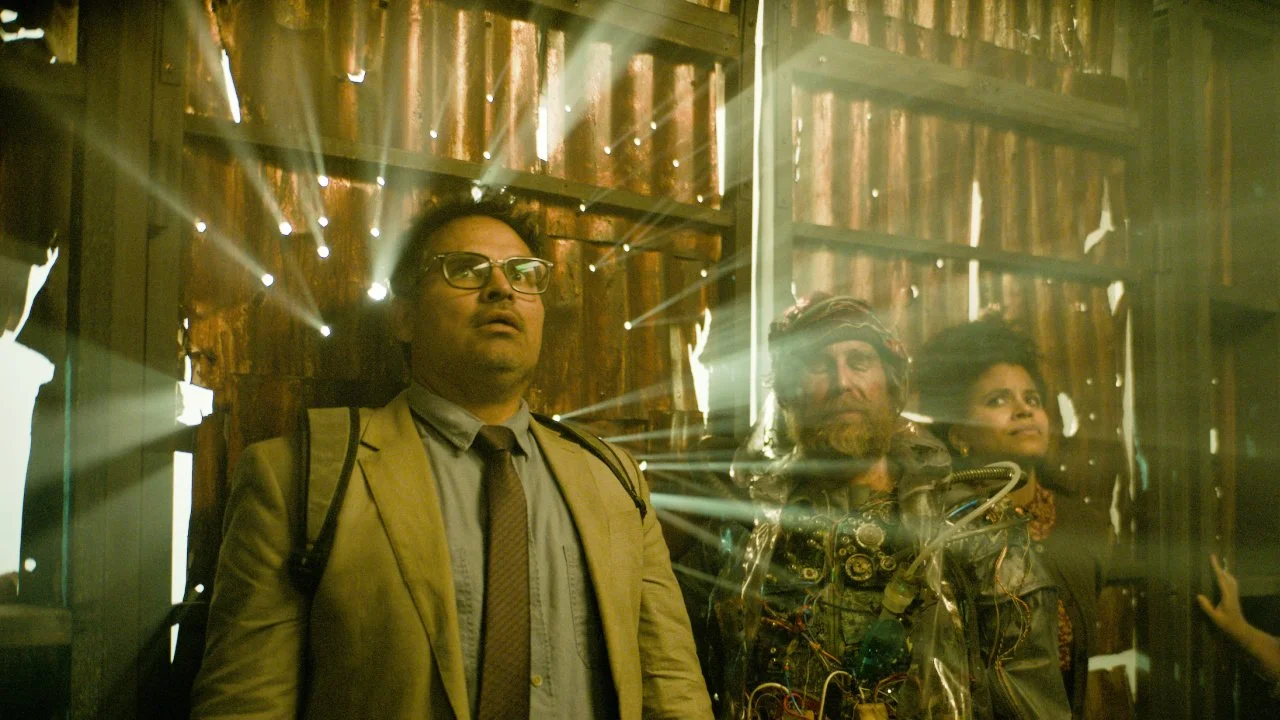
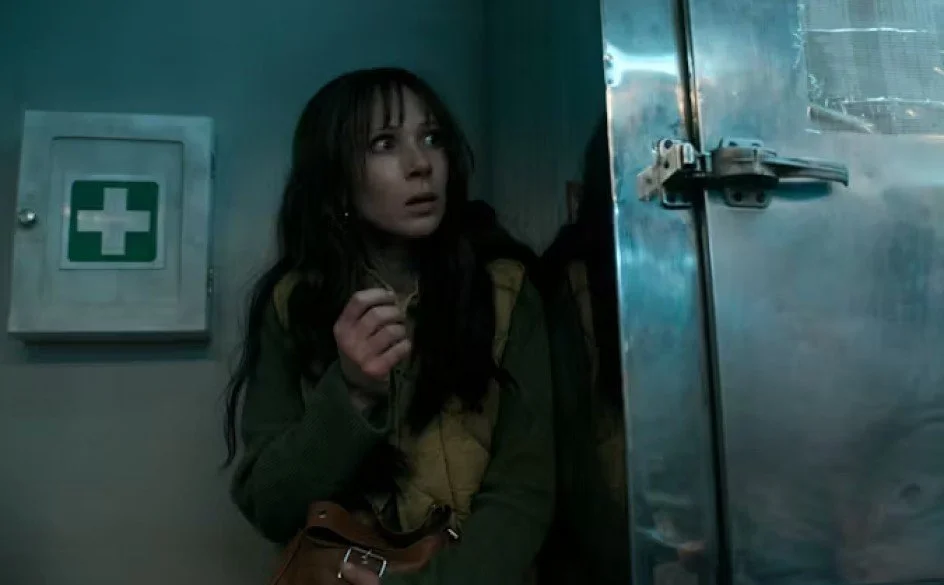
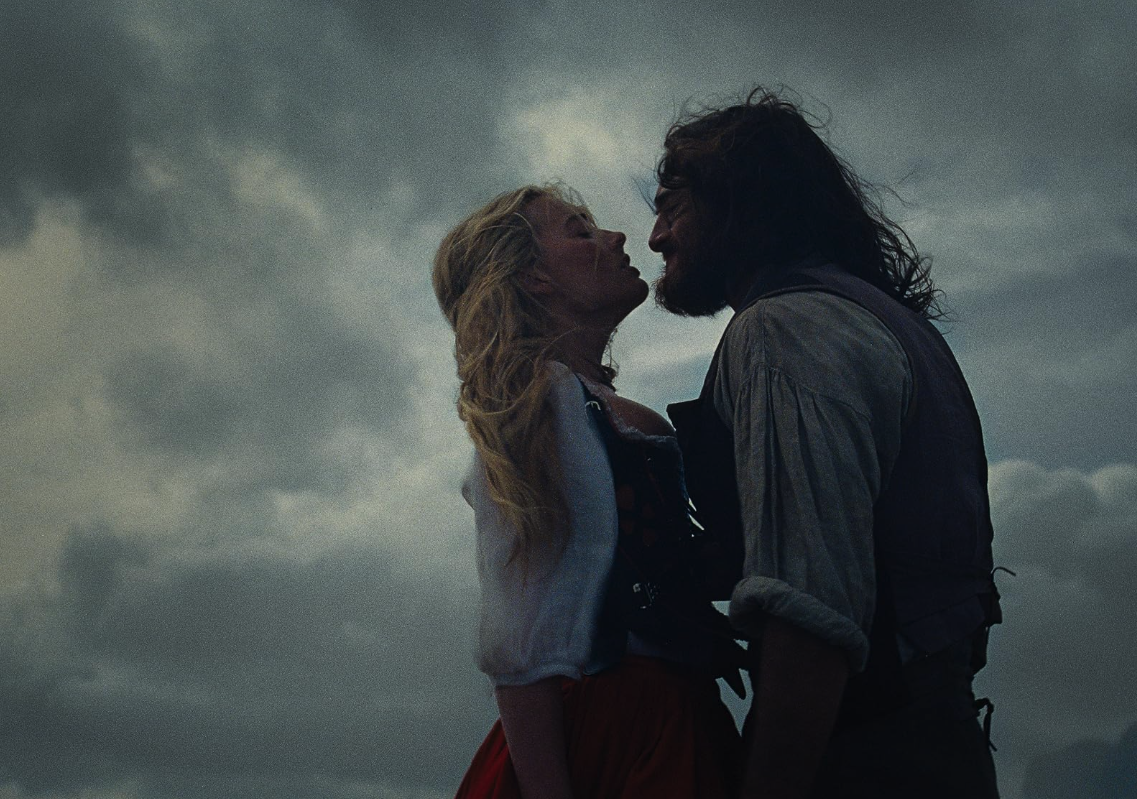
Director/writer Craig Brewer’s (“Hustle & Flow” (2005), “Dolemite Is My Name” (2019)) “Song Sung Blue” is a biopic about another Neil tribute band, one based out of the Midwest.  Lightning & Thunder, from Milwaukee, became a hit during the 1980s and 1990s.  Mike Sardina (Hugh Jackman) is Lightning, and Claire Sardina (Kate Hudson) is Thunder, and this devoted married couple passionately enjoyed playing Mr. Diamond’s music in front of thrilled (and when they started out, a few not so thrilled) audiences for years.

Director/writer Greg Kohs’ documentary, also titled “Song Sung Blue” (2008), chronicled Mike and Claire’s marriage and musical career, and one might ask why a tribute band would merit a documentary.  

This critic didn’t catch the 2008 doc, but after watching Brewer’s 2025 film, it’s easy to see why. 

The 2025 “Blue” is an inspiring story about passion for music and also commitment in the face of stark adversity.  

First, let’s focus on the former.  

Jackman and Hudson share delightful chemistry on and off-stage as an on-screen husband and wife and co-performers.  Jackman’s musical background is well-chronicled, including a 2004 Best Actor Tony for “The Boy from Oz” and on the big screen with “Les Miserables” (2012) and “The Greatest Showman” (2017).   

Kate Hudson’s singing career is more commercially recent with the release of her 2024 album, “Glorious”, although she’s famously linked to director/writer Cameron Crowe’s “Almost Famous” (2000) as a Stillwater groupie, Penny Lane.  (Although Penny Lane refers to herself as a band aide, not a groupie.)

Mike and Claire are dynamite – along with their band - at performing ND favorites.  Hugh and Kate look like they are having a blast, and their infectious, positive energy is bound to reach movie theatre audiences as well.  Cinematographer Amy Vincent captures Mike and Claire’s joy in close quarters during rehearsals and gorgeous, colorful feels from the front row of their concerts. 

It seems like our two talented actors have been performing Neil Diamond songs for a decade. 

(This critic watched a screener at home, but there’s no doubt that yours truly will see “Song Sung Blue” in a theatre during the holiday season, and let’s face it, I would throw down a sizeable chunk of change to catch Hugh and Kate on tour.  Is there a taped two-hour performance of the real-life Mike and Claire out there as well?)

To avoid spoiling which Neil tunes they sing, the tracks will not be revealed in this review, including the single that Mike insists should always be their opening song.  

Good things come to those who wait, right?   

Here’s the good news:  The “Song Sung Blue” soundtrack – in which, yes, Hugh and Kate sing - is available now (to stream), but do yourself a favor and wait until after watching the movie to listen.  

Not only do the pair impeccably play the legendary sequined star’s hits, but Mike and Claire display a lovely dating courtship, where these on-screen 30-somethings flourish like college-aged romantics.  

They just fit together.  

Claire gives Mike direction.  She’s intuitive and perceptive, and Mike appreciates her muse-like qualities.  He thrives off her vibes, thoughts, and companionship. 

For example, this is clearly demonstrated when they begin forming their band.  

Claire says, “You don’t want to be a Neil Diamond impersonator.  You want to be a Neil Diamond interpreter.” 

Mike responds, “I was looking for the right way to say it, and you just came right out and said it.” 

Mike, in turn, is Claire’s rock.  Even though he isn’t very financially stable, he has good intentions, a home, and Mike is a caring, thoughtful light for Claire and her children.  He has an ardent heart, even though our on-screen co-lead suffers from heart trouble.  

From the get-go, this couple is exceedingly easy to cheer on for everlasting success, and Hugh and Kate seem to exude love and support for the real-life Mike and Claire. 

We’re hooked.  

We’re bought in, and admittedly, without these two recognizable stars leading the way, audiences would probably not be as enamored with this story if a pair of up-and-coming or working actors played Mike and Claire. 

Granted, it’s terrific to see Fisher Stevens, Michael Imperioli, and Jim Belushi in lovely supporting roles, but Jackman’s and Hudson’s charm and dazzling showman/showwoman gifts elevate the movie’s appeal.  

In fact, during the film’s first act, “Song Sung Blue” seems too lightweight.  Even Mike’s daughter Angelina (King Princess) is BFFs with Claire’s daughter Rachel (Ella Anderson), and Claire’s young son (Hudson Hensley) looks up to Mike as a supportive, loving father.  

Craig, Hugh, and Kate don’t offer difficulties in this blue-collar fairy tale, until they do. 

No couple is adversity-free, and Mike and Claire are not an exception.  A real-life incident the size of nearby Lambeau Field rocks the Sardina household, and the healing will not commence overnight.  

The film’s tone drastically changes, and a significant portion of the 133-minute runtime dwells on hardship.  In effect, the shift in ambiance feels overly melodramatic, like a middling Hallmark plot device.  If one didn’t know “Song Sung Blue” is a biopic, groans, frustration, and impatience could quickly build like a drawn-out avalanche of barnacles methodically gluing themselves on a ship.  

Instead, due to Jackman and Hudson’s charisma and dedication to the material, authentic empathy rather than exasperation will flow through invested moviegoers.   

Will the good times come storming back for Lightning & Thunder, or will a cold reality permanently rain on Mike and Claire’s hit parade? 

Well, we’re hoping that their good times are always “So good!  So good!  So good!”  

Jeff’s ranking

3/4 stars


“Marty Supreme” – Movie Review

Directed by:  Josh Safdie

Written by:  Josh Safdie and Ronald Bronstein

Starring:  Timothee Chalamet, Gwyneth Paltrow, Odessa A’zion, Koto Kawaguchi, Kevin O’Leary, Tyler Okonma, Fran Drescher, and Penn Jillette

Runtime:  150 minutes

 ‘Marty Supreme’:  Chalamet could win the Best Actor Oscar, and he wouldn’t need any topspin to do it

If you didn’t know anything about director Josh Safdie’s new film other than it stars Timothee Chalamet, ping pong would probably be the furthest thought from your mind.  

This was my experience as I walked into the movie theatre, when a colleague told me, 10 minutes before the film began, that “Marty Supreme” is a ping pong movie.   Well, if Timothee is about to star in a sports movie, ping pong makes more sense than, say, powerlifting. 

Although do not underestimate Mr. Chalamet…even with powerlifting.  The man spent five years preparing to play Bob Dylan in “A Complete Unknown” (2024), and, as a long-time Dylan fan, his remarkable portrayal should have won him the 2025 Best Actor Oscar.  

(Thank you, 2025 SAG Awards for recognizing Chalamet’s work with the 2025 SAG Awards Outstanding Performance by a Male Actor in a Leading Role.)

Well, Timothee worked with a ping pong coach for six years in preparation for “Marty Supreme”, and by golly, his work certainly shows on the big screen.  He demonstrates the type of masterclass effort that can draw the Academy’s attention. 

Safdie’s film is a sweeping, wild affair that carries a similar hectic pace as the Safdie Brothers’ “Uncut Gems” (2019) but travels into threatening criminal elements reminiscent of Martin Scorsese’s “Goodfellas” (1990).  The movie is about Marty Mauser’s winding, unexpected path towards a hopeful shot at facing ping pong legend Koto Endo (Koto Kawaguchi) in Tokyo. 

Marty’s a broke early 20-something without connections, a family war chest, and good standing to simply hop on a plane and fly to Japan. 

Can he raise the money?  Even if he finds his way to Tokyo, can he even enter the tournament?

Marty Reisman is a real-life ping pong player from the era, but this film – written by Safdie and Ronald Bronstein – is a fictionalized story.  

No matter who Marty was in real life, Chalamet plays him as a fast-talking hustler who is single-mindedly focused on pursuing greatness, and his chosen sport will get him there if he can garner some help. 

“It’s only a matter of time before I’m staring at you from the cover of a Wheaties box,” Marty says. 

To say he’s singular-focused is an understatement as he tries to hustle some bucks with his friend Wally (Tyler Okonma), return a lost dog for a payday, and beg for a sponsorship from a pen mogul, Milton Rockwell (Kevin O’Leary from “Shark Tank” fame, who is flat-out terrific in his first big-screen role).  

Although Marty’s not exactly focused on ping pong titles every waking second, as he has eyes for Rockwell’s wife, actress Kay Stone (Gwyneth Paltrow).  His confidence, assertiveness, quick wit, and top-notch street smarts may just win her over.  

Speaking of confidence, Josh Safdie is unafraid to take chances throughout this rumbling story of ambition.  In addition to O’Leary, Safdie cast magician Penn Jillette (who is unrecognizable) and NBA Hall of Fame legend George Gervin.  

The film also introduces a few unknown septuagenarian or octogenarian men, who are utterly believable in key roles.  These gentlemen could have been locals off the street, long-time character actors, or Safdie’s grandfathers’ best friends or neighbors in a similar fashion as some personalities in “Uncut Gems”.  Remember the ultra-tan gentleman in the third act?  These actors seem to have real-life streetwise credentials.  Odessa A’zion nicely plays Marty’s wobbly co-pilot, and 80s and 90s comedienne legends Sandra Bernhard and Fran Drescher also have supporting roles. 

While we’re at it, some classic 80s musical influences make appearances, 30 years after the film takes place, that make welcome additions to the free-spirited vibes.

“Marty Supreme” is a tale of trying to reach your goals by any means necessary, and these ideas lean into some big-time cinematic surprises.  They say you must break a few eggs while making an omelet, and Chalamet cooks up a dandy of a turbulent performance in an equally tumultuous journey….and you’ll swear that Chalamet has already won a couple of world ping pong titles in his personal life after watching this film.  

Well, the last time that ping pong has taken this bright a spotlight in the movies was 1994’s “Forrest Gump”, and Tom Hanks won 1995’s Best Actor Oscar.  Chalamet could too, and he wouldn’t need any topspin to do it.

Jeff’s ranking

3.5 / 4 stars

“Avatar: Fire and Ash” – Movie Review

Directed by:  James Cameron

Written by:  James Cameron, Rick Jaffa, and Amanda Silver

Starring:  Sam Worthington, Zoe Saldana, Sigourney Weaver, Stephen Lang, Kate Winslet, Oona Chaplin, Cliff Curtis, Edie Falco, Giovanni Ribisi, and Jemaine Clement

Runtime:  197 minutes

 ‘Avatar’ devotees will be fired up for ‘Avatar: Fire and Ash’, but the lengthy, repetitive narrative could burn up your patience

Director James Cameron’s “Avatar” (2009) and “Avatar: The Way of Water” (2022) have hauled in a staggering $5.2 billion at the box office.   To put this in perspective, Cameron’s first two Terminator films, “The Terminator” (1984) and “Terminator 2: Judgment Day” (1991), grossed $595 million, just a paltry 11 percent!

“Avatar” movies are a cash cow the size of Pandora, so, naturally, manufacturing more celluloid stories of Jake Sully (Sam Worthington), his wife, Neytiri (Zoe Saldana), and their children living under three suns in a lush, fantastical Alpha Centauri star system environment, 4.37 light-years from Earth, is a no-brainer.  

However, in an August 8, 2025 Variety article, Cameron said, “I’ve justified making ‘Avatar’ movies to myself for the last 20 years, not based on how much money we made, but on the basis that hopefully it can do some good.  It can help connect us.  It can help connect us to the lost aspect of (ourselves) with nature.”

James has captured the attention of a worldwide audience who shares his altruistic intentions and welcomes the cooperative nature of Na’vi and the Tree of Souls.  This positive affirmation, however, has caused an apparent Post-Avatar Depression Syndrome (PADS), where some moviegoers feel sorrow when exiting an Avatar experience after realizing that Pandora is fiction.

For those who love the fanciful lore, technical achievements, or the recurrent action (or those prone to PADS), this cinematic return to Alpha Centauri, “Avatar: Fire and Ash”, should be a homecoming of the senses and feelings.  Proudly sauntering with a 197-minute runtime (which is five minutes longer than “Water”), Jake and company continue to live with the Metkayina clan on the shore, while Col. Miles Quaritch (Stephen Lang) endures his never-ending pursuit of Jake Sully.  

The military-industrial complex still resides on Pandora, led by Gen. Frances Ardmore (Edie Falco), the smarmy corporate type Parker Selfridge (Giovanni Ribisi), and slimy whale hunter, Captain Mick Scoresby (Brendan Cowell).   This collection of creeps poses a constant threat of ripping down forests, shooting Ikran from the sky, or slaughtering Tulkun in the oceans.  

In “Fire and Ash”, Cameron and co-writers Rick Jaffa and Amanda Silver (who both co-wrote “Water”) – unfortunately - don’t give us anything new from Quaritch and the triad of human losers’ perspective. These antagonists persist in their individual pursuits of Jake and the all-mighty buck, respectively, as the Na’vi and Metkayina fight back through the land, air, and sea.  The bombastic battles pit the locals versus the invaders, but the special effects splendor and storylines are repeats from “Water”, and the clashes run, fly, and swim so often, that one becomes numb to the on-screen spectacle.  

Admittedly, sitting through these frequent, epic action set pieces is an other-worldly (literally) experience, because of Cameron’s obsessive, overachieving tendencies to push boundaries of his virtual cameras and other associated technology that mere mortals (like yours truly) cannot begin to comprehend. 

Admiring Cameron’s technical wizardry is not a matter of beauty being the eye of the beholder because, objectively, just about everyone can marvel at the man’s incredible creations or at least his tireless effort towards them.   

However, divided opinions among “Avatar” moviegoers/beholders rest on embracing the familiar trope of man’s insensitivity towards nature, combined with the willingness to sit through repetitive clashes of man-versus-alien bluster.  

It depends on your devotion to the 10-foot blue characters.  Cameron, Jaffa, and Silver don’t push the Na’vi’s story forward with grand ideas for a combined 389 minutes of screentime (6 hours and 29 minutes!) after the first film.  Instead, they simply meet new clans as allies or enemies.  

In “Fire and Ash”, Varang (Oona Chaplin), a high priestess, leads the Mangkwan, and she has a devilish look of ashen skin and a red headdress.  This intimidating presence is hungry for conquests and finds a willing partner to help fulfill her cravings, but unfortunately, Varang is barely on-screen during the film’s last hour.  

Ironically, perhaps, there just isn’t enough time for Varang with the Sully family’s four subplots that need to be addressed before the end credits:

  • Lo’ak’s (Britain Dalton) guilt over his brother’s death

  • Neytiri’s anger towards humans (she calls them “pink skins”)

  • Kiri’s (Sigourney Weaver) search for deeper connections within nature

  • Spider’s (Jack Champion) need for his oxygen mask  

The latter storyline is the most intriguing, but the script doesn’t push the idea far enough, and it gets a bit lost in between whales-versus-ships skirmishes and Col. Quaritch’s sole obsession.  “Fire and Ash” feels similar “Water” with the always-present cat-and-mouse chases that lead to occasional titanic battles.  It’s a film filled with middling platitudes - like “this family is our fortress”, “the day has come”, “weapons of metal are forbidden” – that don’t match (or land with) the weight of a $400 million budget.

“Avatar: Fire and Ash” is a dull and repetitive action movie set in an extraordinary setting. 

Cameron has devoted 20 years of his life to “Avatar” movies, which seems just a tad crazy.  Then again, there are 5.2 billion reasons – and legions of fans - pointing to why he is not.  Geniuses are often misunderstood.  Hey, let’s hope his films do some good. 

C’est la vie! 

Jeff’s ranking

2/4 stars
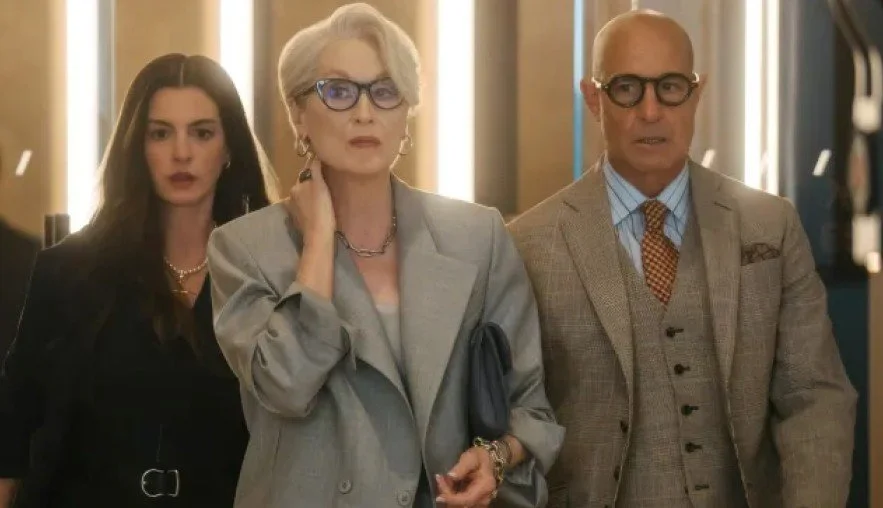

Phoenix Critics Circle – 2025 Award Winners

On Thursday, Dec. 11, the esteemed Phoenix Critics Circle (PCC) film critics gathered at the Phoenix Film Foundation Office for an evening of dinner, cheer, and celebrating movies.  The annual PCC Awards Party announced its best performances, behind-the-camera work, and films of 2025!  

Paul Thomas Anderson’s comedy/crime modern-day classic “One Battle After Another” dominated the evening with six wins, including Picture and Director.   Timothee Chalamet and Jessie Buckley took the top acting honors, and the late Graham Greene and David Lynch were honored as well.  

Here are all the winners. 


BEST PICTURE:  “One Battle After Another”

Other Nominees:

  • “Hamnet”

  • “It Was Just an Accident”

  • “Sentimental Value”

  • “Sinners’


BEST COMEDY FILM:  “The Naked Gun”

Other Nominees:

  • “The Ballad of Wallis Island”

  • “Bugonia”

  • “Friendship”

  • “Rental Family”


BEST SCIENCE FICTION FILM:  “Frankenstein”

Other Nominees:

  • “Bugonia”

  • “Companion”

  • “Mickey 17”

  • “The Running Man”


BEST HORROR FILM:  “Sinners”

Other Nominees:

  • “28 Years Later”

  • “Bring Her Back”

  • “The Ugly Stepsister”

  • “Weapons”


BEST ANIMATED FILM:  “KPop Demon Hunters”

Other Nominees:

  • “Elio”

  • “Predator: Killer of Killers”

  • “Zootopia 2”


BEST DOCUMENTARY:  “The Perfect Neighbor”

Other Nominees:

  • “Deaf President Now!” 

  • “Lilith Fair: Building a Mystery”

  • “Orwell: 2+2 = 5”

  • “Predators”


BEST FOREIGN LANGUAGE FILM:  “Sentimental Value”

Other Nominees: 

  • “It Was Just an Accident”

  • “No Other Choice”

  • “The Secret Agent”

  • “Sirat”


BEST ACTOR IN A LEADING ROLE:  Timothee Chalamet, “Marty Supreme”

Other Nominees:

  • Leonardo DiCaprio, “One Battle After Another”

  • Joel Edgerton, “Train Dreams”

  • Oscar Isaac, “Frankenstein”

  • Michael B. Jordan, “Sinners”


BEST ACTRESS IN A LEADING ROLE:  Jessie Buckley, “Hamnet”

Other Nominees: 

  • Rose Byrne, “If I Had Legs I’d Kick You”

  • Chase Infiniti, “One Battle After Another”

  • Jennifer Lawrence, “Die My Love”

  • Renate Reinsve, “Sentimental Value”


BEST ACTOR IN A SUPPORTING ROLE:  Benicio Del Toro, “One Battle After Another”

Other Nominees:

  • Jacob Elordi, “Frankenstein”

  • Delroy Lindo, “Sinners”

  • Sean Penn, “One Battle After Another”

  • Stellan Skarsgard, “Sentimental Value”


BEST ACTRESS IN A SUPPORTING ROLE:  Amy Madigan, “Weapons”

Other Nominees: 

  • Odessa A’zion, “Marty Supreme” 

  • Inga Ibsdotter Lilleaas, “Sentimental Value”

  • Wunmi Mosaku, “Sinners”

  • Teyana Taylor, “One Battle After Another


BEST DIRECTOR:  Paul Thomas Anderson, “One Battle After Another”

Other Nominees: 

  • Park Chan-wook, “No Other Choice”

  • Ryan Coogler, “Sinners”

  • Jafar Panahi, “It Was Just an Accident”

  • Joachim Trier, “Sentimental Value”


BEST SCREENPLAY:  Paul Thomas Anderson, “One Battle After Another”

Other Nominees: 

  • Ryan Coogler, “Sinners”

  • Jafar Panahi, “It Was Just an Accident”

  • Joachim Trier and Eskil Vogt, “Sentimental Value”

  • Eva Victor, “Sorry, Baby”


BEST CINEMATOGRAPHY:  Michael Bauman, “One Battle After Another”

Other Nominees: 

  • Autumn Durald Arkapaw, “Sinners”

  • Adolpho Veloso, “Train Dreams”

  • Kim Woo-hyung, “No Other Choice”


BEST SCORE:  Jonny Greenwood, “One Battle After Another”

Other Nominees: 

  • Alexandre Desplat, “Frankenstein”

  • Ludwig Goransson, “Sinners”

  • Kangding Ray, “Sirat”


BEST STUNT COORDINATION:  “Mission Impossible: The Final Reckoning”

Other Nominees:

  • “Frankenstein” 

  • “One Battle After Another”

  • “Sinners”

  • “Weapons” 


SPECIAL RECONGINTION AWARDS:

  • Contribution to Native Americans in Film – Graham Greene

  • Lifetime Achievement in Filmmaking – David Lynch


“The Thing with Feathers” – Movie Review

Directed by:  Dylan Southern

Written by:  Dylan Southern, based on Max Porter’s novel

Starring:  Benedict Cumberbatch, David Thewlis, Richard Boxall, Henry Boxall, and Eric Lampaert

Runtime:  98 minutes

 ‘The Thing with Feathers’ explores the agony of grief, but its unconventional approach doesn’t quite fly

“Hope is the thing with feathers that perches in the soul and sings the tune without the words and never stops at all.” – “Hope is the Thing with Feathers” (published in 1891) – Emily Dickinson

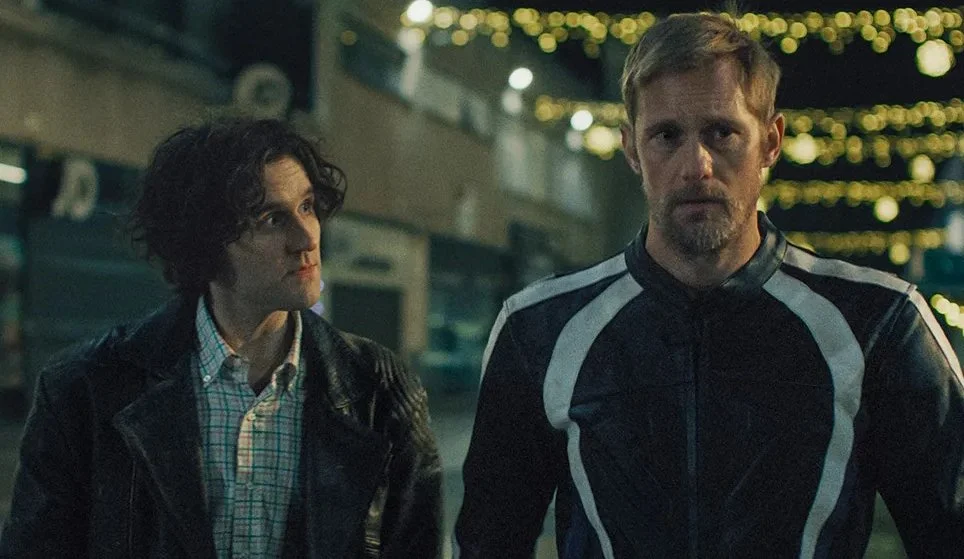
In director/writer Dylan Southern’s “The Thing with Feathers”, hope is hard to come by for the lead, Dad (Benedict Cumberbatch).

Unfortunately, nonexistent is more accurate, because when we first see Dad, he is home, having just returned from his wife’s funeral, and this brokenhearted widower attempts to console his two young boys (Richard Boxall and Henry Boxall).  

He’s emotionally paralyzed and grief-stricken, and his behavior tracks because Southern adapts Max Porter’s 2015 novel, “Grief is the Thing with Feathers” for the big screen.  Southern and Cumberbatch follow Dad’s journey to potentially overcome his sorrow over a 98-minute runtime, but it’s painfully clear during the first act that he isn’t ready to come to terms with his spouse’s passing.  

Rather than seeking professional help, like turning to a counselor played by a sensitive Alan Alda type, Dad mostly wallows in isolation or offers surface-level responses when speaking to colleagues, when he’s not tending to his sons, of course.  

Instead, our protagonist’s therapist appears as an intimidating, supernatural being who enters his abode and taunts him.

“The Thing with Feathers” is a troubling family/psychological drama, but it doubles as a horror film, because this eight-foot creature, or the thing with feathers, repeatedly appears in the home – sans invitation - threatens Dad, and even turns to violence.   

Voiced by David Thewlis, this aforementioned judge-and-jury force – designed by artist Nicola Hicks - constantly berates and sneers at Dad, like an unearthly demon.  In a 2025 Screen Rant Plus YouTube interview with Southern, he said that he was impressed by Thewlis and his “rhythmic, angry, spikey voice” and added, “when he came on board, I was over the moon.” 

The film’s special effects team has a few creature technicians (Amy Dudley, Andy Hunt, and James Kernot) on hand, and actor Eric Lampaert wears the costume.  The practical effects have a throwback “Labyrinth” (1986) vibe, resulting in a horrifying presence. 

The story then leans into Dad’s recovery, but also asks: is the thing imagined or real?  Southern plays with the thing’s reality to keep the audience guessing.  However, if one believes the former, then ugly confrontations – where chaos frequently erupts in the household – don’t ultimately have authentic physical consequences, and, therefore, the intended scares don’t land.  

On the other hand, if one believes the latter, then this entity poses a real and potentially lethal threat.  The result is that a somber drama about loss becomes schizophrenic as it quasi-feels like a “A Nightmare on Elm Street” sequel, and if you’ve seen some of the later installments of the horror series, this isn’t a compliment. 

Then again, compliments should be showered in Benedict’s direction, because he works extremely hard to be befuddled and terrified by his menacing new house guest while also attempting to keep order with his kids as a suddenly single dad in a Ted Kramer (Dustin Hoffman) sort of way (“Kramer vs. Kramer” (1979)).  

Still, the most telling moments might be from the boys’ perspectives, where they opine that their father isn’t the same, and also Dad’s in-laws, where Southern and cinematographer Ben Fordesman’s camera explores their living room and lands on a couple of old photos of their late daughter. 

Dad isn’t the only one suffering.

Perhaps, we needed more of those moments or Alda to appear and insist that Dad lie down on the couch and listen to some supportive words, instead of facing shocking skirmishes with the thing.  For some audiences, “The Thing with Feathers” might be just what the doctor ordered.

Well, at least Southern takes chances to explore grief, but the unconventional approach doesn’t quite fly. 

Jeff’s ranking

2/4 stars


“Eternity” – Movie Review

Directed by:  David Freyne

Written by: David Freyne and Patrick Cunnane

Starring:  Elizabeth Olsen, Miles Teller, Callum Turner, Da’Vine Joy Randolph, Barry Primus, Betty Buckley, and John Early

Runtime:  112 minutes

 ‘Eternity’ isn’t a timeless classic, but it’s a lovely, gratifying rom-com


The afterlife.  

What happens when we pass away?  Where do we go?  

These are questions that human beings have pondered for as long as we’ve walked the earth.  

Devout believers have absolute certainty about eternal life, while skeptics question the existence of a hereafter.  

Many of “us” fall somewhere in between, hoping for some sort of positive version of existential paradise.  

Director David Freyne’s delightful and contemplative rom-com, “Eternity”, explores an encouraging vision of eternal life, if we - to quote “Indiana Jones and the Last Crusade” (1989) - “have chosen…wisely.” 

Better yet, will we choose wisely?

Elizabeth Olsen, Miles Teller, and Callum Turner star in a love-triangle comedy where Joan (Olsen) must make the ultimate choice with absolutely everything on the line.  To spend eternity with Larry (Teller), her husband of 60-plus years, or Luke (Turner), her first husband, who tragically passed away while they were in their 20s. 

Joan built a life with Larry for over six decades but lost her chance with Luke when fate cut their earthly bond short.   

What a difficult choice!

“That sounds stressful,” said my friend when this critic described the film’s premise to her. 

She’s not wrong!  

Larry – who died just a week before Joan – and Luke – who passed 67 years prior – make legitimate rationales to be Joan’s everlasting partner, and Freyne and Patrick Cunnane’s screenplay keeps us guessing throughout the 112-minute runtime. 

Even though Joan faces a taxing, “grave” decision, “Eternity” shares playful banter between the three leads and rollicks with spirited, bouncy surprises in the celestial environment.  

Fans of director/writer Albert Brooks’ hilarious and thought-provoking comedy, “Defending Your Life” (1991) – where Daniel (Brooks) and Julia (Meryl Streep) defend their lives with lawyers in Judgment City - will relish Freyne’s creativity here as well. 

In “Defending”, amusement park trams shuttle the recently deceased – dressed in white robes - to a hotel-like spot, complete with pragmatic courtrooms and celebratory Vegas-style buffets.  

Meanwhile, “Eternity” opts for a train station for the newly departed, and the passengers wear their street clothes.  This otherworldly junction feels like a hotel as well, but Freyne and Cunnane include plenty of laugh-out-loud wonders that won’t be revealed in this review, so that these enjoyable moments can be experienced in your local cineplex for the first time. 

This magical backdrop – created with art director Andrew Li’s and production designer Zazu Myers’ thoughtful touches - by itself won’t complete this theatrical experience.  Thankfully, Olsen, Teller, and Turner share lovely chemistry that invests the audience’s sentiment in Joan’s ultimate choice, one that impacts three fates, as both husbands hang on her every utterance. 

During the first act, actors Barry Primus and Betty Buckley play 80 or 90-something versions of Larry and Joan on Earth, and they physically resemble Teller and Olsen, as all four thespians embody these two characters’ personalities.  This elderly couple banters and bickers about daily tasks, like traffic, while driving to their son’s home for a birthday party, and one spouse declares to the other, “I don’t love to complain.”

Larry and Joan have shared all their stories with one another probably over 1,000 times.  After so many years of marriage, they know each other’s strengths, shortcomings, and every aspect of their physical and emotional makeups.  

Teller and Olsen nicely portray their 80-year-old on-screen selves, where you’d swear that Teller’s Larry will look for a newspaper to clip coupons while Olsen’s Joan frets about paper cut danger.  These octogenarians have tricenarian bodies, and they comically enjoy their newfound youth in a charming moment of a particular calisthenic.

Conversely, Luke is a cool, attractive, suave customer who spent decades waiting for Joan with all the promise of second chances that she never thought the gods would conjure and then grant.

The pressure is on, Joan!  

Luckily, afterlife consultants Anna (Da’Vine Joy Randolph) and Ryan (John Early) often break the tension with affable supporting performances that give Larry and Joan clearer perspectives and frequent shots of helpful advice. 

Well, here’s some helpful advice.  Find “Eternity” in theatres.  It’s not a timeless classic, but it’s a gratifying time at the movies.

Jeff’s ranking

3/4 stars


Wicked: For Good - Movie Review

Directed by: Jon M. Chu.

Written by: Winnie Holzman and Dana Fox.

Starring: Cynthia Erivo, Ariana Grande, Jeff Goldblum, and Michelle Yeoh.

Runtime: 138 minutes.

‘Wicked: For Good’ is done for good, thank God

No one mourns the wicked, and I won’t mourn “Wicked” now that its run has come to an end. 

My eyes need a rest from the pink and green — the branded Stanley tumblers, the branded Witches Brew and The Good Witch margaritas at Chili’s, the branded Elphaba’s Cold Brew and Glinda’s Pink Potion Starbucks drinks. Pink and green as far as they eye can see for the second consecutive holiday season because Universal Pictures was more interested in dipping into the same well twice to sell slippers and T-shirts and eyeshadow palettes and wine glasses – heck, there are even “Wicked” Crocs – thank in making an artful adaptation of a beloved musical.

There are downsides to being so popular, as Glinda the Good Witch learns in tedious part two. “Wicked: For Good” picks up five years after we left off. Elphaba (Cynthia Erivo) is banished in a forest hideout, continuing her fight for animal rights, while Glinda (Ariana Grande) has been elevated to the Wizard’s spokeswoman (or, functionally, his chief propaganda minister). In Oz, Elphaba has become a scapegoat, a boogeyman, while Glinda is its glittering pink-hued hope, engaged now to be married to the dashing Fiyero (Jonathan Bailey), captain of the Wizard’s Guard. 

It's a fairy tale ending fit for a fairy tale princess, only it’s founded on a lie. The animals are still enslaved, Glinda is not as happy as she seems, and dashing Fiyero has fallen for Elphaba, who is not the Wicked Witch the people of Oz believe her to be. 

It’s not much of a story, and what’s there is terminally boring. “Wicked” wasn’t high art either, but it had the charisma of odd-couple Elphaba and Glinda playing off each other at school, two enemies nudged to friendship through forced proximity. It’s a winning formula that’s missing in “Wicked: For Good,” which isolates its heroines into their own storylines. Elphaba’s scenes lack weight or purpose, with Erivo doing her level best acting to a green screen, surrounded by dead-eyed CGI animals. 

“Wicked: For Good” gets even more cloying when it introduces (or rather, refuses to introduce) the Dorothy of it all, grinding what there is of a narrative to a halt with winking nods to the pigtailed Kansas girl. And don’t expect the songs to do the heavy lifting. All the good ones are loaded in the front half; there’s nothing in the second half to match the giddiness of “Popular” or the blow-the-roof-off bombast of “Defying Gravity.” 

It would beg the question why “Wicked” was ever broken into two tortured parts that are collectively twice as long as the stage musical they’re based on, but it’s obvious the answer is money. It’s cynical, but why else would a fantasy musical set in a mythical land feel less like a vibrant world in which to escape our own than a tedious exercise in brand management that has all the lived-in authenticity of a Macy’s Thanksgiving Day Parade float? You need a reason to sell those pink and green margaritas at Chili’s, after all. 

Maybe “Wicked: For Good” is the movie we deserve, a snapshot of where we’re at culturally in 2025, when social media platforms are overrun with AI-generated slop and everything is a copy of a copy of a copy of a copy. Of course, a film based on a stage musical based on a book based on a movie based on another book was the fifth-highest-grossing film of 2024.  

At least those margaritas look pretty good. 

Barbara’s ranking

1.5/4 stars
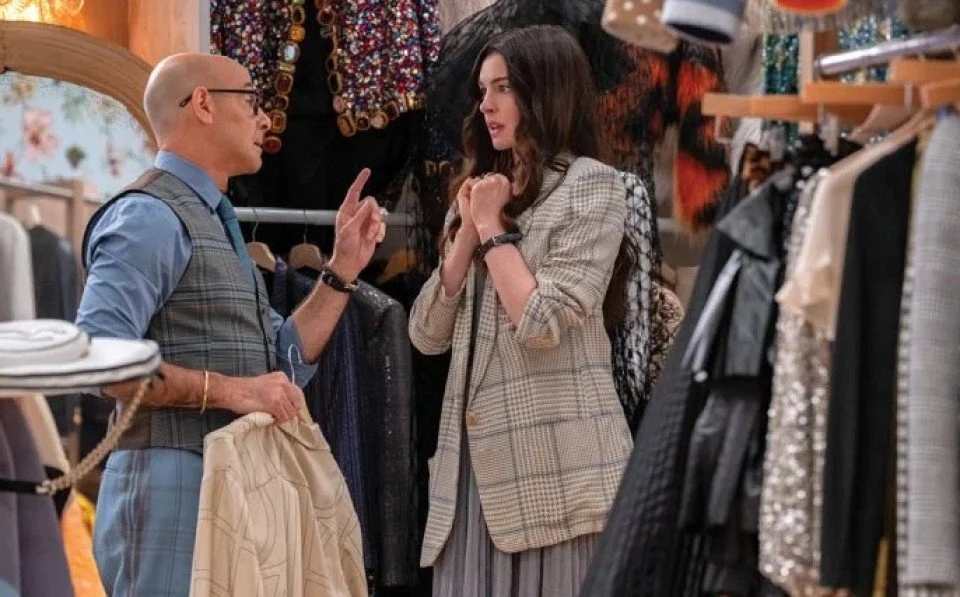

“Trifole” – Movie Review

Directed by:  Gabriele Fabbro

Written by: Gabriele Fabbro and Ydalie Turk

Starring:  Ydalie Turk, Umberto Orsini, and Margherita Buy

Runtime:  95 minutes

 Search for ‘Trifole’, a truffle-hunting arthouse gem

Dalia (Ydalie Turk) steps off a train and then treks in the open, rolling hills of Piedmont, Italy, located in the northwest corner of the country. 

This city girl, living in London, is in her 20s, has long red hair, and sports a fashionable jacket, bag, and boots, but she muddies the latter just before reaching her grandfather’s house, which foreshadows future cloudy moments.  Her Grandpa Igor (Umberto Orsini) lives with his trusty dog, Birba (an absolute cutie), in a two-story yellow abode adjacent to acres of wineries. 

This frustrated, aging truffle hunter unfortunately has bouts of dementia, including hollering at absolutely no one in the nearby woods.  Still, Igor doesn’t think he’s mad.  He simply hopes for a much-needed rain and to find ample truffles with Birba.  However, he needs full-time care, and to make matters worse, the bank is ready to evict him because he missed several mortgage payments.  

Reluctantly, Dalia is here to help her granddad, via her mother’s (Margherita Buy) wishes, but the sudden change of urban-to-rural scenery and Igor’s knowledge of his treasured craft may result in an adventure.  

Set in the present day, director/co-writer Gabriele Fabbro’s poetic and frank drama, “Trifole”, explores Igor’s sacred ritual, and he passes it down to a new generation, whether the young heroine is prepared or not. 

Accompanied by composer Alberto Mandarini’s lovely string-based score, we follow Dalia’s journey, a physical one as she hikes across the forest, but it’s also a trip to overcome her perceived shortcomings.  Fabbro and Turk (who co-wrote the script) include a brief but telling first-act scene in which Igor displays absolute clarity and calls out Dalia’s vulnerabilities.  

Meanwhile, Dalia may live in a metropolis, but she doesn’t have all the answers, and this brief, poignant exchange between the generations precisely defines – from a storytelling perspective - the internal demons that she could potentially slay while staying in the Langhe region of Piedmont. 

The upstart Turk and senior Orsini share palatable, tension-filled chemistry, where Dalia struggles to drum up enough altruism to care for Igor, who will snap or criticize without warning, in between moments of levity.  Certainly, the on-screen kin earn our sympathy when Dalia serves Igor breakfast just before he explodes in an upsetting episode.  

Fabbro and cinematographer Brandon Lattman share closer quarters with Dalia and Igor in the home, as this odd couple has nowhere to hide from one another.  When she roams outside in search of truffles, Fabbro and Lattman often keep their camera’s focus on ground level, which doesn’t elicit the same feelings of claustrophobia.  Instead, Dalia and Birba’s strides in a strange land speak to novelty, anonymity, and isolation.  Then again, the camera lifts at times to marvel at the rolling hillocks, woodsy scenery, and a peaceful river. 

Then again, just when you think that the 95-minute “Trifole” relies on the actors’ natural gifts and leans on the on-location beauty, Fabbro and the sound department’s Francesco Piazza construct a staggering surprise that will remain with audiences for days, weeks, months, or pick your timeframe. 

If one has never found the time to learn about truffle hunting, catch Michael Dweck and Gregory Kershaw’s documentary “The Truffle Hunters” (2020) for an organic education about the pastime in this specific Italian region, possibly as homework before watching this film. 

Or simply first search for “Trifole”, an arthouse gem. 

Jeff’s ranking

3/4 stars


The Running Man - Movie Review

Director: Edgar Wright

Cast: Glen Powell, Josh Brolin, Jessica Henwick

Run Time: 125 minutes

Edgar Wright remains one of the most distinctive filmmakers in modern cinema, defining his work with a style that few filmmakers can match. From the comedic, multi-genre stylings of the "Cornetto Trilogy" (Shaun of the Dead, Hot Fuzz, and The World's End) to the musical/caper kineticism of Baby Driver and the unsettling visual rhythm of Last Night in Soho, Wright treats the camera and editing tools as instruments used to build an eclectic mixtape of movies. Wright utilizes these talents in his adaptation of The Running Man. While the original 1987 action extravaganza starring Arnold Schwarzenegger stripped Stephen King's (writing as Richard Bachman) novel down to its core action set pieces, Wright's version is a far more faithful commitment to the source material's bleak social satire. He builds upon the legacy of the '80s staple only to subvert it, delivering a film that is less about muscle-bound characters and macho spectacle and more about a desperate man running from an entire, bloodthirsty society.
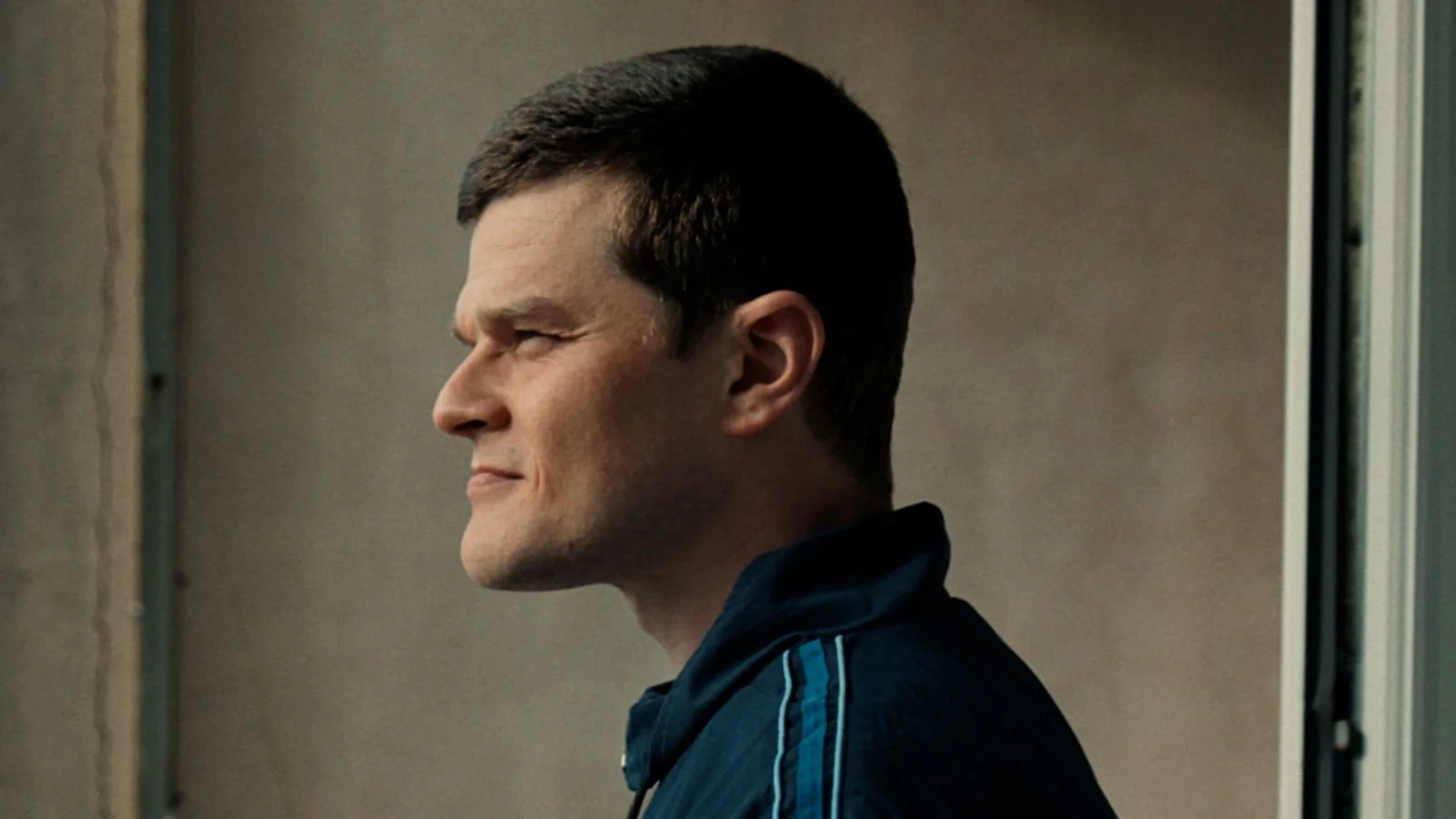

In a near-future, dystopian America, society is divided, and the media-obsessed masses are kept entertained by the "Network," a powerful corporation that broadcasts deadly reality television. Ben Richards (Glen Powell), an unemployed blue-collar worker needing money for his ill infant child, is selected as the lead "Runner" on the Network's top-rated show, The Running Man. Given a 12-hour head start, Richards must evade a team of heavily armed, elite "Hunters" led by the masked poster villain McCone (Lee Pace), and a civilian population eager to turn Richards in for monetary rewards. Showrunner Dan Killian (Josh Brolin) manipulates every aspect of the show, forcing Richards to fight to survive for 30 days while trying to expose the Network's authoritarian control over society.

Edgar Wright's version of The Running Man succeeds largely due to its dedication to the world-building aspects of the original Stephen King story. The film is a chilling reflection of contemporary anxieties, highlighting society's aggression and the rapidly shifting ideals that create destructive divisions between different groups of people. More than just an action film, it is a pointed critique of the unchecked power and control that governments and corporations can exert when combined with media manipulation. All of these resonant topics are subverted with dark comedy, sometimes heightened with emotional drama, and made visually energetic by Edgar Wright's flair for kinetic filmmaking and mile-a-minute pacing. 

The casting choices are excellent. Glen Powell portrays Ben Richards as a desperate man on the edge, playing the role with a blend of charm, aggression, and a keen survivalist instinct. Opposite him, Josh Brolin is a delight to watch as Dan Killian, the show's puppet master with a devious smile and almost omnipresent influence that permeates every frame of the television show he produces. Add Michael Cera as an accomplice to Ben's run with a heavily fortified home and a scene-stealing Colman Domingo as the captivating host, and The Running Man is a who's who of fun character cameos. Wright consistently keeps these somewhat one-dimensional characters interesting by maintaining steady control of the narrative's "never stop running" motto. He constantly throws visual and plot-based wrenches into every setup, ensuring that the film's flow always feels like a desperate, adrenaline-fueled race to the finish line, preventing the audience and the character from ever settling into a comfortable rhythm.

Ultimately, the film succeeds primarily because of how much fun the director is having with the narrative design. Wright's signature visual language transforms the simple acts of fight and flight into a spectacle; whether in moments where the viewer chases Richards with some truly amazing wide-angle photography and rapid-fire editing choices, or in those instances when the world becomes a heightened reflection of the current dilemma facing society, the energy never stalls. Wright balances the tone, which is sometimes a rightfully angry commentary, with moments of smile-inducing silliness, such as a hyper-stylized conspiracy theorist (Daniel Ezra) who aids Richards, or the masked Hunters, one of whom has weapons with names like "Fate" and "Destiny" imprinted on them.

The Running Man is an exhilarating and visceral action film, proving that the best adaptations take the core themes and amplify them for a new generation. Wright has not just remade an '80s action staple; he has enhanced it, transforming it into an exciting, adrenaline-charged contemporary analysis of media's influence on society and the dangers of a divided society. 

Monte's Rating

4.00 out of 5.00


“Christy” – Movie Review

Directed by:  David Michod

Written by: David Michod and Mirrah Foulkes

Starring:  Sydney Sweeney, Ben Foster, Merritt Wever, Jess Gabor, Ethan Embry, Chad L. Coleman, and Katy O’Brian

Runtime:  135 minutes

‘Christy’:  Martin and Sweeney are unanimous winners

Ronda Rousey dominated the women’s MMA conversation and became the fierce face of the sport during the first half of the 2010s (and the rise of social media), and with good reason.  This striking and fearsome 5’ 7” mixed martial artist struck and intimidated opponents into speedy submissions and defeats, some matches lasting just 14 and 16 seconds, in 2015 and 2014, respectively. 

Speaking of time, 30 years prior, Christy Renea Salters, otherwise known as Christy Martin, had a similar pioneering run in the boxing ring during the 1990s and beyond.  This 2020 International Boxing Hall of Fame inductee made the cover of “Sports Illustrated” in 1996, slugged her way into placing women’s boxing into the American consciousness, and finished her career with 49 wins, 7 losses, and 3 draws.  

In 2025, Sydney Sweeney (“Americana” (2023), “Euphoria” (2019 – Present), “The White Lotus” (2021 – Present)) portrays this trailblazing athlete in “Christy”, an eye-opening biopic from director/co-writer David Michod (“Animal Kingdom” (2010)) that leaves a mark.

During a recent “Toronto Sun” interview with Martin and Sweeney, Martin said, “It’s very overwhelming, but to see someone like Sydney Sweeney, the IT girl in Hollywood, out there on the screen portraying me and bringing my life to life and just the struggles.  Hopefully by showing this (movie) to so many other people, we’re going to change lives.” 

After watching Sweeney’s transformative and absorbing performance, as well as the candid experiences portrayed on screen, it becomes clear that Martin’s citation does not refer to her matches within the squared circle.  Michod’s film documents her ring career but also Christy’s combative, contentious relationship with her controlling husband, Jim Martin (Ben Foster).

Her story offers both an athletic fairy tale and a cautionary one.

Set in Christy’s home state of West Virginia, and then Tennessee and Florida, Michod and Mirrah Foulkes’ screenplay follows Ms. Salters’ first steps into the sport as a young adult and then throughout her fighting career.  

Sweeney, cinematographer Germain McMicking, the stunt team, and the sound department work closely to chronicle the in-ring pugilism, where the camera lens sits – seemingly – inches away from Martin and her opponents while their jabs, crosses, hooks, and uppercuts smash into faces and torsos. The fights feel authentic, as the women break boundaries and blood vessels, and carry substantial drama, as this small-town 5’ 5” girl surprises on-screen boxing audiences as well as theatrical ones.   

Conversely, director Benny Safdie’s recent UFC biopic release, “The Smashing Machine” starring Dwayne Johnson, films Mark Kerr’s (Johnson) matches from outside the ropes, a decision that results in an actual distance from the action, which lessens the emotional impact. 

Meanwhile, in “Christy”, the physical and emotional tussles emerge as dangerously close and confrontational.  Sweeney immerses herself as Martin, later nicknamed “The Coal Miner’s Daughter, an “awe shucks” underdog in earlier battles who evolves into a showboating, confident combatant as her career progresses.  

The film proudly plays prevalent and playful tracks from the era, as familiar toe-tapping INXS and Young MC tunes are turned up to 11.  In other moments, Antony Partos’ score casts doubt, melancholy, and doom. 

Sweeney is a wonder on-screen and embraces the considerable turns in Christy’s life, ones that the aforementioned music follows.  She successfully juggles Martin’s revolution of her sport as well as her coping mechanisms with both the subtle and blatant abuses within her marriage.  Christy frequently tiptoes on a tightrope when dealing with Jim, balancing frank discourse with a risk of deplorable consequences in their living room or kitchen on an ordinary Wednesday or remaining silent to avoid them. 

Foster’s Jim Martin is a menacing presence.  Jim is generally quiet but carries a dim, vacant stare while occasionally uttering shallow observations or regulatory ones towards Christy.  His talented, twinkling wife overshadows him, as shown by their first meeting with Don King (wonderfully played by Chad L. Coleman).  Jim, at least 20 years older than Christy, is fully aware of this fact.   

Martin is also forced to muddle through a contentious relationship with her mother, Joyce (Merritt Wever), who is a constant source of frustration.  Joyce regularly spouts displeasing religious overtures that would not pass muster in 2025, and her dour disposition will remind moviegoers of Maggie Fitzgerald’s (Hillary Swank) contentious mom in “Million Dollar Baby” (2004).  

Michod doesn’t document Christy’s record during the film’s 135-minute runtime until the film’s end, so “math nerds” as well as general audiences don’t get calculations of her victories (and losses) along the way.  Still, “Christy” has plenty of boxing matches which will please the sport’s fans, and the movie’s second half delves more into Ms. Martin’s stressful life outside the arenas and gyms.  

Christy Martin valiantly stepped into boxing and paved the way for generations of female fighters, but she demonstrates even more courage in recounting her affecting story.  

Martin and Sweeney are unanimous winners.  

Jeff’s ranking

3/4 stars


Predator: Badlands - Movie Review

Director: Dan Trachtenberg

Cast: Dimitrius Schuster-Koloamatangi, Elle Fanning

Runtime: 1h 47m

The Predator franchise has experienced a creative resurgence under the guidance of director Dan Trachtenberg, first with the Native American-inspired excellence of Prey and more recently with the surprisingly strong animated anthology, Predator: Killer of Killers. Now, Predator: Badlands completely changes direction for the series' established formula by centering its narrative on the alien Predator hunter itself. This film inverts the traditional role of the Predator, known as the Yautja, devoting its focus to following a classic hero's journey rather than portraying the creature as an unstoppable horror villain.

The film introduces us to Dek (Dimitrius Schuster-Koloamatangi), a young Yautja who is considered too small and too weak by his proud, aggressive clan and is determined to prove his worth. After a tragedy, and to earn his place and the respect of his kin, Dek embarks on a journey to the deadly planet Genna to hunt a creature no Predator has ever successfully killed. His solitary quest for acceptance and revenge is complicated when he encounters and is forced to carry Thia (Elle Fanning), the upper torso of a broken, Weyland-Yutani (an Alien universe tech company) artificially intelligent android with critical information, forging a reluctant partnership of survival on the galaxy's most dangerous hunting ground.

The refocusing of the traditional story trope for the Predator franchise is Badland's biggest strength, building a deeper connection with the main character—a Predator—as he struggles for survival on an actively hostile planet. Trachtenberg and his design teams execute phenomenal world-building here, composing the frightening planet Genna with fantastic creature designs that Dek must learn to overcome, all tied together with rapid-fire, kinetic action sequences. Lush with razor weeds, exploding flowers, and hungry tree limbs, the alien wilderness is a character unto itself, providing a high-stakes backdrop for Dek's odyssey.

The storytelling is unsurprising and straightforward, which is both a pro and a con. The simplicity keeps the pacing quick and efficient, immediately propelling Dek into action and ensuring that the adventure sequences remain at the forefront. However, this simplistic approach results in limited development of the core revenge and coming-of-age themes, although the film expertly employs powerful visual dynamics. The grudging partnership between the determined, self-reliant Predator and the sassy, back-mounted android, played with ample amounts of charm and, at times, annoyance by Elle Fanning, echoes the successful "found family" dynamics found in the Guardians of the Galaxy films and The Mandalorian series, with a touch of Lone Wolf and Cub just for fun, building an amusing and unlikely bond between the two non-human characters that ultimately drives the film's emotional core unexpectedly.

Ultimately, Predator: Badlands is a detour of the best possible imagining for this long-running franchise. It brings a story that gives the Predator more than just one primary objective and successfully introduces an adventure element where the series typically only offered horror. The action is nearly non-stop, the world-building brings fantastic atmospheres, and the new focus on the Predator makes for an interesting watch, cementing Trachtenberg's status as the new torchbearer for the Yautja legacy.

Monte's Rating

3.50 out of 5.00


Tron: Ares - Movie Review

Director: Joachim Rønning

Cast: Jared Leto, Greta Lee, Evan Peters, Cameron Monaghan, Jodie Turner-Smith

1h 45m

The original" Tron" (1982) was a landmark film for the Disney company, pioneering computer-generated imagery that created a truly unique, neon-drenched aesthetic, forever influencing science fiction and video game design. "Tron: Legacy" (2010) was a visually stunning sequel that attempted to bridge the past and present, alongside Daft Punk's now-iconic, pulsing electronic score. "Tron: Ares", a visual feast for the eyes, substitutes style over storytelling, bringing a sonic assault on the senses. It's a popcorn cinematic experience, an extended music video, a loud, frantic, and gorgeous bridge of scenes that feels like a science fiction industrial rock music video for legends Nine Inch Nails, complete with Trent Reznor and Atticus Ross's signature blend of heavy synths and menacing rhythms.

The film follows Ares (Jared Leto), an advanced "digital life form" who has crossed the threshold from the computer Grid into the physical, human world. Unlike his predecessors, Ares is not content with simply executing commands. When a hotshot game developer, Julian Dillinger (Evan Peters), discovers that his rival, reclusive CEO Eve Kim (Greta Lee), is searching for and finds the missing pieces to a code that will allow the digital world to exist in the real world, Ares is sent to retrieve the code at all costs. However, against his master's command, he disobeys the order, which leads to a race against time to understand and potentially stop this digital expansion before it destroys the real world.

The phenomenal visual design and soundscape keep "Tron: Ares" from complete collapse. Director Joachim Rønning delivers scene after scene of gorgeous imagery, blending the sleek, digitized designs of the updated Tron universe into the real-world cityscape atmospheres. A light-cycle action sequence, a glowing, frantic race of neon light streams, that adds video game dangers to crowded city streets, slices and dices through cars, and builds unbreakable barriers with every right and left turn. Accompanying this is a pulsing, bass-heavy score, an impressive soundtrack that refuses to let the viewer catch their breath. The music is the film's engine, providing a booming bass with sonic sound tempos that thunder off the big screen. It's an undeniable sonic energy that makes the film feel alive, a kinetic, pulsing rush that keeps the pace fast, fun, and frenzied.

Unfortunately, beyond the dazzling designs and explosive sound, the story within "Tron: Ares" is simplistic and emotionally unsatisfying. The narrative is driven like a video game, with tasks and side quests that characters must accomplish to progress from point A to point B, resulting in minimal character development and little reason to care about what happens to them. They are assigned a simple goal, and they execute it. Stop this, go there, eliminate the threat—simple commands for a simple story. The viewer is merely along for the ride in a step-and-repeat storytelling structure. Without the constant, driving momentum of the visuals and the score, "Tron: Ares" would be a confusing mix of science fiction themes set into action movie mode.

Ultimately, "Tron: Ares" is a visually stunning music video first and foremost, and a confused cinematic story second. It is an amusing, two-hour adrenaline shot if you manage your expectations and surrender to the sheer sensory experience. Go for the popcorn movie setup, turn up the volume, and enjoy the digital light show.

Monte's Rating

2.00 out of 5.00


Celebrate Burt Lancaster with this classic triple feature

Hollywood legend Burt Lancaster was born 112 years ago in Manhattan, N.Y., on Nov. 2, 1913.  Before Lancaster began his film career in “The Killers” (1946), this World War II veteran worked as an acrobat and sometimes performed his own stunts on-screen.  It’s no small feat that Burt acted in television and movies for 45 years before this Oscar/BAFTA/Golden Globe winner passed away in 1994 at the age of 80.

To celebrate the man on his heavenly birthday, enjoy this classic Burt Lancaster triple feature. 


“Elmer Gantry (1960) – Burt Lancaster plays the title role, as a con man who talks his way into preaching the gospel with Sister Sharon Falconer’s (Jean Simmons) traveling ministry.  Elmer may be “just a hick from Kansas,” but his magnetic, fearless persona attracts wholehearted applause and adoration from wannabe and true believers, as he asks them to “play ball on God’s team.” 

Gantry, however, is far from a saint.  He regularly drinks, and he’ll leave a one-night stand in the morning and write Merry Xmas on a mirror with her lipstick while she sleeps.  Elmer has an affair with Sister Sharon and then reconnects with Lulu Bains (Shirley Jones), a former lover, who complicates his current standing with Falconer and his budding fame.  

Director/writer Richard Brooks’ movie won three Oscars, including a Best Actor for Lancaster, Supporting Actress for Jones, and Adapted Screenplay for Brooks, in a production that showcases Lancaster’s leading-man gifts of charisma and drive, as he charms the on-screen players and moviegoers.  Will his followers know the truth?  Elmer may be flawed, but everyone is a sinner.  Can Elmer Gantry have a redemption arc?  We want to believe, but either way, the film’s third act will surprise. 


“Atlantic City” (1980) – Lou (Burt Lancaster) only knows Sally (Susan Sarandon) as the woman across the way from his Atlantic City apartment.  He gazes into her window as she squeezes lemons, catches the juice in her hands, and applies it to her arms, neck, and chest.  Their paths soon cross formally, when her shifty, estranged husband, Dave (Robert Joy), gusts into town, and reaches out to Sally and then, surprisingly, Lou. 

Lou - an aging, former small-time mob hand - runs numbers in his spare time and reluctantly cares for a demanding, cantankerous widow, when Dave asks him to sell a stolen windfall of drugs.  With a new payday, Lou then feels the wind at his back to pursue Sally, a struggling but aspiring card dealer.  

Sally’s sturdy, valiant courage meets Lou’s recent burst of nerve in a captivating character study, as director Louis Malle’s film, which garnered five Oscar nominations, frequently features the crumbling, seedy backdrop of Monopoly City.  These two damaged souls hope to shake their pasts and gamble on a hopeful future, separately or possibly together.   


“Field of Dreams” (1989) – Director/writer Phil Alden Robinson adapts W.P. Kinsella’s novel and knocks it out of the park.  This beguiling big-screen baseball experience convinces audiences everywhere that an ordinary Iowa farmer, Ray Kinsella (Kevin Costner), can cut down a significant portion of his corn crops, build a baseball field, and Shoeless Joe Jackson (Ray Liotta) would then return in his Chicago White Sox uniform and play America’s Pastime.

Costner’s Kinsella takes an enormous leap of faith.  We follow right along with his convictions, as he dodges bank notices, finds elusive author Terrance Mann (James Earl Jones), and reaches out to Moonlight Graham (Burt Lancaster), a doctor who played in Major League Baseball for just one-half inning and never got to bat. 

Acting titans Jones and Lancaster offer outstanding supporting performances for every magical moment of their precious screentime, including Mann’s inspiring baseball speech and Graham’s recollection about his brief stint in MLB.

“They’ll find they have reserved seats somewhere along one of the baselines, where they sat when they were children and cheered their heroes, and they’ll watch the game, and it will be as if they dipped themselves in magic waters.   The memories will be so thick, they’ll have to brush them away from their faces.” - Terence Mann

“It was like coming this close to your dreams and then (watching) them brush past you like a stranger in a crowd.  At the time, you don’t think much of it.  You know, we just don’t recognize the most significant moments of our lives while they’re happening.  Back then, I thought, ‘Well, there’ll be other days.’  I didn’t realize that was the only day.”  - Moonlight Graham 

I’m not crying.  You’re crying.


Bugonia - Movie Review

Directed by: Yorgos Lanthimos.

Written by: Will Tracy.

Starring: Emma Stone, Jesse Plemons, Aidan Delbis.

Runtime: 118 minutes.

‘Bugonia’ Is the Pitch-Black Comedy We Deserve in 2025

Oh, Yorgos Lanthimos. May you never get a diagnosis for whatever’s wrong with you.

“Bugonia” is another dark jewel in the director’s demented crown, an arch-black comedy about humanity’s demise that right now, playing in a U.S. theater in 2025, feels cathartically bleak, a bloodletting for the myriad socio-political humors that ail us.

The Greek filmmaker teams up again with Emma Stone, his muse for his past four films (“Poor Things,” “The Favorite” and “Kinds of Kindness” before this) in an English-language remake of the 2003 South Korean film “Save the Green Planet!” by Jang Joon-hwan. Lanthimos’ take twists the story into a satire of contemporary internet conspiracies, pharmaceutical malpractice and the rapacious greed of the 1%, offering little in the way of redemption we perhaps don’t deserve.

It starts with a plan. Teddy (Jesse Plemons) hatches an unlikely scheme with his loyal gentle giant of a cousin, Don (Aidan Delbis): They are going to kidnap Michelle Fuller (Emma Stone), star CEO of pharmaceutical company Auxolith. It’s an unlikely scheme for many, many reasons, not least of which is that Teddy and Don don’t have the air of criminal masterminds. The two live in a rundown home in quiet obscurity, Teddy working a thankless job in an Amazon-like warehouse to care for Don, who’s played with a sympathetic air of impending tragedy by Delbis, who is autistic (if the movie could be said to have a heart, however small and twisted, it’s Don). 

What makes the scenario even more unlikely is Teddy’s motivation: He believes Michelle to be an “Andromedan,” one of an invasive alien species that has infiltrated earth and is threatening humanity’s survival. When he does manage to kidnap Michelle and shackle her in his basement, he shaves her head and slathers her in antihistamine cream (so she can’t communicate with the mothership, naturally) and demands an audience with her emperor at the next lunar eclipse in four days. 

Stone, of course, is great. The two-time Oscar winner and frequent Lanthimos collaborator leans all in with a kind of savagery. CEO Michelle is no wilting flower, and even shaved, slick with ointment and chained to a bolt in the basement floor, she’s a force to be reckoned with.  

But it’s Plemons who dominates every frame he’s in. Sweaty, twitchy, disheveled, soft-spoken but prone to terrifying outbursts, Teddy is a mess of distinctly American neuroses. “Bugonia” gives us hints of a deeper motivating pain: a mother who struggled with addiction, now comatose from the experimental pharmaceutical “cure”; some childhood trauma inflicted by an older boy who’s now a cop; bone-deep poverty and thankless, body-wrecking labor. In his basement is a conspiracy bunker where he’s diagrammed out the internet “research” that’s led him to kidnap a CEO he believes is an alien. “I don’t get the news from the news,” he says without irony. All you can do is laugh. (If the script had been written just a year later, perhaps Teddy would be suffering from AI-induced psychosis after too many late-night conversations with ChatGPT.)

Emmy Award-winning screenwriter Will Tracy’s work, including 2022 horror-satire “The Menu” and television’s “Succession” and “Last Week Tonight with John Oliver,” has over his career reliably skewered the wealthy and rapacious forces wreaking havoc on daily American life. His astute cultural commentary paired with Lanthimos’ swing-for-the-fences tonal and stylistic excess makes for a blistering and bleak experience. 

There is one line from “Bugonia” that rang through my head long through the night after the screening ended. Engaged in a fervent discussion of colony collapse disorder among bees, one of Teddy’s pieces of evidence of Andromedan interference on earth, Michelle counters, “Sometimes a species just winds down.”

Teddy, with his unaddressed childhood trauma and his pain inflicted by the ravages of the American healthcare system and his thankless job and his crushing poverty and his internet-addled brain, feels like just that: a species winding down.  

I walked out of the theater, but it didn’t feel like the movie had ended. 

Barbara’s ranking

3.5/4 stars


After the Hunt - Movie Review

Directed by: Luca Guadagnino

Written by: Nora Garrett

Starring: Julia Roberts, Ayo Edebiri, and Andrew Garfield

Runtime: 139 minutes

Julia Roberts’ best performance in years elevates ‘After the Hunt’

Look, you don’t turn to a Luca Guadagnino film for subtlety. 

The director of tennis throuple erotica “Challengers” and “Call Me by Your Name,” the queer coming-of-age romance that launched Timothée Chalamet to stardom by having him become intimately acquainted with an overripe peach, could not define the word “nuance.” That predilection for narrative and emotional garishness arguably makes Guadagnino not the best person to tackle a layered campus drama, the focal point of which is a sexual assault allegation levied by a young Black female student against a white professorial lothario. A little nuance would do a story like the one that drives “After the Hunt” well. 

And yet, in spite of the film’s readily apparent shortcomings, “After the Hunt” is a riveting mess thanks to a smorgasbord of meaty performances and Julia Roberts’ best, most layered performance in years. She’s beguiling as Alma, a Yale philosophy professor on the brink of tenure looking every bit the part, composed and calculated with her swoop of icy-blond hair, crisp blazers, and healed loafers. 

She’s distant but not aloof, inaccessible without being cold in the palace of her mind, and she holds those around her in her thrall: her doting homebody husband Frederik (Michael Stuhlbarg), her louche research partner Hank (Andrew Garfield), and her ambitious PhD student Maggie (Ayo Edebiri).

The cohort is perfectly poised for life-defining academic success when Maggie shows up on Alma’s stoop, rain-soaked and sobbing that Hank sexually assaulted her 

The politics are loaded. Alma’s career has been defined by championing female academics in a male-dominated field; she’s worked with Hank for years who, while flirtatious, doesn’t seem to her dangerous, but she clocks the optics of siding with her white male research partner over a young Black woman. Further turning the screws on Alma is mysterious debilitating pain that leaves her retching on all fours – and reaching for a mystery bottle of pills.  

Blessedly, “After the Hunt” isn’t really the he-said, she-said MeToo treatise it advertises itself to be. In the capable hands of Roberts, Edebiri, Garfield and Stuhlbarg (who here, as in Guadagnino’s “Call Me by Your Name,” is the film’s emotional MVP), the film becomes a searing character study. It’s not that Roberts doesn’t believe Maggie; it’s that believing Maggie will force her to confront more than her research partner, something she’s kept locked in a vault. 

So why, then, does “After the Hunt” insist on having its complex, interesting and empathetically fallible characters engage in didactic conversations about “performative discontent” and trigger warnings, reducing generational divides into your annoying uncle’s whiniest Facebook posts about women with septum piercings and how nobody can take a joke these days?  

First-time 30-something screenwriter Nora Garrett gilds the lily of her script with these hot-button discursions, made more grating by her Millennial voice being interpreted through a Gen-X director’s eye. This too-muchness of “After the Hunt” is frustrating because the actors’ performances convey the misunderstanding and frustrations of generational divides without needing to monologue about it in a way that makes the film itself feel like a dissertation. 

But Roberts carries the viewer above all the noise to something more profound, away from generational potshots to a study of the way in which a generation of women has been taught to swallow pain. That pain doesn’t disappear but festers, even as they attempt to benefit from the very patriarchal systems and abusive power structures that hurt them. 

The audience doesn’t need a dissertation to grasp that with Roberts at her best on screen. 

Barbara’s ranking

2.5/4 stars


Roofman - Movie Review

Directed by: Derek Cianfrance

Written by: Derek Cianfrance and Kirt Gunn

Starring: Channing Tatum, Kirsten Dunst, and Peter Dinklage

Runtime: 125 minutes.

Rated: R

Channing Tatum robs McDonald’s, and steals heart, in charming ‘Roofman’

I never expected to see Derek Cianfrance go full screwball, directing Channing Tatum with both cheeks out crashing around a Toys R Us. But then, I didn’t expect a lot of things about 2025, and here we are. 

Cianfrance, the deadly serious writer-director behind feel-bad movies “Blue Valentine” and “The Place Beyond the Pines,” drops the remaining vestiges of the Cassavetes-esque gritty naturalism that marked his career as one to watch for heartwarming middlebrow populism in “Roofman,” a film that has Tatum running naked through a Toys R Us in full Looney Tunes mode with a Spider-Man backpack.

In a story ripped from early aughts headlines, Jeffrey Manchester (Tatum) is a down-on-his-luck dad whose financial precarity and lack of steady work is tearing his young family apart. After one disappointing children’s birthday party too many, Jeffrey, desperate to win back the love of his children and their mother, picks up some shift work at McDonald’s. More specifically, he breaks into and robs McDonald’s. Actually, a lot of McDonald’s. His process is always the same, breaking in through the roof at night, lying in wait for the morning, then locking the workers in freezers or storerooms while he makes off with the cash.

It's a very successful and lucrative scheme. But while Jeffrey has the conniving brain of a super villain, he hasn’t the heart; he’s such a teddy bear, he gives one employee his jacket before locking him in the freezer so he doesn’t get too cold. 

The loveable lug gets arrested and slapped with a weighty prison sentence, but the scheming doesn’t stop there, and before long Jeffrey has hatched a grand prison escape, hitching a ride out of town and into, of all places, a Toys R Us – the last place anyone would think to search for an escaped convict. Jeffrey does his usual trick, breaking in through the roof and hiding in the in-between spaces. Eventually he finds a roomy, hollow space of store architecture in which to hide in plain sight during the day, behind the bike racks. He makes a kind of dorm room of it, popping on headphones and napping on inflatable kids’ furniture while oblivious families shop all around him. 

This is the best, most charming part of “Roofman,” watching Jeffrey go full “My Side of the Mountain” in the Toys R Us liminal space, surviving on candy and taking baths in the sink of the staff bathroom at night while he tries to outwait the manhunt. 

But one can’t live off pilfered peanut M&M’s forever. A man as golden-retriever-boyfriend coded as Jeffrey eventually needs love. 

Jeffrey’s constant surveillance of the store and its employees leads him to form a little crush on Leigh Wainscott (Kirsten Dunst), a beleaguered but kind-hearted single mom to two teen girls just doing her best under the dictatorial rule of the store’s Napoleonic manager, Mitch (Peter Dinklage). When Leigh announces her church is hosting a toy-donation drive, Jeffrey leaves the confines of the Toys R Us and seizes the opportunity. 

It’s when Jeffrey ventures out into the wider world that “Roofman” wobbles a bit on its parapet. It defies reason even if it’s partially true; the real-life Manchester did, in fact, successfully carry on a double life for a spell, dating a woman named Leigh, going to church, and ingratiating himself with the community he was using as a cover. But “Roofman” takes some liberties with the story, placing Leigh in the Toys R Us and making the otherwise pragmatic woman incredibly incurious about her new beau’s seemingly endless source of income.

Here, Cianfrance’s instincts begin to surface, shifting tones between broad comedy, family drama and existential introspection. “Roofman” can’t quite stay balanced on the tonal tightrope, nor does it seriously grapple with the destabilizing harm Jeffrey’s charm inflicts on every woman with whom he comes into contact. The film, it seems, likes Jeffrey too much to risk souring us on him.

Unlike its protagonist, “Roofman” is a film that leads with a bit too much heart and not quite enough brain. But at least its heart is the right place. 

Barbara’s ranking: 

2.5/4 stars


“The Smashing Machine” – Movie Review By Jeff Mitchell

Directed and written by:  Benny Safdie

Starring:  Dwayne Johnson, Emily Blunt, and Ryan Bader

Runtime:  123 minutes

Despite Johnson’s and Blunt’s solid performances, ‘The Smashing Machine’ swings and misses

“Winning is the best feeling there is.”  - Mark Kerr (Dwayne Johnson)

Mark Kerr knows winning.  

He was an All-American wrestler at Syracuse University.  When director/writer Benny Safdie’s film begins, Mark is a few years removed from his college days, as this 6’ 1” 255-pound colossus takes his grappling talents to professional mixed martial arts in the squared circle.  While Mark pummels his opponent, he also narrates his feelings about this new sport, including sensing fear in his opposition and his time in the ring being “magical.” 

However, Mark doesn’t obnoxiously yell, scream, or preach his feelings into a microphone, like the late Hulk Hogan during a WWE interview or Kansas City Chief Travis Kelce after a Super Bowl win.  With a matter-of-fact, soft-spoken cadence, Mark (almost) always brings a gentle giant persona when speaking.  He’s either revealing his natural, instinctive soothing side or, perhaps, wanting to be more accessible to John or Jane Q. Public, due to his intimidating muscle-bound physique and the occasional contusions and cuts on his face after a match.  

Safdie’s biopic “The Smashing Machine” depicts Kerr’s fighting career over a few years, beginning in 1997, as UFC experiences its growing pains.  UFC has promoted 749 events as of October 4, 2025, with the first one kicking off in 1993.  While UFC experiences in recent years enjoy rock concert pomp and circumstance, those early days, obviously, didn’t have the breadth of ballyhoo.  

This movie lives in Mark’s era, as Safdie’s film features a blue-collar daily grind, with a lunch pail filled with protein smoothies and painkillers.  

Except for his time in the ring and cage, Kerr’s free-from-fanfare life consists of training on his own (or with his girlfriend, Dawn (Emily Blunt)), preparing meals at home, and sitting on the couch.  Most of his homelife, however, is spent arguing with Dawn, a frustrating antagonist who does not seem to possess the skillsets of a supportive partner or the will to develop them.  

Dawn isn’t the understanding and encouraging Adrian Pennino/Balboa (Talia Shire) from the “Rocky” movies but rather Ginger McKenna (Sharon Stone), Sam Rothstein’s (Robert De Niro) troublemaking and inflammatory demon of a spouse in “Casino” (1995).  

Mark requires Herculean drive and focus in all phases of life to become an MMA champion, but when adversity strikes during a competition and also with his health (through coping with pain), Dawn and he constantly miscommunicate.  

This bickering couple frequently explains – in no uncertain terms - their individual needs to each other, but neither can satisfy them, which results in exasperation and eventually infuriation by both parties.  

Hence, the necessity for peace in Mark’s personal life is swept up and smashed by Hurricane Dawn, and living with this turbulent weather system can easily forecast misfortune during in-ring/in-cage combat.  

Granted, Kerr contributes to the domestic storm with his OCD tendencies towards meal preparation and household happenings, such as complaining about the cat lying on the couch and Dawn not fulfilling her tree-trimming duties.

Mark’s biggest individual complaint, however, is Dawn’s drinking, when he simultaneously attempts to wean off painkillers, but we only see her drinking once with a friend.  She takes a few aspirin to nurse a hangover on a single occasion.  So, her association with alcohol doesn’t resonate thematically within the confines of a 123-minute picture.

We’re told she has a drinking problem, but it’s not adequately portrayed on-screen. 

Additionally, Mark’s addiction to opiates rises as a central plot point, however, we are only witnesses to one instance of the man using the drug.  There are no other signs of abuse other than suddenly, without warning, Mark ends up in the hospital with his colleague, Mark Coleman (Ryan Bader), comforting him while he weeps.  Kerr, for some reason in this scene, has missing front teeth, but Safdie doesn’t explain this odd visual, as Mark has all his pearly whites in his next on-screen moment.   

What is happening here? 

Our lead is also forced to live in a rehab facility, but the movie only features him walking in and walking out without the potentially thought-provoking and emotional testimonials and physical struggles endured on the inside.  

It seems that “The Smashing Machine” had another 45 minutes of valuable footage left on the cutting room floor that would fill in these gaps and strengthen the connections that Safdie wishes to convey.

Then again, with very little time Mark actually spends in matches (perhaps 15 minutes; it’s difficult to exactly say), another three-quarters of an hour of domestic and addiction messes would further exacerbate the disparity between the physical pugilism and the plights outside it. 

As far as the in-ring camerawork, it’s unremarkable and (mostly, frequently, or perhaps entirely) filmed from outside the ropes from a spectator’s perspective.  It feels distant, and the nondescript, unknown, and unseen fight announcers’ commonplace cadence and commentary don’t add to the experience.  

Where’s the late Fred Willard when you need him? 

Still, Johnson absolutely sells the corporeal confrontations with his decades of wrestling experience under his championship belts.  

Also note that Johnson is in incredible shape for the part, with his inhuman brawn seemingly capable of crushing bricks with his bare hands.  He obviously worked hard in the gym and in rehearsals.  With the nifty but subtle facial prosthetics and his commitment to portraying the (mostly) soft-spoken Kerr, Johnson is entirely believable as The Smashing Machine (and so is Blunt as Dawn).

The famed WWE superstar at some point, after the initial curiosity, melds into Kerr, a grappler grappling with everyday opponents - namely, his relationship, drugs, one example of money concerns (that is never mentioned again), and fighting setbacks – when trying to win in the game of life.  

Winning may be the best feeling there is, but the pedestrian, choppy screenplay and questionable editing and production decisions ruin any chance for victory.  

Unfortunately, “The Smashing Machine” swings and misses.

Jeff’s ranking

2/4 stars


The Smashing Machine - Movie Review By Monte Yazzie

Director: Benny Safdie

Starring: Dwayne Johnson, Emily Blunt

2h 14m

"The Smashing Machine" offers ringside seats in the chaotic and brutal world of the early 1990s mixed martial arts through the eyes of a dominant yet troubled figure, Mark Kerr. Known as "The Smashing Machine," Kerr was a two-time UFC Heavyweight Tournament champion and one of the pioneers of the sport, bridging the gap between wrestling and martial arts in the late 1990s. The film marks a dramatic departure for Dwayne Johnson, the former WWE superstar and global action icon, who delivers a career-best performance. Johnson, under heavy makeup, embodies Kerr with a dedication that sheds the familiar Hollywood action hero persona for which he is known. Johnson delivers a rugged yet nuanced and affecting portrayal of a man defined by the intensity of his profession.

Writer/Director Benny Safdie's biopic chronicles Kerr's rise as a professional fighter and subsequent struggles with addiction, tracking his arrival in the high-stakes PRIDE organization in Japan in the 1990s. The film takes a raw spectator's perspective on Kerr's dominance, a seemingly unstoppable machine in the ring with a decisive mentality for winning. However, as the demands intensify, both in the ring with lingering injuries and in personal life with his tumultuous relationship with girlfriend Dawn (Emily Blunt), the story centers on Kerr's addiction to prescription painkillers and, like any cinematic sports story, the comeback. 

Johnson delivers an emotional and imposing performance that is undeniably the film's centerpiece. Johnson's commitment to embodying the fighter goes beyond the prosthetics and the muscles; he captures the duality of Kerr—a powerhouse competitor chasing perfection in the ring, yet profoundly vulnerable emotionally and ultimately isolated outside of it. The moments showcasing Kerr's battle with substance use, primarily his addiction to pain medication, are depicted with a rawness that exemplifies Johnson's performance. He successfully portrays the desperation and the obsessive drive of a Kerr, who sacrifices and destroys himself physically and emotionally to remain the best in a sport.

Despite the intensity of Johnson's performance, "The Smashing Machine" often feels emotionally distant, never willing to venture into the difficult moments to connect the character in a real way to the trials and tribulations that define the journey. Safdie captures the spectacle of the prize fight with unflinching realism; the brutality hits in a way that you can feel the pain, and the realistic fighting moments are incredible. Yet, once the moments in the ring are over, the film seems hesitant to venture beyond the ropes and behind the curtain. The viewer is left feeling like a spectator watching the fight on television or in the stands, observing the significant, brutal events, the wins, the relapses, and the dramatic confrontations, all of which are presented in broad strokes. We witness the downfall but rarely get to immerse ourselves in the quiet, agonizing process of healing, the personal pain, or the daily struggle of recovery, sobriety, and preparation for the subsequent brutal encounter. The film outlines the significant moments in Kerr's life, but seldom delves into the core of the man, the parts that make the machine operate.

Ultimately, "The Smashing Machine" serves as a testament to Dwayne Johnson's ability to handle dramatic material, a definite career highlight for the actor. However, aside from the performance, the film struggles to find its emotional target. While it captures the brutal exterior of professional mixed martial arts, it rarely dedicates the time to exploring the deeper, more complex battles of dependency and identity that Mark Kerr faced in every aspect of his life as a modern gladiator.

Monte's Rating

3.00 out of 5.00


Anemone - Movie Review

Directed by: Ronan Day-Lewis

Written by: Daniel Day-Lewis and Ronan Day-Lewis.

Starring: Daniel Day-Lewis, Sean Bean and Samantha Morton

Runtime: 121 minutes 

‘Anemone’ unpacks deep trauma in Daniel Day-Lewis’ big-screen return

What a blessing it is to have Daniel Day-Lewis back on the big screen — even if it means having to stomach his delivery of a 10-minute monologue about defecating on a priest. 

The three-time Oscar-winning actor (“My Left Foot,” “There Will Be Blood,” “Lincoln”) retired, to the grief of cinephiles and lovers of fine faces everywhere, after his Oscar-nominated turn as the prissy and precise Reynolds Woodcock in Paul Thomas Anderson’s resplendent 2017 drama “Phantom Thread.” He was only 60 at the time, an unexpectedly early exit for such a celebrated thespian not in want of interesting work. 

We have nepotism to thank for his return. Ronan Day-Lewis, 27, directs his father in his first feature-length film from a script they wrote together, the gorgeously outfitted if narratively opaque family drama “Anemone,” named for the delicately petalled white wildflowers reclusive Ray (Day-Lewis) plants around his solitary cottage in the woods. There he lives as a hermit, tending garden and drinking whiskey in his shelter from the howling wind, half-feral with the isolation when he receives an unexpected visit from his brother, Jem (Sean Bean). 

“Anemone,” to its credit and detriment, is in no rush to tell you what it’s about, lounging in the languid squalor of Ray’s primitive cottage, asking searching questions with no immediate answers. Jem is prayerful, dutiful, Ray gleefully blasphemous. “You’re going to hell, brother,” Jem says. “Family reunion!” Ray quips in reply. 

There are hints like this scattered like breadcrumbs in a dark wood of Ray’s motivation for solitude, suggestions of trauma levied by the brothers’ father, the church and the Troubles. American audiences might struggle to grasp the intimations; a keen grip on the socio-political landscape of 20th century Britain and Ireland, though, helps reveal “Anemone” as a trauma narrative. Slowly, over drunken evenings, midnight dance parties and the occasional brotherly fistfight, it is revealed that Jem is the dutiful husband to Ray’s abandoned wife Nessa (Samantha Morton) and father-figure to Ray’s likewise abandoned son Brian (Samuel Bottomley) and has come to try to entice Ray back to his family and help his son, who’s beginning to unravel as he enters young adulthood.

It’s beyond cliché to say that some actors can make even reading a phone book interesting. Day-Lewis does us one better and makes that interminable priest-defection monologue feel like high art. “Anemone” is an unsurprisingly actorly film, its patient silence interrupted by stitched-together monologues: Day-Lewis, Bean and Morton are given space and time to stretch their powers so that even when the elusive narrative frustrates, the characters keep you invested. 

It's not an insult to call “Anemone” a nepotistic endeavor, merely an observation. How else could a 20-something first-time filmmaker entice actor Day-Lewis out of retirement? But “Anemone” deserves to be engaged with sincerely. Director Day-Lewis approaches the subject of trauma — both personal trauma and historical trauma — in visually striking ways. With an assist from cinematographer Ben Fordesman, who also shot the unsettlingly pretty, emotionally ugly films “Love Lies Bleeding” and “Saint Maud,” “Anemone” interweaves the simple drama unexpected phantasmagorical elements. Strange woodland creatures, spectral visitations and violent weather events serve as gorgeous, unnerving harbingers, portals into the tortured characters’ states of mind. 

There is a whiff of wet-behind-the-ears pretension to some of it, but when everything works in harmony, “Anemone” moves like a prize fighter, dancing around the point for what feels like ages then delivering a knockout uppercut.

Barbara’s ranking

2.5/4 stars


“One Battle After Another” – Movie Review

Directed and written by:  Paul Thomas Anderson

Starring:  Leonardo DiCaprio, Sean Penn, Chase Infiniti, Teyana Taylor, Regina Hall, and Benicio Del Toro

Runtime:  161 minutes

‘One Battle After Another’:  The cinematic hits don’t let up for over two and a half hours 


“Viva la revolucion!” – Bob Ferguson (Leonardo DiCaprio)

The French 75 is an assembly of domestic vigilantes, terrorists, or folk heroes, depending upon your perspective.  Set during a time that resembles modern-day America, these revolutionaries are either a menace to the state of things or freedom fighters embarking on a just conflict against an oppressive regime.  They blow up office buildings, electrical grids, and banks, and they sometimes rob them.  

Director/writer Paul Thomas Anderson didn’t have to rob a bank to make his tenth film, “One Battle After Another”, but his big-budget action flick allegedly cost well over $100 million.  Well, the studio’s spending certainly shines and booms on the big screen. 

For much of the 161-minute runtime, “Battle” feels like “Mission Impossible: Dead Reckoning” (2023) meets “Midnight Run” (1998) meets “Terminator 2: Judgment Day” (1991), where Col. Steven Lockjaw (Sean Penn) attempts to hunt down the French 75 and especially our lead, Bob.  Lockjaw does not intend to arrest the “75” and place them in custody.  

In a relentless pursuit, Lockjaw is playing for keeps.

Anderson demonstrates early in the first act that Lockjaw and his platoon mean business, when one of the 75, Mae (Alana Haim from “Licorice Pizza” (2021)), is – spoiler alert – viciously and efficiently killed, much like smashing a fly with a newspaper and discarding it in the trash. 

“Battle” dives headfirst into government (perceived or real) overreach and the violent battles against it, immigration, and race.  

The audience doesn’t witness the initial tyranny that causes the revolutionaries to begin combat, as the film opens with Bob (previously named Pat), his girlfriend, Perfidia Beverly Hills (Teyana Taylor), and company committing a montage of destructive illegalities.  Still, the “State” responds with coordinated extractions and ferocious attacks, as seen by Mae’s demise, and Bob/Pat, Perfida, Deandra (Regina Hall), and the rest find themselves on the run. 

When pricey theatrical endeavors confront grand ideas, filmmakers can struggle to balance both their ambitious production plans and compelling character studies within a single movie.  However, Anderson successfully manages this delicate celluloid scale, a daring tightrope walk, with care.

First, he doesn’t bog down the former with lengthy histories of atrocities on both sides.  Instead, he conveys the long, painful “war” through his characters’ battle-fatigued facial expressions and the clashes that exist in the here and now, while also including the never-stressed Sensei Sergio St. Carlos (Benicio Del Toro) and his immigrant community mainstay, as well as a secret society where diversity isn’t tolerated.   

Second, with the plethora of car chases, explosions, and stressful, winding on-foot pursuits, “Battle” is grounded in a personal mano a mano conflict between Lockjaw and Bob stemming from the opposing sides of the State vs. Rebels confrontation and the affection for Perfidia.  Lockjaw and Bob’s disagreement comically begins when Bob commits a harmless but also aggressive physical gesture.  

A rivalry is born! 

The dichotomy between Lockjaw and Bob is as evident as the sun rising from the east.  Aside from their stark philosophical and political differences, Lockjaw’s stringent, dedicated, and manicured appearance and strict posture contrast with Bob’s pot-smoking, casual, and frequently-trying-to-catch-up (while wearing a flannel bathrobe) persona.  

Costume designer Colleen Atwood and the 12-person makeup team must have had a ball making this movie! 

Anyway, Anderson shoots and pens this two-man confrontation (and includes Bob’s daughter, Willa (Chase Infiniti) as a critical character) with Lockjaw’s T-1000 mindset versus Bob’s The Dude (from “The Big Lebowski” (1998)) outlook taking center stage.  Penn and DiCaprio take PTA’s cues and run with them – with gravity and humor - in utterly compelling Oscar-worthy performances. 

Expect an anxiety-driven, thrilling, and provocative time at the movies, with some gentler moments playfully dancing on occasion.  For instance, after about 45 minutes of composer Jonny Greenwood’s constant and taxing piano work, the audience gratefully meets Willa in the Sensei’s class with Steely Dan’s “Dirty Work”.   I said silently, “Oh, good.  I love this song.”

Hey, when witnessing a revolution, it’s refreshing to take a moment to appreciate Donald Fagen and Walter Becker. 

Jeff’s ranking

3.5/4 stars