
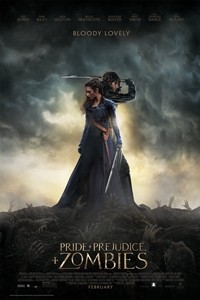
 ‘Pride and Prejudice and Zombies’ brings life to a crazy genre
Directed by: Burr Steers
Starring: Lily James, Sam Riley, Douglas Booth, Charles Dance, Jack Huston, Matt Smith
“Pride and Prejudice and Zombies” (2016) - Four years ago, Hollywood released “Abraham Lincoln: Vampire Hunter”. If you have not seen it, yes, the movie is as ridiculous as the title suggests. Even with a bright cast and some fun action sequences, watching the 16th President of the United States slaying the undead not only does not suspend one’s disbelief, this movie pulls back the curtain and gives it a front row seat.
Well, except I should mention one colleague actually (and seriously) asked me if “Abraham Lincoln: Vampire Hunter” was based upon a true story, but I digress.
After the lingering effects of the previously mentioned film, I surely felt a bit skeptical about “Pride and Prejudice and Zombies”. Admittedly, I am lukewarm to both genres (Jane Austen and zombies) and combining them seems a bit like cinematic déjà vu from my previous experience in 2012, but I am happy to report that this movie does surprise and is an entertaining flick. Set in the 1800s, England is ravaged by zombies, and as the narrator puts it, the French were probably behind it. Writer/director Burr Steers is the man behind this film, as he cleverly plays up a Jane Austin-like world in which mothers spend every waking moment desperately trying to marry off their daughters, formal dances are important social gatherings of the highest order, invitations for tea are always welcomed, and yes, a looming, murderous threat of the undead is ever-present.
For the Bennet family, they maintain a happy and comfortable abode in safe quarters behind the Great Barrier - built in 1710 around London - and raised four girls who are now are women at marrying ages. The Bennet women are great catches, as they are knowledgeable about worldly events and completely well-mannered and dressed, but they are also trained in martial arts for the sole purpose of killing zombies. A couple of the film’s funniest and most surreal moments are when all the girls simultaneously draw their swords or point their rifles, like an 18th Century cry for Girl Power!
Elizabeth (Lily James) is “2nd most beautiful” Bennet (according to her mother), but she is the fiercest. Curiously, when Col. Darcy (Sam Riley) first glances at Elizabeth, he remarks that she looks “tolerable”, but once he sees her fight, he falls in love instantly. The problem for Darcy is a woman never forgets, and Elizabeth still hears the word “tolerable” from his lips and keeps her distance. The movie frolics with their love/hate relationship throughout the runtime while also dealing with the zombie war.
The zombie infection somehow sneaks inside the Great Barrier, and Col. Darcy, Elizabeth, and many others chop, stomp, slash, and smash the undead with the efficiency of a pour of tea at 3 p.m. sharp. The other threat, however, is a legion of zombies outside the Great Barrier who begin to mobilize, and the only standing bridge between humans and the undead (the Hingham Bridge) may soon be under siege.
From a cinematic perspective, the blend of 19th Century British pleasantries and hand-to-hand zombie combat works beautifully and feels oddly natural. Much credit goes to Seth Grahame-Smith’s original material and Steers’ screenplay. All of the characters in this alternative universe refrain from playfully winking to the audience, and their collective conviction brings a welcomed and intended comedic effect to the concept’s silliness. The end result is the writing and performances do suspend our disbelief which was a key element missing in “Abraham Lincoln: Vampire Hunter”. The movie’s humor is not only implied but directly written into the script as well with the Bennet girls’ cousin, Mr. Collins (Matt Smith), becoming the butt of many jokes.
While this movie-blend experiment organically succeeds, the film falls short from a functional perspective. The narrative itself gets a little confusing between Col. Darcy and a potential antagonist named George Wickham (Jack Huston). Darcy and Wickham each explained their backstory quarrel a couple times – and despite listening very closely – I could not quite understand why they disliked one another. Unfortunately, their disagreement from many moons ago is a main thread of the story, but I also could not follow exactly where the characters physically existed during much of the film either. As mentioned earlier, the Great Barrier keeps the zombies out, but sometimes our heroes were in No-Man’s Zombie-Land in a place called the In-Between, and other times they traveled back to safe harbors. Despite the occasional on-screen presence of a map, I was a bit lost.
From a pure horror movie viewpoint, “Pride and Prejudice and Zombies” was not particularly scary either. Although our living 19th Century friends were routinely placed in danger, I never felt a fraction of the tension they experienced on-screen. Maybe that’s not the point, because rather than becoming frightened, I spent the entire time transfixed on an effective film mash-up. Sure, I hope that “Andrew Johnson: Vampire Hunter” does not see the light of day, but “Pride and Prejudice and Zombies 2” could be fun. (3/4 stars)
 s Sparks made a choice to stop by Phoenix and talk about “The Choice” (2016), a new film based upon his 2007 novel with the same title. Benjamin Walker and Teresa Palmer star in this love story, and Nicholas is also a producer of this cinematic project. He sat down and spoke with the Phoenix Film Festival and three other critics/journalists during a group interview and discussed lots of topics, including the on-screen chemistry with the lead characters, elements of his personality and personal experiences within his novels and whether or not men routinely ask him for advice about women. “The Choice” opens on Friday, Feb. 5th.
 something in your personal life that you drew from for these siblings?
  PFF: Trauma is involved in many of your novels. Do you think trauma makes your stories better?
  ‘The Finest Hours’ somehow loses track of its emotional core
 Mojave
 Ip Man 3
 ’45 Years’ captures a lifetime of drama in one particular week
 13 Hours: The Secret Soldiers of Benghazi
 “Ride Along 2” - “Ride Along 2” sets cruise control and puts us to sleep
 Anomalisa
 The Revenant
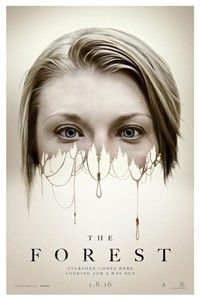 'The Forest' gets lost in the shuffle of better horror films
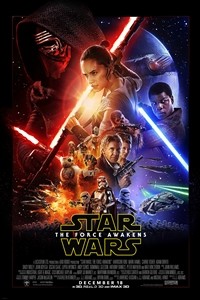 Star Wars: The Force Awakens — Not only did J.J. Abrams right the ship that is Star Wars, he found himself on par with the original trilogy thanks to careful writing, exceptional special effects and new, interesting layers to the Star Wars mythology. I never knew I needed a Finn, Rey, Poe Dameron or Kylo Ren in place of Han, Luke and Leia — who return anyway — but here they after one movie and I can’t imagine the franchise without them anymore. Yes, there was a lot of hype on this one, but meeting the hype and even surpassing it at this level is really a rare feat.
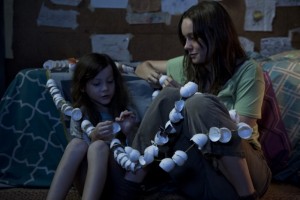 Room — Featuring two of the most inspiring performances of the year, Room is ripped from the headlines in the most compassionate way possible. It begins with a teenage girl (Brie Larson) who is kidnapped and held in seclusion in her rapist’s backyard shed that has been converted into her soundproof prison. Room picks up six years into her ordeal, and she now has 5-year-old son Jack (Jacob Tremblay), whose entire world is the four walls, floor and ceiling of the cell, which he refers to as “room” the way we refer to the planet as Earth. Although the product of a rape, and confined to one room for his whole life, Jack has been taught about the wonder of the world by his mother, whose innocence was stolen so long ago. What could be a grim drama, and it certainly has those moments, Room is largely about the good that a mother can inspire in her child and the love that brings them together to conquer their prison.
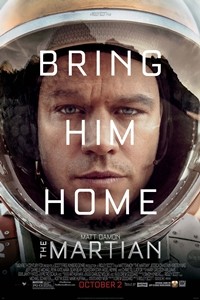 defeats, and how they add up to tell a story about science. We tend to forget that science got us up there in the cosmos, and science will bring us down, so to see science and engineering given such a starring role is a powerful reminder of what, and who, NASA is. When Matt Damon’s botanist is marooned on Mars, he does what any astronaut would do: “I’m going to have to science the shit out of this.” What follows is a thrill-ride involving radiation, poopy soil, ASCII translation, solar panels and hydrogen-burning water factories. Scott is no stranger to space having made Alien and Prometheus, but The Martian is a wholly unique endeavor for Scott and his gifted eye. It’s hopeful and upbeat, and even though millions of miles separate the Martian from earth victory is always within his grasp.
 The Big Short — It’s remarkable that Americans lost their jobs, lost their homes, were uprooted from their lives and scattered to the wind and many still don’t know what caused the recession, and why. The Big Short is the blueprint for the whole damn thing: the housing bubble, the sub-prime mortgage calamity, the collapse of Wall Street, the imploding bond market … all of it, every ugly derivative and security swap from day traders right on up to CEOs. The fact that Adam McKay’s movie, based on Michael Lewis’s book, is both informative and devilishly funny is the film’s saving grace. It’s also supremely well acted, it routinely breaks the fourth wall to address us directly, is edited with style and purpose, and paced so viewers can laugh and learn at the same time. There’s a lot going on here, but The Big Short succeeds in holding it all together with a vengeance.
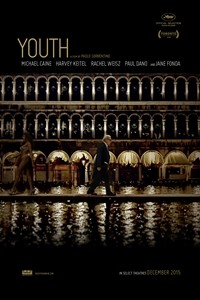 “Youth” - Director Paolo Sorrentino offers a story of two longtime friends - played by Michael Caine and Harvey Keitel - who ponder big and small questions under a backdrop of an extravagant hotel in the Swiss Alps. Sorrentino intermingles stunning visuals and pleasing sounds with intimate conversations, and Caine and Keitel are at the top of the game.
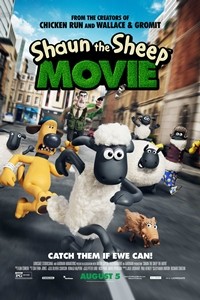 engineers a day off for the flock but inadvertently creates a big problem for the farmer. The painstaking top-motion animation (from Aardman Animations, the “Wallace and Gromit” folks) is only topped by the totally creative narrative and endearing characters.
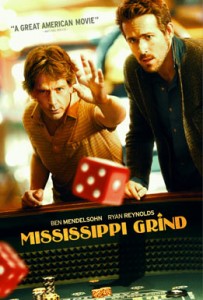 “Mississippi Grind” - Gerry (Ben Mendelsohn) and Curtis (Ryan Reynolds) are a pair of degenerate gamblers who embark on a sooty trip down America’s most famous river to make some bucks. They form an immediate friendship and share great on-screen rapport, while directors/writers Anna Boden and Ryan Fleck make us literally flip a coin to guess if they will win or lose at every turn. Mendelsohn’s performance deserves an Oscar nomination.
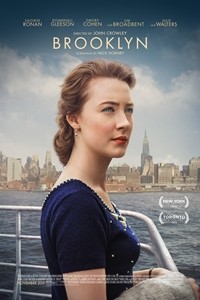 life in the bustling streets of New York City while struggling with the emotional pulls of home in County Wexford. Along with Eilis’ (Ronan) homesickness, writer Nick Hornby pens several amusing and warm moments with her boarding housemates and a new love interest, and with the film’s throwback vibe to pictures of yesterdecade, “Brooklyn” is the most graceful and lovely cinematic experience of the year.
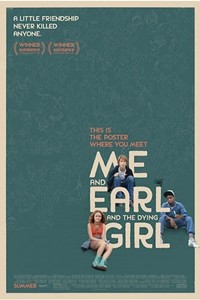 “Me and Earl and the Dying Girl” - In one of the most effective high school stories in long memory, a self-doubting teen (Thomas Mann) befriends a fellow student stricken with leukemia (Olivia Cooke), and the particularly well-written script provides an equally hilarious and affecting journey about teenagers coping with untimely circumstances. Director Alfonso Gomez-Rejon guides the material with a Wes Anderson-like flair, as Mann, Cooke and RJ Cyler (as Earl) deliver especially likable and sympathetic performances while navigating through the clumsy, exposed and thoughtful emotions of youth.
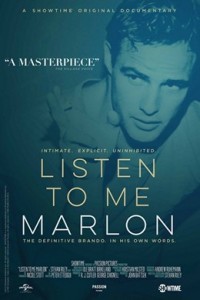 chronicled hundreds of hours of personal audio recordings as a diary of sorts, and director Stevan Riley pieced together the man’s personal thoughts in a truly amazing reveal over a 1 hour 43 minute runtime. Paired with photos and historical video footage of movie clips and interviews, Brando - in his own words - recites and reflects his innermost views on his romantic relationships, colleagues, preparation for his most coveted roles, and his painful childhood. This extraordinary find is easily the documentary of the year.
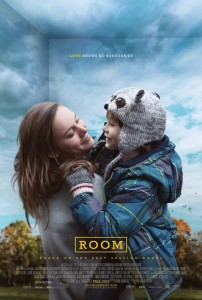 “Room” - Brie Larson delivers the performance of year as a young mother living in an uncommonly cramped one-room space with her 5-year-old son (Jacob Tremblay). The movie initially presents the circumstances of their odd living situation as a confusing puzzle, but eventually the secrets of “the room” are revealed, and the narrative then splits from one incredibly difficult challenge to an altogether different confrontation. Narrated - at times - by Jack (Tremblay), this raw story expresses the beauty of our everyday world through a child’s voice, and Ma (Larson) professes the feverous bond of mother and child through her actions.
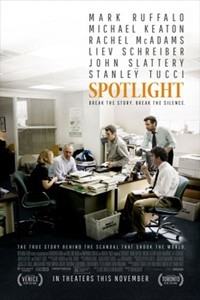 McAdams, and Liev Schreiber), director/co-writer Tom McCarthy provides a wholly mesmerizing account of a tenacious group of Boston Globe reporters who uncover a widespread Catholic priest sexual abuse scandal. The journalists bang on figurative locked doors while dozens of Boston players - big and small - carry differing agendas to expose or cover up the sordid details. McCarthy opens up a world of exemplary journalism practices to the audience and reinforces the importance of the media as the Fourth Pillar of Democracy. This riveting movie leaves you hanging on every moment and is the best picture of 2015.
 Monte Yazzie’s Best Films of 2015
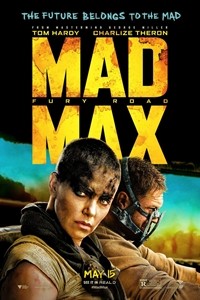 Imperator Furiosa, Ms. Theron confidently controls the film with stunning screen presence. Mr. Miller executes the film with exceptional style and skill, making “Mad Max: Fury Road” feel more suited for the arthouse than the grindhouse.
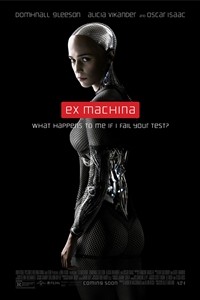 Machina”, a methodically structured film with an intelligent narrative directed by Alex Garland. While many of the films that deal with science fiction are cluttered with special effects, Mr. Garland utilizes these tools to build an impressive, beautiful, and emotional artificial being known as Ava, played impeccably by actor Alicia Vikander. “Ex Machina” focuses on relationships between men and women, the advancing world and how it connects with progressing technology, and the trappings and limitations of science. It is an exceptional film that asks difficult questions and allows the viewer to interpret the answers however they choose.
 fight a faceless foe. It’s a film that lingers in an atmosphere of fear and builds suspense in subtle yet effective ways. Whether the enchanting cinematography by Roger Deakins, which is a visual descent into darkness, or the narrative penned by Taylor Sheridan that displays the bleak disenchantment of the whole situation. “Sicario” is consistently tense and foreboding; it’s a film that drops the viewer in the middle of a frantic and confused setting, and then continues the journey amidst building chaos. Director Denis Villeneuve is a skillful director and “Sicario” is one of his best films.
 In the eighth film from Quentin Tarantino the director takes a group of unredeemable characters and locks them in a shack during a blizzard in post-Civil War Wyoming. The three-hour long epic, released in a special 70mm presentation, displays Mr. Tarantino meticulously building a mystery while also incorporating an interesting amount of social commentary that transcends beyond the time period depicted in the film; it’s compelling to see everything slowly unravel. The film finds further success with stunning cinematography and a beautiful score, composed by the legendary Ennio Morricone. “The Hateful Eight” is Quentin Tarantino self-indulgently doing what he does best.
 Joy
Joy
 Blanchett and Mara offer award-worthy performances in ‘Carol’