Revenge of the Green Dragons - Movie Review by Eric Forthun

revengeRevenge of the Green Dragons  

Starring Justin Chon, Kevin Wu, Harry Shum Jr., Ray Liotta, Jin Auyeung, and Shuya Chang

Directed by Wai-keung Lau and Andrew Loo


Rated R

Run Time: 94 minutes

Genre: Action/Crime


Opens November 7th


By Eric Forthun of Cinematic Shadows


Revenge of the Green Dragons has been publicly endorsed by Martin Scorsese and described as a film in the vein of Mean Streets. Oh, how pretentious that makes it seem. While Green Dragons attempts to look at a particular ethnic group of immigrants in New York attempting to make it in a world of crime, the film fails to socially comment on Chinese Americans and the influx of gangs in Queens during the 1980s and 1990s. Instead, it revels in deplorable acts of violence and avoids subtlety at all costs, preferring to dole out its themes in the first five minutes and letting the rest of the film shock and disgust. It's not particularly thought-provoking once it gets past its initial set-up, involving immigrants forced into different families as children if they did not arrive with their parents. That's how the story introduces its protagonist, Sonny (Justin Chon), who interacts with his newfound brother, Steven (Kevin Wu), during his early years before growing into a neighborhood divided by six gangs.


These criminal groups are described in narration with derogatory names associated with all but one: the Green Dragons. They run the city and commit senseless acts of violence to do whatever it takes to make it in New York. Paul Wong (Harry Shum Jr., of Glee fame) stands as the face of the Dragons in their pursuit of control of the city. What other motivations they have are hard to decipher, but they will stop at nothing to get what is seemingly theirs. That means that everything must be solved with violence! Directors Wai-keung Lau and Andrew Loo revel in the film's brutal action sequences, mostly involving numbing assaults or guns shooting multiple times into a person's body and head. It's the kind of violence that personally makes me nauseous, especially when considering how repetitive and wholly unnecessary the lingering shots of blood and loss of human life are. I find it particularly unnerving and chilling to see women put in such perilous situations when they only serve the misogynistic views of the central male figures. When the film is full of characters that commit such senseless acts and are defined by their murderous actions, how can we identify with anyone?


Sonny stands as that figure, and the film relies on his believability as a protagonist. He's brought into this world when Steven is pushed to that moment, but how does that come about? Let's just say it involves a men's room interaction that involves a man committing a excruciatingly disgusting act while other men prepare to kill a defenseless man on the ground. Who is he, you ask? The story doesn't care about him or his importance, only about how repulsive the scene can be. It's generally senseless filmmaking that prefers stylizing death scenes rather than defining characters or their situations. Revenge of the Green Dragons deserves credit for its initial ambition, particularly since Chinese actors rarely get this amount of screen time. It's shameful, then, that their roles cannot be insightful or intuitive like classics surrounding Chinese Americans (Chan is Missing comes to mind as a piece of remarkable filmmaking). Genre overwhelms the narrative and American actors like Ray Liotta inhabit the film if only to collect a paycheck. The film is derivative, gruesomely violent, and repetitive.
Elsa and Fred - Movie Review by Eric Forthun

Elsa and FredElsa & Fred  

Starring Shirley MacLaine, Christopher Plummer, Marcia Gay Harden, Scott Bakula, Chris Noth, and Wendell Pierce

Directed by Michael Radford


Rated PG-13

Run Time: 94 minutes

Genre: Comedy/Romance


Opens November 7th (at Harkins Shea)


By Eric Forthun of Cinematic Shadows


Shirley MacLaine and Christopher Plummer, two acting legends, deliver committed, sporadically affecting performances in Elsa & Fred. Their talents are squandered by material that starts off as overly trite and lifeless, crafting characters out of bloated dialogue and overly exaggerated actions, but it turns into something oddly more sincere and wholesome in its second half. MacLaine and Plummer fill the roles of elderly widows who find themselves yearning for love in a world that doesn't respect their wishes to be happy. Family members ask why they should worry about finding romance when they are so old; according to them, what's the point? That's the heart of Michael Radford's film, along with themes surrounding loves built on lies and the drive for a person to be themselves and live out all of their fantasies when they know they may not have much time left. The two leads are exceptional when the moments arise, but they are few and far between. The film falls into romp territory and emphasizes lightness and wistful scenes rather than hard-hitting, revealing truths about the perseverance of the human spirit and the everlasting desire to be loved.


Elsa (Shirley MacLaine) is a teenager in the body of an old woman. She likes to drive fast, dance to her heart's desire, blast contemporary music, and fantasize about traveling to rome while reveling in her favorite film, La Dolce Vita (a marvelous, fantastical romance from Italian master Federico Fellini). Fred, meanwhile, is a crotchety old man who wants to sit in peace, watch TV, and not be bothered by anyone, including family. The only person he can tolerate is his doctor, who advocates for him to be more active and exercise but he hates the local parks. He's a curmudgeon ever since his wife died seven months ago. Elsa is a widow of over twenty years, and sure enough they live next to each other in a New Orleans apartment complex. They meet through peculiar means: Elsa hits Fred's son-in-law's (Chris Noth) car with hers while his grandson sees everything. Fred's daughter, Lydia (Marcia Gay Harden), wants her to pay $1500 for the damages, and one thing leads to another. They fancy each other, go on a few dates, and magic begins to happen.


The film is an English adaptation of the 2005 Spanish-language film of the same name. That might help explain the generally stagy, forced nature of the narrative, with many characters delivering monologues or exposing all of their backstory through long discussions. Show, don't tell. That's the essence of screenwriting and the film squanders that opportunity by instead providing the audience with every shred of detail and important information needed to understand the story. It's a simplistic romance that I've seen many other times, albeit with better supporting characters and less forced motivations for characters. Why do we need two scenes with MacLaine rocking out to hip-hop/pop music? An actress as talented as her shouldn't be degraded to such mindless asides. The two leads are phenomenally talented, and only rarely do we see those acting chops shine through. Radford's film, unfortunately, forces them to talk through their emotions rather than express them. Plummer's finest roles in his old age have been driven by longing and nostalgia; take a look at his Oscar winning supporting turn in Beginners. Elsa & Fred should strive for more innovative storytelling and more awakening looks at love in such a fragile, limited time span. Instead it falls on familiar tropes and misses the mark on its potential.


Monte Yazzie's Top 10 Horror Films

ShiningFor a horror fanatic, asking them to pick their ten favorite horror films can be a difficult challenge. So today, here are ten of my personal favorites. Enjoy!  
By Monte Yazzie of  The Coda Films


An American Werewolf in London (Dir: John Landis)

“American Werewolf in London” was released in 1981, all that time and the werewolf transformation scene is still the special effects scene to beat. John Landis, coming off “The Blues Brothers” and “Animal House”, made this darkly comedic werewolf film into a standout genre film. Rick Baker’s Academy Award winning special effects steal much of the spotlight but the narrative is inventive and humorous while still levying a generous amount of gore and jump worthy scares.


Candyman (Dir: Bernard Rose)

The best movies stay with you because they evoke an emotion. Fear is a strong emotion and “Candyman” captured my fear. Whether the haunting score by Phillip Glass or the gothic poetry spoken by the monster, this movie directed by Bernard Rose stuck with me. Based on a story by Clive Barker, “Candyman” has all the misery and dread found in Barker’s work. As it is in most of Barker’s tales, the monster is the most complex character of the story.


Dawn of the Dead (Dir: George Romero)

First was “Night of the Living Dead”; the second was “Dawn of the Dead”. George Romero’s script is filled with satire and social commentary and the reflection of the emotions and attitudes of the time. In the current state of popular culture, where zombies are everywhere, Romero’s films are a direct influence for all of them. For Romero zombies have always been used for commentary, which makes it interesting to see how “Dawn of the Dead” still reflects many of the issues from the past in our present. Even though the 70’s are on clear external display, the undertones are inherently timeless.


Evil Dead 2 (Dir. Sam Raimi)

The first “Evil Dead” was a straightforward, low budget horror film. The second, still to its core a horror film, added a healthy dose of humor and unleashed the charisma of Bruce Campbell. Director Sam Raimi mixes slapstick and horror with ease, making it okay to laugh while our hero Ash is put through the ringer of horrible acts. Raimi’s style was patented here, a distinctive quality that can still be seen in nearly all of his films. Bruce Campbell’s manic comic acting turned the film into something lighthearted at times but it never stops being relentlessly horrific.


Kairo (Dir: Kiyoshi Kurosawa)

“Kairo” is a cautionary tale. In a technology fueled world people have isolated themselves to near zero communication. Instead using numerous forms of electronic communication to connect with the rest of the world. Suicide becomes rampant and the ghostly images of the recently deceased begin to communicate through technology. Horror films have always been used as social commentary; here the topics of depression and suicide are examined. Communication has changed to the extent that human interaction happens through artificial sentiments looking into the glow of a screen. How will this change people? “Kairo” may not offer scares that keep you up at night, but the questions offered might keep you thinking longer than expected.


Nosferatu the Vampyre (Dir: Werner Herzog)

Werner Herzog’s “Nosferatu the Vampyre” is a beautiful, dread-filled film. While holding many of the strengths of F.W. Murnau’s 1922 classic, Herzog embeds his patented designs throughout the film. From the use of nature that hints at something dangerous behind the scenic fronts, to the color that continuously expresses emotion with vivid and muted renditions, to Klaus Kinski’s pitch perfect performance of the character made famous by Max Shreck; this is more than just a run of the mill vampire film. In the hands of one of the great filmmakers, horror is made truly beautiful.


The Shining (Dir: Stanley Kubrick)

Stanley Kubrick has created some of films most revered works of art. “The Shining”, based off a Stephen King story, is in the horror hall of fame. Down every hallway and through every door of the labyrinth that is the Overlook Hotel Kubrick draws fear with subtle and deliberate imagery. Flooded elevators of blood and ghostly images are still effectively startling today. Not to mention the performance by Jack Nicholas, which can only be classified as iconic. “The Shining”, regardless of how many times I watch it, continues to stay with me long after the credits roll. That’s the mark of a true horror film.


Shivers (Dir: David Cronenberg)

“Shivers”, alternatively known as “They Came From Within”, is a low budget horror film from the bizarre and brilliant mind of David Cronenberg. This film displayed the skill that would be further implemented in his later work, but the effectiveness of “Shivers” is that it doesn’t utilize the typical genre characteristics to scare. The gore and violence happen relatively off screen and the special effects are used sparingly, instead Cronenberg focuses on the characters in the apartment and the uncontrolled threat of the parasites turning people into sex-crazed maniacs. Cronenberg has transitioned in his current work, away from the horror of the body and more into the horror of the mind, but the past has proven Cronenberg one of the most unique directors of our time.


Suspiria (Dir. Dario Argento)

I was fortunate enough to watch this film on a 35mm print with a crowd full of horror enthusiasts, some watching Dario Argento’s masterpiece for the first time. It was an experience to say the least. From the assaulting introduction complemented with a score by Goblin, the young American ballet student walks into a European school of horror. The unpleasant mood builds with nightmarish imagery with little concern about adhering to structure. Rendered with deep blues and bright reds, visceral gore, and innovative design, “Suspiria” is less a story and more an atmosphere. A genre spectacle conducted by a master of horror.


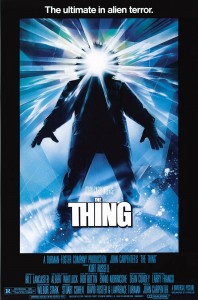
The Thing (Dir: John Carpenter)

“The Thing” is potentially one of the best genre remakes every made. From director John Carpenter, whose film catalog could have populated this list completely, “The Thing” is a benchmark of special effects wizardry from the hands of the great Rob Bottin. It’s also terrifying. Carpenter, having “Halloween” and “The Fog” underneath his belt, utilizes the isolated Antarctic research facility to portray a story where no one can be trusted. With tension filled scenes, Carpenter builds anxiety, shocks you with scare, and then follows it with a gory mutation whose effect still holds up thirty years later.


Here are ten more that could have easily made this list on a different day.

  • Black Christmas
  • Bride of Frankenstein
  • Carnival of Souls
  • The Devils Backbone
  • Fright Night
  • Halloween
  • The Lost Boys
  • Pieces
  • Return of the Living Dead
  • Rosemary’s Baby


Michael Clawson's Top 10 Horror Films

The-Thing-PosterTop 10 Horror Films


by Michael Clawson of Terminal Volume


  1. The Thing — There’s an uneasy minimalism to John Carpenter’s The Thing. All that white nothingness stretching from one horizon to the other. It’s as if the universe was still booting up after the dawn of man, and Antarctica is the load screen. Something primal and terrifying hides within those white folds of snow, a fact that is confirmed in the opening moments as a stray dog wanders into an American research camp and introduces an alien, shape-shifting parasite to a group of very macho scientists. Like so many other horror movies, the men are free to run, but to where? They’re trapped inside their own nightmare as man after man is assimilated by the alien super-thing. The movie is marked by its intensity, in both its high-voltage special effects scenes and in its more jarring moments of stillness, like when a testy MacReady (Kurt Russell) must poke at blood samples with a red-hot wire to determine who’s human and who’s thing. Between the abstract musical score, a colorful cast of characters, tendon-snapping violence of the highest order, and the note-perfect ending, The Thing is one humdinger of a horror movie.

  2. Alien — Horror and science fiction are perfectly linked — they’re both examinations of the unknown. Where one ends in death and gore, the other ends in discovery and technological fulfillment (or perhaps failure). Ridley Scott’s Alien is a marriage of the two, in more ways than one. It takes the wonder and awe of space and the terror of slimy evisceration and couples them in blasphemous splendor against the backdrop of a blue-collar workplace accident. The 1979 film is beautifully paced (the alien finally turns up halfway through the movie), claustrophobic as a straightjacket, and gloriously filmed using optical effects, miniatures, children posing as adults, goo and splatter, and sets that have altered space movies forever. There are just so many great scenes: warrant officer Ripley (Sigourney Weaver) learning her corporate monetary value from supercomputer MOTHER, the pinging proximity alert of ventilation-duct prey Dallas, that damned yellow cat (on a spaceship!) and, of course, John Hurt’s famous dinnertime snafu, which made an entire audience realize this: “In space no one can hear you scream, but in a movie theater everyone hears you vomiting in your popcorn bucket.”

  3. Rosemary’s Baby — Want to make my skin crawl? Just show me old people and Satanists. By the time Roman Polanski’s Rosemary’s Baby presents us the seed of its creation — as geriatrics giddily exclaim “Hail Satan!” — we’ve already come to realize what’s happened, that a demonic presence has impregnated a hip young woman with the infant Antichrist. It’s intense stuff, but never as intense as the senior citizens who lurk around the mother’s apartment. The more they come over, with their smart-ass advice and evil aromatherapy, the tighter the noose gets around the Mia Farrow-starring horror picture. It’s an unsettling and claustrophobic movie, one that hardly passes a horror film today, but one that earned its stripes through its terrifying propositions.

  4. Evil Dead — Modern horror is less about story and more about one-upmanship. While this aspect of the genre can stymie the creation of story-driven works, it can also produce some noteworthy gems such as Fede Alvarez’s 2013 remake of Sam Raimi’s cult-classic Evil Dead. While the original film has its charms, and low -budget quirks, I never quite understood the fanboy geekery that is thrown all over it, which is why I was so surprised when the remake stormed out of the gate with the vigor and intensity of a movie with a singular purpose: to one-up its namesake and predecessor. The remake took what we knew of the original film — skin-covered book, demonic cabin, tree rape, ultra violence — and cubed it. It’s not a perfect movie, and I was never quite sure if laughing was appropriate, but the updated Evil Dead is exactly what a horror movie should be, which is a thrill ride of stupid proportions. With needles in eyes, nails in shins, carvinging knifes in arms and an ocean of blood in the sky, this thrill ride outdid itself.

  5. The Descent — Claustrophobia has never been visualized so accurately as it was in The Descent, Neil Marshall’s closing vice of a cave thriller. But what’s great about it is how suspenseful it all is even before the monsters — in this case, primal cave trolls who see with their ears — turn up to reign terror on our female spelunkers. Another interesting feature: the biggest threat isn’t the mutated creatures, but the characters’ best friends.

  6. Texas Chainsaw Massacre — Modern horror films look for too much purpose in their stories. Grave sites are disturbed, curses are unknowingly released, ghosts are summoned, and with each scenario comes countless more rules. A chant will calm the spirits, a church will keep demons at bay, garlic will ward off vampires. These attributes work great for convoluted plots, but they don’t speak to the natural pulse of evil: nihilism. Because sometimes bad people just do bad things. And this is one of the many terrifying parts of Tobe Hooper’s original Texas Chainsaw Massacre — its villains weren’t bound by any rules. They simply hacked through anything that managed to wander on their property, which is exactly what happens to the victims of Tobe Hooper’s horror classic. Of course, Leatherface is a recognizable here, but I think the most chilling scene is the dinner table sequence toward the end that is almost too much to stomach.

  7. The Shining — It’s a horror classic for a reason, and still to this day it’s largely a mystery. Just two years ago a whole movie, Room 237, was made to try and dissect Stanley Kubrick film’s secrets. It didn’t present one; it presented four hypotheses. As the Torrance family settles in for a long winter at a deserted ski lodge, we settle in for a labyrinthine riddle that might suggest “dull boy” Jack is madman, a spirit from another life, a ghost, or the resort itself manifested as a human man meant to kill his own family. And everyone remembers where they were when they saw that elevator open and the flood of blood splash out. It’s a defining moment of the horror genre.

  8. Let the Right One In — Original vampire movies are hard to come by, but this Swedish film did wonders when it was released in 2008, and then followed up later with a dopey American remake. The Swedish original was about a boy being drawn to his mysterious new neighbor, who has a creepy old man that does the devil’s bidding during late hours. It takes some time to catch up to this cerebral thriller, but the rewards are more than worth it.

  9. Poltergeist — Steven Spielberg/Tobe Hooper’s Poltergeist is a bag full of great ideas. Child-munching TVs, elastic doors, squeaky-voiced spiritual advisors, clown toys, maggot meat, worm steak … no idea is too silly in this very-serious horror film that doesn’t get a lot of credit for its inventive mechanics.

  10. Dead Alive — Peter Jackson’s dopey zombie gorefest is just beautiful mayhem. And proof that horror should be funny, too. It features a man with a handheld lawnmower as he shoves it at people to make raspberry jam. That’s all there is to it.

Eric Forthun's Top 10 Horror Films

SilenceTop 10 Horror Films  

by Eric Forthun of Cinematic Shadows


Horror films have existed since the dawn of cinema: The Cabinet of Dr. CaligariNosferatu, and The Phantom of the Opera are all highly influential films made when celluloid was just starting to develop into an art form. The genre has always had a big place in my heart, with so many films affecting me as a child (both as fun scares and nightmares) that I sought out others I generally wouldn't explore.

So when tasked with making a list of ten horror films that I deem the best (or my favorite, depending on how subjective I must make myself as a critic), I decided to make a chronological journey through ten great choices that build upon one another in some fashion. It's a different exploration, but it'll yield equally exciting results.

For being a horror film from 1931, one thing is definitive about Dracula: Bela Lugosi makes for a killer vampire. Shockingly, his performance still holds up today and stands as one of the most campy, fully crafted presentations of the titular night walker. Any black-and-white films that can use the haunting cinematography allowed by such a drained color palate, particularly in horror, deserve credit. While Dracula doesn't hold up as particularly terrifying, it earns a spot because of its undeniable influence and the impressionable, unforgettable lead performance. 1935's The Bride of Frankenstein deserves mention, too, because it provides us with one of the greatest scenes in the history of film: Frankenstein's monster's encounter with the blind hermit. It's a brilliant, thought-provoking, and everlasting scene. Humanity has never seemed so accepting and fragile.

Alfred Hitchcock's Psychocirca 1960, reinvents the wheel, killing its lead female in the first half hour and telling the story of Norman Bates in slow burning, methodical fashion. Hitchcock's film has some of the greatest cinematography of any horror film, and its fateful twist still packs a punch on every viewing. It's a stark piece of psychological horror, one of the first of its kind. Ridley Scott's Alien is a reminder of how gore and darkness can be dichotomized into brilliant scares, messing with its astronauts psychologically and scaring them to death. There are plenty of scenes that torture the viewer with their anticipation of a scare, and the film doesn't let up. It's terrifying and produced one of the greatest sequels ever made.

Wes Craven has made two wildly inventive horror films, each with their own unique merit. His first, A Nightmare on Elm Street, has one of those premises that is just too good: what if a psychopath could kill you in your dreams? You're at your most vulnerable when you're sleeping, so why not threaten that last shred of safety? Freddy Krueger is played thrillingly by Robert Englund, and the scares are bloody and satisfying. It's even more remarkable that Craven made Scream later in his career, a film that tears apart horror tropes and examines the self-aware nature of the modern generation. Nothing seems to surprise us anymore, but Scream kills off its advertised protagonist in the opening scene and tells a story that sparked another great satire in The Cabin in the Woods.

Every list made should probably include a Stanley Kubrick film, so it's a given that The Shining earns a spot. It's iconic because of just how enigmatic it is as a thematic story: what exactly plagues this family and what does Kubrick want his story to be about? I think that makes it all the more brilliant, and Nicholson's performance is simply one of the best in any horror film. Speaking of towering, spectacular performances, The Silence of the Lambs is one of the most eminently watchable horror films ever made and features Anthony Hopkins' infamous take on Hannibal Lecter. Jodie Foster is equally strong, and the film is tightly wound, sophisticated, and damn near perfect. It won Best Picture in 1991, and holds up better than almost any winner from the past thirty years.

As for outliers in the horror genre, I have an '80s oddball horror-comedy and a modern fairy tale of sorts. Evil Dead II is an improvement on its already excellent original, since it takes Bruce Campbell and Sam Raimi's story to new and absurdly entertaining levels. The film features Campbell's Ash fighting his own severed hand and it plays like a slapstick romp. It's just too classic. The other is from a modern expert in the genre, and it's not a horror film in the traditional sense: Pan's Labyrinth. Guillermo del Toro's gothic fairy tale parallels a young girl's journey into fantasy stories alongside her family's plight in the aftermath of the Spanish Civil War. It's poetic, powerful, and features the Pale Man, a horrendous, nightmarish invention that could only come from the mind of del Toro.

There are other films that could easily place on the list (like Halloween, or Videodromeor...well you, get the idea), but I figured I'd narrow it to ten that I think encapsulate the breadth that horror can have. It can be cheesy, funny, bloody, heartfelt, inventive, gory, and many other things. But perhaps most important? It can scare the living daylights out of you.


Nightcrawler - Movie Review by Eric Forthun

nightcrawlerNightcrawler

 
Starring Jake Gyllenhaal, Rene Russo, Bill Paxton, Riz Ahmed, and Michael Hyatt
Directed by Dan Gilroy


Rated R
Run Time: 117 minutes
Genre: Thriller/Crime


Opens October 31st
 
By Eric Forthun of Cinematic Shadows


Dan Gilroy's extraordinarily confident directorial debut Nightcrawler casts a powerful shadow over the landscape of Los Angeles media and the everlasting pursuit for the perfect story. Jake Gyllenhaal's lead performance is never less than gripping and unnerving, crafting a brilliant sociopath out of a man without much of an identity until he grabs a camera and begins to film crime scenes. Only then does his true, obsessive self emerge as the real world takes a back seat in favor of sensationalist storytelling. Gilroy's screenplay examines the way in which our country consumes media but, perhaps more importantly, how the media crafts its own stories surrounding material that may not be pertinent for everyday life. The film emphasizes that xenophobia and fear permeate the messages our media sends, telling the public that everything should be feared and that this world offers no sense of safety. Gyllenhaal's performance accentuates that thematic punch, providing us with an equally sensationalized, harrowing look at a videographer's pursuit for a bold story and the lengths to which a person will sacrifice themselves and their integrity to reach their goals.

Louis Bloom (Jake Gyllenhaal) is first seen cutting a wired fence and filming his results, both seemingly illegal acts considering his demeanor. He doesn't strike the audience as a very trustworthy individual, particularly in the early moments when we see him committing increasingly reprehensible things, but he's charming. He speaks eloquently and assuredly, knows what he wants, and ensures that nothing will get in his way. That leads him on a pursuit to find a worthwhile job in photography, which eventually guides him toward filming for news outlets. He sees Joe Loder (Bill Paxton) filming a recent accident at breakneck speed, only moments after it has happened, and it amazes him. He buys a video camera after committing a deplorable act to do so, and his career begins. His first job takes him to Nina Romina (Rene Russo), a veteran of local news that likes his work ethic and wants to see more of his work. She asks where he gets his shots and he avoids many of the questions, like a mischievous child that's doing the right thing but won't say how he did it. He's slick and slimy, but oh my does he charm the socks off of these people.

Louis eventually needs help, so he puts out an ad and brings on an unpaid intern, Rick (Riz Ahmed). There's some sly commentary about internships and how they exploit the work force, which Louis thinks is inappropriate and unhelpful, but sure enough he jumps on the opportunity when he sees fit. That rascal. As Louis and Rick bond over crime scenes and become involved in darker and darker acts, the line in the sand starts to grow faint. Where does investigative journalism stop and criminal actions begin? Does breaking-and-entering under noble pretenses compensate for the crime committed? The film begs for answers to these strong questions and ultimately floors the audience with its message. The backdrop of Los Angeles, a notoriously divided community that's full of haves and have nots, allows for beautiful landscapes and harsh racial commentary from the local news affiliates. Rich white people don't want to see crimes in white neighborhoods unless they involve blacks or Hispanics. Simple as that. There's something frank about the way Gilroy presents his ideas, as they are matter-of-fact, fluid, but ultimately rigid and old-fashioned due to the people in charge of the media and its presentation of culture.

Gyllenhaal's performance is a career best and absolutely transformative. He's one of the strongest actors in Hollywood because he aggressively avoids typecasting or traditional roles. Opting for adventurous demonstrations of human character and the internal struggle many of us face, he's tackled some bold, expert roles in the past year: his mysterious, fidgety detective in Prisoners, his divided, haunted man in Enemy, and this manipulative, deranged power-monger and enigma. Louis is a character that runs mostly undefined in terms of his past and even his present, with the audience being unfamiliar with his family, past work experience, or even his traditional behavior. Yet we see the character crafted on screen and expressed through mannerisms and actions. It's brilliant acting. Russo and Paxton shine in their supporting roles, with the former in particular falling into the seemingly familiar role of fast-talking, do-whatever-it-takes newscaster only to become something more morally compelling altogether. Robert Elswit, Paul Thomas Anderson's longtime director of photography, provides some stunning, beautifully lit cinematography that captures the essence of Los Angeles and the haunt of the city. Nightcrawler is such a strikingly confident, articulately crafted work that it'll stand as an unforgettable, harsh takedown of media obsession and manipulation.

Force Majeure - Movie Review by Eric Forthun

Force MajeureForce Majeure  

Starring Johannes Kuhnke, Lisa Loven Kongsli, Clara Wettergren, and VIncent Wettergren

Directed by Ruben Östlund


Rated R

Run Time: 118 minutes

Genre: Comedy/Drama


Opens October 31st


By Eric Forthun of Cinematic Shadows


An avalanche pushes a marriage to its breaking point in Force Majeure, a witty, acerbic comedy about masculinity and familial life in the wake of a rash decision. Writer-director Ruben Östlund employs a detached, unwavering look at the disintegration of trust and long-lasting foundation within a married couple and the aftermath of a husband's self-preserving actions. In the wake of overly masculine heroes in superhero films and other blockbusters from major studios, it's wholly satisfying to see a stripped approach to what makes a man imperfect and how subversive his actions can be when compared to standard cinematic representations. The film's cinematography in particular uses long, unwavering takes to examine these characters and the growing sense of gender subversion. The central character is Tomas (Johannes Kuhnke), a man overly concerned with work while on a five-day vacation with his family at a French resort. It's winter, the weather is beautifully white and crisp, and Tomas' family cannot wait to explore the mountains around the resort and ski to their hearts' desire.


His wife, Ebba (Lisa Loven Kongsli), wants this vacation to be a means of bringing the family closer together, meaning that Tomas must put away his cell phone and spend as much time as needed with his kids. She feels isolated in these times while he attempts to make a living, but her life begins to crumble when an avalanche hits the resort. The shot is beautifully rendered by Östlund, captured with a green screen in the background and the image of an actual avalanche playing as the actors react to the natural disaster. It's remarkable how fluid and gripping the scene is, particularly as the mood changes from playful (as the family thinks it's a controlled avalanche) to terrified (as the avalanche threatens them) in a heartbeat. Yet what defines the film, and becomes the main catalyst for conflict, is Tomas' reaction to the moment, failing to seize the opportunity to save his kids but instead choosing to grab his phone and run inside as quickly as he can. His abandonment of family, and the moments afterward when everyone is okay and Tomas must confront the moment, is presented as both hilarious and horrifying.


Östlund's film provides the audience with these biting laughs, ones that provide commentary on the characters while also relying on situational comedy to lighten the tone. When Tomas lounges with a friend and drinks rather than spending time with his family, a woman approaches them and lets them know that her friends think Tomas is attractive. Flattered, the two men laugh and feel pleased, only for the woman to come back and awkwardly correct herself by saying they think the man next to him is attractive. The camera lingers on a single take for this whole scene, having it shift slowly from ego-boosting to painfully awkward. It's also one of the many subversive scenes on display, particularly as the film examines the crumbling hubris of a man defined by his strength as he sees it disappear before his eyes. Tomas' breakdown in the film's final half is remarkable, especially when demonstrated through the dichotomy between him and his wife. Both lead performances are stellar and allow the film to work as an emotional force of nature (hence the title). While Force Majeure may run a bit too long and painfully force the audience to watch long-winded scenes that analyze every single way a person could've handled such a situation, the film lingers and questions. That cannot be said about most films.

Camp X-Ray - Movie Review by Eric Forthun

campCamp X-Ray  

Starring Kristen Stewart, Peyman Moaadi, Lane Garrison, Joseph Julian Soria, and Julia Duffy

Directed by Peter Sattler


Rated R

Run Time: 112 minutes

Genre: Drama


Opens October 31st


By Eric Forthun of Cinematic Shadows


Guantanamo Bay has been a source of disagreement in the United States, particularly after its controversial, extended use during the War on Terror. Camp X-Ray, a film that attempts to dramatize life within the prison through the eyes of both a soldier and a detainee, opens with a man practicing seemingly illegal acts in a Middle Eastern country as the camera pans over many cell phones lying on a table. The man is then seen praying, only for him to be taken in that vulnerable moment by U.S. soldiers, eventually imprisoned in GTMO for eight years. This man is Ali (Peyman Moaadi), a relatively harmless individual that becomes treated like the terrorists involved the 9/11 attacks. He is not a prisoner, mind you, for that would be an inaccurate description and require a certain amount of rights that the U.S. government cannot allow. Rather, he is a detainee, meaning that he is denied most rights and can be treated as a threat to the United States. He lives a life of hell.


Enter Cole (Kristen Stewart), a newly deployed soldier whose first assignment seems to be far different than she was expecting. Upon arrival, the soldiers do not see the threats that they had previously heard about, instead seeing relatively normal human beings in captivity with no chance of escape. They live bleak lives and the soldiers understand that, but they must follow orders. Cole has left her life in a small town in hopes of finding more meaning and escaping her seemingly overbearing mother. Family becomes a necessity for motivation in a secluded life as a soldier, so by extension Cole distances herself from a potential chance at happiness. Nonetheless, she interacts with the other men in her platoon but notices that she doesn't exactly fall into a normal role. She's not the bombshell blonde that the other men go after, nor is she aggressive or manly enough to make the prisoners feel less threatened by her femininity. She spends much of her time handing them books, blacking out females in newspapers, and patrolling hallways repeatedly and thoroughly.


Cole and Ali's lives don't seem that far removed from one another, so naturally a bond occurs. They go through their rough patches, particularly as Ali sees her as an initial threat and Cole must follow protocol when needed. But their friendship lasts as a reminder of human compassion passing through any circumstance. The problem I have with Camp X-Ray, something that many have claimed as its strongest suit, is the embattled nature of Cole's demeanor and Stewart's performance in the lead. Her expressions fail to subtly explore the trappings of her character, proving her a mismatch for an acting talent as strong as Moaadi (best known for his outstanding work in Asghar Farhadi's masterpiece A Separation). I also never connected with the characters or the emotional heft of the film as much as I needed to appreciate such a gloomy, morbid look at wrongful imprisonment. Ali is compassionate and occasionally manipulative, but his conversations with Cole prove that a strong individual shines through his exterior. Writer-director Peter Sattler has an excellent idea at the forefront of his film, and it allows for minor social commentary, yet the film ultimately feels like a repetitive foray into themes that have been tackled more appropriately in other Iraq War-minded efforts. Camp X-Ray has admirable goals and lofty ideas surrounding the recent American conflicts, but it squanders interesting characters on a bloated running time and overly abstract dialogue.


Birdman or (The Unexpected Virtue of Ignorance) - Movie Review by Michael Clawson
BirdmanBirdman or (The Unexpected Virtue of Ignorance)  
Dir: Alejandro González Iñárritu

Starring: Michael Keaton, Naomi Watts, Emma Stone, Edward Norton, Zack Galifianakis, Andrea Riseborough, and Amy Ryan


119 Minutes

Rated R


By Monte Yazzie


Alejandro González Iñárritu’s body of work can easily be described as serious and downtrodden but also in moments exceptional and striking. From his first impressive feature “Amores Perros” into further serious and grim pieces “21 Grams” and “Babel”, Iñárritu is always commenting on something. “Birdman or (The Unexpected Virtue of Ignorance)”, the most pleasurable of his catalog, discusses the meanings of art, the trappings of celebrity, and the power of performance through stunningly composed techniques, lovingly and confidently guided by Iñárritu.

Riggan Thomas (Michael Keaton) portrayed an iconic superhero known as Birdman; he was successful and beloved by fans. However, Riggan turned down the opportunity to continue the franchise, which grew to greater success, and he is now a washed up actor in desperate need for success and continued relevance. Riggan is the writer, director, and star of a play, a Raymond Carver story called “What We Talk About When We Talk About Love”, that is nearing it’s opening night. Things are falling apart, Riggan is in debt, ridiculed by his recently rehabbed daughter (Emma Stone), and overshadowed by a Broadway star (Edward Norton) who takes an open role in the play. But most obvious, Riggan is tormented by self-doubt and the weight of his stress. Will this show save his career or permanently bury his celebrity.

"Birdman" is a movie where everything flows together seamlessly. The cinematography makes the film feel like one continuous shot without being distracting or frustrating to follow. The long takes are meticulously paced out and rehearsed, some lasting near ten minutes in length. They are technically impressive and completely immersing, bringing the viewer into the labyrinth of the back stage theater and in the most pertinent aspect making the viewer companion to Riggan’s slowly unraveling mentality. The motion of the camera is mesmerizing, moving into and out of the different perspectives. Emmanuel Lubezki is the director of photography and his skill behind the camera makes “Birdman” beautiful from frame to frame. The story accommodates the characters and the locations offer an authenticity for everything to exist harmoniously together. Watching the actors stroll around in the mazelike halls of the St. James Theater brings the story of the desperate and frantic characters to glorious realization.

This is simply put Michael Keaton’s best performance. From the first moment of screen time his performance only continues to soar. Riggan is haunted by his past, present, and future. He is a man looking to change an identity of regret but also desperately trying to remain relevant. There is an interesting portrayal of this theme that Iñárritu utilizes to display Riggan’s growing detachment. In his dressing room is a picture of his Birdman persona hanging on the wall; it talks to him squarely pointing out failures with forceful criticism. On the opposite wall is his vanity, brightly and beamingly exaggerating every day of growing age and compounded regret. Emma Stone is sublime as Riggan’s daughter Sam. She has a monologue that shifts from pity, to anger, to self-loathing, finally ending with sorrow. In one short scene she defines her entire character. Edward Norton is always interesting; here he is perfectly cast as the egotistical Broadway prodigy whose arrogant method approaches and consummate dedication to the art of the theater overshadow Riggan’s worth as director, writer and lead actor.

“Birdman” is a brilliant film filled with intricacy and idiosyncrasy. The cast is fantastic, especially Michael Keaton in a career performance. Even in the small moments when the narrative becomes knowingly pretentious and the techniques border on overuse, it never stops being fascinating to watch, a testament to the skilled guidance by director Alejandro González Iñárritu.

Monte's Rating 4.75 out of 5.00

Birdman or (The Unexpected Virtue of Ignorance) - Movie Review by Michael Clawson

BirdmanBirdman or (The Unexpected Virtue of Ignorance)  

Starring Michael Keaton, Edward Norton, Emma Stone, Zach Galifianakis, Amy Ryan and Naomi Watts

Directed by Alejandro González Iñárritu


From Fox Searchlight

Rated R

119 minutes


by Michael Clawson of Terminal Volume


What can only be compared to avant-garde jazz on psychotropic drugs, Birdman spazzes off the screen in a cacophony of hammered notes, false starts, odd tempos and syncopated rhythms. Somehow it finds a tune in this wall of noise. And what a strangely melodic tune it is.


Alejandro González Iñárritu’s film — the full title is Birdman or (The Unexpected Virtue of Ignorance) — is likely to be the most polarizing movie of the year, the Synecdoche, New York of 2014. If its nominated for a bunch of Academy Awards, like some early adopters are already suggesting, it will likely draw out a curious and varied crowd, half of which will walk out shrugging their shoulders. The other half will be on their hands and knees bowing to Birdman’s wacky eccentricities. Let the games begin.


First of all, it’s a stroke of genius. I’ve never seen anything like it. Only Charlie Kaufman’s scripts come to mind when grasping for comparisons, but even those fall short of this film’s brain-like three-dimensional matrix of neural pathways and firing synapses. It’s not just cerebral and existential; it’s densely written and perversely styled, a supernova within one man’s exploding psyche.


The film stars Michael Keaton as Riggan Thomson, a Broadway director, actor and writer who is carving a piece of himself into a play of literary hero Raymond Carver’s What We talk About When We Talk About Love. Many years before the events of the film, Riggan starred in a series of comic movies called Birdman, and now his professional career is spent playing into and against that unfortunately bombastic legacy. Fans and detractors of his work grow bored of the Carver play but perk up when someone mentions the unfilmed Birdman 4, which is about as likely as a Terry Gilliam’s forever-gestating Don Quixote movie.


Now, Keaton’s casting here is interesting. He was a successful ’80s actor until he was plucked out of the normal acting world and dropped into two Tim Burton Batman movies, which forever colored the rest of his career. He went through some down time, and he took some dud movies, but here he is playing what can only be described as “Michael Keaton on Broadway” in Iñárritu’s spiraling whirlwind of ideas. He’s mesmerizing, and also heart-wrenchingly honest. Truer performances have not yet come to pass.


As Riggan gets ready for his play, he interacts with members of the theater, including a maddeningly brilliant actor (Edward Norton), his daughter and personal assistant (Emma Stone), his lovely ex-wife (Amy Ryan) and his hovering attorney (Zach Galifianakis), who is desperate to get Martin “Score-seez” in the theater’s seats. As Riggan interacts with all these characters, he slowly starts to unravel as his alter-ego, the likely-imaginary, possibly-real Birdman starts to fight for space in his noggin. And as Riggan plays through different variations of his theater character, so does Birdman with Riggan.


The film seemingly takes place within one single day, but watch careful and you’ll see weeks whiz by in cinematographer Emmanuel Lubezki’s careful presentation, which includes virtuosic long takes, seamless transitions, nifty editing tricks and silky-smooth Steadicam tracking shots. The camera seems to have no limit as it bobs in and out of dressings rooms, up and down narrow stairwells, onto roofs, effortlessly through audiences or, in a signature scene, through Times Square as Riggan streaks through in his tighty-white briefs. Notice all the mirrors and reflections — never once do you see the camera. I wouldn’t be surprised if there were more special effects here than in the last Thor movie. Also of note is the score, which includes dizzying drumwork, some of which can be seen as the drummer appears in scenes as if he were an unseen siren on Birdman’s shores.


This is a brilliant movie, and it features two groundbreaking performances (Keaton and Norton) that are simply awe-inspiring. I did find the film rather hollow in sections. Riggan’s scattered brain, although ceaselessly provocative, would often circle back on itself, and while it seemed like the script was rocketing toward the sun, on reflection it was more likely static. It’s a difficult film, one that makes you dig for its treasures, one that will likely infuriate some viewers.


Birdman is quite simply a once-in-a-billion film. I’ve never seen anything like it, and likely won’t ever again. Even when it frustrated me to no end it was still captivating and hypnotic, and as lyrical as any song, as poetic as any poem and as cinematic as any film.


Birdman or (The Unexpected Virtue of Ignorance) - Movie Review by Eric Forthun

BirdmanBirdman or (The Unexpected Virtue of Ignorance)Starring Michael Keaton, Edward Norton, Emma Stone, Naomi Watts, Zach Galifianakis, Andrea Riseborough, and Amy Ryan Directed by Alejandro González Iñárritu

Rated R Run Time: 119 minutes Genre: Drama/Comedy

Opens October 24th

By Eric Forthun of Cinematic Shadows

Birdman or (The Unexpected Virtue of Ignorance) is a brilliant balancing act between theater and reality. The film is the latest from acclaimed Mexican director Alejandro González Iñárritu, best known for his challenging works like 21 Grams and Babel. Here, he brings together a masterful mix of competing ideas surrounding actors and their egos, the compulsive need for infusing on-stage work with reality, and the desperation of an older actor to achieve the proper fame he has always wanted. The result is a masterpiece about acting with a superb, endlessly riveting performance from Michael Keaton. It's a reminder of the talent that has been underneath some of his lesser work that he's done over the past decade to make money, and stands as a clearly personal work considering how close his character Riggan's career aligns with his own. Add in the brilliant cinematographer Emmanuel Lubezki (who won an Oscar last year for Gravity), who comprises the film to appear as a long continuous take, and the film becomes a magnetic, vibrant, and wholly inventive look at acting culture.

Riggan Thomson is an actor in his 50s looking for a way to revitalize his career. His superhero franchise Birdman stormed the box office twenty years ago and made him a star, but he turned down a fourth film in the franchise in hopes of finding truth in his work. Now, he is tormented by his past and wants to make a work that challenges him, so he makes it about love and aims for the best Broadway cast he can get. His venture into theater is a challenge, and his actors do not make his life easy: Laura (Andrea Riseborough) plays a love interest that is also having a relationship with Riggan off-stage, while Lesley (Naomi Watts) plays a woman that has an off-stage relationship with another actor, Mike (Edward Norton). Mike and Riggan butt heads because, let's face it, two strong personalities with distinct visions for the play won't mesh. Riggan's director and personal friend, Jake (Zach Galifianakis), thinks it's the best move for the play. This makes Riggan's life even more stressful, considering he is coping with his daughter Sam's (Emma Stone) recent suicide attempt.

Everything is about Riggan. That's defined his life for better and for worse. Mostly worse. His personal life is in shambles, his play is setting up to be a failure, and his past never lets up. Keaton brings a remarkable gravitas to every frame, having us walk around in his life and understand what makes him tick. The cinematography allows the film to work in those compulsively magnetic ways: the personable tracking shots that follow characters down corridors and around corners; the wide lens looks at the stage as they move into close-ups on a particular person; and the natural ability for the audience to examine a frame as the camera does not switch shots. This makes the film a special breed, combining the elements that make long, continuous takes so watchable (the spontaneity of the moment and the organic feel of the action) with the unpredictability of shot changing as the camera goes black and a new, longer take emerges. And the performances that emerge from that ingenuity are remarkable. Norton has always been a great character actor, and here he provides the best performance of his career as an arrogant, aggressive man that never knows when to stop acting and start living. His supporting performance could win him an Oscar, much like Keaton.

The other supporting performances, particularly from Stone, manage to shine through the Riggan-centered material. And Iñárritu's film doesn't just rely on transformative performances or seemingly gimmicky camera work to provide a punch. The commentary is stout and aware, attacking everyone from film turned stage actors to critics themselves. There's a brilliant showdown between a playwright critic, who tells Riggan that she will destroy his work because she hates everything he stands for, and Riggan himself, who believes that critics like her don't deserve to comment on their work and provide nothing to the world. It's cold, biting, and vicious, infusing the film with even more life. The scenes that balance between theater and reality work even stronger, whether that involves a standard conversation between Riggan and Mike or Riggan himself getting lost outside in his underwear before wandering onto his own stage during a show. Iñárritu himself has discussed how much he despises superhero films, and that much is evident. But what strikes me as so remarkable and unforgettable about the film is its mixture of innovative presentation, impeccable acting, and a focused, auteur vision. Birdman is extraordinarily entertaining, and a massive achievement in filmmaking.

Whiplash - Movie Review by Monte Yazzie

Whiplash  

Whiplash


Dir: Damien Chazelle

Starring: Miles Teller, J.K. Simmons, Melissa Benoist, and Paul Reiser


106 Minutes Rated R


By Monte Yazzie of TheCodaFilms


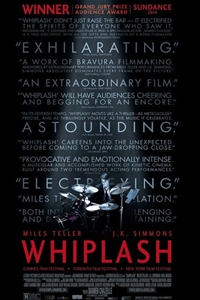
Names like Miles Davis, Art Tatum, John Coltrane, and Charles Mingus introduced me to the world of jazz music. “The Monster” by Gene Krupa and Buddy Rich, two of the best jazz drummers of all time, was the song that enlightened my ears towards percussion lead jazz music. Buddy Rich's solo in “The Monster” is something impressive, just like director Damien Chazelle’s film “Whiplash”. The fitting title describes in more ways than one the tonal quality of the film, which is harsh, unexpected, and at moments painful. Lead by impressive performances from both Miles Teller and J.K. Simmons, Chazelle has crafted a standout film.

Andrew Neyman (Teller) is an aspiring student at a prestigious east coast music conservatory. He is introduced playing his instrument of choice, the drums. Andrew is a first year student, relinquished to turning sheet music for older students and practicing countless hours in wait for his opportunity to showcase his skill. Opportunity ferociously comes in the form of Terence Fletcher (Simmons), an abrasive instructor of the top jazz ensemble at the school who utilizes terrifying methods of education. Fletcher sees potential in Andrew and challenges him through vehement verbal abuse and all-around intimidation. Andrew, wanting to be the best, becomes obsessed in the search for perfection.

How do we motivate each other? Positive reinforcement or a supportive word of encouragement are two ways? If kindness and heartfelt sentiments, amid a swell of uplifting music, are what you are looking for in ‘Whiplash”, then you may have watched the wrong trailer because the closest you’ll come to any of those qualities would be heartfelt sentiments…meaning obscenity laced shouting from the heart and felt forcefully across the face with a slap sentiments. J.K. Simmons gives R. Lee Ermey’s “Full Metal Jacket” character, Sergeant Hartman, a run for his money as the vicious, some may utilize bullying, instructor Terence Fletcher. With motivations that are never fully explained or completely identified, the viewer is left to examine the critical methods of abuse for purpose. Is a certain amount of unrelenting push needed to reveal potential?  Or is it simply the flawed shortcomings of a miserable man? These questions prove an interesting dichotomy when matched against a character, Andrew, whose talents boast unmatched potential but whose character also craves acceptance and reward. Chazelle handles this aspect exceptionally in many of the scenes between the two figures.

Miles Teller continues to impress. His performance displays the progression of his characters consuming obsession. Practicing to the extent of bleeding and cutting off relationships before they have chance to develop. Andrew wants to be remembered as one the greats, which he points out aggressively in one scene during dinner with friends and family. Chazelle does a fantastic job of playing Fletcher and Andrew off against each other; the tension is near unbearable in parts. Even before we see Fletcher in full profanity laden, homophobic and racially charged assault, the viewer is offered acknowledgement of his control through a scene that shows his intimidation by the expressions of a class full of students who stand with heads down in silent fear and anticipation. J.K. Simmons is terrifying and fantastic.

Familiar themes are present however, where other films would offer predictable setups and conclusions, “Whiplash” keeps an unstable narrative tone. Though conventions inevitable take over and the abuse becomes so over-the-top it feels far-fetched, Chazelle still maneuvers the film with skillful guidance accompanied by exceptional performances, making “Whiplash” as bold and confident as the jazz music that supports it.

Monte’s Rating 4.50 out of 5.00

Whiplash - Movie Review by Michael Clawson

WhiplashWhiplash  

Starring Miles Teller, J.K. Simmons and Paul Reiser

Directed by Damien Chazelle


From Sony Pictures Classics

Rated R

106 minutes


by Michael Clawson of Terminal Volume


In an often-repeated story in Whiplash, when the saxophone legend Charlie Parker was a young novice he had a cymbal thrown at his head by Jo Jones, who was irritated at his playing style. Parker would shake it off and eventually become one of the most important players in musical history.


The first time this story is told, it’s slanted toward Charlie Parker, the young punk with the determined spirit. The second time it’s slanted toward Jo Jones, the pig-headed teacher pushing his student to his true potential. The beauty of Whiplash is that it’s actually about both men — the master and the apprentice. The road it takes to bring those two sides together is a hard slog through turbulent waters, but it’s worth it in Damien Chazelle’s Whiplash, one of the best movies of 2014.


We begin with the apprentice, Andrew (Miles Teller), who’s at a prestigious music school in New York City. The eager young drummer is working his way up through the ranks of the school’s band programs when he meets the school’s head instructor, a stubborn monster by the name of Fletcher (J.K. Simmons). We get lots of practice time with Fletcher, who runs his rehearsal space like it’s North Korea. In an early scene he torments one trombone player who may be out of tune. The poor kid is assaulted with homophobic slurs, threats of violence and Fletcher fuming in his face. The college-age kid eventually starts crying, a common occurrence under Fletcher’s direction. Andrew thinks he has this drum thing all figured out, until Fletcher smacks him into his place as an alternate. But Andrew doesn't give up. He practices at night, listens to music of the greats, sleeps in his rehearsal space and dumps a girlfriend who was likely going to ask for more time from him. His practice routine is so intense that blood pours from open blisters on palms and fingers. Bandages just slip off the raw wounds. But the practice pays off and Andrew gets a spot on the jazz band


But then trouble really starts as Fletcher lays into his musicians. In one especially awful session, he forces three of his drummers to do a double-time swing until they get it right. Hours later, one of them is victorious. He tells the losers, “Alternates, clean the blood of my drumkit!” Then, after all that comes a kicker: “OK, now we can start practicing.” The audience I saw Whiplash with groaned audibly at his cruelty. This is the norm: Fletcher intimidates his students, terrifies them, belittles them, and grinds their ambition into a fine powder. In one scene, he’s seen making nice with a student, asking about his parents, inquiring about his past. He’s gathering ammunition. Sure enough, one missed note later — “a tonal catastrophe” — and the kid’s entire family history is being heaved at like a battering ram. I haven’t seen torture this cruel since 120 Days of Sodom.


Simmons plays a monster brilliantly. He’s so often the nice guy, the kind dad, the affable boss … and here is a contemptible jerk and sadist. Awards season is going to be nice to Simmons. He has one line that sums up his cynicism and contempt for compliments: “There are no two words in the English language worse than ‘good job.’” Teller, it should be said, is also fantastic. He’s a drummer himself, which allows Chazelle to film his hands and to show wide shots with Teller behind the kit. It’s a nice touch to see the actor doing the hard work, and Teller’s humble presence makes it all the better.


My experience with phenomenal drumming is the Buddy Rich drum-off with Animal on The Muppet Show, so take my praise with a grain of salt, but the drumming is electric. I loved all the little insert shots — close-ups of hands, tuning keys, drumheads, bloody palms, and vibrating cymbals — that bring us up close and personal with the instrument. The soundtrack, with its machine-gun salvos of snare and uptempo jazz numbers, is also wonderful. Whiplash is a brutal exercise in obsession, talent and determination. You’ll keep wondering how much Andrew will take before he snaps. He takes more abuse than I thought he would, but he does snap — everyone under Fletcher eventually does. After a big blow-up at a competition, the film shifts gears into something monumentally more powerful. As Andrew ponders his next step, he meets Fletcher again in a different environment and starts to see things from his point of view. This is where we hear the Charlie Parker story again. And it frames the last act of the movie, which is a triumph of epic proportions.


It ends with an ambush, a double-cross, a public execution, a retaliatory strike and a drum solo to end all drum solos. I’ve never had so many ups and downs in a film this year, or any year from the past five. When it was over I had to catch my breath.


And then I wanted to do it all again. This is the film to beat this year.


Stonehearst Asylum - Movie Review by Michael Clawson

stonehearst-asylum-posterStonehearst Asylum  

Starring Jim Sturgess, Ben Kingsley, Michael Caine, Kate Beckinsale and David Thewlis

Directed by Brad Anderson

From Icon Productions


Rated PG-13

112 minutes


by Michael Clawson of Terminal Volume


Stonehearst Asylum reveals its wicked sense of humor early: A doctor is given a tour of an insane asylum, and during the tour he’s introduced to a patient who’s allowed to pretend he’s a horse. Why not cure him, the doctor asks. “What, and make a miserable man out of a happy horse.”


Here is a movie that does not excel, but it has heart and pluck and charisma. Oh, and making matters more interesting, Stonehearst is a gothic thriller set in chilly castle for the criminally insane. Yeah, it’s creepy charmer.


The doctor here is Edward Newgate (Jim Sturgess) and he’s come to Stonehearst in the English countryside to learn about curing mental patients, who are still at this point in modern medicine called “lunatics,” which is one better than what another character calls them — “inebriates and chronic masturbators.” Newgate is quickly taken under the wing of Dr. Silas Lamb (Ben Kingsley), who runs the facility under some curious rules, including one that allows patients to come to staff dinners to socialize in their bare feet.


As Newgate learns about the facility and its many dark corners, he realizes the film’s first big joke: the lunatics are running the asylum. Now, I say joke, but this is no comedy, yet I couldn’t help but laugh as events unfolded to reveal one absurdity after another. Patients are injected with heroin, given drought-causing waterboarding exercises, thrown in this ridiculous dizzy-chair contraption, and allowed to determine their own treatment, even if that treatment is none at all. When one character is threatened with something called a “pelvic massage” I wasn’t sure if I should laugh or not. (I did.) the whole movie is like this — vaguely hilarious, if also menacing and shrouded in doom.


Newgate takes a special interest in Eliza Graves (Kate Beckinsale), a beautiful ear-biter and eye-gouger whose husband has put a price on her head if she’s discovered. Behind Newgate as he attempts to rescue Graves is Dr. Lamb, an even more mysterious Dr. Salt (Michael Caine) and a groundskeeper named Mickey Finn (David Thewlis at his most vile). And if you caught those names — Newgate, Graves, Lamb, Salt — you’ll be forgiven for thinking this is an psychological allegory.


The movie is drawn from an Edgar Allen Poe story, though I suspect loosely. It does have Poe’s devilish sense for humor. In an early scene, we’re told the asylum is home to the finest lunatics in all of Europe. “Here look at this man,” Lamb says, “he comes from a wealthy family that owns a vast train empire.” But why is he in the asylum? “Because he suffers no interest in trains.” Yeah, that sounds like Poe or maybe even Alfred Hitchcock.


Stonehearst, directed by Brad Anderson (The Machinist) from a script by Joe Gangemi, taps on all the predictable story beats, and some that aren’t so predictable. You know you’re in for a whopper of a finale when they trot the horses through the asylum kitchen. I will admit I expected a bigger twist at the end, something perhaps on par with Sam Fuller’s Shock Corridor or even One Flew Over the Cuckoo’s Nest. Instead, it fizzles.


It’s all absurdly silly and at the same time deathly serious. That makes for a strange dynamic, for sure, but I was never bored, which is high praise for this genre.


Stonehearst Asylum - Movie Review by Eric Forthun

stonehearst-asylum-posterStonehearst Asylum

 
Starring Jim Sturgess, Kate Beckinsale, Ben Kingsley, Michael Caine, David Thewlis, and Brendan Gleeson
Directed by Brad Anderson


Rated PG-13
Run Time: 112 minutes
Genre: Thriller


Opens October 24th


By Eric Forthun of Cinematic Shadows
 

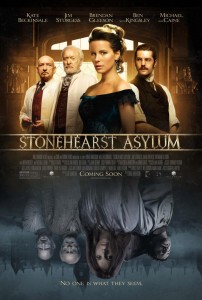
Stonehearst Asylum is based on an 1844 short story by Edgar Allan Poe, foreshadowing a psychological/gothic horror film in the heart of England with pessimism and dread. So why is it that this film adaptation, with an all-star cast including Ben Kingsley, Michael Caine, and Jim Sturgess, never elevates its intriguing set-up past anything more than red herrings and confusion? Visually the film is a treat and filled with sepia and black-tinted shots, lavishly decorated and costumed. Edgar Allan Poe would be proud of its eye for the times. But it's confounding in how deliberately it avoids establishing its own voice, instead feeling too light-hearted and comedic at times while simultaneously mixing horror-thriller with a whodunit-type caper that gets introduced in the final moments of the film. The delivered surprises are inconsistent in their effectiveness, with the first delivering a solid punch while the one in the final scenes of the film feels woefully overdone and aimless. Director Brad Anderson's film is a convoluted mess.

The film focuses on a medical school graduate named Edward Newgate (Jim Sturgess) who takes up a position at Stonehearst Lunatic Asylum. He wants to study asylum medicine because he admires the idea of helping those that truly need it. The doctor on staff, Silas Lamb (Ben Kingsley), believes in a different type of care for the patients, keeping them from their supposedly "helpful" medicine and instead letting them run their own course. It's admittedly working, with music acting as a cure for hysterical housewife Eliza Graves (Kate Beckinsale), a woman that bit off her husband's ear. She used to be treated in improper, often exploitative ways, as evidenced by an opening scene with a doctor (Brendan Gleeson) showing how to manipulate her "intimate" areas to subdue her hysterics. Suffice to say, when Silas talks about how advanced medicinal studies have become and far from barbaric they now are, the audience cannot help but snicker at the thought of these advancements. And as Edward begins his stay in Stonehearst, he realizes something is truly off with how things are being run, and that something is afoot.

Twists run abound in Stonehearst Asylum, with the most effective emerging as its central plot point a half hour into the film. The problem with much of the film's set-up, though, and its constant switches in tone and who to believe, is that it makes for a convoluted story that relies on absurdity and shock value more so than reveals of character and motivation. The prisoners begging for escape, including one played by Michael Caine, add for some inventive role reversal that becomes even furthered in the second half. But here's my biggest issue: why does the film have to provide a last-minute twist that not only doesn't make much sense but also undermines the foundation of its protagonist? There's an outstanding cast here that elevates the sadistic, tonally odd material to oddly intriguing levels, particularly as Kingsley and Sturgess occupy much of the screen time. The former is always phenomenal. Beckinsale is always a talent but her role choices lately have been unexciting. The film simply underutilizes its talents on screen and never fully takes advantage of its gothic horror elements, resulting in an underwhelming feature.

John Wick - Movie Review by Michael Clawson

wickJohn Wick  

Starring Keanu Reeves, Michael Nyqvist, Alfie Allen, Willem Dafoe, Ian McShane, Lance Reddick and Dean Winters.

Directed by David Leitch and Chad Stahelski


From Lionsgate

Rated R

96 minutes by Michael Clawson of Terminal Volume


Keanu Reeves has turned into his own meme. Sad Keanu. Google it, it’s very sad. John Wick is a movie version of Sad Keanu, but with guns. And more point-blank headshots than the photo booth at the DMV. Enough that they start to have a numbing sensation, a side effect that comes in handy for John Wick’s plodding second half. The film starts very dark: former hitman John Wick is burying his wife, who died suddenly from an illness, as opposed to a bullet like everyone else in this story. Before she keeled over, the sweet wife arranged to have a dog delivered to John on the day of her funeral. The puppy — with his droopy little eyes and puppy-dog tail and his scurrying paws — arrives and immediately alters John’s mood for the better. Things are looking up after all. But we’ve already established that bad things (and Sad Keanu) happen in this movie, things that end with point-blank gunshots to the face. These things transpire because the puppy has to die. It just has to go. And go the puppy does at the hands of Iosef Tarasov (Alfie Allen, aka Theon Freakin’ Greyjoy), the dim-witted son of a Russian mobster who is too cocky and arrogant to even know that he just blew up the world of the wrong guy. So all that is just setup. Here is the plot: John Wick murders an entire mob family as payback for the death of his puppy. Now, that sounds monotonous and dull, and it mostly is, especially in John Wick’s darker later episodes. But for large swaths of the first half this violent and gritty action thriller is a rather amusing comic adventure. I especially enjoyed the kingpin’s answer to why a low-level car thief would punch the kinpin’s son. He killed John Wick’s dog, the grunt says. “Oh,” the kingpin mumbles. Never before has “oh” meant so much. In those two letters he’s summed up his entire fate. Other scenes are just absurdly dark, so much that you can’t help but laugh. After a particularly violent shoot-out, John calls for a hitman cleaning crew. The team arrives with all sorts of cleaning devices, including one big burly guy who only carries a squeegee. The crew Saran wraps the bodies into neat little take-out packages. And off they go as if wanton murder never took place. I also appreciated how everyone in the film knew who John Wick was, because he was just that legendary a hitman. At one point a local cop shows up to a shootout and John barely has to explain himself before the cop tips his hat and whistles away as if he never saw anything. Murder machine John eventually gets stuck in a gory loop of violent head-exploding gunfights. At first his cruelty is oddly humorous, like when he wounds a bad guy, lets him cringe and bleed on the floor as he reloads his own gun to only blast him in the head. The joke here is that the threat was already isolated, but John takes his time to pop the guy in his dome because he’s some kind of obsessive completionist. This macabre brand of humor fades quickly as the headshots start stacking up and up and up. How many is too many? John Wick seems to be grasping for an answer. David Leitch and Chad Stahelski’s film employs a wide variety of top-tier talent, especially if you watch HBO’s programming. The Wire’s Clarke Peters and Lance Reddick play two pros in a hotel, Deadwood’s Ian McShane is a club owner with information to sell, Newsroom’s Thomas Sadoski plays the befuddled cop, and Allen, Game of Throne’s organ-less imp Theon Greyjoy, plays the puppy killer. Other larger performances include Willem Dafoe, John Leguizamo, Michael Nyqvist and Dean Winters, whose work on TV is also goofily entertaining — he is the Mayhem insurance salesman and 30 Rock’s Beeper King. Altogether, this is a nice cast and the way the film is structured, I was never quite sure who was going to turn up next. I just wish the film could hold my attention longer. As the body count rose, my attention drifted. The film looks snazzy, and Reeves plays Sad Keanu quite well, I just couldn’t punch through all the arbitrary killing, which was novel in small little dashes, just not something I could watch uninterrupted for a whole movie.


John Wick - Movie Review by Eric Forthun

wickJohn Wick  

Starring Keanu Reeves, Willem Dafoe, Adrianne Palicki, Bridget Monayhan, John Leguziamo, Michael Nyqvist, and Alfie Allen

Directed by David Leitch and Chad Stahelski


Rated R

Run Time: 101 minutes

Genre: Action/Thriller


Opens October 24th


By Eric Forthun of Cinematic Shadows


Simplicity shouldn't work as strongly as it does with John Wick, but the film rides its thin plot to admirably entertaining territory. The film is the first that Keanu Reeves has led since the domestic failure 47 Ronin, a sign that his star power may be dwindling with mainstream audiences or there may just be a growing ambivalence toward older action stars. But Reeves, now 50, brings a humanity to his title character that surprises with how authentic and grounded it makes the film. Granted, there's an implausibility to the motivations behind the central premise and how flimsy it holds up throughout the feature, yet it never distracts from the dazzling violence put on display. It's not particularly bloody or overdone, simply well executed and never dull. Characters face the consequences of such extreme acts of violence and our hero is flawed and weakened in his emotionally troubled state. The film, ultimately, understands how to stylistically overpower substance and use simply drawn characters in gripping, visually arresting ways.


The film focuses on John Wick (Keanu Reeves), a recent widow that lives in a nice New Jersey home all by himself. His wife, Helen (Bridget Moynahan), haunts his memories as he watches old videos of her and grasps the idea that she's really gone forever. The first five minutes of the film establish this beautifully, using little dialogue and interruption in favor of lingering, quiet shots that emphasize Wick's loneliness and the isolation that consumes him. It's powerful storytelling that lays the groundwork for the film. One night, a puppy arrives at his door as a late gift from his wife, who while dying of cancer realized that John would need something to get through his days. It not only expedites his mourning but also helps him feel connected with his wife once more. Sure enough, that all disappears when Russian mobsters led by Iosef Tarasov (Alfie Allen) break into his house, steal his 1969 Mustang, and kill his dog for desired effect. As a web of his past begins to unravel and his former boss, Viggo (Michael Nyqvist), reveals his place in the matter, John goes on a revenge rampage and will stop at nothing to ensure he finds some sort of solstice.


I would say there's more to the story that I'm not revealing, but for the most part, the film's plot ends there. There's a mysterious organization that plays a focal part in the film called the Continental that allows the narrative to explore its more self-aware, comedic elements. Inherently, a story this barebones must employ some compelling characterizations. So it's refreshing to see how John Wick uses its stylistic leanings to create a unique, strangely passive villain while simultaneously making the core struggle of the film work around its supporting cast. There are plenty of jokes about how people don't realize who they are messing with, in particular with Iosef, while other incidents have people around the community letting John do his thing and not interfering. Loyalty and connections play a huge part in the film's underlying themes. The supporting turns from Nyqvist and Willem Dafoe give the film strong character actors that work well in this seedy, beautifully photographed world. Directors David Leitch and Chad Stahelski have made an action film with not only heart, and not only strong characters, but also compulsively watchable set pieces that build upon its world. John Wick is some terrifically exciting, if simplistic, cinema.


John Wick - Movie Review by Monte Yazzie

wick  

John Wick


Dir: Chad Stahelski Starring: Keanu Reeves, Michael Nyqvist, Willem Dafoe, Alfie Allen, Dean Winters, Adrianne Palicki, Lance Reddick, John Leguizamo, Ian McShane, and Bridget Moynahan


101 Minutes Rated R

By Monte Yazzie (www.thecodafilms.com)


Be careful whom you cross. That’s the introducing theme to the most recent entry into the revenge genre with director Chad Stahelski’s film “John Wick”. Seemingly influenced by the films of John Woo, Stahelski pulls no punches with the breakneck, bullet ridden action sequences. Writer Derek Kolstad offers some of the best material in years for star Keanu Reeves, who seems tailored for walking into a room full of armed tough guys with a calm, “no problem” personality. “John Wick” is a worthy entry into the revenge genre, it’s not heavy on pointless plot or twisting narrative transitions but instead relishes in the mayhem that moves it from scene to scene.

John Wick (Keanu Reeves) is a former hitman for hire. Retired, John lives a normal life with his wife (Bridget Moynahan) until she suddenly dies. John is alone but an unexpected gift from his wife before she died arrives at his doorstep, a puppy. John is given an opportunity to continue his normal existence, but a group of young gangsters come and take the last piece of hope in his life. John returns for vengeance to the life he barely escaped, guns in hand.

There is nothing complicated about “John Wick”. The simplistic, narrative design gives you all the major plot points in the first 15 minutes. From then on the film trudges into familiar revenge film territory. John in a nice suit armed with weapons and bad guys with heavy accents lining up for John to unceremoniously knock down. However, writer Derek Kolstad adds some unique features to accommodate the distinctive formula. John isn’t the only hitman in New York City, there is an assassin society that keeps their secret and offers safe housing, also added are a cleanup crew that takes care of the messy aftermath, and special currency that pays for services.  The narrative nicely composes the settings and atmosphere of the film, making the world seem like something out of a comic book.

Keanu Reeves is a perfect fit for this role. A mix of calm and collected while also displaying the personality of an ordinary and regular guy, Reeves has been playing this character for some time and he does it well when the material is suited for it. There are some great cameos from the always-reliable Willem Dafoe as a fellow hitman and Ian McShane as the manager of the assassin safe house.

“John Wick” functions best when it embraces its B-movie ambitions. Keanu Reeves surprisingly holds the film together with his performance. Though in moments the film’s no nonsense approach has a tendency to slow the pacing significantly and scenes have an inclination to feel more like rehashes in new settings.  After being asked a recurring question throughout the film John Wick exclaims, “yeah, I’m thinking I’m back”. That line of dialogue is a telling statement for a film that is bound to find a sequel, which I would more than likely to sit through again.

Monte’s Rating / 3.50 out of 5.00

23 Blast - Movie Review by Eric Forthun

23 Blast23 Blast  

Starring Mark Hapka, Bram Hoover, Stephen Lang, Max Adler, Alexa PenaVega, and Dylan Baker

Directed by Dylan Baker


Rated PG-13

Run Time: 98 minutes

Genre: Sports Drama


Opens October 24th


By Eric Forthun of Cinematic Shadows


23 Blast tells the most improbably, shockingly true story I've seen on the big screen. Tell me if you've heard this one before: a high school football star suddenly suffers from a sinus infection spurred by a rare disease that causes irreversible total blindness, forcing him to leave school and his team, only to return later on as a strong moral presence and a newfound member of the team. Yeah, that same old story. Yet despite that admittedly inspiring narrative plucked straight from real life, the story overdoes the sap and confuses the audience with its redeemable message surrounding supporting characters. The film prides itself on a few atypical moments for a sports film that demonstrates togetherness and equality in a shockingly subtle way, and the passion from first-time director Dylan Baker (best known as a character actor from TV shows like The Good Wife and films like Sam Raimi's Spider-Man trilogy) shines through the otherwise trite, predictable developments.

Travis Freeman (Mark Hapka) is a football star alongside his childhood friend, Jerry Baker (Bram Hoover). Jerry is the resident idiot with a heart of gold while Travis seems to be a morally sound, strong individual. He makes for a too perfect protagonist, so the sudden development that he goes blind puts the story on a shocking, abrupt turn. His parents, Larry (Dylan Baker) and Mary (Kim Zimmer), are saddened by the news and cannot fathom how their son's future will be affected. His football prospects especially, but more importantly his future ability to navigate the world freely. Travis's girlfriend leaves him when seeing him in his fragile state, leaving his longtime crush Ashley (Alexa PenaVega) with the opportunity to finally spend quality time with him. Coach Farris (Stephen Lang) hates to see Travis's departure, and begins to realize that he can be utilized in other ways, as both a play caller and eventual player. Other players like Cameron Marshall (Max Adler) have problems with how the Coach and school are going about their treatment of Travis, leading to some schisms as him and Jerry grow distant.

The film is simplistic in its presentation of ideas and often spends too long on scenes that hold relatively little meaning. There's an exchange in a hospital room between Travis and Jerry that not only lasts too long, but turns into a clichéd montage where they do anything and everything in the hospital that constitute as fun and spontaneous. I genuinely disliked the film when it transpired into that territory. Yet there were surprisingly inventive developments in key scenes, mostly involving women. Take, for instance, a shining moment when Ashley, who was a football player at a pee-wee age with the boys, is forced to help Travis when he cannot cooperate with Jerry and Cameron when they begin training him to be a center. She teaches him patience but, perhaps more importantly, teaches him form and quality football play. It's rare to see a female character so knowledgeable about sports, and it's never been more refreshing. Dylan Baker's film, unfortunately, rarely uses these moments as insight into the world of sports, instead sprinkling elements of faith and teamwork into a narrative that hits every stop on the beaten path. 23 Blast has moments that showcase its potential, but it's too conventional and safe for its own good.

St. Vincent - Movie Review by Eric Forthun

St VincentSt. Vincent  

Starring Bill Murray, Melissa McCarthy, Naomi Watts, Chris O'Dowd, and Terrence Howard

Directed by Theodore Melfi


Rated PG-13

Run Time: 103 minutes

Genre: Comedy


Opens October 17th


By Eric Forthun of Cinematic Shadows


Bill Murray carries St. Vincent with an affecting, sustained performance that resonates through the rudimentary material. He plays the titular Vincent, a misanthropic, bawdy, hedonistic, war veteran that lives by himself and perpetually falls into debt due to a gambling addiction. His bookie, played by Terrence Howard, warns him that his money is due in two weeks since they cannot wait any longer, while his hooker with a heart of gold, Daka (Naomi Watts), cannot provide her services any longer without getting the pay she needs. His life isn't going well. Then, a mother and son move in next door and everything starts to go well for Vincent. Maggie (Melissa McCarthy) and Oliver (Jaeden Lieberher) are recovering from a messy divorce and Maggie works long hours as a nurse, so Oliver ends up spending time with Vincent as he acts as an interim babysitter. He charges a respectable wage because, keep in mind, he cannot do charity work.


Vincent's a fickle man that doesn't take care of Oliver like a father would, or even like a crazy grandfather (probably a better descriptor). He feeds Oliver his last can of sardines while he feeds his cat high-quality pet food, and even takes Oliver out to bars while Vincent gets drunk and acts irresponsibly. Something happened in Vincent's past that dictates how he lives today, which provides a dramatic underlining for the film's structure. Theodore Melfi's film never takes a particularly fruitful or inventive narrative path, mostly aiming for broad, slapstick comedy that delivers modest laughs if only due to Murray's charm. I've seen Bill Murray play a lot of unique characters, ranging from an arrogant and egocentric weatherman (Groundhog Day) to a lonely, lost soul (Lost in Translation) to his wacky supporting turns over the past decade. This is Murray's first lead role since 2005, but it doesn't feel like he's missed a beat. He's dynamic and hits the dramatic notes well when the story requires its strange tonal shifts.


The supporting characters often define comedies like this, so it's a shame that they become a mixed bag of eclectic personalities. Naomi Watts plays an unnecessarily Russian prostitute whose accent sounds awful and never convincing. She's such a terrific actress that she shouldn't have been delegated to such ethnically insensitive fodder. Melissa McCarthy, on the other hand, provides an unique dramatic turn as Maggie, allowing her character to remain strong when she's clearly struggling, only to have a dramatic payoff when Oliver gets in trouble at school. There's an outstanding confessional that holds too long and grows weary, but remains effective. Chris O'Dowd might be the best of the bunch, teaching at a Catholic school that accepts all religions and provides some of the strongest context laughs of the year. He's on a fantastic run as of late with religious-themed roles, particularly after August's astounding Calvary. But St. Vincent uses these supporting characters to sporadically affecting lengths, mostly focusing on Vincent as a flawed, kind-hearted man that Murray makes something wholly unique. The emotions are explained in an onstage speech at the end, a cliché of the genre, but Melfi's film uses the magnetism of Murray to remain enjoyable and light.