by Michael Clawson
Writer Dan Fogelman, known largely for his Disney scripts — including Tangled, the Cars franchise and Bolt — was tucked in a back corner of the Phoenix Film Festival premiere party. No one recognized him. The luxury of being a screenwriter.
 He’s in Phoenix not just for his screenwriting, though: he’s directed his first film, Danny Collins, from a script he wrote, and the film kicked off the annual festival. I caught up with him to chat about the film just 30 minutes before Danny Collins’ Phoenix premiere.
Phoenix Film Festival: Tell me about the film. I know a little about it, but I’d love to hear how you describe it.
It’s a redemption story. It’s based on real story about a guy named Steve Tilston. I came across his story on the Internet. He had done an interview as an 18-, 19-year-old guy where he said he was worried about what fame and fortune might do to his music, and if he became famous what it might do to is art and how it might corrupt it. Cut to 40 years later, and he’s in his 60s and he gets a knock on the door and someone telling him that John lennon had read that interview and he had written him a letter that he had never heard of until that moment. The letter was advising him, cautioning him and gave guidance, and then had John Lennon’s home phone number. Steve didn’t get this letter until his 60s, long after Lennon was killed. And that was the inspiration for this redemption story.
PFF: How did the letter get lost?
It’s a complicated thing, and we took some liberties with this part of the movie, but the letter was sent to the musician in care of the magazine. It’s not that the letter was stolen, but that it was just rerouted the wrong way. It didn’t come back around until many decades later.
PFF: Amazing cast: Al Pacino, Annette Bening, Christopher Plummer, Jennifer Garner and Bobby Cannavale. Had any of them met Lennon?
Pacino had met him a couple of times. Once or twice. He’s been telling stories lately about walking the streets of New York City and running into Lennon. He knows Yoko a little. al only really knew him tangentially At the premiere, I heard that Yoko had left a letter for Al . I don’t know what it said, though. One can only imagine. I’m not sure if Christopher Plummer had — I’m going to his Hollwyood Walk of Fame ceremony tomorrow morning in LA.
PFF: If Yoko did write a letter, someone should lose it for 30 years or so and then give it him.
Exactly. There’s a line in the movie where Annette Bening asks how that letter makes him feel, and he says, “You know what I think, I wish he would have sent that to my house so I wouldn’t have lived a bullshit life for 40 years.” That’s basically the story of the film.
PFF: Bobby Cannavale is great in everything he’s in.
The film is a gentle, sweet and sentimental — hopefully not tipping over into sentimentality — but the film makes people feel good. And Bobby is perfect in the film. I’m a very harsh critic of my own stuff, and I‘ve watched this movie more than any human being should be forced to watch a movie, but every time Bobby is on the screen he’s perfect. He’s an exceptional actor, but also a very normal guy. For whatever reason, maybe because of his theater works, it’s taken people a long time to find him. But that has made him very balanced. I think he’s on the edge of some very incredible things.
PFF: I interviewed him for Station Agent early in his career, and he was amazing. I’m glad he’s in more things these days.
Bobby says what he thinks. We package ourselves in this day and age. He doesn’t package himself. He’s a real guy. He’s happiest on the stage, and he’s good at it. He doesn’t really care about all this stuff, yet he’s a TV star, theater star and film star.
PFF: Speaking of the cast, Al Pacino seems to only get better with age. He could easily slip into parody at this point, but he can still get lost in performances.
It’s great to hear you say that, because a lot of people like to talk about the big over-the-top performances, but it’s not fair at all to him. Look at his body of work over the last 10 years. While there hasn’t necessarily been a blockbuster film, he’s still done incredible work on Broadway, on HBO, in films. He’s not a guy trying to make the almighty buck. He’s an actor and he’s 75 years old and he’s acting his ass off. It was amazing to work with him. I’ve been five years with Al, and it doesn’t get any better than that.
PFF: That sounds like a great title for a movie: Five Years With Al.
He’s nuts in the all the ways you want him to be nuts. And he’s a great guy. He’s great here as Danny Collins.
PFF: How was it directing your first film?
It is different, and more responsibility. When you write a script, it could be best movie in the world or a real piece of shit. At some point the film leaves my hands and it goes to someone else. But when you’re the director it’s your job to make that script into the film. On this particular film, and I say this genuinely, any fault of the movie is my own. I’m very proud of the film. I got to make the movie I wanted to make as a director and a screenwriter. There other directors who would have made a worse film, or better film, or even just a different film, but I felt like I wanted to tell this story the way I wanted to tell it and I got that opportunity.
PFF: And now you’re here in Arizona opening it.
My fiancee went to Arizona State University, and I’ve traveled through Arizona many times. We opened the film last week in New York and Los Angeles, and then it rolls out much wider in a couple more weeks. But it’s exciting to be showing the film now because people don’t know the film. They’re walking into something they largely haven’t heard of. I’ve worked on lots of movies, and I know when I’m working on a bad one, and I genuinely think this is a good one, and it’s exciting to be in a room with 300 or 400 people who have no clue what’s going to happen. This film is a commercial and populist film and an accessible film that I know this room of people are going to love. When people don’t know anything about a movie the movie can really sweep them away.
PFF: I have a niece, I imagine everyone does, who would go crazy if they knew I was interview someone who had anything to do with Tangled. Does it surprise you that movies still have the power to transcend everything that came before them?
Yeah, it’s always a little surreal to see films take off the way they do. My friends [Glenn Ficarra and John Requa] directed Crazy Stupid Love and I wrote it. We knew as we finished it that people would attach to it in a different way. I felt that way when I saw Tangled for the first time. There are certain ones. You make movies every year or so when you do what I do, but you can just feel it when they lock in a certain way. Tangled locks in for little girls and families. Cars did the same thing. And Crazy Stupid Love. And I think Danny Collins will too for a certain audience.
 The Longest Ride
 Insurgent
 '71
'71
 Cinderella
 The Salvation
 Champs
 The Second Best Exotic Marigold Hotel
 Chappie
 Double Indemnity — Insurance salesman Walter Neff has killed a man, staged his death and is now planning on running away with the man’s girl. But as he walks home, he’s startled by his ears: “I couldn't hear my own footsteps. It was the walk of a dead man.” With Raymond Chandler’s brutal dialogue, Billy Wilder’s pinpoint-precision directing, and the white-hot chemistry of Fred MacMurray and Barbara Stanwyck, Double Indemnity embodies all that was great about noir in the 1940s.
 noir classics that rely on gullible men and seductive women. The man here is William Hurt, playing a greasy lawyer, and the woman is Kathleen Turner, the trophy wife to a rich executive. They conspire to kill her husband, but then everything falls apart, like Walter Neff before them. The lighting is gorgeous, the sex scenes are legitimately sexy, and the Turner’s hroaty purr is just perfect for this material.
 Touch of Evil — When people talk about Touch of Evil, they often talk about the brilliant three-minute-plus tracking shot that opens the movie. It’s a masterpiece as far as long takes go, but so many discussions end there, long before the heart of this gorgeous film has been unearthed. Of course, the film is also steeped in lore, with director Orson Welles fighting, and losing — and then many year after his death, winning — for final cut of the film. Today, with Welles’ cut, the film is noir legend, from its shadowy interiors and brazen dialogue to its cynical worldview and devastating conclusion.
 Douglas is great, playing a cop who is blinded by his lust.
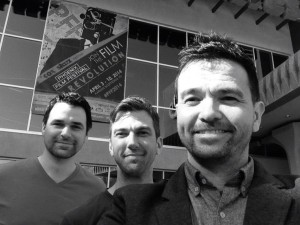 Alex Drummond is the director/writer/producer of PFF 2014 Horror Feature The Shower, a film about a group of friends who get trapped at a baby shower when a mysterious outbreak starts turning people into homicidal maniacs. However, this is not only a horror film, but a film that is “well-acted, and laugh-out-loud funny,” according to a PFF attendee review.
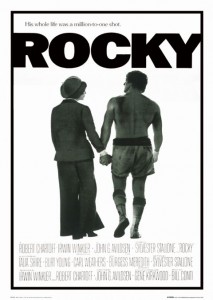 I'm partial to the poster for Rocky. It's hanging above my TV.
 Focus
Director: Glenn Ficarra and John Requa
Focus
Director: Glenn Ficarra and John Requa Mommy
Mommy
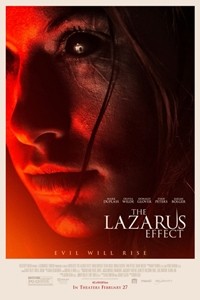 The Lazarus Effect
 1- The Assassination of Jesse James by the Coward Robert Ford — Andrew Dominik’s gorgeous ode to the west’s greatest outlaw is unlike any western that came before it. Rapturously narrated, photographed in poetic stanzas, and with acting that is devastatingly pure, Jesse James established the myth of the man and then shattered it, only to mythologize once again in its closing heartbreaking chapters.
 the Old West and its historical relevance. In Open Range he focuses on several cowpunchers and their desperate fight with a town’s heavy-handed leader. The film is notable for its realism, with gunfights taking place in agonizing realtime, townspeople who don’t vanish at high noon and relationships that don’t just take place behind swinging saloon doors. Dances With Wolves might be masterpiece, but Open Range is Costner’s smaller study of the west.
 6-Brokeback Mountain — Forever known as the gay cowboy movie, people often forget that Ang Lee’s Brokeback Mountain was a loud declaration of the western’s right to be anything it wanted, without all the white hat/black hat cliché. The film made homesexuality, cowboys, stereotypes of the Old West, hate crimes, family values … all of it relevant in a modern context. Step aside from the cultural response to Brokeback Mountain and peer into this film’s open heart and you’ll see that had a lot to say, all of it eloquent.
 Part revenge tale, part rescue mission, but thoroughly a Tarantino picture, Django turned two men — one white and one black — loose to fight their way through the Antebellum South. By recognizing and commenting on America’s terrible shame the film committed itself to western history.
 10-Appaloosa — Ed Harris’ forgotten cowboy flick does not break tons of new ground for the western genre, which is why I like the movie so much — it’s more of a callback to the way these movies used to be. Lawmen with big guns, cattle barons, outlaws, shootouts, main street confrontations … innovation in the genre can only go so far before it must reach back into the past and borrow from what already works. And there is nothing wrong with that.
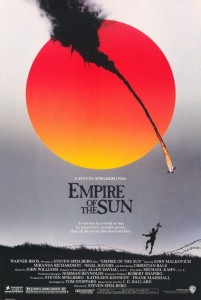 Empire of the Sun, Steven Spielberg
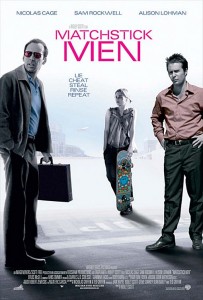 Matchstick Men, Ridley Scott
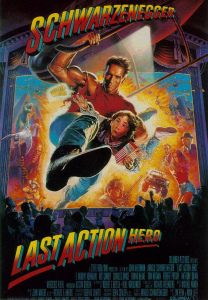 Last Action Hero, John McTiernan
 McFarland USA
 Hot Tub Time Machine 2
 The Last Five Years