 Interview – Adriana Trigiani, Jenna Elfman and Paul Wilson of “Big Stone Gap”
In writer/director Adriana Trigiani’s “Big Stone Gap”, she weaves a warm, small-town story of Ave Maria Mulligan’s (Ashley Judd) quest for answers and a new life after she discovers a family secret. Since Trigiani grew up in Big Stone Gap, VA, making a movie about her hometown truly was a labor of love for her. After watching the film, I felt the cast - including Judd, Jenna Elfman, Patrick Wilson, Paul Wilson, Whoopi Goldberg, Jane Krakowski, Anthony LaPaglia, and Jasmine Guy - seemed to have an equally strong labor of love for Big Stone Gap as well. Adriana, Jenna and Paul stopped by Scottsdale to promote a “Big Stone Gap” screening, and the Phoenix Film Festival sat down with the three and enjoyed an engaging chat about their movie. Kyle Wilson of NerdRepository.com also sat in the discussion and contributed to this interview. “Big Stone Gap” opens on Oct. 9.
PFF: Food seems to be a major character in “Big Stone Gap”. Mentions of apple butter, red pepper sandwiches, pineapple upside-down cake, hot dogs at the Hob Knob, and many other staples were included in the film. Why is food such a big part of this movie?
Adriana: “It’s the gift of the South. It’s southern. It’s sustenance. It’s the table. It’s sharing. It’s one of the ways that people come together in a community and share, so it’s really important.
Jenna: “They (The townspeople) were offering home-cooked meals to me via Facebook. When someone cooks or bakes something in their home and offers it to you, to me, it’s symbolic of them giving you their heart.
Paul: “It’s a symbol of love and kindness.”
PFF: The cinematography of the film is gorgeous, and the city itself is almost a character as well.

Would you have made this film the same way if you weren’t able to shoot on location?
Adriana: The reason it took so long to get this film made is because I insisted it be made there, because I believe that films are living art forms. I know when I watch an American movie made in Canada, I know it is Canada. I know the people are Canadian. You cannot fool me.
Jenna: What are you talking “abooot”? (Everyone laughs.)
Adriana: I know that they are Canadian, and that’s fine. I love Canadians, but don’t try to sell me that it’s Big Stone Gap. I felt very strongly about that. I wanted (this movie) to be shot in my hometown for many reasons, but first and foremost, for artistic reasons. We got an A-list cinematographer (Reynaldo Villalobos) and an A-list cast, so you are going to get the best possible version of Big Stone Gap.
Paul: It (Big Stone Gap) had a starring role. We couldn’t have recreated Wood Avenue. The town itself plays such a key starring role, as it’s holding everybody together but also breathing life into all the eccentricities, realities and relationships. There is an organic authenticity that could have never been recreated.
Jenna: There’s real texture in this movie. I felt it (while) filming it. You felt like you were living in a painting. Many times on the weekend – and I had my kids with me – we’d go driving and exploring, and my breath would be taken away. I couldn’t believe I was looking, with my own eyeballs, at something so glorious and not through some cool lens that made it look that way.
PFF: Adriana, “Big Stone Gap” is obviously a very personal film for you, but for you too, Paul. (The Wilson family has real-life roots in Big Stone Gap, VA). Prior to filming this movie, when was the last time you visited Big Stone Gap? Also, during the filming, what memories did it stir up?

Paul: The last time we were in Big Stone Gap was burying my grandmother who died 9 months before we began filming. Prior to that, the first time the entire family – at the same time – was in Big Stone Gap was for her 90th birthday in 2012. She lived in (her) house since she was 18 years-old and married my grandfather. She lived past 90 and was Adriana’s biggest fan! We couldn’t even drop our luggage in the house – when we would go see her – and she would say, “We got to tell you about Adriana! Sit down.” My grandmother loved her and loved the story, and I think there was an authentic connection with Adri, because she – like those people – loved that town. Not everyone can relate to a small town, but everyone can relate to their hometown.
To stay on Wilson Road - in the house that my father was raised - was our kind of Disneyland as kids. We learned to fish there. Big Stone Gap was that emotional maypole we always could come back to.
PFF: Well this film is obviously such a labor of love, but there are other books in the series. Do you feel like this movie should stand alone, or do you feel like doing some screenplays for the next couple of films?
Adriana: I think that the people will tell us. I always let the audience decide everything. If I write sequels, it’s because there’s a clamor for it. Whatever they want, they get from me. I really feel that my job as a novelist – and truly as a director – is a service job. I’m here to serve these actors. That’s really why I’m there. If I serve them, then I’m telling a great story.
PFF: I read that Adriana said that Jenna “transformed herself into the sexiest bookmobile librarian in America” for this movie. Iva (Jenna’s character) is well-read (pardon the pun), gives good advice and is a solid friend. All of sudden, Iva fell for Lyle (Paul’s character). What was the attraction to Lyle? Was it because he was from out of town? Was he mysterious?
Jenna: There is this little moment where I (Iva) first sees him and goes, “Huh,” (breath taken away). I think it

was just his Jade East cologne. (Paul and Jenna laugh.) There’s a charisma about Lyle, and she thinks he is a character. I think Iva sees a fellow character, a fellow person who celebrates living the way she does, and I think she saw a kindred spirit with him.
PFF: There is a scene where Jack (Patrick Wilson) and Ave (Judd) notice the moon on their date. Was that scene an ode to “It’s a Wonderful Life” when George wanted to lasso the moon for Mary, and if not, was that movie an inspiration for you?
Adriana: Everything that Frank Capra did was an inspiration. That was an inspiration to me. Absolutely! One of the most important things about Frank Capra was his use of real people in cinema. When I (zoom) in on the people in Big Stone Gap, it’s to remind (the audience) that we are telling a real story about real people. Don’t forget that. Of course, he’s Italian, so I share that with him too.
 “Mendelsohn and Reynolds are a pair of aces in ‘Mississippi Grind’”
 The Walk
 The Martian
 Sicario
 The Intern
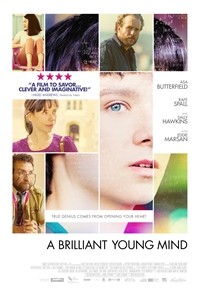 A Brilliant Young Mind
 Interview – Oren Moverman, director “Time Out of Mind”
By Jeff Mitchell
Interview – Oren Moverman, director “Time Out of Mind”
By Jeff Mitchell people. New York is quite an overwhelming city in terms of the mass volume of humanity in your face all the time. The more people there are, the more alone you can be. When you have so many people (in one place), then they (simply) do not see each other. So, I think the state of homelessness - that kind of isolation - leads to deprivation of very basic needs. The lack of eye contact or human contact just makes the problem worse for sure.
  OM: That was our biggest worry: Are we going to get away with putting Richard Gere in this environment. We tested it. What we discovered – when we hid the camera, because we didn’t want the camera in people’s faces to give away the fact that we’re shooting a movie - is they didn’t recognize him at all because they didn’t look at him. It was a very deliberate, very understandable, very human, and a very New York approach. Urban dwellers would just walk past this homeless guy, and maybe someone would pay attention and maybe someone would give something, but ultimately no one looked him in the eye. It wasn’t as if he was unrecognizable as Richard Gere. He was unrecognizable as a movie star, for sure. He was unrecognizable in his clothes because that’s not how you would expect to see Richard Gere. The fact that no one looked him in the eye, it was a lesson for us when someone in that position becomes quite invisible to the people around him. He did get recognized twice in Grand Central Terminal when two people walked by him and said, “Hello”. It wasn’t sort of “Oh my God, it’s a movie star. Let me take a picture.” It was more like, “Hey, he looks like Richard Gere. It looks like he is having a hard time.”
  Black Mass
 Everest
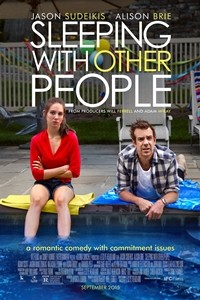 Sleeping with Other People
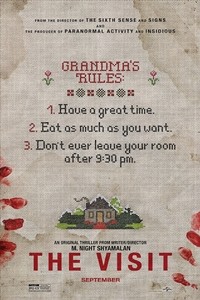 The Visit
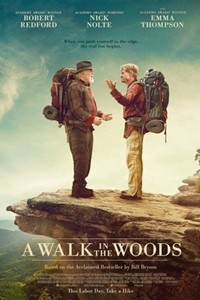 Director: Ken Kwapis
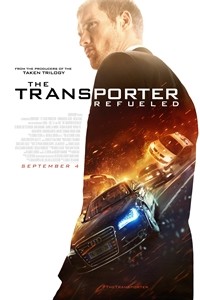 The Transporter Refueled
 “’Learning to Drive’ never quite moves out of the slow lane”
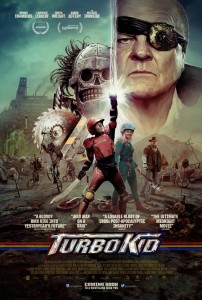 Turbo Kid