
 Room
Room
Director: Lenny Abrahamson
Starring: Brie Larson, Jacob Tremblay, Sean Bridges, Joan Allen, and William H. Macy
Young children can make the most simple and meaningless objects come to creative life, their imagination transforming the ordinary into something extraordinary. At the core of Lenny Abrahamson’s film “Room”, based off the critically acclaimed novel by Emma Donaghue, is a story about the relationship between a mother and child. It also happens to be about a horrendous seven-year long kidnapping. Though the surprise is that at moments the terrible crime being portrayed on screen, in a tiny single room, takes a back seat to a heartfelt and sincere portrayal of a child encapsulated in a one-room world with his mother. For the child the room holds every memory and is the definition of safety and love. For the mother the room holds the exact opposite sentiments, her only reason for living being the child she is trying to save. “Room” is filled with moments of gut-wrenching emotion, it’s a terrifying captivity tale, a profound example of resilience and survival, and displays the bond of codependency that exists between a mother and child.
Jack (Jacob Tremblay) is celebrating his 5th birthday with Ma (Brie Larson). Their little family lives in a little shed, the victims of a kidnapping by a sexual predator nicknamed Old Nick (Sean Bridges). The two live a life within four walls; every moment of the day is lived through the illumination of a singular skylight. Ma smiles for Jack through the lingering pain of a life taken from her seven years prior. Jack’s lively imagination and Ma’s unwavering love keeps Jack from realizing that anything is out of the ordinary. After an altercation with Old Nick, Ma devises a plan to escape which leads to Jack’s harrowing journey into a world he has never seen. The narrative at numerous times in the film is constructed from Jack’s point of view. We see the familiar world through his eyes, but also the changing world once the film moves away from the imprisonment. Jack often refers to this living place simply as “room”, almost as if it were a person instead of a place; it’s a poignant narrative touch. We also see the changing character of Ma, a kidnapped mother forced to build a life in seclusion with her child and then as a post-traumatic suffering survivor dealing with the world she once knew, a world still messy and complicated.
Lenny Abrahamson directs “Room” confidently throughout, painting a world that is at one moment a simple and minuscule process and then opening into broad and complicated form. The camera utilizes close-up framing of objects to make the world seem larger than it is, but also to display the grandeur of Jack’s imagination. When Jack makes the escape, wrapped in a rug with only a circular viewpoint to see glimpses of the new world, the camera is in constant motion and changing focus, a correlation to how Jack is processing the new world in its startling brightness. Unfortunately this amusing technique only lasts for a few quick moments, the world that Jack is experiencing is quickly substituted for standard dramatic elements. Seven years in captivity changes everything, while the world remains new for Jack, Ma is thrust back into a life that has been damaged by the tragic event. While this offers an interesting perspective for Ma, the character is somewhat glazed over in the end.
Still, Brie Larson is simply fantastic. An impressive leading performance that is heartbreakingly subdued yet in other moments filled with undeniable passion. Jacob Tremblay gives the film its life; his performance is filled with energy and a sensibility that can only be defined as pure. Together the two actors have incredible chemistry. Ms. Larson and Mr. Tremblay are a primary reason to see this film.
“Room” is a very good film with even better performances. The film handles subject matter that can be difficult to watch at times but the narrative consistently displays the strength of the characters and the resiliency to show that a “home” is wherever love exists, even if it’s in the confinement of four walls.
Monte’s Rating
4.00 out of 5.00
 Rock the Kasbah
 ‘Bone Tomahawk’ tosses an exceptional, gritty and gory western onto big and small screens
 “’The Last Witch Hunter’ adds good ingredients but undercooks the brew”
 Interview - Lenny Abrahamson, the director of “Room” (2015)

 PFF: One of the pleasures of the film is Jack’s narration, as he explains the way he sees the world. What lessons can adults take by looking at life through a kid’s eyes?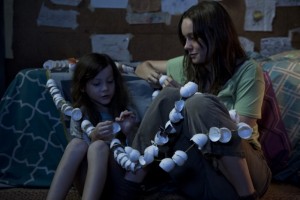
 “A well-designed ‘Steve Jobs’ leaves the audience wanting a future release”
 Bridge of Spies
 “The foreclosure film ‘99 Homes’ serves stressful theatre”
 “He Named Me Malala” features an extraordinary woman in a less-than-perfect documentary
 The Final Girls
 Interview – Adriana Trigiani, Jenna Elfman and Paul Wilson of “Big Stone Gap”


 “Mendelsohn and Reynolds are a pair of aces in ‘Mississippi Grind’”
 The Walk
 The Martian
 Sicario
 The Intern
 A Brilliant Young Mind
 Interview – Oren Moverman, director “Time Out of Mind”
By Jeff Mitchell
Interview – Oren Moverman, director “Time Out of Mind”
By Jeff Mitchell people. New York is quite an overwhelming city in terms of the mass volume of humanity in your face all the time. The more people there are, the more alone you can be. When you have so many people (in one place), then they (simply) do not see each other. So, I think the state of homelessness - that kind of isolation - leads to deprivation of very basic needs. The lack of eye contact or human contact just makes the problem worse for sure.
  OM: That was our biggest worry: Are we going to get away with putting Richard Gere in this environment. We tested it. What we discovered – when we hid the camera, because we didn’t want the camera in people’s faces to give away the fact that we’re shooting a movie - is they didn’t recognize him at all because they didn’t look at him. It was a very deliberate, very understandable, very human, and a very New York approach. Urban dwellers would just walk past this homeless guy, and maybe someone would pay attention and maybe someone would give something, but ultimately no one looked him in the eye. It wasn’t as if he was unrecognizable as Richard Gere. He was unrecognizable as a movie star, for sure. He was unrecognizable in his clothes because that’s not how you would expect to see Richard Gere. The fact that no one looked him in the eye, it was a lesson for us when someone in that position becomes quite invisible to the people around him. He did get recognized twice in Grand Central Terminal when two people walked by him and said, “Hello”. It wasn’t sort of “Oh my God, it’s a movie star. Let me take a picture.” It was more like, “Hey, he looks like Richard Gere. It looks like he is having a hard time.”
  Black Mass