

‘Deepwater Horizon’ horrifyingly recreates the 2010 disaster in-depth
Directed by: Peter Berg
Starring: Mark Wahlberg, Kurt Russell, Gina Rodriguez, John Malkovich, and Kate Hudson
“Deepwater Horizon” – I really should buy an electric car. I have talked about it for years. I just need to do it and then plug my future vehicle into a 50-foot high windmill each evening. The idealist in me wants to reduce my carbon footprint, and this feeling substantially heightened during the ungodly British Petroleum (BP) oil spill in 2010. On April 20, 2010, BP’s unstable oil well blew and almost 5 million barrels of crude subsequently spilled into the Gulf of Mexico over a period of months. In the process, it destroyed the Deepwater Horizon offshore rig – owned by Transocean - and massively polluted the surrounding environment in the worst such disaster in United States history. The scope of 5 million barrels of oil pouring into the gulf’s ocean waters is truly unfathomable to comprehend, and for many people, BP will always be considered a “four-letter word”.
The disaster film “Deepwater Horizon” uses revealing words and striking visuals to recreate the horrific events from the perspective of the rig’s chief electronics technician Mike Williams (Mark Wahlberg) over a speedy 1-hour 47-minute runtime. Director Peter Berg sometimes misses with big budget action films – like “Hancock” (2008) and “Battleship” (2012) - but recently connected with the true war story “Lone Survivor” (2013) with Wahlberg in the title role. This time, Berg and Wahlberg connect again in a film about true events, and the two form a winning combination in a movie that contains no winners. We do, however, find heroes.
Prior to the previously-mentioned disaster and heroic efforts, the movie performs an important visual service as well, by showcasing the elaborate infrastructure associated with offshore rigs. Since the Deepwater Horizon sits about 40 miles out to sea, the quickest way to travel there - with your hardhat and lunch pail - is by helicopter via the Bristow Heliport, which feels like a highly secure mini-airport. We see Mike, his boss Jimmy (Kurt Russell) and others, like his coworker Andrea (Gina Rodriguez), run through extensive protocols and then fly over the ocean to put in “normal” workdays for a number of weeks at a time. Berg sets up a real sense of unease by introducing the isolation and danger of exploring for fossil fuels. The danger initially appears through numerous, small Deepwater Horizon issues that Mike needs to address, and – of course - the drill itself which travels about one mile to the ocean floor.
With an appropriately anxious setting established, the film quickly offers a lengthy list of Transocean protagonists and BP antagonists. While I do not have actual knowledge of the black and white distinctions between “good” and “bad” characters here (and their respective companies, for that matter), the film portrays BP – led by oil executive Vidrine (John Malkovich) - as impatiently demanding to drill despite repeated warnings by Transocean employees. As a viewer, once I saw Malkovich on the big screen, I immediately understood that BP would absolutely pull the wrong figurative levers to trigger the impending catastrophe. (Hey, traditional Malkovich characters seem to possess that type of aura.)
The catastrophe obviously dominates much of the movie, and the impressive special effects portray a hellish nightmare of never-ending reservoirs of fossil fuel feeding an inferno amongst the twisted metal with over 100 souls on board. Berg depicts an impossible situation with about a half-dozen heart-stopping moments and constant unease, as fire spreads in every direction with accompanying explosions on the manmade, floating island.
“Deepwater Horizon” works as a thriller, because it offers a series of contrasts to drive our emotions. For instance, it clearly introduces likeable and unlikeable characters. With the likeable characters, we – at first - eavesdrop on their light, jovial conversations about family and college football versus the subsequent blaring exchanges with death seemingly very close. Most of all, the struggle of man versus nature finds itself on display with horrendous and cataclysmic consequences.
There is some time devoted to the worried families at home, but Berg keeps these storylines at a thrifty minimum and focuses on the actual incident and the missteps leading up to it. The end result is an appreciatively exhausting film which doubles as a cautionary tale on whether or not such oil explorations should even be attempted in the first place.
The idealist in me hopes that future generations everywhere will labor on massive solar panel grids or attend to friendly, towering windmills, rather than fly to faraway marine locales and trench the planet for oil. Well, the realist in me understands that those days are probably far off, because six years after the BP oil spill, I am still pondering the purchase of an electric car. (3/4 stars)
Jeff – a member of the Phoenix Critics Circle – has penned film reviews since 2008 and graduated from ASU’s Walter Cronkite School of Journalism. Follow Jeff and the Phoenix Film Festival on Twitter @MitchFilmCritic and @PhoenixFilmFest, respectively.
 The Magnificent Seven
 ‘The Dressmaker’ needs some alterations
 ‘Storks’ delivers a fun animated experience
 Oliver Stone’s ‘Snowden’ is a valuable ‘Citizenfour’ companion piece
 Blair Witch
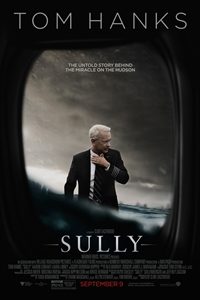 Hollywood legend Clint Eastwood’s 35th directorial effort, “Sully” (3/4 stars), arrives in theatres on Friday, Sept. 9 with Tom Hanks in the title role. The film chronicles U.S. Airways pilot Chesley ‘Sully’ Sullenberger’s heroic landing on the Hudson River in January 2009. With another solid Eastwood film in theatres, this seems like a perfect time reflect upon his work. Although I would love to compile a Top 20, 17 or 15 list, my pragmatic nature and movie critic tendencies “require” me to somehow limit the number of movies to 10, so here are my Top 10 films directed by Clint Eastwood.
 some Union fighters burn his house and kill his wife and son. With nothing to live for, he joins a group of Confederates, and soon after, he finds himself on his own and an outlaw. In a film that truly showcases everything about the American Western, Wales covers a winding story from Missouri to Texas and partners with – at various times – a teenager, two Native Americans and a family from Kansas. Eastwood mixes good fun with plenty of gunfights, as Wales offers a barrel full of memorable lines, countless visuals of his chewing tobacco spit, dead bodies in his wake, and - possibly - a reason to live.
 convict from a Huntsville, Texas prison. On the morning after Halloween in 1963, Butch (Costner) and another con kidnap an 8-year-old boy named Phillip (T.J. Lowther). After Butch dumps his partner, the two drive across the state with Texas Ranger Red Garnett (Eastwood) on their tail. The movie volleys between Red and Butch, and it soon concocts a semi-case of Stockholm syndrome for Phillip and the audience. Butch treats Phillip with esteem and kindness, so Costner does not wind up playing a complete bad guy, but Red is an empathetic figure as well. With an occasional protagonist and a fulltime protagonist on opposite sides of the law, “A Perfect World” reminds us that we do not live in one.
 – Sean Penn and Tim Robbins won Oscars for Best Actor and Best Supporting Actor, respectively, in Eastwood’s dark crime tale filled with massive Shakespearean themes, when three childhood friends’ (Penn, Robbins and Kevin Bacon) lives intersect as adults under brutal circumstances. In chilly Boston, a coed is found dead, and the three previously-mentioned men approach the incident from very different perspectives, while the tightly-wound and complicated murder investigation pushes forward. An all-star cast – including, Laurence Fishburne, Marcia Gay Harden and Laura Linney – complete a mesmerizing experience which brings constant thoughts friendships, loyalties and how the sins of the past impact the present. The film’s most memorable line – “The last time I saw Dave” - will haunt you for years.
 Best Director, Best Supporting Actor for Gene Hackman, and Best Film Editing and proved – along with “Dances with Wolves” (1990) – that the genre can win the Academy’s top prize. Eastwood delivers a prized role as well as William Munny, an aging cowboy who takes one last bounty hunter job after years of living a clean life. Munny frequently speaks of his violent past, but the audience presently sees a cordial and respectful man, so any previous sinister dealings seem either deeply buried or simply exaggerated. In the movie’s final act, however, Sheriff Little Bill Daggett (Hackman) tests Munny’s patience with potentially explosive consequences. Most everything in the town of Big Whiskey, Wyo. (actually filmed in Alberta, Canada) feels bleak and cold, and the tones match Munny’s job of attempting to kill two cowboys for a group of prostitutes. In this world, no one is completely innocent, and Munny mentions to one of his partners in passing, “We all have it coming, Kid.” Not only does Little Bill have it coming, but so does the Kid, the targeted cowboys, Munny’s other partner named Ned (Morgan Freeman), and Munny himself. Munny’s past sins – unfortunately – are just skin-deep, and even though his wife forgave his past misdeeds, to him, they remain unforgiven.
 This Crusoe story, ‘The Wild Life’, is visually pleasant but feels lost
 Complete Unknown
 Two solid performances cannot stop ‘The Hollars’ from feeling hollow
 The emotional, beautifully-filmed ‘The Light Between Oceans’ had me at G’day
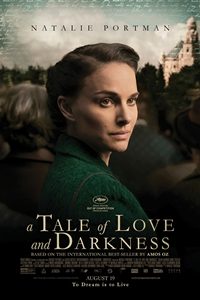 Natalie Portman shines as a master storyteller in “A Tale of Love and Darkness”
By Kaely Monahan
Natalie Portman shines as a master storyteller in “A Tale of Love and Darkness”
By Kaely Monahan ‘Morris from America’ is a coming-of-age Christmas gift
 Hands of Stone
 Don’t Breathe
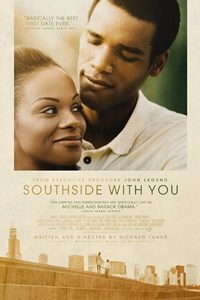 ‘Southside with You’ recalls a very important first date
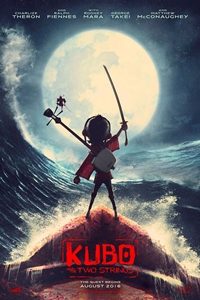 Kubo and the Two Strings – The must-see summer animated feature
By Kaely Monahan
Kubo and the Two Strings – The must-see summer animated feature
By Kaely Monahan