Justice League - Movie Review by Monte Yazzie

Justice League.jpg

Justice League


Director: Zack Snyder

Starring: Gal Gadot, Ben Affleck, Henry Cavill, Jason Momoa, Ezra Miller, Ray Fisher, Amy Adams, Jeremy Irons, Diane Lane, Connie Nielsen, J.K. Simmons, Amber Heard, and Joe Morton


There is nothing wrong with a little teamwork. The superhero genre has been working towards the team oriented concept for some time now. While the Marvel Cinematic Universe was the first to successfully achieve this feat with “The Avengers”, talk about a D.C. Comics Justice League movie has been brewing for some time now, long before Marvel thought about bringing a team of heroes to screens. While audiences have already got a taste of what a Justice League feature film might feel like with 2016’s much maligned “Batman v. Superman: Dawn of Justice”, the D.C. Extended Universe has finally found some focus on how to make a superhero film resonate beyond just the diehard fans.


“Wonder Woman” was the first successful step, paving the way towards a “Justice League” film that is far less serious than past films in this superhero catalog and more aware of giving into the entertaining indulgences of humor, heart, and spectacle. While this emphasis renders the narrative left on the back burner, “Justice League” is undeniable fun if altogether somewhat dull.


Bruce Wayne (Ben Affleck) knows that bad things are abound now that Superman (Henry Cavill) is dead. In an attempt to get a head start on the oncoming threats, Bruce and Diana Prince (Gal Gadot) are in search of other metahumans to help the fight. This leads Bruce to the sea in search of a man named Arthur Curry (Jason Momoa) and to Central City to find a young man named Barry Allen (Ezra Miller). Diana on the other hand is looking for a scientist (Joe Morton) and his son Victor Stone (Ray Fisher). However, things may be too late as a formidable foe named Steppenwolf is looking to destroy humanity.


“Justice League” is different than previous D.C. Comic film outings; gone is the stiff emotional demeanor and long winded storytelling. This time around it’s more loose and witty, more free to let characters embrace the amusing qualities of their characters. The film is still a noisy mess of visuals and the villain is still an indomitable CGI creation that doesn’t have the personality to challenge the heroes in any way that seems intimidating. Still, “Justice League” has flashes of promise, especially when the team unites. While this takes some patience over the 120 minute running time, there is fun to be had in watching these comic book characters interact with witty banter and clever verbal jabs.


The team of actors together develop some good chemistry. Again the highlight of this film is Gal Gadot’s Wonder Woman; her character is ultimately the tie that binds the group together. It’s a smart move considering Batman is still somewhat brooding here, though even the Dark Knight is offered a few moments of levity. Ezra Miller and Jason Momoa are the characters that offer the most entertainment; Mr. Miller’s Flash adds a naive youthful element to the team that offers the actor moments to cut the tension with a clever joke while Mr. Momoa basically gets to be a laid back surfer of sorts. Both actors seem to be having lots of fun with the roles.


It all adds up to an entertaining if wholly unoriginal film. Everything within “Justice League” has been done before; the action scenes, the comedy, the composition of the team, it all feels familiar and somewhat stale. Still, for a franchise of superhero films that has struggled to get off the ground, “Justice League” is much better than earlier attempts by the D.C. Extended Universe. Unfortunately that’s not saying very much but hopefully this is the first step towards better films in the future.


Monte’s Rating

3.00 out of 5.00

My Friend Dahmer - Movie Review by Ben Cahlamer

My Friend Dahmer.jpg

My Friend Dahmer


Directed by Marc Meyers

Written by Marc Meyers based on My Friend Dahmer by Derf

Starring Ross Lynch, Alex Wolff, Vincent Kartheiser, Anne Heche, Dallas Roberts, Liam Koeth


Set in 1978, Marc Meyers’ My Friend Dahmer, is a stark look at the adolescent life of serial killer Jeffrey Dahmer in Ohio. In the titular role of Mr. Dahmer is Ross Lynch, who was cast against type for this film. Mr. Lynch is best known as one of the members of the pop rock band, R5 and has imbued his acting career with multiple Disney Channel characters. So, it is with a great sense of satisfaction that I can say his performance as the troubled and demented Dahmer is sublime.

Based on the graphic novel, My Friend Dahmer by Derf, Mr. Meyers surrounds Mr. Lynch with exceptional talent. Playing Derf is Alex Wolff. Although they didn’t start out, or even end up as friends, Derf was in the best position to give the world insight into some of the schizophrenic, and brilliant tendencies of Mr. Dahmer.

The source of much of Mr. Dahmer’s troubles were his parents, neither of whom were mentally stable either, at least in the film. Dallas Roberts plays Lionel Dahmer, an introvert with anti-social tendencies. He is someone who has adapted to world around him in order to provide for his family. The interaction between Lionel and Jeffrey is awkward, but there was genuine affection between father and son. Anne Heche plays Joyce Dahmer, Jeffrey’s mother. Ms. Heche was so very much in character that I didn’t recognize her. And that’s important because of the type of character she plays. Newcomer, Liam Koeth plays Jeffrey’s younger brother, Dave. Mr. Koeth was very passive in his role, but that serves to emphasize the dangers around him.

Mr. Meyers’ script focuses on the family dynamic, which gives the impression that it was the source of Jeffrey’s tendencies.  Interestingly, Jeffrey never turned his tendencies towards his family. At least, not in this film. He didn’t even turn them towards his friends. To the world, he seemed to be a strange, anti-social high schooler.

One thing that was extremely evident in Mr. Meyers’s script was Jeffrey’s homosexual tendencies, which Mr. Dahmer used to target his victims. Early in the film, Mr. Meyers establishes one of Jeffrey’s targets, Dr. Matthews, played by Vincent Kartheiser. There’s a scene later in the film between Jeffrey and Dr. Matthews that is awkwardly funny, but doesn’t seem out of place. Mr. Lynch’s coy approach blends extremely well with Mr. Kartheiser’s sarcasm.

I grew up in Wisconsin and a friend of mine used to joke that I grew up among some of the most heinous serial killers known to the world. I was a teenager when they finally apprehended Jeffery Dahmer. I knew of him from the news, but it never occurred to me just how truly dangerous he was. Mr. Lynch was perfectly cast as Mr. Dahmer and is surrounded by talent that really enhances his performance.

In a limited theatrical release now, Mr. Meyers’ My Friend Dahmer is a solid look into the adolescent mind of one of the nation’s high profile serial killers.

Ben’s rating 3 out of 4

Justice League - Movie Review by Jeff Mitchell

Justice League.jpg

‘Justice League’ team chemistry tops some muddled special effects, lackluster villain


Directed by: Zack Snyder

Written by: Chris Terrio, Zach Snyder, Josh Whedon


Starring: Ben Affleck, Gal Gadot, Ezra Miller, Jason Momoa, Ray Fisher, Henry Cavill, Amy Adams, Jeremy Irons, Diane Lane, J.K. Simmons, and Ciaran Hinds


“Justice League” – There is no “I” in team. 


When confronted by a selfish player, a coach may use that sports proverb to help illustrate that looking out for No. 1 may prove fatal to the team’s success.  Now, if the team has one, some or a collection of self-centered basketball, baseball, football, volleyball, soccer, or insert-your-sport-here players, the end result could be a lost game or perhaps, a lost season.


In the movies, an individual superhero might not be self-regarding, but he or she may just not be capable of saving the world from a malevolent extraterrestrial on his or her own, but a team – working together as one – could be the planet’s only hope. 


In March 2016, many, many comic book movie fans conjured up very little hope for the DC Extended Universe’s (DCEU) future after a depressing and disjointed “Batman v Superman: Dawn of Justice” (2016) arrived in theatres.  Apparently in the comics, Batman and Superman fought one another, but in director Zack Snyder’s film version, the motivation for this super-tussle was terribly forced, as the entire narrative seemed to only serve as a convoluted means to form a big screen Justice League, hence the second half of the film’s title.


Twenty months later, Batman (Ben Affleck) and Wonder Woman (Gal Gadot) are back on-screen and act as a pair of super-coaches, as they attempt to recruit The Flash (Ezra Miller), Aquaman (Jason Momoa) and Cyborg (Ray Fisher) to save Earth from Steppenwolf (Ciaran Hinds), a powerful alien known as a conqueror of worlds.  If you thought Steppenwolf was only a band from the late 1960s and early 1970s, you are not alone, but no, in this film, this born-to-be-wild, 12-foot baddie sports a horned helmet and wields a glowing-orange executioner’s axe to cut down his foes.


It turns out that Steppenwolf returns to Earth to claim three mother boxes, which are explained as sources of power or energy or something, but when combined into one, they form The Unity.  All one has to know is that The Unity is really, really bad news, so Batman and Wonder Woman have very little time to pull together their super-team and put an end to Steppenwolf’s plans.


With a runtime of just two hours, the film cannot afford to waste time, as it catches us up on the Caped Crusader’s and Diana Prince’s latest adventures and introduces us to The Flash, Aquaman and Cyborg.  Snyder is judicious in highlighting each of their powers and injecting some appreciated camp and humor during the picture’s first 45 minutes.  He also needs to establish menace and danger with Steppenwolf, and he effectively accomplishes all of these tasks.  Sure, additional precious minutes of character backstory would have been appreciated, but the quick pacing and crystal clear, concise narrative lanes are vast improvements over “Batman v Superman”, in which brooding tones and confusing scenes plagued that film’s first hour.


This film’s camp and humor gladly continue throughout the entire picture, as Miller’s Flash plays up his inexperienced rookie routine who incrementally becomes more confident as a hero, while also delivering frank moments of disbelief during battles with weird alien antagonists.  Meanwhile, Momoa’s Aquaman exudes machismo, a certain surfer/motorcycle gang member mix, and after the movie, one might swear that he said “I dig it” about a half dozen times.  Then again, he might not have said it even once, but his cool guy bravado certainly resonates.


Fisher’s Cyborg is the least comfortable with his abilities and takes a more cerebral, cautious approach.  Since his body is now meshed with Kryptonian machinery that sends unknown impulses to his brain, one can understand that purposeful restraint can rule his days.  Batman and Wonder Woman are the glue that holds this new alliance together, and Affleck’s and Gadot’s iconic characters learn more about what makes each other tick and experience some growth against their own personal setbacks.  The film does not allocate enough time to explore more introspection, but carves out plenty of moments of authentic character chemistry between the five leads and highlights each of their individual strengths that, of course, blend into team harmony.  Snyder also includes some real surprises, one of his signature trademarks. 


This is an entertaining group of heroes to watch interact on the big screen.  Albeit, in the film’s third act, they fight for Earth’s survival in a cloudy, artificial special effects fishbowl.  In fact, the background environment during the closing clash with Steppenwolf and his army of parademons (who are essentially six-foot flying insects) closely resembles some of the worst green screen moments from any of the “Resident Evil” films.  Meanwhile, the laws of physics become hugely questioned when a flying Cyborg tosses Aquaman across the sky, as this man from the sea stabs a random “bug” with his trusty trident and then crashes into an abandoned factory.  In another instance, Batman catches The Flash with a grappling hook, but one might wonder how The Dark Knight’s eye-hand coordination matches the speed of light.  


The muddled special effects – which caused problems in “Batman v Superman” and “Wonder Woman” (2017) – continue their disappointing path in this film too, and the villain does not exactly inspire fear or vitriol either.  These are low points, but the comic book protagonists do form a charismatic justice league, a highly appealing and enjoyable lineup, and hey, there is no “I” in this team.  Like any great team, they lean on each other’s strengths, while the film’s shortcomings do not feel as important.   


Now, are we sure that this particular Steppenwolf does not play music and have a cousin named Bachman-Turner Overdrive?  I’m asking for a friend.

(3/4 stars)


Jeff – a member of the Phoenix Critics Circle – has penned film reviews since 2008 and graduated from ASU’s Walter Cronkite School of Journalism.  Follow Jeff and the Phoenix Film Festival on Twitter @MitchFilmCritic and @PhoenixFilmFest, respectively

Wonder - Movie Review by Jeff Mitchell

wonder.jpg

Tremblay, Roberts and Wilson kindly deliver in ‘Wonder’


Directed by: Stephen Chbosky

Written by: Stephen Chbosky, Steve Conrad and Jack Thorne based on the novel by R.J. Palacio

Starring: Jacob Tremblay, Julia Roberts, Owen Wilson, Izabela Vidovic, Mandy Patinkin, Daveed Diggs, and Danielle Rose Russell


“Wonder” – Be kind.


Auggie (Jacob Tremblay) walks with his parents – Isabel (Julia Roberts) and Nate (Owen Wilson) - towards Beecher Prep for his first day of middle school, and he is terrified.  Sure, middle school can be terrifying for just about any kid.  Think back to your years during that preadolescent and adolescent brew of confusion mixed with caste systems of rumors, doubt and Darwinism that distract from the primary tasks at hand: reading, writing and arithmetic.  


His future schoolwork does not concern him, but the potentially toxic social concoction does, because Auggie was born with genetic facial deformities.  Twenty-seven surgeries have helped normalize his appearance, but he does not look like other 10-year-olds, and this kind and thoughtful little boy demonizes himself because of it.  Isabel homeschooled Auggie through fourth grade, but now he is literally taking his first steps on a formal learning institution’s campus, and his mom pleads, “Dear God, please make them be nice to him.”


Be kind.


Co-writer/director Stephen Chbosky (“The Perks of Being a Wallflower” (2012)) and Tremblay - who is unrecognizable, not unlike Eric Stoltz in “Mask” (1985) – successfully capture Auggie’s emotional 5th grade journey.  That’s no surprise, but Chbosky unexpectedly and refreshingly devotes significant screen time with other key characters as well.  First and foremost, “Wonder” is Auggie’s spiritual mountain to climb.  His challenges also greatly impact others, especially those closest to him, namely his supportive and loving parents and sister, Olivia (Izabela Vidovic) or “Via” for short, and the picture frequently checks in with her often enough to almost call her a co-lead character. 


Vidovic’s Via successfully garners admiration and sympathy from the audience, as she deeply cares for her brother but also aches due to less devoted attention from her folks.  The film – at least during its first half – is structured in a chapter-format by presenting the names “Auggie” or “Via” on-screen, as introductions to their individual perspectives.  This approach gives some reprieve from Auggie’s heavy-handed troubles with close focus on Via’s own problems with isolation and the sudden, unknown brushoff from her best friend, Miranda (Danielle Rose Russell).  Certainly, Auggie grapples with monumental changes, but Via’s problems are no less real, as the picture thoughtfully embraces her story with sincerity.


Be kind.


Roberts is wonderfully cast, as Isabel convincingly communicates her sincere love for Auggie throughout the picture.  In one particular break-your-heart scene (after a difficult day of school), Tremblay and Roberts wholly convey Auggie’s helpless despair and Isabel’s strength to hold it together and not completely sob along with him.  Roberts does not normally play an understanding mom on-screen, but she falls into the role effortlessly with grace and sensitivity.  Wilson’s Nate is the least developed family member-character.  He is easy going dad who must earn at least a quarter of million dollars a year at some unknown big job, but cashes in plenty of time at home to show love and support while also giving Isabel gray hair with occasional glimpses of arrested development.  Nate does not hinder the film’s flow, but we don’t learn much about him, as Wilson basically plays the considerate, but semi-out-of-touch Nick Campbell from “The Internship” (2013).  Hey, perhaps Nate works at Google? 


One does not need to confer with Google to know that an acting-triad of Tremblay, Roberts and Wilson - plus a nice performance from Vidovic - will provide compelling moments of celluloid textile for the audience, but the picture is also anchored by a serviceable script.  Surely, “Wonder” carries familiar family and school themes, and it jams too many smaller narratives into one hour and 57 minutes.  In fact, the film feels like it reaches its rightful conclusion at the 1h 40m mark, but carries on for another 17 minutes. 


While the film’s beats are common, the characters – including key supporting ones, like Principal Tushman (Mandy Patinkin), a teacher named Mr. Browne (Daveed Diggs) and two school friends – enrich Auggie’s world and ours as well.  “Wonder” delivers a compassionate teaching moment that is so important for kids, and during these divisive times, a most worthy reminder for adults.


Be kind.

(3/4 stars)


Jeff – a member of the Phoenix Critics Circle – has penned film reviews since 2008 and graduated from ASU’s Walter Cronkite School of Journalism.  Follow Jeff and the Phoenix Film Festival on Twitter @MitchFilmCritic and @PhoenixFilmFest, respectively.

Murder on the Orient Express - Movie Review by Ben Cahlamer

Orient Express.jpg

Murder on the Orient Express


Directed by Kenneth Branagh

Written by Michael Green

Starring Kenneth Branagh, Penélope Cruz, Willem Dafoe, Judi Dench, Johnny Depp, Josh Gad, Derek Jacobi, Leslie Ododm Jr, Michelle Pfeiffer, Daisy Ridley


My uncle once told me that when a movie features a ‘cast of 1000’s’, it typically wouldn’t be very good. This was based on the all-star murder mysteries that permeated tele-movies and theatrical movies of the mid-1970’s where a bevy of big named players would endure a small movie in order to build their credibility as actors. Sydney Lumet’s Murder on the Orient Express from 1974 was one such movie. However, audiences ate it up. Sadly, I haven’t seen it. However, as we explore Kenneth Branagh’s reimagining of the Agatha Christie mystery of the same name, I went in with a fresh pair of eyes and no expectations.

In the lead role of the Belgian detective, Hercules Poirot is Branagh. As the film opens, we learn intimate details about what would today be identified as obsessive compulsive disorder, but as he reminds us early in the story that life is real and murder is out of the ordinary. After solving one last crime, Poirot looks forward to some respite when he is called back into service on the Orient Express bound for France.

As with the aforementioned ‘cast of 1000’s’ comment, Branagh’s Orient Express features a strong cast of big names and up-and-comers. Front and center is Johnny Depp as Samuel Ratchett, an antiquities dealer looking for protection. Willem Dafoe plays Professor Gerhard Hardman, an Austrian professor trying to get to a conference. Penelope Cruz plays Pilar, a sultry au pair with more on her mind than meets the eye. In the plum role of Princess Dragomiroff is Dame Judi Dench, who manages to steal the show without even batting an eyelid. Josh Gad stepped out of his comfort zone as Hector MacQueen, someone who imbibes a bit more than he should. Michelle Pfeiffer surprises as Caroline Hubbard while Daisy Ridley demonstrates that she can wield more than a lightsaber as Mary Debenham. Tom Bateman plays Bouc, the director of the Orient Express and Poirot’s friend.

Mr. Branagh shot the film in such a way that the investigative conversations felt like we were watching a stage play while the special effects made the film feel as grand and as opulent as the train’s namesake. Much like Poirot, Mr. Branagh had a purpose for every shot, and there is an economy in the choices he made. The script, written by Michael Green based on Agatha Christie’s classic novel creates the openness while balancing against the intimacy of the setting. Patrick Doyle’s piano-based score enhances the opulence, the openness and the intimacy that Mr. Branagh aimed to achieve. This is a rare film amongst the special effects laden films we get where something explodes every five minutes. Here, the biggest effect is an avalanche caused by a lightning strike.

The rarity also works against the film. Mr. Branagh makes sure to frame himself, minimizing the supporting characters, especially once they were eliminated as suspects. They each have their moment, yet as the clues mounted up, you begin to realize what the story is about. I struggled with Mr. Bateman’s Bouc, who was extremely helpful in the early stages of the film, even offering some levity to Mr. Poirot’s indulgent nature. As the story wrapped up, he became less and less important. 

I won’t share what questions I had because that would give the film away. However, the visual effects and the opulence that Mr. Branagh delivers makes the film worth seeing on as big a screen as possible.

2.5 out of 4 stars

Novitiate - Movie Review by Jeff Mitchell

Novitiate.jpg

Leo and Qualley shine during a dim view of the ‘Novitiate’


Written/directed by: Margaret Betts

Starring: Margaret Qualley, Melissa Leo, Julianne Nicholson, Dianna Agron, and Rebecca Dayan


“Novitiate” – Cathleen (Margaret Qualley) is 17 years old and in love.  She is in love with God.  Conversely, her mom, Nora (Julianne Nicholson), never embraced religion and does not quite understand her daughter’s love and faith.  Soon, everything that Nora knows - her own faith in a sense – becomes severely tested.  Cathleen joins a convent, Sisters of Beloved Rose, to become a nun, and Nora believes that she is too young to make this decision.


Faith and coming-of-age rise as the two primary themes in writer/director Margaret Betts’s picture that steps inside an unknown world to a vast majority of audiences.  In 1964, this isolated and insulated place lives by its own sacred laws and teachings, in a rigorous and tireless pursuit to transform women into perfect beings, ones who are worthy to devote their lives to God, the Church and Christ. 


Since human beings are inherently and painfully imperfect, this quest is ultimately impossible, but there is a certain nobility in becoming the best that one can be.  During the picture, Cathleen’s personal, principled journey ironically feels like she steps into U.S. Marine Corps boot camp.  Instead of becoming trained killer – as described by Gny. Sgt. Hartman (R. Lee Emery) in “Full Metal Jacket” (1987) – she hopes to become just the opposite.  A vehicle to teach and spread God’s love.  The process, however, feels the same.


Reverend Mother Marie St. Clair (Melissa Leo) – who has lived at Beloved Rose for 40 years - runs the operation.  Although the Reverend Mother represents the word of God, she shows no warmth towards longstanding nuns and the young upstarts.  She demands that her rules be followed without exception, including “grand silence”, which means that no one on the grounds - not even her - can speak during specific hours of the day.  Betts repeatedly shows nuns walking in silence with their eyes pointing downward on the lovely, pristine campus, and during breakfast - in a cafeteria which looks like a smaller version of Hogwarts’s dining hall – one can only hear forks, knives and spoons gently clanging against plates and bowls.  


Silence is one challenge, but it pales in comparison to the 18-month rigor of the novitiate, the time in which the transformation occurs.  The Reverend Mother and other nuns keep the novitiate’s secrets private until Cathleen and the others experience it for themselves, and Betts offers windows into the women’s deepest thoughts, and many times, these reveals will greatly surprise.  For the Reverend Mother, she has heard these spoken thoughts hundreds and hundreds of times, and during the novitiate, Leo’s performance surprises as well.  Sometimes she portrays the Reverend Mother as very engaged and active in dispelling imperfections in her young pupils, and other times, she goes through the motions.  Her mind wanders somewhere else, or she simply dispassionately disconnects, while half-listening to a sob story from another wavering young spirit.  


Although others like Sister Evelyn (Morgan Saylor) and Sister Candace (Eline Powell) share Sister Cathleen’s journey, this is her story, and Qualley effectively presents an altruistic, pure spirit with the very best of intentions.  Referring back to the aforementioned two themes, Cathleen’s intrinsic faith does not necessarily waver, but coming-of-age – to her disbelief – clashes with her training and her larger pursuits.  What seemed so clear upon entering the convent is now very cloudy. 


Betts’s picture is a takedown of the novitiate, but she also accounts for the year that her film takes place.  During the early 1960s, the Vatican II promoted changes to the church to lighten up or eliminate stringent practices.  Since this particular convent’s traditions are in need of change, some may not view “Novitiate” as a repudiation on the Catholic Church but only its harsh, past practices.   Others may view this film as a complete denunciation.  No matter one’s position, Betts attempts to create universal sympathy for these young women.  

(3/4 stars)


Jeff – a member of the Phoenix Critics Circle – has penned film reviews since 2008 and graduated from ASU’s Walter Cronkite School of Journalism.  Follow Jeff and the Phoenix Film Festival on Twitter @MitchFilmCritic and @PhoenixFilmFest, respectively.

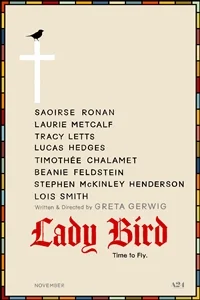
Lady Bird - Movie Review by Jeff Mitchell

Lady Bird Poster.jpg

‘Lady Bird’ flies with humor and universal, high school truths


Written and directed by: Greta Gerwig

Starring: Saoirse Ronan, Laurie Metcalf, Tracy Letts, Lucas Hedges, Jordan Rodrigues, and Beanie Feldstein


“Lady Bird” – “None of the things that happen in the movie literally happened to me, but they all rhyme with the truth.” – Greta Gerwig, 2017 New York Film Festival


On the surface, Gerwig’s “Lady Bird” – in which she wrote and directed - does appear autobiographical.   Both her and her lead character, Lady Bird (Saoirse Ronan), grew/grow up in Sacramento, attended/attend a Catholic high school and dreamed/dream of getting into college on the East Coast, but as Gerwig says, this film is not her life story.     


Still, when watching Ronan play Lady Bird - whose God-given name is Christine – she seems to channel her inner-Greta Gerwig, complete with the writer/director’s on-screen trademarks.  Lady Bird carries a quick wit, a distinct, matter-of-fact assuredness of the obscure and a prideful and purposeful outsider’s point of view.  Observing high school’s absurdities with figurative crossed arms fuels Lady Bird, but she wades in the adolescent think tank just enough to be relatively accepted by its populace, but still deemed “weird” by the popular kids.   


Not only does Ronan capture Gerwig’s likable attributes and preaches her words from the screenplay, but she delivers her lines and carries her mannerisms like a devout student of “Damsels in Distress” (2011), “Frances Ha” (2012) and “Mistress America” (2015).  Ronan strolls through this non-autobiographical film with an effortless, breezy ease, like she was born to play this role, even if she is actually five years older than the average high school senior.


The picture runs through Lady Bird’s senior year, and along with identifying markers on the calendar – like Thanksgiving, Christmas and St. Patrick’s Day – she delves into hilarious anecdotes and universal moments of dating, theatre groups, school assemblies, and guidance counselor appointments.  These collection of moments do feel familiar with other films, because how many different ways can one slice high school? 


Then again, Lady Bird certainly can charm a movie audience.  Not despite her faults, but because of them.  She surely does not have all the answers, because yes, her poised persona is wonderfully mixed with her inexperience.  Thankfully, she can medicate with a seminal Dave Matthews song with her best friend, Julie (Beanie Feldstein), and these two share an engaging, authentic relationship that is not afraid to flash its occasional warts.  Almost every, on-location moment with her fellow students and school faculty captures our attention with rich, clever dialogue but admittedly, does not break new ground.  We’ve seen these stories before.


On the other hand, the narrative does feel different than most high school movies, because the script features Lady Bird’s parents – Marion (Laurie Metcalf) and Larry (Tracy Letts) – as prominent characters.  In many high school pictures, filmmakers treat parents like out of touch buffoons (e.g. “Better Off Dead…” (1985) and “The Edge of Seventeen” (2016)).  Other times, parental figures play meaningful but very, very supporting roles (e.g. “Sixteen Candles” (1984) and “The Perks of Being a Wallflower” (2012)).


Here, the Marion/Lady Bird dynamic is integral to the story.  While Lady Bird tries to navigate around her school year potholes, she also attempts to dodge her mother’s constant criticism.  Gerwig perfectly casted Metcalf, as she brings an everywoman’s quality to Marion, and this actress knows how to portray a character with decades of emotional baggage.  Marion is the type of mom who wants the best for her kids – Lady Bird and Miguel (Jordan Rodrigues) - but her nitpicking, fault-finding methods do not exactly bloom self-esteem.  Since Lady Bird is Marion’s lone daughter, mom’s daily verbal disapprovals ride on a wide-open, one-way freeway towards this redheaded (with rebellious tinges of pink and purple locks) teen. 


Although, Marion is not the Wicked Witch of the West.  Far from it.  She is a flawed, overworked woman, stifled by some unknown broken dreams, and through it all, delivers moments of care and love.  Marion truly loves her family, including Lady Bird, but the mixed messages can be confusing to a high school senior, and her naiveté is expressed through casual, conflicting comments of “my mom hates me” and “my mom loves me” during the picture.


She has no doubt where her dad stands, as Larry always expresses unconditional love and support for Lady Bird through a soft-spoken voice.  Letts – a late blooming rising star on the indie circuit – delivers in every scene, and Lady Bird appreciates her dad’s encouragement, but it is always countered by her mom’s less sympathetic persona.  


The words coming from Sister Sarah Joan’s (Lois Smith) voice – during a conversation with Lady Bird – probably sum up this particular mother/daughter relationship, and her astute thought (which will not be repeated in this review) could apply to anyone or anything, including the city of Sacramento itself.  Okay, Gerwig’s film may not be her autobiography, but “Lady Bird” will certainly “rhyme with the truth” for many, many others.

(3.5/4 stars)


Jeff – a member of the Phoenix Critics Circle – has penned film reviews since 2008 and graduated from ASU’s Walter Cronkite School of Journalism.  Follow Jeff and the Phoenix Film Festival on Twitter @MitchFilmCritic and @PhoenixFilmFest, respectively.


LBJ - Movie Review by Ben Cahlamer

LBJ.jpg

LBJ


Directed by Rob Reiner

Written by Joey Hartstone

Starring Woody Harrelson, Michael Stahl-David, Richard Jenkins, Bill Pullman, Jeffrey Donovan, C. Thomas Howell, Jennifer Jason Leigh


“May you live in interesting times.” ~ Robert Kennedy


Never in the modern political history of the United States has there been a time where we have not lived in ‘interesting’ times. And that irony is not lost on director Rob Reiner, who made the bold choice to focus his latest film, “LBJ” on the life and career of the 36th President of the United States, Lyndon Baines Johnson.

Joey Hartstone’s script focuses on LBJ’s idiosyncratic need to be loved and Mr. Reiner keeps that need center stage, using the constitutional crisis following JFK’s assassination as the impetus for the events. In the titular role of then-Vice President Lyndon Johnson is Woody Harrelson. Harrelson, who has had numerous roles in television and film, also has performed on stage. It is his theatrical nature along with his good humor that makes him such a suitable actor for this role.

The film opens as LBJ and Lady Bird Johnson (Jennifer Jason Leigh) arrive at Love Field along with JFK and Jackie. The onlookers are cheering for JFK on the bright, sunny November day in 1963. As the crowd continues to cheer for JFK, LBJ tries to engage his constituents, though they never acknowledge him. As a senator and the House Majority Leader, LBJ had even fewer friends. Never was this more apparent than the heated distaste between LBJ and Senator Ralph Yarborough (Bill Pullman), who we will discover are on opposing sides of the same initiatives.

Throughout the film, flashbacks are used to show LBJ’s struggles to gain support for his own initiatives. Mr. Reiner and Mr. Heartstone use these flashbacks to support LBJ’s insecurities and Lady Bird’s rock-solid support of her husband as he suffers setback after setback. Harrelson’s performance is good natured, as he tries to work both sides of the aisle, knowing that compromise would get what he wanted, and needed done. The ongoing relationship between LBJ and Senator Richard Russell (Richard Jenkins) was key to this. Jenkins, whose career began in theater, was an excellent match for Harrelson.

Using the assassination as the focal point brings its own set of problems, namely other key players who have been seen on screen before. As JFK, Jeffrey Donovan conveyed the looks and mannerisms, but didn’t bring anything new. Kim Allen as Jackie was rightfully reduced to a smaller performance, but so much happened as the transfer of power occurred that more could have been made of her role. Michael Mosley as Kenneth O’Donnell was solid, but I kept thinking back to Kevin Costner’s performance in “Thirteen Days”; here again I wanted more.

The brightest supporting performance was Michael Stahl-David’s as Robert Kennedy, someone who hasn’t had much exposure on screen. He was the counterpoint to Mr. Jenkins’ Senator Russell, giving us the bridge that LBJ needed to heal a grieving country.

As I mention all the actors involved in the film, a theme of theatricality seems to spring to mind. Mr. Reiner gave the film a theatricality in the way it was staged. Barry Markowitz’s cinematography was static in its framing, but within the framing, there was always some level of fluidity.

The use of the flashbacks to build LBJ’s story became a challenge to sit through. Harrelson did a remarkable job performing through all of the makeup and prosthetics, but the pity party portrayed through the first two acts held the drama back.

It wasn’t until the third act, when he finally determined that he was going to push JFK’s Civil Rights Act without any changes, pushing the nation forward, that we got a true sense of what and who LBJ was. The historical context of his emotional state was interesting, but it seemed to go by the wayside once he was firmly in office.

Mr. Reiner demonstrates that he still has the technical prowess to tell stories. His eye for detail is exceptional and his flair for theatricality is second to none. “LBJ” doesn’t tick all of the boxes for me.

2 out of 4 stars

Thor: Ragnarok - Movie Review by Monte Yazzie

Thor.jpg

Thor: Ragnarok


Director: Taika Waititi

Starring: Chris Hemsworth, Tom Hiddleston, Cate Blanchett, Tessa Thompson, Mark Ruffalo, Idris Elba, Karl Urban, Anthony Hopkins, and Jeff Goldblum


In the Marvel Cinematic Universe Thor, the god of thunder, gets the short end of the hammer. Having two feature films and numerous cameos, Thor has been relegated to somewhat of a supporting character position within the heavy hitters in the Avengers. Iron Man is charismatic, Captain America is proud, Hulk is smash, and Thor, well, he has a hammer. Both stand-alone films, which weren’t very good, failed to establish the powerful son of Odin as much more than an ego driven hero who doesn’t really understand, or learn, what his purpose is. The most memorable part of the Thor films was always his brother Loki, played by the scene stealing Tom Hiddleston.


“Thor: Ragnarok” makes some exceptional changes; supported by the vision of talented director Taika Waititi, who helmed last year’s fantastic “Hunt for the Wilderpeople”, the film adds a welcome dose of humor and a structure that resembles something akin to a “buddy cop” movie. And who might Thor’s partner in heroics be? Non other than the Incredible Hulk. “Thor: Ragnarok” is easily the best Thor movie and, surprisingly, the best Hulk movie


Thor (Chris Hemsworth) is searching the worlds for his father Odin (Anthony Hopkins), who has been missing since Loki (Tom Hiddleston) deviously found his way onto the throne in Asgard. Just as Thor begins to fix the mess his brother and few former foes have created, his long exiled sister Hela (Cate Blanchett) returns to reclaim her rightful position as heir. Thor and Loki, while trying to fight Hela, are sent to a different realm and Hela returns to Asgard to wage war. Thor finds himself enslaved, positioned to fight as a gladiator in a tournament organized by a flashy showman who calls himself Grandmaster (Jeff Goldblum).


Director Taika Waititi has a way establishing a charming human quality within his stories, one that utilizes witty banter and silly premises while also composing wholly unique characters that seem to fit perfectly into every aspect. This is refreshingly established in different ways throughout  “Thor: Ragnarok”, however the most noticeable change is the use of humor in the film. Thor, who is typically on the receiving end of a good joke in “The Avengers” films, is the primary focus of most of the jokes here. It creates a playful tone, especially when the supporting cast gets involved in the jabs.


And the supporting cast is a great mix of actors. Jeff Goldblum makes a wonderful appearance as Grandmaster, playing a flamboyant master of ceremonies. Mr. Goldblum is excellent in the role, chewing scenery with glee. Mark Ruffalo returns as Bruce Banner, providing a nice emotional quality in a few scenes to the character who here is mostly the raging Hulk. Tessa Thompson plays a member of Thor’s ragtag group and fits comfortably in the mix with the heroes. Cate Blanchett plays the formidable villain, there are moments were the character offers a nice counterbalance to the heroes but also times when she isn’t given much to do except wait for the heroes to return and perform in an occasional fight.


This use of Ms. Blanchett is an example of how “Thor: Ragnarok” struggles; the narrative operates in such a familiar way that it becomes rather tedious, we know the moves this kind of story is suppose to make. With so many superhero movies coming out during the year it's becoming easier to identify these plot devices. We know a big fight is suppose to happen, we know new characters will enter the journey, we know the hero must fall before they can rise again; with this film many of those devices are present and predictable.


Still, “Thor: Ragnarok” is a surprisingly fun if altogether overly familiar. You’ll laugh quite a bit, you’ll get to see some pretty impressive effects, and Jeff Goldblum is here to make you remember how great he is at tailoring a character; all the entertaining check marks will be checked. However, change is on the horizon for the Marvel Cinematic Universe, so enjoy the lightheartedness of “Thor: Ragnarok” because it may be the last laugh before things take a serious turn for the Marvel superhero friends in 2018.


Monte’s Rating

3.50 out of 5.00


The Square - Movie Review by Jeff Mitchell

Square.jpg

‘The Square’ marvelously carries bizarre and hilarious edges


Written and directed by: Ruben Ostlund

Starring: Claes Bang, Elisabeth Moss, Terry Notary, Christopher Laesso, and Dominic West


“The Square” – Do you enjoy modern art?   Modern art can offer fascinating trips into extraordinary visions, kooky madness, fashionable imagery turned on its head, and much more.  Walk into a modern art museum, and one might find neon orange cubes that turn purple and then back to their original color every 30 seconds or so.  In another room, one could spot repeated portraits of Sophia Loren layered with newspaper and paraded on the walls, and the adjacent corridor may house an oil painting splashed by one thousand hues and shapes. 


Such a museum may even feature the second largest ball of twine on the face of the earth, one that Clark Griswold (Chevy Chase) hoped to visit in “National Lampoon’s Vacation” (1983). 


No matter what you think of the discipline, modern art often delivers a feast for senses. 


Writer/director Ruben Ostlund’s (“Force Majeure” (2014)) latest film – which won Cannes coveted 2017 Palme d’Or - delivers a feast for the senses too.  It’s a bizarre and hilarious story about an art curator’s wildly unexpected journey within the confines of his social circles, dating life and workplace, the X-Royal Museum.  Christian’s (Claes Bang) day begins like any other, as he walks to work in downtown Stockholm, when an unknown pedestrian approaches him in an unusual manner.  Their off-the-wall exchange results in Christian’s misfortune and triggers a series of repercussions throughout the rest of the film.


While trying to navigate through his suddenly-presented First World problem – which should truly be labeled as an inconvenience – he also copes with daily lunacy that matches the peculiar X-Royal exhibits.  


Bang – who is 6’ 4” – appears even taller and carries a James Bond-like air.  Debonair, charming and suave, Christian seems like he opted for the British Secret Service early retirement program after one too many close calls with SPECTRE and embraced an alternative, tranquil existence of choosing and promoting paintings, sculptures and other thoughtful works.  The museum surrounds itself with pieces like a towering stack of cafeteria chairs and a looped film of a man acting as a primate, and its newest creation is called The Square and defined as “a sanctuary of trust and caring.”  


One might think that The Square would be a pleasant, one-off departure of quiet normalcy, but its promotion hilariously skids off the guardrails, primarily because of Christian’s continued distraction from the said, opening encounter in the film.    


Ostlund takes creative chances with situational set pieces that are wildly entertaining on their own, but admittedly do not always fit with the narrative.  For instance, one character (who shall not be named in this review) shares an apartment with a monkey, but the film never explains why.  One could simply conclude that Ostlund solely introduced this infinitely peculiar choice for comedy’s sake, but hey, this particular decision works in the moment and so do many others throughout the film.  Five minutes into the picture, “The Square” sweeps its audience on a ride, accompanied by a figurative florescent billboard that flashes, “Don’t ask questions.  Just go with it!” 


Many times, this leap of faith rewards the audience with showers of hysterical riches but also with some uncomfortable ones too, including a scene specifically designed to leave us squirming in our seats for 10 long, agonizing minutes.  One can “thank” Ostlund and actor Terry Notary for the most awkward and uneasy big screen event (within a comedy) in 2017.  Notary, however, is not the only memorable supporting contributor, as Elisabeth Moss (“Mad Men” (2007 – 2015)) wonderfully soaks up every on-screen moment with her perfect comedic timing as an American journalist. 


Moss is a treasure, as well as so much of “The Square”, and just like so many experiences when viewing modern art, feasts for the senses are not always easily explained or understood. 


Don’t ask questions.  Just go with it. 

(3.5/4 stars)


Jeff – a member of the Phoenix Critics Circle – has penned film reviews since 2008 and graduated from ASU’s Walter Cronkite School of Journalism.  Follow Jeff and the Phoenix Film Festival on Twitter @MitchFilmCritic and @PhoenixFilmFest, respectively.

A Bad Mom's Christmas - Movie Review by Ben Cahlamer

Bad Moms.jpg

A Bad Moms Christmas


Written and Directed by:  Scott Moore, Jon Lucas

Starring: Mila Kunis, Kristen Bell, Kathryn Hahn, Cheryl Hines, Christine Baranski, Susan Sarandon, Peter Gallagher


Following on the heels of their breakout hit last summer, Bad Moms’ Mila Kunis, Kristen Bell and Kathryn Hahn return to deliver a Yule tide surprise with Bad Moms Christmas. This time, co-writer-directors Scott Moore and Jon Lucas bring the mom’s moms (Christine Baranski, Cheryl Hines and Susan Sarandon) along for the ride as they all rediscover the meaning of Christmas Spirit.

The film opens amidst a chaotic and destroyed living room with Amy Mitchell (Kunis) in tears. She opens up to we, the audience, to bring us up to speed about how she’s ruined Christmas for her entire family. As she elaborates, the story backs up a couple of weeks to the start of the chaos. We all know how much the holidays can be a struggle for moms as they struggle to give the most perfect Christmas they know how.

For Amy, she struggles with a broken family and a boyfriend, Jesse (Jay Hernandez) with a daughter. Things go from stressful to downright bad when her parents, Ruth (Baranski) and Hank (Peter Gallagher) show up. Moore and Lucas made a point to paint Amy and Ruth’s relationship in a sporting, claws-all-out type battle to offer the most supreme Christmas. The realization of why they try to one-up another at the end of the film is the hallmark (please, pardon my pun) reason why families struggle at this time of the year. I found this duo’s resolution to be the most satisfactory. Both Ms. Kunis and Ms. Baranski seemed to enjoy themselves. It helped that their natural acting abilities and their past experiences were a good match for their characters and their own personalities.

In the other corner is Kiki (Bell). She remains the demure mom of the group as her mom, Sandy (Hines) spends most of the movie trying to ingratiate herself in their lives. Even psychiatric help can’t solve this mother-daughter duo’s issues, but it results in some truly hilarious moments. I felt like this combination didn’t work as well as it could have. Ms Hines and Ms. Bell played their roles too close together and their relationship struggles came off as clichéd rather than genuine, though the reason for their dysfunction is touching.

And then there’s Carla (Hahn) and her mom, Isis (Sarandon). Of the three mother-daughter combinations, their story is the most human. Neither wants anything to do with the other and yet, they need each other more than ever. Carla has a job in a salon and it gives her the perfect opportunity to be as profane, lewd and raunchy as Ms. Hahn can take her character. Ms. Sarandon approached the character as if she was a cross between a gypsy and a trucker, and she relished every moment of her performance. She was a realist as was her daughter, and that’s why I liked their relationship.

None of the laughs in Mr. Moore’s and Mr. Lucas’s script felt forced or out of place, but the humor got to be a bit over the top as each family tried to improve on their gamesmanship. In the end, they managed to bring the meaning of Christmas right-side up. At an estimated budget of $28 million, I would hardly be surprised if this film isn’t another breakout.

2 out of 4 stars

Underrated Horror Movies by Jeff Mitchell, Monte Yazzie and Ben Cahlamer

With Halloween around the corner, the Phoenix Film Festival has a scary treat!  The trailer for “Winchester: The House that Ghosts Built” arrived online this week.  Helen Mirren and Jason Clarke star in this horror film about the mysterious Winchester House residing in San Jose, Calif. 


The film arrives in theatres on February 2nd, 2018, but the trailer is here now....

In Theaters February 2, 2018 #WinchesterMovie Inspired by true events. On an isolated stretch of land 50 miles outside of San Francisco sits the most haunted house in the world. Built by Sarah Winchester, (Academy Award®-winner Helen Mirren) heiress to the Winchester fortune, it is a house that knows no end.


Whew…one might have a difficult time sleeping in that house!  Speaking of sleeping, the Phoenix Film Festival critics pulled together their Top 5 Sleeper Horror Movies for the spooky holiday season.  If you are looking for a horror movie or two that you never heard of or are itching to see an old favorite again, here are our three lists!   Feel free to read them at your leisure…if you dare.  

Happy Early Halloween!


Monte Yazzie’s List….


With the demise of the video store and the rise of streaming services, access to mass amounts of film content is now easily and readily available at the click of a button. And with a streaming service like Shudder, which specializes in only horror genre films, the ability to find both classic and lesser known horror movies is so simple. During the Halloween season take some time to watch the classics like “Halloween”, “The Shining”, and “Psycho” but also make some room in your final days of October to watch something lesser known, understated, or underrated. Here are five films that would be great introductions to some new, lesser known horror films.


The First Power.jpg

5. The First Power


Three words. Lou. Diamond. Phillips. For some reason I remember seeing the trailer for this film on every VHS horror film I rented in the late 80’s, early 90’s. The premise is similar to a Wes Craven film called “Shocker”, which came out a year before this one. A Los Angeles detective and a female psychic team up to stop a demonic serial killer who has supernatural powers. It’s a police procedural that takes a horror turn. This may be one of those films that means more to people who strolled the video store aisles in the 90’s or who have a soft spot for “La Bamba”.


4. Sole Survivor


Before there was “Final Destination” or “It Follows” there was 1983’s “Sole Survivor”. From director Thom Eberhardt, who also helmed the equally excellent “Night of the Comet”, “Sole Survivor” is a film about a woman who survives a plane crash and is then haunted by the feeling that that she shouldn't have lived through the experience. Just as she begins to move on with her life, the dead begin to come after her everywhere she goes. The film is satisfyingly unnerving; built around a simplistic structure that is nicely composed, crafting an atmosphere that is eerie, and an ambient soundtrack that further adds mood to the surroundings. It’s a film that succeeds on numerous levels, especially in giving the viewer the chills.


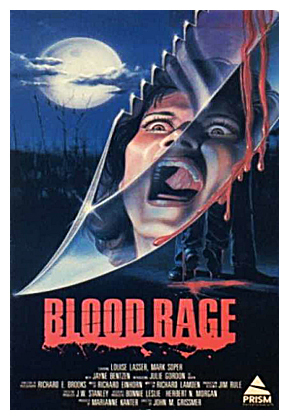
Blood Rage.jpg

3. Blood Rage


It’s only fitting that we finish the Halloween season and start preparing for Thanksgiving with a slasher film that takes place during the November feast. “Blood Rage” is one of those lesser known 1980’s slasher films that makes an undeniable impression on the viewer, in fact its one of those films that needs to be seen to be believed. The film starts at a drive-in with a violent murder, twin brothers are at the center of the investigation, and the wrong twin gets sent to a mental institute. It’s a completely bonkers premise that makes good on the gore and has that indelible charm that defined horror actors in the 1980’s.


2. Cherry Falls


Some films you discover in the theater, some you discover on late night cable television; “Cherry Falls” is one of those films I discovered on late night cable television more than likely hosted by Ronda Shear or Joe Bob Briggs. In the vein of teenage slasher films that hoped to capitalize on the success of “Scream”, “Cherry Falls” is one of the best copycats. This film subverts the slasher rules in an ingenious way, here the masked killer targets virgins in a small town called Cherry Falls. Brittany Murphy and Michael Biehn lead a fairly recognizable cast, lending a nice balance of drama and comedy to a horror film that makes bold decisions and confident turns.


The Entity.jpg

1. The Entity


Probably the scariest film on the list this time around. “The Entity” is a film that makes the most of its “based on true events” tagline, crafting a creepy and atmospheric vibe that builds impressive tension and boasts an exceptional performance from Barbara Hershey. A young mother undergoes the terrifying experience of being sexually assaulted, a disturbing and graphic portrayal, by an unseen entity. As she looks for help from friends, who don’t believe her, and scientists, who question her mental state, things only get worse. It’s a shocking and exploitive film that may not be for every horror fan, but for those willing to make the journey, it’s one of those films that will stay with you long after the credits roll.


Jeff Mitchell’s List….


The Brood.jpg

5. “The Brood” (1979)


Director David Cronenberg made a living for years by delving into body horror, and “Scanners” (1981), “Videodrome” (1983) and “The Fly” (1986) rightfully garner plenty of press and accolades.  Don’t forget his 1979 effort about a woman named Nola (Samantha Eggar) who begins bearing children in a most bizarre and twisted way.  One scene in particular could give you nightmares for days, weeks, months…


4. “Black Christmas” (1974)


“Halloween” (1978) might be considered the first mainstream slasher film, but director Bob Clark’s picture arrived in theatres four years earlier.   A group of sorority girls hope to spend a joyous holiday over Christmas break, but an unknown maniac – with unknown motivations – attempts to murder them one by one.   Creepy and violent, it has a raw and unsettling edge.  Margot Kidder stars.


Open Water.jpg

3. “Open Water” (2004)


Scuba diving in the Caribbean sounds like a fun way to spend a holiday, but for Susan (Blanchard Ryan) and Daniel (Daniel Travis), their trip turns into an unthinkable nightmare.  Their boat mistakenly leaves them, while they were swimming below the ocean’s surface and find themselves treading water with sharks nipping at their heels.  A suffocating movie that will make you hold your breath and lift up your feet from your living room floor.


2. “High Tension” (2003)


This savagely brutal French picture innocently begins with Alexia (Maiwenn Le Besco) inviting her college friend, Marie (Cecile De France), to her family’s farmhouse for rest and relaxation.  Unfortunately, this Norman Rockwell setting soon turns into a place of mayhem, when a mysterious stranger enters and splatters buckets of his victims’ blood all over the figurative artwork.  A wild twist elevates director Alexandre Aja’s already memorable picture.


orphanage.jpg

1. "The Orphanage” (2007)


Laura (Belen Rueda) moves back to the closed orphanage that she lived in years ago and brings her husband and son as well.  Spooky noises and a child with a sack draped over his head appear, as this old house does not contain fun and games for Laura and her family.  Guillermo del Toro produced this emotional stunner from Spain, which is not an ordinary ghost story.


Ben Cahlamer’s List….


Only within the last year has Ben begun to submerse himself in the world of horror, so you may find his list focus on more recent titles. We imagine over the next few years his mind will be blown by what he’s been missing.  Here we go…..


5. “Green Room” (2015)


This film might not be underrated, but it certainly feels underseen. The film from Jeremy Saulnier features Anton Yelchin in one of his final performances. Patrick Stewart is in a role that we’ve seen before, but never in this setting. It’s a lot of fun.


Hounds-of-Love-2.png

4. “Hounds of Love” (2016)

Ben Young’s debut film is more of a thriller, but the implications of it read horror for the main character, Vicki played by Ashleigh Cummings. Emma Booth and Stephen Curry were equally as dangerous.


3. “Raw” (2016)

This French-Belgian horror film stunned audiences at Cannes in 2016 and ran the art house circuit in the US this year. While the technical side of this film is stunning, especially the makeup, effects and camera work, Garance Marillier was absolutely divine as Justine.


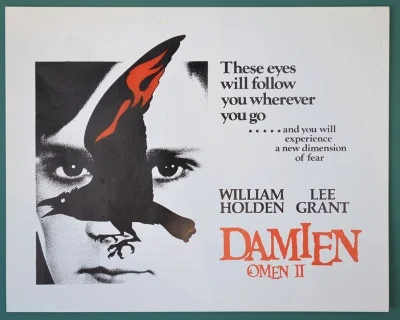
damien.jpg

2. “Damien: Omen II” (1978)

In the middle of a mainstream resurgence of horror films, sits Don Taylor’s sequel to one of the more famous horror films. It is not as strong as the original, but the performance by Jonathan Scott-Taylor as young Damien still haunts me.


Alien 3.jpg

1. “Alien 3” (1992)

This entry might turn some heads, but I have an affinity for David Fincher’s first big studio feature. Fraught with production issues, the film makes logical choices given the events of the two films that preceded it, even if they aren’t rational. The reason why I like this film so much is because it makes such brilliant use of dark corners. There really is no place to hide.

Thank You for Your Service - Movie Review by Jeff Mitchell

Thank you Poster.jpg

‘Thank You for Your Service’ effectively offers a rare look at soldiers coming home


Directed by: Jason Hall

Written by: Jason Hall, based on the book by David Finkel

Starring: Miles Teller, Beulah Koale, Joe Cole, Haley Bennett, Keisha Castle-Hughes, and Amy Schumer


“Thank You for Your Service” – “How do you remove the shield that the warrior has been given in order to (step) into battle?   Taking away that shield is very hard.” – Jason Hall


Writer/director Jason Hall’s Iraq War movie is not a conventional one, because it focuses on soldiers returning home and the adjustments, struggles and churn that present brand new challenges for them.  As Hall explained in a recent Phoenix Film Festival interview, in order for the military to turn men and women into warriors, they have to teach them how to be fearless and to charge into harm’s way.  When soldiers come home, however, that emotional shell or shield that they have built - through training and combat - is not easily removed.  


Additionally, their homes that they originally left now feel different.  For the soldiers in “Thank You for Your Service”, their home is Kansas.


Adam (Miles Teller), Solo (Beulah Koale) and Will (Joe Cole) are three young Iraq veterans, who return home and attempt to restart their lives but are hampered and haunted by the emotional, mental scars endured from their time in Iraq.   This film carries an introspective, thoughtful weight, with quiet conversations and moments of reflection, as Adam, Solo and Will attempt to transition from a dangerous, violent Middle East arena to making breakfast for children, looking for work and addressing a broken relationship, respectively. 


While the men try to cope, Hall includes their families and significant others as equal partners in this after-combat equation.  Generally speaking, without any insight into their partners’ experiences overseas, soldiers’ spouses might wrongly assume that a life of normalcy at home is the perfect recipe to dial down from the front lines.  For these men, and hundreds of thousands of others who have served/are serving in the military since 9/11 and who suffer from a traumatic event, life is not nearly as easy as walking through the front door, receiving a hug, enjoying a meal, and soundly sleeping. 


Adam’s wife, Saskia (Haley Bennett), very quickly understands that her husband is not acting like himself and repeatedly asks him to communicate with her, but he remains mostly silent.  Not completely silent, but certainly not forthcoming on the details of his troubles.   While at a racetrack and hearing the noisy cars whizzing by as strident, mechanical white noise, Saskia looks for straight talk from Adam.  He gives her some sense – through osmosis - of a far away, grizzly encounter, but then gets up, walks to a fence surrounding the track and stares at the masses of steel burning up the concrete.  Adam knows that he needs help and solely opening up to his wife will not address the problem.   Solo is in worse shape, and with his partner, Alea (Keisha Castle-Hughes), carrying their baby, he knows that a comforting, pleasant future existence of family will be impossible, because he feels like a ticking time bomb. 


Unfortunately, the clock ticks and ticks and ticks at their local VA, as they wait and wait and wait for help, as the film effectively addresses the current supply/demand issues at veterans’ hospitals.  With not enough professionals to see the emotionally-wounded warriors, Adam, Solo and many other vets sit in the lobby, with the very dim hope of counseling actually occurring, and if it does, it could be months down the road.  The problem is: their problems exist right now. 


Will’s circumstances place him in even more dire straits, but he becomes a secondary character in the film, even though his important screen time greatly impacts the narrative.   Adam Schumann and Tausolo ‘Solo’ Aeiti are real life Iraq veterans, and this film is a depiction of their lives, based upon journalist David Finkel’s book of the same name. 


On its own, “Thank You for Your Service” is a moving, emotional and difficult journey, but when one recognizes that this movie captures the true stories of these men, it resonates even more.   During a screening and Q&A of the film with Hall on Oct. 12 in Tempe, Ariz., one also quickly realizes that the onscreen stories can be universal to any veteran in any branch of service.  It is a vitally important movie while clearly demonstrating that taking away that shield is very hard.

(3/4 stars)


Jeff – a member of the Phoenix Critics Circle – has penned film reviews since 2008 and graduated from ASU’s Walter Cronkite School of Journalism.  Follow Jeff and the Phoenix Film Festival on Twitter @MitchFilmCritic and @PhoenixFilmFest, respectively.


Wonderstruck - Movie Review by Jeff Mitchell

Wonderstruck.jpg

‘Wonderstruck’ delivers cinematic wonders with a less effective mystery


Directed by: Todd Haynes

Written by: Brian Selznick

Starring: Millicent Simmonds, Oakes Fegley, Julianne Moore, and Michelle Williams


“Wonderstruck” – “Lighting can best be seen in the dark…Bright persons do best in bad circumstances.” – Erik Tanghe


In 1977, Ben (Oakes Fegley), a preteen boy living in Minnesota, runs into terrible circumstances, as a one in one hundred million chance event crashes down upon him.  Actually, it flashes down upon him, as a bolt of lightning upends his life.  The said event and the moments leading up to it then lead Ben on a journey, one towards New York City. 


Fifty years earlier, Rose (Millicent Simmonds), a preteen girl living in New Jersey, makes a mad dash for New York City as well.  Rose wishes to catch a glance - and in fact, some attention - from a stage/screen actress, Lillian Mayhew (Julianne Moore), as she rehearses for a new part, somewhere on Broadway.  


Although, these two kids share a similar journey, “Wonderstruck” slowly reveals - over 1 hour 57 minutes – that Ben and Rose have much more in common than initially meets the eye, which is the heart of the picture.  


Director Todd Haynes certainly has an eye for embracing beautiful cinematography with “Carol” (2015) and “Far from Heaven” (2002) proudly standing his resume, and this movie is no different.   Brian Selznick’s screenplay (based upon his book) alternates between the two time periods, and Haynes plays along with two dramatically distinct visuals of The Big Apple.  Haynes films 1927 NYC in black and white, but sometimes it feels like warm grays and whites.  In one particular scene, the bright lights of Time Square glow off the big screen, as their graceful rays seem to wrap the theatre audience with a gentle hug. 


Rose carries an earnest heart, but does not frequently receive gentle parental hugs.  Her stern, strict father constantly directs verbal assaults in her direction, and her absentee mother is not physically or emotionally available.  In fact, adults rarely provide comfort for her, but in one moment on the bustling streets, a random man reaches out his hand to help her up from the sidewalk.  As he gives Rose his undivided attention for a few seconds, she offers a rare smile, grateful for the kind gesture.   Simmonds offers delicate gestures of humanity through every minute of screen time, as she delivers a beautiful, heartfelt performance as emotionally renascent as the radiant glows from the city. 


She is a vulnerable kid in this massive place.  With the odds stacked against her, yes, she can satisfy her childhood ids, but only with perseverance and lots of luck.  You see, Rose is deaf.  Simmonds shares the same disability with her in real life, and Haynes adapts to Rose by always presenting her view of the world with the audience.  We – in turn – find her daily reality challenging and surprising.  The audience and she still receive 100 percent of her environment’s emotional messaging, even though she only carries 80 percent of her sensory gifts.  Credit Simmonds and Haynes for cinematically transporting us into Rose’s reality.


Even though Rose and Ben live in difficult realities, “Wonderstruck” operates in a world of mystical forces of fate.  These same forces pull Ben towards New York City, and his urban ecosystem looks, feels and sounds dramatically different than Rose’s.  Tight-fitting polyesters of oranges, yellows and purples dot and dance on the seas of rich, multicultural humanity.  While Rose’s world might be rigid and cold, Ben’s is lively and chaotic.  Both are intimidating and foreign to inexperienced children and are framed differently in their respective metropolitan glories.


Much of the film’s experience during the first hour contrasts their journeys, and the disparities and parallels effectively and cinematically offer intrigue.  Some parallels are obvious.  For instance, both kids engage with the same meteorite at the American Museum of Natural History.  Other experiences are more subtle, and the film would require multiple viewings to process many of its thoughtful visuals into actual audience connections.  On the other hand, the first hour’s pacing requires patience at times.  One could easily view Haynes’s movie as a classroom exercise for film students to pause, rewind, replay, pause again, and dissect.


As the film comes together in the third act, the mystery between the two kids’ connection becomes resolved.  Actually, rather quickly, but some of the smaller motivations – outside of their control - remain unclear and untied.  Perhaps Selznick and Haynes are expressing that kids will never have total insight into their parents’ ultimate rationales, or that children just try their best to see their complete realities while searching in the dark, even when a bolt of lightning leads the way.

(2.5/4 stars)


Jeff – a member of the Phoenix Critics Circle – has penned film reviews since 2008 and graduated from ASU’s Walter Cronkite School of Journalism.  Follow Jeff and the Phoenix Film Festival on Twitter @MitchFilmCritic and @PhoenixFilmFest, respectively.


Suburbicon - Movie Review by Ben Cahlamer

Suburbicon.jpg

Suburbicon


Directed by George Clooney

Written by Joel Coen, Ethan Coen, George Clooney and Grant Heslov

Starring Matt Damon, Julianne Moore, Noah Jupe, Oscar Isaac, Glenn Fleshler, Alex Hassell


No matter how much progress is made, race, money and politics are firmly in the minds of Americans. These are not necessarily negative subjects to talk about. As a matter of fact, if history has taught us anything, it’s that we are less close minded about these subjects, even if we still don’t like to talk about them. In fact, director George Clooney takes several risks to bring these subjects front and center in his latest film, the dark comedy Suburbicon.

Set in the late 1950’s, the small, unassuming and peaceful community of Suburbicon is just the haven families sought to escape from the hustle and bustle of city life. Suburbicon had all the amenities that a growing family needed to continue growing; plenty of land, lots of space and plenty of opportunities to socialize. Suburbicon hides its problems well. 

Perhaps a little too well.

As the film begins, the peaceful suburban respite of Suburbicon is disrupted when the Mayers move in, affecting the community as a whole. Behind the Mayers live the Lodges. Gardner Lodge is an extremely successful executive.  He has a wife, Rose and a son, Nicky. They seem to have everything they could want. A late night break-in results in Rose’s death and shakes the family to the core.  Rose’s sister, Margaret moves in to help take care of Nicky. Even with the citizens of Suburbicon up in arms over the Mayers, something more sinister involving the mob seeps in just below the surface.

Matt Damon plays the simple, yet multi-faceted Gardner Lodge; “simple” because the plans he hatches are so very simple and easy to trace. He’s multi-faceted because he has the foresight to counteract the hurdles he creates for himself, except one. Julianne Moore has had an absolutely stellar year and this is no exception. Noah Jupe plays Nicky; he is the quiet-type and is extremely respectful of his elders, a sign of the times the film is set in. Oscar Isaac shows up and steals the show while Glenn Fleshler and Alex Hassell are the strong arms.

In deference to Mr. Clooney, he went all out to make sure that we felt right at home, right down to the looks of the homes and the cars along with the situations the characters were placed in. Each of the cast members got the nuances of the characters right too. The film is so full of amazing detail along with Alexandre Desplat’s luscious score, that I felt like I was looking at a moving postcard, it’s that uncanny.

Sticking to the details, Mr. Clooney also assumed multiple risks in tackling such an involved film.

As swell as this film looks and sounds, the risks don’t pay off. Much like the sprawling suburb of Suburbicon, the script written by Joel Coen, Ethan Coen, Mr. Clooney and Grant Heslov hides its problems a little too well. The Coen’s originally wrote the script in the late 1980’s shortly after filming their acclaimed Blood Simple. Mr. Clooney and Mr. Heslov rewrote the script. The result is a series of outlandish and whacky vignettes which work because of the Coen – esque characters, but the overlapping narratives overlap the characters. The story objectifies the situations, rather than romanticizes them.

Which is a shame, because I am a huge sucker for all of the talents involved.

2.5 out of 4 stars

An interview with Jason Hall, director of Thank You for your Service by Jeff Mitchell

“Thank You for Your Service” is an Iraq War movie but not a conventional one.  Writer/director Jason Hall’s picture focuses on soldiers returning home and the adjustments, struggles and churn that present brand new challenges for them.  The film is based upon David Finkel’s 2013 non-fiction book with the same title, and Miles Teller, Beulah Koale and Joe Cole star as vets who carry internal, cerebral scars from the war. 


Thank You for Your Service.jpg

Jason stopped in the Valley on Oct. 12 and 13 and sat down with the Phoenix Film Festival for a group interview.  This first time director – who also wrote “American Sniper” (2014) – talked about the importance of addressing soldiers’ experiences after combat, veterans’ reactions to his film and much more.


“Thank You for Your Service” arrives in theatres on Friday, Oct. 27.


Q: Two of three soldiers who come home, Adam (Miles Teller) and Solo (Beulah Koale), are real-life men, who you talked with prior to filming.  In the movie, Adam has difficulty speaking about his Iraq experiences.  He does not want to share with his wife, Saskia (Haley Bennett), and does not talk about it with his friends.  Is this because he was a leader in Iraq, so he feels that he should show a silent strength back home?


JH: The challenge with this (movie) was making the story personal enough about Adam, but also making a story - through these guys and their decisions – that applied to every warrior who has come home (under similar) circumstances.  (The military teaches) these guys to shoot at human targets, so they can shoot at humans and walk into the bullets (on the battlefield), when (one’s) primary instinct is to walk away.  They teach them how to be fearless, and how to do things that normal humans just don’t have the capacity to do. 


In doing that, they create this toughness and this shell that allow them to do it, and everything that comes (afterwards) about finding your way back to yourself is untaught.  How you remove the shield that the warrior has been given in order to (step) into battle? 


Taking away that shield is very hard. 


So, for someone like Adam, it blew me away that (for) everything heroic that he has done in battle, he came back and revealed himself to David Finkel (the author of the book, “Thank You for Your Service”), allowed him into his life and watch what he was going through.  Even (through) some of Adam’s resistance to tell stories or to hold on to certain things, his willingness to articulate, let this guy in and be vulnerable was as heroic as anything that he did in battle.


Q: Your film places more emphasis on what happens when a soldier comes home, as opposed to what happens in combat.  Why do you think that is so important to talk about, especially in film?


JH: I think (knowing) the consequences of war are tremendously important to a society, especially one that distances (itself) from the aftermath of war and the consequences (for) its warriors.  In my mind, and what I’ve seen, these guys are honorable, young men and women, who are making decisions to serve their country.  It’s beholden upon us - not just the government, but the citizens – to make sure that we are making the right decisions, and we are electing the right people who put us into conflicts equally as honorable as the men (and women) we are sending over there. 


For all the war films that we make, we haven’t made a ton about (soldiers) coming home.  Cinema holds a big responsibility, in that it’s able to shift people’s perception.  So, it’s also beholden upon us to tell the right story.  Tell the true story and not just half the story that sells a lot of tickets.


Thank you Poster.jpg

Q: Do you see “Thank You for Your Service” as a response to “American Sniper” or a spiritual duo?


JH: I call it spiritual sequel, I think.  It stands as its own film (too).  (In “American Sniper”), these guys go away and fight a very different war.  They came from very different places and are very different people from who these guys in “Thank You for Your Service” are. 


It was challenging for me.  Early on, I thought, “I already know this war.  I’ll just step right in and tell this story.”


That wasn’t the case. 


Because of the selective process of special forces, there’s a different way that the soldiers in “American Sniper” deal with the traumatic effects of war.  In the Navy SEALs selection process, they weed out everybody, and it’s not a physical weeding out.  It’s a psychological one.  It’s not Olympic athletes who go to “Hell Week” and make it.  (They are) guys who have armors, who have tough minds, who (get) up at 5 o’clock in the morning, who know hard labor.  (They are) farmers, wrestlers and blue-collar kids that just have a toughness about them. That mental toughness translates to battle, and they are less susceptible to some of the things that others suffer because of that mental toughness.  They (are) able to compartmentalize pain (and) suffering, so it’s a psychological weeding out of those who are not able to process mental anguish in a way.


These guys, on the other hand, when you start talking to them, they had very little training.  There was very little time to prepare them. You are dealing with kids, and they don’t have the experience, they don’t have the training, and they don’t (go through a) weeding out process.  They are just (looking) for an opportunity. 


Adam comes from a nice family.  He comes from a well-off family.  For a lot of these guys, (joining the military) is their best opportunity.  Becoming a warrior is their best opportunity.  Adam Schumann fell in love with a girl.  He wanted a house (with) a picket fence, and he didn’t want go fracking in North Dakota.  He could’ve done fracking work or join the military and serve his country.  That seemed much more honorable to him.  So, it’s a different story than special forces.  This is really the working-warrior class.  It’s the blue-collar soldier that we send off to war, and I wanted to make a film with social realism about these warriors’ struggles when they come home. 


Q: What has been the reaction from Adam Schumann and vets who have seen “Thank You for Your Service”? 


JH:  It’s been terrific.  The first time I showed Adam, we got him some popcorn and a Coke, and he said that he didn’t touch the popcorn (and) Coke the whole time and basically cried for an hour and 45 minutes.  He (also) laughed and had these experiences of beauty.  Afterwards, I gave the guy a hug, and he said that (the movie) was beautiful.


The most common response that I have (received) from veterans is: “Somebody finally told our story.”


Q: One of the movie’s themes is: the real world that these men come back to is not the one that they (once) knew.  Something has changed, but their spouses might assume that home is exactly the same.  Does that frequently occur?


JH: I think spouses (sometimes) expect the (people) that they send off, return to them the same.  They expect that person to step into the same role that they left.  They are not expecting (that they) come back changed and parts of them are unknown now.  The trick is (to) structure (the film), so the audience is also in that unknown part as well.


You want (the audience) to be with Adam and the guys, but also step back and say, “Who are they talking about?  Who are these names that they are bantering around?  I don’t know what happened.  This is unclear.”


And (the movie) is intentionally unclear, because that is what (a) family experiences.  A family experiences the mystery, (tries) to unwrap the newness of this person and get to the bottom of this story.  (The returning warrior) had relationships and extraordinary experiences that (family members) don’t understand or even know about.


I wanted to structure the film, so the audience felt that too.  


Q: You started out acting and made the transition to screenwriting.  Now you are directing.  Would you say that it has been a very natural transition for you?


JH: Yea, I think they all happen organically.  There wasn’t a real plan there.  I tried to go to film school early on and (was) certain that I wanted to make (movies).  So, I just kept kicking on doors, until somebody let me do it.


Q: Working with Clint Eastwood on “American Sniper”, did you learn anything from him as a director?


JH: I think you learn a lot from anybody who is a master like that, and certainly, there is an ease and fluidity that Clint works that is intoxicating.  I don’t have (the) same persona as Clint.  I’m very anal.  So, God bless him, but I am not that kind of filmmaker. 


(In my movie), I wanted to find an architecture in the houses that was similar to the (ones) that they lived in.  I made sure that we had 200 actual veterans sitting in the VA, because I know that veterans recognize veterans.  I imported two tons of trash into Morocco, because I haven’t seen an Iraq war film that had enough trash in it.  “The Hurt Locker” (2008) was maybe an exception. 


So, I guess I learned a lot from Clint and nothing at all.  Maybe it just takes 100 films to get that ease and calm.


Jeff – a member of the Phoenix Critics Circle – has penned film reviews since 2008 and graduated from ASU’s Walter Cronkite School of Journalism.  Follow Jeff and the Phoenix Film Festival on Twitter @MitchFilmCritic and @PhoenixFilmFest, respectively.


Breathe - Movie Review by Ben Cahlamer

Breathe.jpg

Breathe


Directed by Andy Serkis

Starring: Andrew Garfield, Claire Foy, Hugh Bonneville, Dean-Charles Chapman, Tom Hollander, Diana Rigg

Written by William Nicholson


I’m going to go out on a limb here. Cinema, today is filled with nostalgia-driven stories that don’t necessarily focus on story or character, but on just being. Hollywood rages against itself with interconnected cinematic universes, which I’m not opposed to. In the same vein, there is a growing trend over the past few years that has seen an increase in nostalgia-driven biopics. More than that, they focus on historical aspects of our global society. Andy Serkis’ directorial debut, Breathe is a solid example of a film that fits both bills.

Set in the late 1950’s, the footloose and fancy-free Robin Cavendish (Andrew Garfield) courts Diana Blacker (Claire Foy), taking her on his tea-broking adventures to Kenya. Shortly after their arrival, he succumbs to polio at age 28, paralyzing his body from the neck down.

Mr. Garfield uses his roguish charms to convey the onscreen character’s exuberance for life. When he was diagnosed, they only gave him three months to live. He would go on to be the longest surviving “responaut” when he passed in 1994 at age 64. William Nicholson’s script wisely doesn’t focus on Cavendish’s suffering or the disease itself. It instead focused on his exuberant nature; his zest for helping others. It also focused on his family. Ms. Foy was perfectly cast as Diana. Their love for each other transcended his diminished state, and she supported her husband in all his efforts to extend not only his own quality of life, but their son, Jonathan’s as well.

The support network that Cavendish surrounded himself with does not stop at family, and Serkis takes full advantage of the nimble supporting cast. Tom Hollander plays Diana’s twin brothers, Bloggs and David Blacker, though you cannot tell in the film which twin is which. Hollander plays both roles with grace and humor. Hugh Bonneville plays Teddy Hall, the Oxford professor who helped convey Cavendish’s message to medical experts around the world.

Although his role was limited, Dean-Charles Chapman drives the human element as the next generation of Cavendish. It is important to note that Jonathan Cavendish produced this film, so we get a first-hand account of his experiences with his dad. His involvement in the film diminishes some of the emotional impact of the family life for the sake of dramatization, but it does not turn the film into a paint-by-the-numbers-drama.

Mr. Serkis, whose claim to fame is playing motion-capture characters such as Lord of the Rings’ Gollum or Caesar in the modern Planet of the Apes trilogy, uses his experiences here to frame Robin. Mr. Garfield naturally uses his facial expressions to convey his emotions, and Mr. Serkis uses his motion-capture character experiences to their full advantage, which sounds like it shouldn’t work because it is the exact opposite of his experience. The reason it does work is because a lot of the capture work is on his facial expressions, which requires his body to be still. Robert Richardson’s cinematography extends Serkis’ vision for the film, using a warm and inviting color palette.

It goes without saying that my praise for Breathe is largely in part due to Mr. Garfield, Ms. Foy and Mr. Serkis’ excellent direction. This might seem high praise, but after seeing the film, and knowing his background, I dare say that Mr. Serkis is a modern Frank Oz, and I hope he continues to explore his craft on both sides of the camera.

3 out of 4 stars.


Geostorm - Movie Review by Ben Cahlamer

Geostorm.jpg

Geostorm


Directed by Dean Devlin

Starring: Gerard Butler, Abbie Cornish, Ed Harris, Jim Sturgess, And Garcia

Written by Dean Devlin and Paul Guyot


I feel really badly because I was going to open this review with yet another “when I was a kid” type stories to share. Yes, I grew up with effect-laden spectacles, and I even found a second wind with the disaster epics that permeated moviegoers’ minds in the 1970’s and 1980’s. They had stories and characters that amplified the moods of audiences. Most importantly, they had stories that audiences could relate to. Unfortunately, Dean Devlin’s Geostorm has all of the ambition, but none of the relatability.

In the film, 18 of the world’s governments band together to create a satellite network called “Dutch Boy”, which was designed to control the global weather, creating calm. The chief architect behind “Dutch Boy”, Jake Lawson (Gerard Butler) brings the system online in 2019. Three years later, he is removed from the program in a bureaucratic move, and when a freak ice storm kills a village full of people in the deserts of Afghanistan, Jake is called back into action.

The film does do two things right. First, it builds on the global warming environment. It doesn’t dwell on it, but it does bring those concerns to the center of the world stage. It also brings together collaboration by world governments. I leave the particulars of the ‘hows’ and the ‘whys’ for audiences to discover.

Needless to say, the script by Mr. Devlin, Paul Guyot and in an uncredited re-write, Laela Kalogridis, is largely uninspired. It felt as if they took the best parts of Gravity, Independence Day, The Core, Deep Impact, The Day After Tomorrow and Armageddon, put them in a blender, shook the chunks out and called it a day.

The casting is fine for this type of film. Jim Sturgess doesn’t do action very well, but as Max Lawson, he is convincing when he conveys the seriousness of the situation. Abbie Cornish was no-nonsense serious as Secret Service Agent Sarah Wilson, but the relationship between Sarah and Max feels extremely forced. It was nice to see Richard Schiff in a cameo, while Andy Garcia makes for a formidable POTUS. Ed Harris plays Leonard Dekkom, the Secretary of State. I don’t know where his character’s inspiration came from, but if you’re paying attention to the dialog, the outcome of the film becomes clear very early on.

The second thing that this film gets right are the gorgeous special effects. Yes, some of the effects are hyper-frenetic. Yet, they had plausibility to the narrative. The scenes in orbit looked extremely realistic and the future space shuttles gave me hope for a second round of the Space Program.

It was clear that Mr. Devlin had a vision, and when the film didn’t test well, extensive reshoots were ordered and the film sat on the shelf for two years. It is not an abomination, but it is not Mr. Devlin at the top of his game either. I have to say that I was genuinely unhappy when, after the house lights came up, I couldn’t even laugh at some of the gross overstatements the film makes. As I was trying to figure out how to convey my feelings for Geostorm, I decided to let something that made an impact on me as a child convey my feelings for me: “It’s Not Nice to Fool Mother Nature.”

1.5 out of 4 stars

Only the Brave - Movie Review by Monte Yazzie

Only the Brave.jpg

Only The Brave


Director: Joseph Kosinski

Starring: Josh Brolin, Miles Teller, Jeff Bridges, Jennifer Connelly, James Badge Dale, Taylor Kitsch, Andie MacDowell, Geoff Stults, and Ben Hardy


The story of the Granite Mountain Hotshots is tragic and heroic. It’s a story that displays the consistent, and often underappreciated, bravery that firefighters demonstrate while battling some of the biggest fires in the country. 19 Granite Mountain firefighters gave the ultimate sacrifice on June 30th, 2013 in Yarnell, Arizona, in one of the deadliest wildfires in recent U.S. history.


Turning the story of these men and their specialized work into a film is a daunting task, especially when it comes to creating a biography that engages and honors the memory of these firefighters. Director Joseph Kosinski, who tacked the science fiction films “Tron: Legacy” and “Oblivion”, may not seem like the most likely choice. However, “Only the Brave” operates as a film that aims to pay tribute to the memory of these firefighters first and foremost.


“Only the Brave” takes its time telling the story of the Granite Mountain team, watching them progress towards certification as the nation’s first municipal firefighting team with elite status as “hotshots”, which is the title given to firefighters who specialize in wildfire suppression tactics. Leading the team from Prescott, Arizona is Eric Marsh (Josh Brolin), a tough supervisor who is haunted by dreams of a bear engulfed in flames. Eric and his wife Amanda (Jennifer Connelly) have a strained relationship due to the prolonged hours Eric works. Preparing for their certification opportunity, Marsh hires a new recruit named Brendan McDonough (Miles Teller) who is trying to turn his life around. McDonough earns his place within the team, “the family” as many of the firefighters describe it.


“Only the Brave” operates differently than other films like it. Take for instance a film like “Blackhawk Down” where much of the story is told through an action vehicle lens, “Only the Brave” rarely utilizes fire as motivational force. Instead the film steadily focuses on the characters and the drama that takes place away from actual firefighting, at home and during the down time. Mr. Kosinski utilizes these moments to provide insight into the lives of the firefighters, we see them with their families and watch them bond as teammates. Whether it’s taking care of an infant with a high fever, arguing with a significant other about life’s problems, or hanging out a barbecue, the film displays the ordinary and everyday lives of these men away from their heroics inside a dangerous fire. While this has a tendency to single out certain characters, it’s important to remember that all these men have a story to tell, it never undervalues the brotherhood these men have with one another.


The cast is a group of recognizable faces. Josh Brolin plays Eric Marsh as a tough but fair leader. James Badge Dale plays Jesse Steed, the second in command to Marsh, with loyalty and an unwillingness to let his team be anything but the best. Miles Teller plays Brendan McDonough with empathy, portraying a young man doing his best to make good on a second chance. Jennifer Connelly plays Amanda Marsh with compassion; she is a woman who must share her husband with a career. Connelly and Brolin have good chemistry even though they are stilted with some unfortunate dialog.


It’s impossible to honor each of the 19 men equally, even within the 133 minute running length of the film. While some of the specific stories and characters are singled out for dramatic storytelling purposes, the emphasis remains on the aspect of honor and bravery. Regardless of whether you are familiar with the story, everyone knows the tragic and devastating outcome; and trust me it’s one of the most heartbreaking scenes you’ll see in the cinema this year. These were real people, with real families, who made a real sacrifice for public safety. “Only the Brave” may not be the most unique title but it’s the perfect phrase to describe the men in this story.


Monte’s Rating

3.75 out of 5.00

Only the Brave - Movie Review by Jeff Mitchell

Only the Brave.jpg

‘Only the Brave’ salutes Prescott’s elite firefighting team


Directed by: Joe Kosinski

Written by: Sean Flynn, Ken Nolan and Eric Warren Singer

Starring: Josh Brolin, Miles Teller, Jennifer Connelly, James Badge Dale, Taylor Kitsch, Jeff Bridges, and Andie MacDowell


“Only the Brave” – “If this isn’t the greatest job in the world, I don’t know what is.”  - Eric Marsh (Josh Brolin)


Eric Marsh utters the aforementioned declaration during a moment of satisfaction of a job well done, but his chosen profession is also one of the most grueling and physically taxing that one can imagine.   Eric is the superintendent of the Granite Mountain Hotshots, an elite firefighting force, and this particular group of men earned a notable distinction.  The hardworking, Prescott, Ariz. crew became the first municipal hotshot team in the United States, and director Joe Kosinski’s “Only the Brave” honorably tells their true story on the big screen.


Like police officers who run towards the sound of gunshots to serve and protect, wildland firefighters charge towards dangers that appear in the form of raging infernos, those which burn helpless trees for thousands and thousands of acres.  Beautiful, green trees that unfortunately become labeled as “fuel”.  Teams like the Granite Mountain Hotshots leap to the front of these fires’ paths, quickly dig trenches and cut down vegetation to squelch these scorching demons, hell-bent on burning everything in sight.


At times, “Only the Brave” is an action picture, and Kosinski captures stunning moments of massive fires ripping through Arizona forests (which are seamless blends of actual New Mexican fires, flames created by the film crew and CGI), while these 20 brave men endure oppressive heat, rough terrain and long days and nights battling against their chosen enemy.   Like many war films - such as “We Were Soldiers” (2002) and “Saving Private Ryan” (1998) – a more prominent facet of “Only the Brave” is the comradery that these men have for one another.  The brotherhood that they share. 


In an interview with the Phoenix Film Festival, Kosinski said, “That is the heart of this film.  It’s about the brotherhood.  It’s about what we are capable of, when we can rely on the guy standing next to you.”


With a runtime of 2 hours 13 minutes, Kosinski’s picture spends time in expressing these bonds through moments of humor, quiet conversations, demanding training, and hair-raising action in the field. 


These 20 men have 20 unique, personal stories, and the film deepens its focus on a few select firefighters, including polar opposites (at least at first) Eric Marsh and Brendan McDonough (Miles Teller) who garner the most screen time.  They are connected. 


Brolin’s Marsh is a no-nonsense leader, a drill sergeant in a way and develops his men into tireless warriors to battle the forces of nature on the smoky front lines.  Eric is the type of person who intellectually ponders a fire’s thought process and then quickly throws himself into the mix for 16-hour days and delivers firm orders to suffocate fires, while also caring about his men’s safety.


In his spare time, Eric rides horses with his wife, Amanda (Jennifer Connelly), as this power couple also seem to double as a cowboy and cowgirl placed in a time capsule from 150 years ago and resurrected in present-day.  Kosinski ensures that Eric and Amanda’s three-dimensional relationship is properly captured on-screen.  Connelly is terrific in portraying a woman who is crazy in love with her husband, accepts his dangerous job but also desires his equal attention in their relationship.  Many times, this becomes an impossible task for Eric.  He deeply loves her, but – as the leader of the Granite Mountain Hotshots – a majority of his time is spent on assignment, saving lives by containing and ending runaway forest fires.   We also learn a surprise backstory which adds to their intrigue as both an empathetic and respected couple. 


Eric runs a respected firefighting company in Prescott but wishes to certify his team as hotshots.  They need to flawlessly execute their work to even sniff at a chance to call themselves hotshots, but in a twist of fate and with the worst sense of timing, Eric cuts a flawed young man a break by giving Brendan McDonough a chance to join his firefighting team.  Teller is perfectly cast, as the actor portrays Brendan as a directionless local whose ever-present route of underachievement is his one certainty.   With drug use and trouble with the law as predominant entries on his resume, a 180-degree life turn is the only foundation that could beget any inkling of success as a firefighter.  Of course, that is not lost on the other men, like Chris (Taylor Kitsch) and Jesse (James Badge Dale), and especially when they desperately hope for their elusive certification.  They also realize that Brendan is now their brother.


Jeff Bridges and Andie MacDowell round out an impressive, star-studded cast, and one might easily derive that many, many great actors and actresses hoped for a piece of screen time in this film.  The Granite Mountain Hotshots are a hugely memorable firefighting team, not only for their groundbreaking accreditation, but for their mark in history during one particular fire.  Many Arizonians know Granite Mountain’s story, but whether one is aware of it or not, it does not spoil the movie experience.  A visual and truly emotional one that keeps us on the edge of our seats, offers a deeper understanding of a firefighter’s bond with his or her brothers and sisters on the front line and a sense of what makes this particular job…the greatest in the world.

(3/4 stars)


Jeff – a member of the Phoenix Critics Circle – has penned film reviews since 2008 and graduated from ASU’s Walter Cronkite School of Journalism.  Follow Jeff and the Phoenix Film Festival on Twitter @MitchFilmCritic and @PhoenixFilmFest, respectively.