I Care a Lot – Movie Review

Written and directed by:  J Blakeson

Starring:  Rosamund Pike, Dianne Wiest, Peter Dinklage, Eiza Gonzalez, Chris Messina, and Isiah Whitlock Jr.

Runtime:  118 minutes

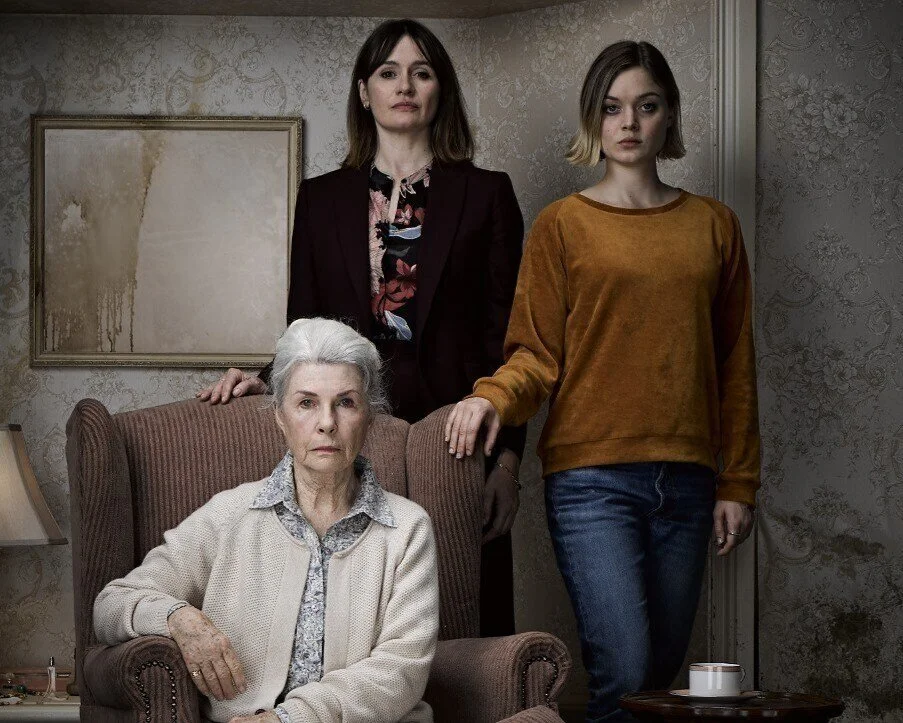
ICareALot_movie1.jpg

Pike, Wiest, and Dinklage embrace this modern-day crime story

“Caring is my job.  It’s my profession.” – Marla Grayson  (Rosamund Pike)


Marla Grayson loves her job.  She’s a caregiver.  Well, that’s not correct.  She’s a legal guardian, one for the elderly, and she has dozens of clients, those who need a robust, proficient personality to help make decisions for them, for both day-to-day happenings and grand issues. 


Wow, Marla sounds like a godsend, and perhaps she’s doing the Lord’s work, a real Mother Teresa.  Not so fast.  We soon discover that she carries all the selfless, kind altruism of Alec Baldwin’s Blake from “Glengarry Glen Ross” (1992).  You know, the executive who announced a sales contest by saying, “As you all know, first prize is a Cadillac Eldorado.  Anybody want to see second prize?  Second prize, a set of steak knives.  Third prize is you’re fired.”  

Well, the professional in this movie – with an endless supply of impeccably-tailored power suits and skirts for every bright color of a rainbow – always searches for her next pot of gold in the form of siphoning cash and possessions from her unsuspectingly clients, who may or may not be mentally capable of making decisions for themselves.  


If one hopes that Marla sports a soft spot for someone within her vulnerable target market, please shoot that notion down.  

It’s a zero-sum game out there in Brydon County, as she proclaims that human beings fall into only two categories:  “The people who take and those getting taken.”  

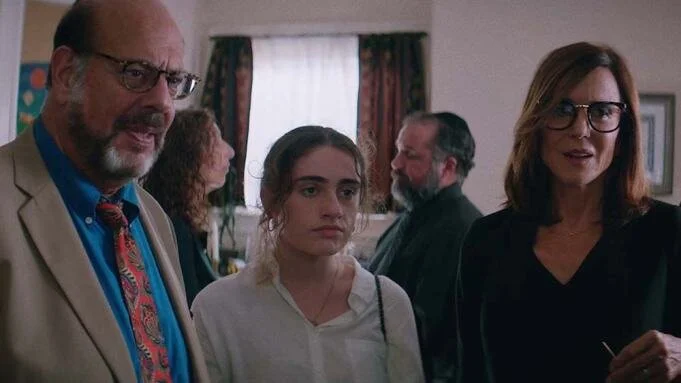
ICareALot_movie2.jpg

As writer/director J Blakeson’s movie suggests – accompanied by Marc Canham’s playful synthesizer score that frequently stirs warm memories of Suzanne Vega’s “Luka” (1987) - Marla does care a lot!  About herself.  Her scheme – which she’s smoothly and slickly carried on for years – has finally run into a stumbling block, a troubling one, when she discovers and recruits a new mark, Jennifer Peterson (Dianne Wiest).  Marla places this mild-mannered, comfortable, and competent 70-something under massive restrictions at Berkshire Oaks, a nursing home with all sorts of creature comforts but no real freedoms.  Think of the mental institution in “One Flew Over the Cuckoo’s Nest” (1975) with larger bedrooms and finer linens.  


Actually, Pike – in this film - resembles Sarah Paulson and her turn in “Ratched” (2020), a Netflix “Cuckoo’s Nest” prequel series that captures the early-life and deadly times of Nurse Ratched.  Marla is a cool, unscrupulous opportunist who games the system.  She doesn’t forcibly dole out abusive medication, but she has no shame in giving the orders to those who will.  Look, if you see Ms. Grayson fiercely marching your way - and you’re over the age of 65 with a pocket full of Benjamins - turn around, run for cover, and call for an Uber lickety-split.  


Avoid this wolf in Stepford Wives’ clothing.


Blakeson’s film owns a similar analogy, as his script takes some head-spinning genre turns, but at its heart, it’s a wicked black comedy, a satirical take on life in 2021.  Unless someone recruits 10 other henchmen to break into The Bellagio’s vault, the days of outlaws robbing banks are long gone.  Nowadays, a crook can pick your pocket – with an alluring white, porcelain smile - while sitting down for coffee in a spotless, modern, minimalist office or servicing some well-placed sociable words in a court of law.


Yes, an opportune legal summons, a shifty backroom conversation, or some nifty keystrokes on a Mac have replaced a steel drill bit, a blowtorch, or explosives.  Sure, this take on 21st-century crime isn’t a hyper-recent phenomenon, but cruelty or apathy towards our fellow man may have reached new highs in 2021.  Just turn to your news app of choice for hundreds of examples.  Better yet, don’t.


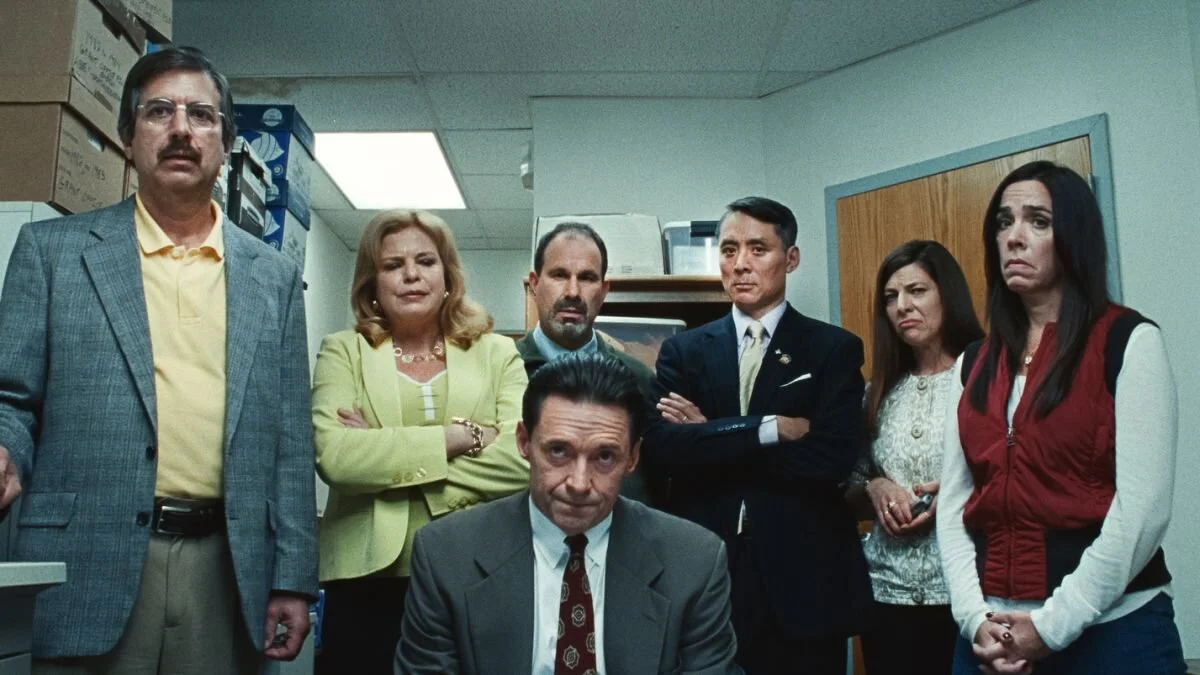
ICareALot_movie3.jpg

“I Care a Lot” is a model example of intriguing storytelling, and it mercilessly dives into the aforementioned and brutal current events vibe.  Pike – a thespian-chameleon who can perfectly accommodate any genre and character – is devilishly terrific here (of course), as this critic admires Marla’s ingenuity and despises her heartless game.  Marla’s a villain, but then she meets her match with Peter Dinklage’s Roman Lunyov, a man with a keen interest in Jennifer Peterson’s well-being.  Dinklage seems to have a blast internalizing Roman’s rage, which also sometimes explodes outside the surface.  Not to expand on the Grayson-Lunyov storyline, let’s just say that both parties care a lot.  


If you can manage the stress for 118 minutes, you might too. 


Jeff’s Rating

3/4 stars

"Palm Springs" Interview With Actors Andy Samberg and Cristin Milioti

PalmSprings_1.jpg

“Palm Springs” is a hilarious, wondrous comedy about two strangers meeting at a Palm Springs wedding, but due to a pair of bizarre, out-of-this-world of mishaps, Nyles (Andy Samberg) and Sarah (Cristin Milioti) are stuck with one another and need a miracle to free themselves.  This film gifts more surprises, chuckles, and genuine smiles than a Times Square New Year’s Eve celebration filled with laughing gas.  Samberg and Milioti share boundless chemistry and comedic timing in a film – directed by Max Barbakow and written by Andy Siara - that never loses momentum or authenticity.

Andy and Cristin graciously shared their time on a Zoom call with the Phoenix Film Festival and several other media outlets for a light, fun, and engaging Q&A.  The stars spoke about the film’s premiere at Sundance 2020, the script striking the right balance, and Cristin also mentions her experience with desert weather, and as Arizona residents, we can relate! 


“Palm Springs” is available to stream on Hulu. 


Q:  A year ago, “Palm Springs” had its world premiere at the Sundance Film Festival.  What do you remember about that screening, the energy in the room, and the audience’s reaction?


AS:  How great it was to be in a movie theatre and surrounded by people.  (The premiere) went better than I was expecting, and (I was) excited by that.  I (shared) looks with Cristin and other people who worked on the movie (during) the screening and afterwards and (felt) glad (that) everyone seemed (to enjoy) it.  

CM:  It was incredible.  Obviously, (watching a movie in a theatre) takes on extra significance now.  It was amazing to feel people react in the same ways that I reacted when I read (the script) and hear an audience of hundreds of people laugh, scream, cry, and not know any of the twists.  (To) not only laugh so hard but (also) be moved by (our movie); it exceeded my wildest expectations.  To be there as a cast and crew (too); we hadn’t seen each other since we shot (the film), and it was beautiful.  I really want to go back in time. 


Q:  What were the unique challenges to “Palm Springs”?


AS:  The biggest challenge was not (having) a lot of money (in the budget).  That makes everything more challenging, but all of us (decided) that we still wanted to be very ambitious with how much we (shoot) and the scope of the things (that) we (shoot).  Once we were up and running, it was more about the crunch of the schedule.  It was the challenge of (making) this movie look (the way) we all envisioned it.  


Q:  How many days did you have to shoot?

AS:  21 and a half.  (That half did make a big difference) because we spent half of it driving.  It was at Joshua Tree.  We got some great stuff with the tortoise out there. 

CM:  The goat, the tortoise.  There was a whole cast of characters.

AS:  A whole zoo! 


PalmSprings_4.jpg

Q:  The weather in the film was a little misleading.  It looked warm on camera, but that wasn’t always the case in reality.  


CM:  Oh yeah.  It was freezing.  (We wore) summer clothing, (but we) were constantly doing night shoots that were 30 degrees.  That’s something that I didn’t understand about deserts.  I don’t live on the west coast.  It’s so unimaginably hot during the day, and then at night, it somehow plummets 90 degrees.  


Q:  What made Max Barbakow the perfect director in capturing the voice of this film?


AS:  The whole script was born of Max’s and Andy’s imagination.  They conceived it together, and Andy wrote it through many different iterations based on conversations and brainstorms.  The tone of the movie really (is) the Andy-and-Max tone.  


PalmSprings_2.jpg

Q:  Cristin, you said that you really had to believe that Nyles and Sarah would fall for each other, so how did you and Andy workshop the dialogue and chemistry? 

CM:  We were blessed enough that we had chemistry from the first time we met.  We just had ease with each other.  I met Andy (for) – what was supposed to be – a 20-minute meeting with him and Becky, our producer, and it ended up being three hours.  We couldn’t stop talking.  As performers, it was just there.  (Andy and I) did a lot of talking about (the script), and we have similar sensibilities and a similar sense of humor.  We like a lot of the same things.  I know that sounds basic or something, but I never felt, “I really have to work for this.”

AS:  It’s the same reason that you are friends with someone in real life.  You just share a worldview, and it made it easier to fall in. 


Q:  “Palm Springs” is a smart film.  It’s a tight balance to be funny and clever and then be philosophical, profound, and emotional.  What were the challenges to strike the perfect balance and be all of those things?

AS:  The real trick to it is having a great script.  (That balance) was there the first time I read it.  So many really great people agreed to be a part of the movie (because of) the source material.  You read it, and it’s threading the needle between comedy, drama, rom-com, existential dread, and all the space in between.  The sci-fi parts are so fun and interesting (too).  You read a lot of stuff that attempts to cross genre-blending, and it doesn’t necessarily all work, and you end up with a lot of cool scenes that (don’t) feel like one story, but for whatever reason -  and the reason is Andy Siara - “Palm Springs” does.  

CM:  Everyone involved (in the movie) believed in (that balance) and wanted to do it justice.  It is rare that one film can encompass so many different aspects of life.  


Q:  Was it a choice not to reference other movies or television episodes?

AS:  Definitely.  We were hoping the movie would be a little more timeless than referencing anything (in) pop culture.  I know there are a lot of songs in the (film), but we never wanted (them) to be within the diegetic space. 

Q:  In this movie, you both really had to go for it, and critics and audiences both noticed.  Is there another time in your life when you just had to go for it, and it worked out well for you?  

CM:  A lot of things, actually.  By its very nature, what we do for a living can be so embarrassing, to show up in front of a group of strangers, and (say), “It’s this, I think!”  I did this episode of “Black Mirror”, and I didn’t get the script until two weeks before we started (shooting).  I remember reading it and thinking, “Oh my God,” and then showing up in London and (saying), “I think it’s this,” and hoped for the best.  


AS:  I’m basically known for mostly going for it.  (With) SNL, there’s no time, and you’re just going crazy-big and arched.  Everything’s crazy.  “Palm Springs” and “Celeste & Jesse Forever” with Rashida (Jones) (were) my (versions) of going for it, because (I) was not going for it, which was more a change of pace for me.  I (put) my faith in the material more and was less going to be a rubber-faced hambone and power my way through (it).  


Q:  Have you considered doing a sequel or turning “Palm Springs” into a series?


AS:  It hasn’t come up.  I love everyone involved, so I’d love to work with everyone again.  The story feels pretty resolved, but I also hear they are writing a sequel to “Edge of Tomorrow”, which I thought was almost a perfect movie in its own right.  Nothing’s impossible. 


Judas and the Black Messiah - Movie Review

Dir: Shaka King

Starring: Daniel Kaluuya, LaKeith Stanfield, Jesse Plemons, Dominique Fishback, and Martin Sheen

TRT: 2 h 6 m


Judas2.jpg

The moment the credits rolled in director Shaka King's impressive "Judas and the Black Messiah," my primary emotion was anger. Heartbroken anger over the many injustices forcefully dealt to people of color throughout America's history. Frustrated anger that progress for equal rights and treatment of people of color doesn't seem too far removed from the feelings found during the 1960s where this film takes place. 


If we judge films based on how they can make you feel, whatever emotion that may be, "Judas and the Black Messiah" wins, hands down. But what director Shaka King and co-writer Will Berson do with this remarkable film is provide a form of clarity to a precarious moment in time, through a cinematic lens and with heartfelt, honest, and controlled storytelling. Pulling the past back into the present to clear the fog of time off events and try to bring the focus back to situations history might otherwise try to forget. 


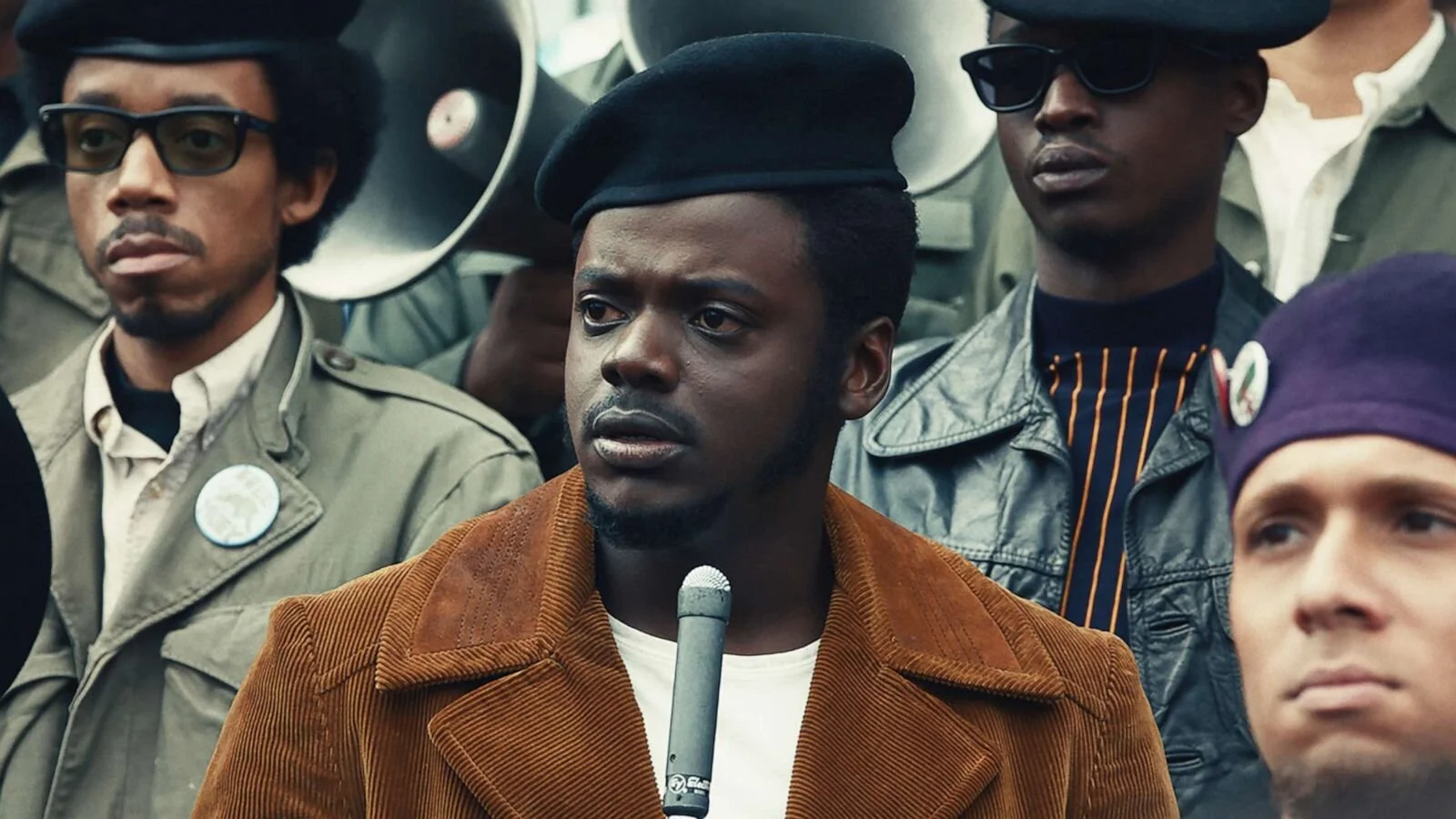
The situation focused in "Judas and the Black Messiah" centers on Fred Hampton (Daniel Kaluuya), chairman of the Illinois branch of the Black Panther Party in 1968, and J. Edgar Hoover's (Martin Sheen) paranoia over the rise of African-American militants who he deemed the greatest threat to national security. 


Bill O'Neill (LaKeith Stanfield) is a thief who often impersonates an F.B.I. agent to steal cars. After he's caught, an actual agent, Roy Mitchell (Jesse Plemons), recruits O'Neill to invade the Black Panther Party's ranks to take down Hampton and the societal movement he is leading. 


Shaka King utilizes two characters, Hampton and O'Neill, to build a tense and provocative story. Betrayal, as the title implies, is the ultimate focus of the story here. A betrayal that reaches beyond just personal ties, showcasing a more tragic and upsetting reality of betrayal, one where America betrays the African-American community. These narrative motivations are always present. During scenes of persecution by authority figures, during moments of peaceful protest, and even in unexpected scenes in fancy restaurants or during intimate moments between two people falling in love. The issues and politics of race are handled deftly by King and Berson throughout the story, layering this historical depiction with subtle and blatant representations of what it was like to be a person of color in an urban community in the 1960s. 


LaKeith Stanfield is spectacular in only a way LaKeith Stanfield can be. Examples of this might be the twitchy, nervous, and anxious moments like when two Black Panther organization members interrogate O'Neill. Or the relieved and happy-to-be-paid demeanor when sitting across from Agent Mitchell, a calm yet downright menacing Jesse Plemons, while devouring a steak and snapping his fingers for more wine; Stanfield wholly owns the character with his unique characteristics. 

Judas1.jpg

And even with Stanfield's impressive performance, Daniel Kaluuya has an equal amount of shining moments playing the embattled Fred Hampton. It's not the bravado of fiery speeches or the impassioned motivational dialogs he provides his comrades that are most striking for the performance (do not be dissuaded, these moments are memorable). It's the smaller personal moments that give substance to the character. The way Hampton falls in love with fellow activist Deborah Johnson (Dominque Fishback) or the sadness in his eyes when he is forced to watch the world he built crumble through newspaper headlines, the anger he indulges when every small step forward is countered with violent pushback resulting in friends and fellow activists' death. These moments that Kaluuya embraces provides the tragedy and subsequent fury felt when Hampton's fight song comes to an end.  


"Judas and the Black Messiah" is a powerful and poignant piece of cinema. Taking a moment in history and shaking off the dust that clouds the underlying sentiments felt during a moment in time, a moment where feelings and attitudes were not so different from what is supposed today. That's the power of filmmaking and its ability to boldly hold a mirror up to the past.  Its power to display that anger and frustration felt then, isn't so different from how we feel today. Its power to show that change and hope are worthy and essential to continue to pursue, so that one day that mirror will begin to show the difference made by revolutionary people.

Monte's Rating

4.50 out of 5.00

The Map of Tiny Perfect Things – Movie Review

Directed by:  Ian Samuels

Written by:  Lev Grossman

Starring:  Kyle Allen, Kathryn Newton, Josh Hamilton, Cleo Fraser, and Jermaine Harris

Runtime:  98 minutes

MapofTinyPerfectThings.jpg

‘The Map of Tiny Perfect Things’ isn’t flawless, but you’ll discover heartfelt smiles

Mark (Kyle Allen) is too cool for school, and quite frankly, he seems too cool for any formal or informal institution.  He walks in the kitchen for breakfast with an assured confidence that most adolescents lack.  Without a second thought, this know-it-all helps his father (Josh Hamilton) with a crossword puzzle, verbally duels with his sister (Cleo Fraser), catches a ceramic dish falling off the table with the reflexes of The Flash, and heads outside – that’s filled with miles and miles of blue skies and bright sunshine - to conquer the world.  It’s more like seize his hometown, one that has all the feels of a modern-day Mayberry.  

MapofTinyPerfectThings_2.jpg

Director Ian Samuels did film his quirky and charming but also a bit frazzled teenage rom-com in the deep south, Fairhope, Ala. to be exact, with a population of about 15,000 (according to the 2010 Census).  In this place – that sits on Mobile Bay’s east coast - everyone should know your name.  As previously and briefly mentioned, Mark’s dexterity is extraordinarily memorable.  It’s uncanny.  Think 1988-Jean-Claude van Damme, as our young protagonist pops on his bike, ditches it, hops on the back of a moving pickup truck, finds a fresh cup of coffee on a car roof, climbs on a house rooftop, and slides through a window to visit his best buddy Henry (Jermaine Harris).  Mark also pulls a slew of other head-scratching stunts within the first few minutes of “The Map of Tiny Perfect Things” that will have you asking, “What in the name of Fairhope is happening in this movie?” 


Mark’s secret will not be revealed in this review, but he unexpectedly meets Margaret (Kathryn Newton), who harbors similar gifts.  The two connect and search for the meaning of life, in a way, by traveling every square inch all over this charming municipality and finding tiny perfect things.  Not things, but moments, like a first bike ride without training wheels or a flawless score on an impossible algebra test.  These two events don’t specifically occur in Samuels’ movie, but you get the idea.


A couple of filmmakers have attempted Samuel’s specific idea/gimmick (again, which will not be revealed in this review) with huge success, including an iconic 1993 comedy, but this movie doesn’t score as many movie-points.  Through most of the 98-minute runtime, we are flying blind to the rhyme or reason behind Mark and Margaret’s shared extrasensory perception and the ultimate remedy for the pair to land safely.  


MapofTinyPerfectThings_3.jpg

So, Samuels and screenwriter Lev Grossman take us on an indie teenage ride and ask for their trust.  Ever been talked into riding a towering, loop-de-loop metal roller coaster or perhaps taking a 3-hour tour off the coast of Hawaii in 1964?  No, there are no real hazardous dangers that throw us off the rails or catastrophic storms that strand us on an uncharted island.  Instead, the narrative runs in a place for long stretches, while wide-eyed Mark – an inspiring and inspired artist – pines for answers and a hopeful romance with the emotionally unavailable Margaret.


It’s a familiar case of dating-desires versus friend-wants, but it’s darn-near impossible to root against these young teammates.  Will they find love?  It isn’t certain, but Allen – who is an exceedingly likable kid – can carry a movie, while Newton capably plays Margaret as dispassionate and distant to guard against her vulnerabilities.  Newton just played a teen possessed by a serial killer in “Freaky” (2020), but rest assured, Margaret isn’t guarding against any sketchy, deadly notions.  While Mark sketches piles of penciled artwork, she – a math whiz – plugs together calculations like a 17-year-old Einstein.  

Together, their collection of tiny perfect things could add up to enormous rewards.  For us, our heartfelt smiles are enough.   

Jeff’s Rating

2.5/4 stars

The Mauritanian -- Movie Review

Directed by:  Kevin Macdonald

Written by:  Michael Bronner, Rory Haines, and Sohrab Noshirvani

Starring:  Tahar Rahim, Jodie Foster, Benedict Cumberbatch, and Shailene Woodley

Runtime:  129 minutes

‘The Mauritanian’ gives us another reason to never forget 9/11

It’s difficult to believe, but the September 11 tragedy is almost 20 years old, and indeed, the lasting impact of losing 3,000 human beings on American soil during that horrible day will never fade.  The United States has been changed forever, not unlike how The Civil War, The Pearl Harbor attack, and JFK’s assassination altered the country’s optimistic trajectory.  Yes, I believe that the U.S. is still a hopeful place, but certainly, 9/11 wounded the U.S.A.’s psyche and removed chunks of our collective soul.  


Its aftermath cost American blood and treasure during the Iraq War and the Afghanistan occupation, but while attempting to locate the masterminds behind the attacks and other terrorists, the U.S. also lost more of its soul through enhanced interrogation techniques (EITs).  These EITs included waterboarding, sleep deprivation, assault, and sexual violence at black operation sites.  In addition, The Guantanamo Bay Detention Camp became notorious for imprisoning suspected connected persons of interest without due process, which violates one of the key pillars of our democracy. 

In 2019, Scott Z. Burns’ “The Report” followed U.S. Sen. Dianne Feinstein staffer Daniel J. Jones’ (Adam Driver) herculean, historic efforts to uncover the CIA’s aforementioned EITs.  Jones produced a 6,700-page report that documents their ugly, un-American moments, and the film dives into the intricate details of his discoveries and flashes back to several torturous torture scenes that visually express the horrors captured in the voluminous paperwork. 

the-mauritanian.jpg

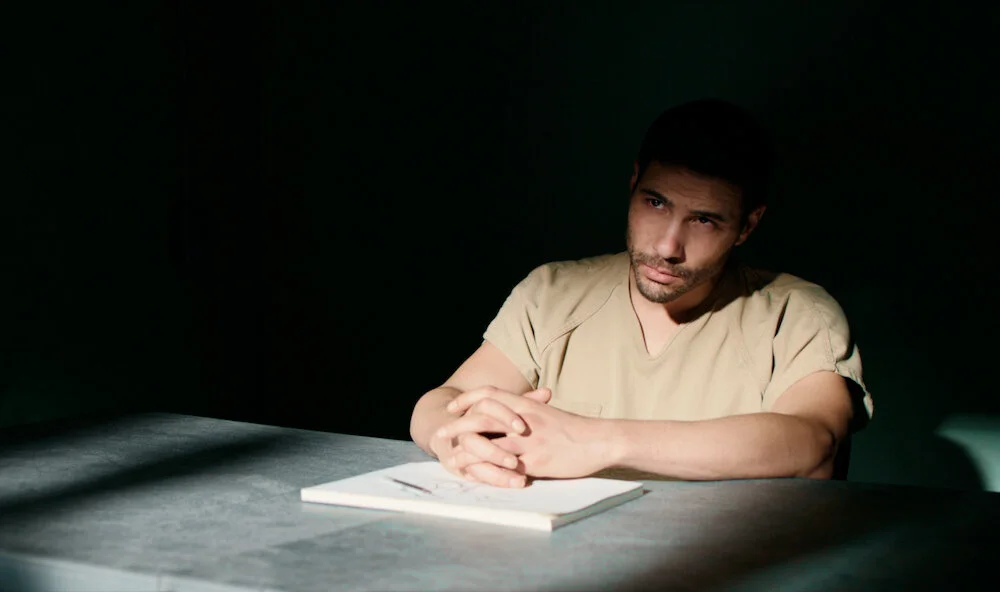
Kevin Macdonald’s “The Mauritanian” might be a worthy companion piece to Burns’ movie because this film follows one man’s story, a person who lived through the broken system of inhumane cruelty and flagrant disregard for legal rights.  Mohamedou Ould Slahi (Tahar Rahim) – from Mauritania (in North Africa) – began his painful journey in November 2001.  Local authorities detain Mohamedou – through American wishes - because his cousin called him from Osama Bin Laden’s phone.  No matter what they discussed, this particular conversation proves to be extraordinarily costly.  


Guilt by association.  

TheMauritanian2.jpg

The U.S. imprisoned Mohamedou in Guantanamo Bay, but Albuquerque attorney Nancy Hollander (Jodie Foster) picks up his case via pro bono in 2005.  She looks to free him and brings along her associate Teri Duncan (Shailene Woodley) to help with the heavy legal-lifting.  Meanwhile, U.S. military lawyer Stuart Couch (Benedict Cumberbatch) stands in opposition, as he and his superiors seek the death penalty.   The stakes couldn’t be higher in this grim bureaucratic maze that’s pitted with more roadblocks than on NYC streets during Macy’s Thanksgiving Day Parade.


Macdonald and three screenwriters walk a balancing act by portraying Nancy’s, Stuart’s, and Mohamedou’s journeys equally over the film’s long 129-minute runtime.  Nancy and Stuart get plenty of screen time discovering Mohamedou’s winding travels of abuse and incarceration.  The correctional officers and interrogators (who can be mistaken for mercenaries) have zero regard for his welfare, because during this dark period in our history, gaining information through any sordid means was paramount.  

Forget the cold, hard truth that extracting intel through emotional and physical carnage is a fruitless exercise, like beating a dog until it solves quadratic equations.  

themauritanian3.jpg

The attorneys – from both sides - attempt to uncover the truth, not only the reasons for Mohamedou’s arrest but the painful years after his initial capture.  Those previously mentioned roadblocks take the form of thousands of manual redactions, so the government stymied paper trails through the abundant use of black Sharpies.  Although we don’t get much of Hollander’s and Couch’s backstories, Foster and Cumberbatch deliver their characters’ emotional clarities.  Both masterclass actors offer memorable on-screen presences through Hollander’s tenacity and Couch’s focused, southern persona.  

“The Mauritanian” is more of a heavy morality tale than a legal one, and although one can anticipate Hollander’s altruistic, human reactions, Couch’s ultimate path is a question.  For Macdonald, the trial is less critical than presenting the horrific retaliatory stances of those in power, and he lays out their previously closed books on the table.  Although the audience receives these messages – in loud, clear, and visceral fashions – we, unfortunately, get less of a sense of Mohamedou as a person.  


He suffers, struggles, and attempts to maintain his sanity, but his personal hopes and feelings, outside of his current predicament, are infrequently reflected on-screen, or not presented as often as I’d prefer.  It’s not an issue with Rahim’s performance.  He’s awfully convincing here, but there are only so many minutes in a movie, I suppose.  It’s a missed opportunity, but all in all, “The Mauritanian” gets its points across…the brutal, ugly, and extraordinary truths. 

Jeff’s Rating

2.5/4 stars
Minari -- Movie Review

Dir: Lee Isaac Chung

Starring: Steven Yeun, Yeri Han, Yuh-Jung Youn, Alan S. Kim, Noel Cho, and Will Patton

1 h 55 m

Minari2.jpeg

By Monte Yazzie

There is tenderness at the core of Lee Isaac Chung's exceptional Minari. This quiet and straightforward sensitivity allows a story of an immigrant family chasing the American dream to feel universal even though the culture and traditions explored may be unfamiliar. Chung, whose own personal story is reflected in Minari, does not depend on extravagant sequences or melodramatic thrills. It's merely a story about family and the struggles of trying to provide the best for them. It's poignant, beautiful, sweet, funny, and life-affirming storytelling.

David (Alan S. Kim) is a young boy moving to Arkansas with his family in the 1980s. His father, Jacob (Steven Yeun), mother Monica (Yeri Han), and sister Anne (Noel Cho) are relocating from California, setting up a home in a mobile residence in the middle of nowhere. Jacob has dreams of starting a farm, producing Korean vegetables, which he thinks is a growing food commodity. Monica is less thrilled but more scared and frustrated that Jacob didn't explain the specifics of their new life in Arkansas and just how hard it would be to change their lives. They argue, frustrations growing more heated as Jacob's small victories get consistently upended by greater, looming misfortunes. 

Chung's film is one of hope and despair, success and failure, easy wins and troublesome losses. It's hard not to grow more invested in the movie as we know the family more intimately. We observe two parents putting on the best show for the kids, even when everything isn't going as planned. We watch frustrations mount to shouting matches between mom and dad. But we also see the happiness blossom between family members who learn to trust each other. We witness a family unit come together and grow stronger solely because they can depend on each other. 

Minari1.jpg

Minari, even with its heavier emotions in moments, is equally as warm and funny. The film gets much of its heart from two characters and their quarrelsome relationship, young David and Monica's mother, Soonja (Yuh-Jung Youn), who moves from Korea to help the family out. Soonja is defiant, challenging, enjoys gambling on cards, uses swear words, and deeply loves her young grandchildren. Soonja and David start on rocky terms, but they grow closer throughout the film. It's delightful to watch. 

Yuh-Jung Youn gives an impressive performance, playing Soonja with a perfect blend of "grandma" qualities; the wise words spoken from a place of experience that is equally as comforting as it can be uncomfortable to hear such honest truths. When paired with young actors Alan S. Kim and Noel Cho, the trio become the heart of Minari. Steven Yeun and Yeri Han give exceptional performances and occupy the married couple struggling to understand what they want out of life and how they will survive the many obstacles that persist through their life in honest and raw displays of emotion. 

The beauty of Minari comes in how it displays the theme of "The American Dream" through the perspective of a family who comes from a different country and culture. It's an intimate portrait of family dynamics and a film that displays how hard it was, and still is, for non-white people to assimilate into America. 

minari_2.jpg

Monte's Rating

4.25 out of 5.00

By Jeff Mitchell

‘Minari’: An absorbing, authentic
American immigrant story

“Nothing’s gonna turn us back now. Straight ahead and on the track now. We’re gonna make our dreams come true. Doing it our way.” - “Making Our Dreams Come True” by Cyndi Grecco, the “Laverne & Shirley” (1976 – 1983) theme song.

“And there ain’t no nothing we can’t love each other through. What would we do baby, without us?” - “Without Us” by Johnny Mathis and Deniece Williams, the “Family Ties” (1982 – 1989) theme song

Writer/director Lee Isaac Chung’s “Minari” is an immigrant story about a Korean family attempting to make it in the United States, and more specifically, a small town in Arkansas during the 1980s.

In fact, this is his story, or a small portion of it.

During a January 2020 Sundance Film Festival Q&A, Chung opens up, “I just (wanted) to throw it all out there and go for the film that I’ve always wanted to make.” He adds, “The exercise I went through was to start writing down memories from growing up in Arkansas.”

Chung soon realized that the memories he jotted down surrounded a specific period, when he was about 6-years-old, his daughter’s age now.

In “Minari”, Chung is a little boy named David (Alan S. Kim), and his father Jacob Yi (Steven Yeun) whisks the family to The Natural State to start a farm and grow Korean vegetables. Jacob bets on a reaching a niche market through his know-how and sweat with – hopefully - no blood or tears. He makes a major-league gamble. Jacob risks everything, and his wife Monica (Yeri Han) is quite frustrated with this move. Not only does he change careers, from a day laborer (he separates baby chicks by placing males and females in different boxes) to a farmer, but he relocates their household to a suspect trailer in the middle of nowhere. Their new town in the deep south is complete with stifling heat and a local populous that possibly has only seen Koreans on “M*A*S*H*” (1972 – 1983) reruns.

Jacob, however, is bound and determined to see his farm succeed, so his family can reach the American dream. Keep in mind that financial stability and family-friction over money are inversely related, especially when the couple in question has struggled with solvency and long working hours for years. This dynamic - along with newcomers attempting to fit in with a settled, rural community - are the central focal points in this absorbing American immigrant tale, maybe the best one that this critic has seen since director/co-writer Jim Sheridan’s “In America” (2002), about an Irish family moving to New York City, during the 1980s as well.

Due to their Korean roots, the Yi family physically stands out in their new environment, and Chung makes select, delicate choices to highlight local reactions to the new neighbors. One might brace for the worst, but Chung gets his point across without ugly culture clashes. For the most part, others offer support to the Yis, but hesitations and second looks do exist, and the fact that Jacob’s farmhand (Will Patton) doubles as a village outcast doesn’t go unnoticed. Still, Chung gets the tone right here, so we aren’t distracted from the film’s primary driver: getting the farm up and running.

Almost everything hinges on the farm. For Jacob, it’s a massive uphill climb, figuratively, not literally. The land is as flat as a pancake prepared by a steamroller, but Jacob soon discovers that finding water becomes his most daunting problem, and note that this dramatic hitch also haunted the farmers before him. Since their home sits on his workplace, Jacob doesn’t have the luxury of leaving his problems at the office. Still, he doesn’t take out his frustrations on Monica and the kids - David (Kim) and Anne (Noel Cho) - but they feel his weariness and the marriage strain.

Rather than solely focus on gloom and doom, the kids are regular sources of wonder, smiles, and mischief. When Monica’s mom – played wonderfully by Yuh-jung Youn in an Oscar-worthy performance – arrives to live with the four, she inadvertently becomes a source of contention for just one, young David. Grandma (Youn) has the best intentions, but her frank discourse, foreign quirks, and manners best suited for the front row at a WWE event or midnight trips to the casino aggravate David and his limited world views. David fits a bit of a one-way-war with Grandma, and her refreshing, heartwarming reactions and their rapport help distract us from Jacob’s and Monica’s individual and collective issues.

Many distinct relationships within this family of (now) five bask and twist with fluidity, and since their security is tied to the Arkansas ranch, the cinematic stakes are high. Through Chung’s rich characters and grounded (pardon the pun) script – based on his recollections – we, as an audience, juggle the macro and micro connections simultaneously, as the Yis’ fate becomes ours too over the 115-minute runtime…and beyond.

Hey, they’re trying to make their dreams come true, but please don’t continue marching without us.

Jeff’s Rating

3.5/4 stars


Ed note: Minari is currently available in theatres or online through A24’s Screening Room. More information is available HERE, or CLICK HERE to purchase tickets.


Jeff Mitchell Also Goes to Sundance (also from his couch)


Even though the Sundance Film Festival is a big deal and only a 90-minute flight away from Phoenix, I sadly never attended.  After growing up in Upstate NY, shoveling our 60-yard driveway hundreds of times and trudging through blizzards, ice storms, and 3-foot snowdrifts as a paperboy for five years, I tend to shy away from snowy, cold weather whenever possible.  (Living in and embracing one of the hottest cities in the country is reasonably reliable proof, don’t you think?) 

This year, however, I enrolled in Sundance 2021, and through Internet magic, I watched the festival’s movies from my living room, a workable compromise.  Hey, it was cool, figuratively…not literally.  Now, I didn’t catch every film, but I experienced 27 of them.

Here are my five favorite films from Sundance 2021:

Sundance_JudasandTheBlackMessiah.jpg

Judas and the Black Messiah

Director Shaka King delivers an explosive – literally and figuratively – biopic of Black Panther Party Illinois Chapter Chairman Fred Hampton (Daniel Kaluuya) and Security Chief William O’Neal (LaKeith Stanfield).  Kaluuya is nothing short of electric as Hampton, as he decrees thunderous, mesmerizing speeches that prompt his audiences to repeat in unison, “I am!  A revolutionary!”  King’s film is also a raw, nuanced, and informative history lesson.  He doesn’t pull any punches from the violence caused by the Panthers and police, but King also captures Fred’s empathetic, humanitarian side.  Meanwhile, William is supposedly a loyal ally, but with FBI Agent Roy Mitchell (Jesse Plemons) holding Wild Bill – as he was sometimes called – under potential jail-time duress, Fred unknowingly has a reluctant adversary within his trusted circle.  Stanfield and Plemons are perfectly cast, and Dominique Fishback is a marvelous surprise as Deborah Johnson, Fred’s girlfriend, who may have called out her boyfriend most accurately:  he’s a poet. 

Sundance_Mass.jpg

Mass

On an ordinary afternoon, a volunteer and a social worker prepare a pleasant Episcopal church’s meeting room. This unassuming space contains a table, chairs, some snacks, a Kleenex box, and invisible tension. It will house an assembly of four to discuss an unknown topic…to the audience. They (Jason Isaacs, Martha Plimpton, Reed Birney, and Ann Dowd) arrive in two pairs, sit, and debate in this chamber for most of the movie’s 110-minute runtime in writer/director Fran Kranz’s deeply affecting picture, one that feels like a no-frills Broadway play. In his directorial debut, Kranz doesn’t immediately reveal the core event(s) that brought these rational but emotionally-scarred individuals together. He slowly divulges critical tidbits along the way and keep us riveted to the conversation. Isaacs, Plimpton, Birney, and Dowd seem to bestow every one of their acting gifts – like athletes leaving it all on the field – in this consuming, wholly authentic experience.

Sundance_Passing.jpg

Passing

By random chance or perhaps fate, childhood friends Irene (Tessa Thompson) and Clare (Ruth Negga) reconnect at a posh New York City restaurant as 30-somethings. They explore their life choices that afternoon and beyond in writer/director Rebecca Hall’s first feature film, an adaptation of Nella Larsen’s 1929 novel. The story dives headfirst into identity and race, as Irene quickly discovers that Clare has been passing as a white woman for years. Filmed in a rich black and white, Hall captures the big-band sights and sounds of the 1920s as well as the rigid racial lines of the period, ones that Clare has routinely crossed without consequences. She, however, might discover what she’s lost, and Negga is a shoo-in for a 2022 Best Supporting Actress Oscar nomination.

Sundance_ThePinkCloud.png

The Pink Cloud

Smack dab in the middle of the COVID-19 pandemic, writer/director Iuli Gerbase concocts a toxic brew – in the form of pink clouds - that suddenly encircles the planet and forces humans to remain indoors or suffer certain death within 10 seconds of outdoor exposure.  Naturally, Gerbase’s premise hits way too close to home for John and Jane Q. Public, as she imagines an ill-timed fate for Giovana (Renata de Lelis) and Yago (Eduardo Mendonca), a couple who just met and are now quarantining for an indefinite time.  Not only does Gerbase travel in unexpected directions within the walls of the spacious – but enclosed – modern apartment, but she also stirs anticipated scenarios that are greatly heightened due to Giovana and Yago’s claustrophobic predicament.  “The Pink Cloud'' might spark CPTSD (current pandemic traumatic stress disorder), but then again, at least you and I can open up a window or step outside to breathe some fresh air.  


Sundance_StrawberryMansion.jpg

Strawberry Mansion

Writers/directors Kentucker Audley and Albert Birney dispense a wildly bizarre cinematic acid trip that seems like an uninhabited mix of a long-lost Philip K. Dick short story, “Sigmund and the Sea Monsters” (1973-1974), Terry Gilliam’s “Time Bandits” (1981), and a good, old-fashioned love story.  That’s a lot to absorb, right?  Take a deep breath and step into the Strawberry Mansion.  It’s 2035, and mild-mannered James Preble (Audley) is a government dream auditor.  His job is to assess and tax dreams using far-fetched technologies with some throwback 20th-century remembrances.  Accompanied by practical and special effects last seen during the groovy 1970s, Preble meets his latest client Arabella Isadora (played by both Penny Fuller and Grace Glowicki), and her particular dreams enchant him outside of his regular 9-to-5 duties.  Well, Audley and Birney’s entire film sparks enchantment…and frequent daydreams too. 


Monte Goes to Sundance (from his couch)


The largest independent film festival in the United States, the Sundance Film Festival, wrapped its new and innovative virtual program this week. The event, which typically takes place in Park City, Utah, transitioned its program to a virtual platform, offering festival-goers the opportunity to enjoy some of the best independent cinema from America and around the world from the comfort of their living room. 

Perhaps the best part of this year's festival was the convenience of watching these movies, most of which were World Premier viewings, from the comfort of your home. I wouldn't want this format to be the new way to film festival. Part of the joy of going to a festival is discovering new movies and the camaraderie of watching these indies with cinephiles of every variety. Still, this year and for the sake of safety, this was a great way to experience one of the most iconic film festivals in the world.  

CODA.jpg

This year's festival's big winner was Siân Heder's CODA, taking home the coveted Grand Jury Prize, the Directing Award, U.S. Dramatic Audience Award, and a Special Jury Prize for Best Ensemble. The film is a dramatic comedy about a 17-year-old girl named Ruby, played by Emilia Jones, the only hearing child in a deaf family. Emilia, the communication translator for her family, is torn between pursuing her dream of making music and staying to help her famil

hive.jpg

Similarly, in the World Cinematic Dramatic category, Blerta Basholli's Hive swept in numerous types winning the Grand Jury Prize, the Directing Award, and the Audience Award in the World Cinema Dramatic category. The film follows a single mother in the aftermath of the war in Kosovo, trying to survive in a patriarchal society that doesn't support her efforts.

Here are 5 of the films I watched at Sundance 2021:

Censor-1611182871-928x523.jpg

Censor

Dir: Prano Bailey-Bond

A "video nasty" was a term used in the U.K. in the early 1980s that described films, mostly low-budget horror slashers, that had excessive amounts of violence and gore. These films received criticism by family and religious groups and prosecution for distributors who would sell and trade these films. Censor, directed by Prano Bailey-Bond, focuses the story on a film censor named Enid, a committed performance from Niamh Algar, who is trying to solve the mystery of her sister's disappearance. Enid slowly loses grasp of the line between reality and fiction. Censor is a confident debut for director Prano Bailey-Bond, a heartfelt homage to the horror films of the 1980s.

Wild-Indian-1611184779-928x523.jpg

Wild Indian

Dir: Lyle Mitchell Corbin Jr.

The lives of two Native American boys have been torn apart after the murder of a schoolmate. As adults, they must confront the past trauma and deal with a secret they thought was buried. Writer/director Lyle Mitchell Corbin Jr. composes a fascinating character study that brings about themes of historical trauma, reservation life, and the lingering effects of violence. Wild Indian does a great job of playing against type, specifically for Native American characters who are often one-dimensional compositions in crime dramas. Actor Michael Greyeyes gives a threatening and conflicted performance that provides the film with a beautiful foundation to build emotions. Wild Indian is a refreshing and intriguing film featuring Native American artists in front and behind the camera. You don't hear too often, but this film demonstrates that perspective and culture are essential storytelling pieces. 

coming-home-in-the-dark-review.jpg

Coming Home in the Dark

Dir: James Ashcroft

Coming Home in the Dark doesn't waste time letting you know the kind of journey you are taking. In the film's beginning moments, a shocking event occurs, placing a family on vacation in the middle of a bleak and nightmarish scenario. Director James Ashcroft confidently builds tension and atmosphere throughout, constructing a frightening landscape on lonely backroads and within the haze of the night. Daniel Gillies, an actor most known for playing the same role on The Vampire Diaries and The Originals, provides a startling and menacing presence as tormentor of the family. Coming Home in the Dark is a horror of the purest kind, one that is unrelenting, inescapable, and bleak.

In-the-Earth-1611183280-928x523.jpg

In the Earth

Dir: Ben Wheatley

Myth and science mix with creative storytelling in writer/director Ben Wheatley's film In the Earth. Wheatley, known for his immersive and assaulting engagement of the senses, builds a claustrophobic yet open-air world set in the middle of a pandemic stricken society. The story centers on a research hub deep in the forest that a doctor and park scout are trying to reach. After a nighttime attack, they find assistance with a man living off the grid, but intentions are not what they seem. Wheatley's film impressively suffocates the atmosphere of the vast forest, making it seem inescapable. Add the human element of those guided by science and those persuaded by myth and In the Earth embodies the many conflicted emotions people have experienced while watching the entire world make sense of a pandemic.

prisoners.jpg

Prisoners of the Ghostland

Dir: Sion Sono

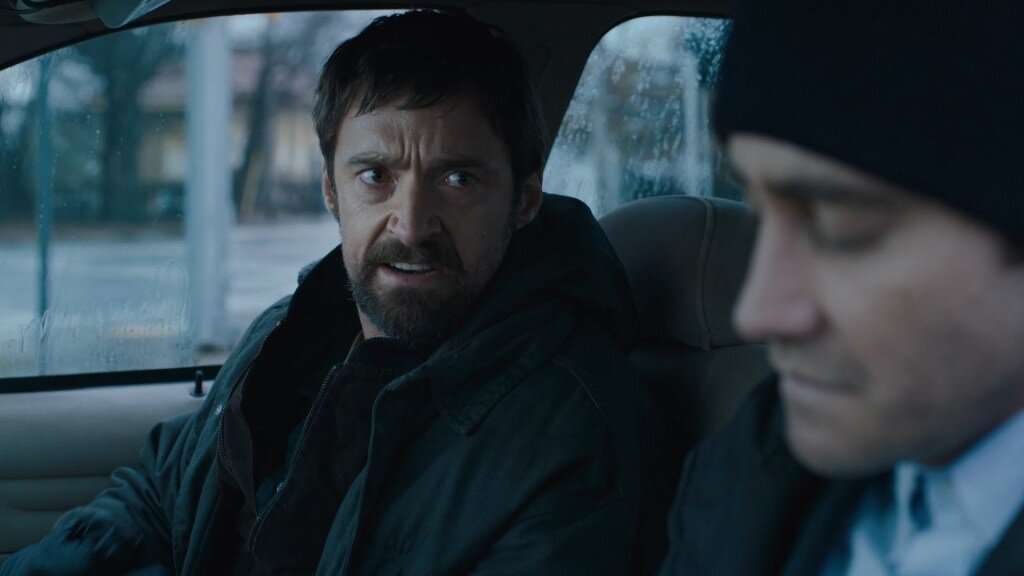
Director Sion Sono's films have been called genius, crazy, extravagant, exploitive, and audacious. And these descriptions were explained before the great Nicolas Cage came to bless his presence on Sono's new film Prisoners of the Ghostland. The premise concerns a notorious criminal tasked with saving a girl missing in a post-apocalyptic wasteland. Oh, and he has to do this before the leather suit he is wearing explodes. Offering a few Nicolas Cage outbursts that will have you smiling with pure glee, Sono's film is a mess of wild images and bonkers storytelling. It might be everything you are looking to watch.


Bliss – Movie Review

Directed and written by:  Mike Cahill

Starring:  Owen Wilson and Salma Hayek

Runtime:  103 Minutes

Bliss.jpg

Wilson and Hayek’s manic journey is anything but ‘Bliss’


“Ignorance is bliss.” – Cypher (Joe Pantoliano), “The Matrix” (1999)

“Most people say, ‘Ignorance is bliss.’” – Isabel Clemens (Salma Hayek), “Bliss” (2021)


Greg Whittle (Owen Wilson) daydreams about a different life, and why not?  He works at Technical Difficulties, a call center for customers who have….well, you know, and the office and everyone else are painted in dank, gray hues.  Greg’s workplace may not be as cheerless as Joe’s (Tom Hanks) in “Joe versus the Volcano” (1990), a factory of mindless misery, but passions throughout the cubicles run as thin as a Geo Metro’s tire tread after a year-long trek in the Canadian Rockies.  


Our hero’s world becomes infinitely rockier when he accidentally causes a freakish mishap at his company and then runs into an urban gypsy named Isabel.  She claims to wield magical powers, and sure enough, before you can say “Yapple Dapple”, Isabel manipulates the space around her.  Cosmic storms don’t suddenly rain down on Los Angeles, but a flick of Isabel’s wrist causes a bar server’s tray full of glasses to swoop out of his hands and crash to the floor.  Are you not convinced that Isabel can bend physics in this Matrix-like existence?  You soon will be.  Greg is.


Writer/director Mike Cahill knows a thing or two about trippy cinema concepts and turn to his “Another Earth” (2012) and “I Origins” (2014) as prime examples.  On this planet, Cahill’s greater Los Angeles is every bit as gloomy as Greg’s office.  Ambulance sirens, abandoned construction sites, closed-up businesses, graffiti, trash, cheap motels, and smoggy skies dominate the landscape.  The local chamber of commerce wants no part of this movie because everything around Greg and Isabel’s immediate present is anything but a paradise.


Randy Newman doesn’t love this LA.


However, Cahill offers a gateway to another place, one of bliss, that exists right where our heroes stand.  “Bliss” is a science-fiction picture, but an ugly, haphazard one to stomach.  In addition to the environmental grime and more grime, Isabel is strident, harsh, and manic.  She has a curt answer for every question and carries all the warmth and stability of the snide kids in “Willy Wonka and the Chocolate Factory” (1971).  Ugh, remember the gum-chewing girl.


Sure, she opens Greg’s eyes to this real-life Matrix and another other-worldly locale (that will not be revealed in this review), but Isabel doesn’t truly possess Morpheus’ (Laurence Fishburne) or Trinity’s (Carrie-Anne Moss) steely confidence.  Then again, Greg is no Neo (Keanu Reeves).  He twists in the wind and allows Isabel to wrap her hands around his neck and drag him all across town and beyond.  Meanwhile, in slow motion – like the hands on a clock – this kooky couple appears to become increasingly disheveled and unkempt as the minutes drone on.  Not only is this an unhealthy relationship, but these two don’t seem very healthy on their own either.  


Cahill has a masterplan in mind, and looking back, it’s an earnest one.  Still, he yanks his audience through confusing double-talk, contradictions, and some blabbering – but purposeful - nonsense.  Concepts like a brain box, fake generated people, synthetic biology, asteroid mining, and a thought visualizer (which resembles as 56 inch Etch A Sketch) fly through these realities like two extended rounds of Pictionary at a modern-day “Mad Max Beyond Thunderdome” (1985) and “Elysium” (2013).   


Many kudos to Cahill, production designer Kasra Farahani, and art director Jordan Ferrer because they offer some fascinating world-building here, but these universes are also deliberately frustrating throughout most of the movie’s 103-minute runtime.  “Bliss” is not an ignorant film, not by a longshot, but it’s certainly not a blissful experience.

Jeff’s Rating

1.5/4 stars


Interview with "News of the World"'s stars Tom Hanks and Helena Zengel, and Director Paul Greengrass

Helena Zengel and Tom Hanks in “News of the World”

Helena Zengel and Tom Hanks in “News of the World”

In “News of the World”, Captain Jefferson Kyle Kidd (Tom Hanks) meets an 11-year-old orphaned girl (Helena Zengel) who lost her German and Native American families.  This Civil War veteran – who is now a newsreader traveling across Texas - decides that he will take Johanna (Zengel) to her aunt and uncle’s home in Castroville in writer/director Paul Greengrass’ affecting, soulful western. 

“News of the World” is a reunion for Greengrass and Hanks because they made “Captain Phillips” in 2013.  That film’s screenwriter Billy Ray hosted a Zoom call Q&A with Paul, Tom, and Helena.  The Phoenix Film Festival wasn’t part of the interview, but Universal Pictures graciously shared the link with us!  

Tom discussed the positives about shooting his first western, Helena reminisced about her approach to the role, and Paul explained the origins of newsreaders.  The three spoke about much more in this wonderfully insightful interview.  

“News of the World” is playing in theatres and is also available to stream at home. Helena just earned a Golden Globe Best Supporting Actress nomination for her work as Johanna!

Q:  “News of the World” is set in the west, but is it, for you, a western?

PG:  I grew up with westerns.  I watched “Bonanza” as a kid on Saturday nights (in the U.K.).  You can say (this movie) is in the west, but it’s a post-Civil War film.  In the end, it’s the story of a lonely newsreader who lost everything, who wanders Texas in the aftermath of the Civil War.  He comes upon the girl, and they go on an adventure, a journey out of dark times towards something hopeful.  That, for me, made it incredibly contemporary and affecting.

TH:  Outside of the standard things that go along with the genre – wagons, horses, and kerosene lamps – (this movie) is no different than the stuff that goes along with any film.  Westerns, if you are going to talk about them as (a genre), (have) a lot of arguments against them, (including) worldwide box office.  The (things) that westerns have for them (are) some brand of gunplay and justice against long odds.

That wasn’t nearly as interesting as what we had in hand, which is the story of Captain Kidd and young Johanna, the timeless theme of very damaged people becoming better because they have come across each other and the friendship that forms between them. 

What I liked about the (movie) being a western is the lack of technology made immediacy a real plot point.  You couldn’t get from here to there very quickly.  The news that Captain Kidd (reads) is weeks or sometimes even months old because that’s how long it (takes) information about the Brooklyn Bridge to get from New York City all the way down to Dallas.  You’re always looking for obstacles that can keep the story from happening too (easily).  

In that regard, the western (is) absolutely fantastic, that along with this great truth:  you can get an awful lot of people to almost volunteer to work on a western because they’re outdoors.  The demands are so specific.  It’s just different.  You’re out in nature, and I just ended up liking the slower, plodding pace.  You can’t get from Point A to Point B any faster than our horse Wimpy would walk.

Helena Zengel as Johanna in “News of the World”

Helena Zengel as Johanna in “News of the World”

Q:  Helena, you’re sitting in Berlin one day, and someone shows you a script called “News of the World”.  What do you think when you first read it?  Johanna doesn’t speak English or understand Captain Kidd.  

HZ:  I was excited to do it.  I read the script, (and) I thought it was going to be pretty hard to play because you (have to say the lines) with your eyes.  It wasn’t that easy sometimes to take the emotions and show them with your eyes.  You really want (the audience) to read your mind when you don’t talk because (Johanna) unfortunately (doesn’t).  It’s very interesting to play the role and to learn the Kiowa language.  When you Google it, you won’t get a translator for the language.  Nobody (speaks) it anymore. 

(It was great) to get to know the Kiowa elder, Paul, and Tom.  I saw “Captain Phillips”, and for a German actress, Hollywood is a goal (that) you will never reach, especially at my age.  So, it was a dream when I read the script.  I was very excited to meet Paul, (but) my English wasn’t as good, so I was like, “OK, everyone, I don’t understand anything.”  It was ridiculous, (but) I was very excited, and to go to Hollywood was something that I never imagined.  

TH:  Were you glad that you were making a movie when “System Crasher” (2019) came out because you didn’t get to go off and really embrace it?  You had to come to work every day, sit with me, and listen to Paul, when back in Germany and Europe, everybody was talking about you. 

HZ:  Yea, I thought it would be nice to be in Germany, but on the other side, it was good to be somewhere else because I knew a lot (was) going on.  (In) my hometown, there were so many posters with me.  My friends texted me every day.  It may have been a little bit weird if I had seen my friends every day, but I was excited to get a new movie.  Back then, I’ve never (been) in the U.S.  My mom was, so I always dreamt (of getting) to the U.S. and (seeing a) whole other part of the world.

Q:  What do you think is broken in Captain Kidd?  Had he not found Johanna, what would’ve happened to that man?    

NewsoftheWorld_Tom.jpg

TH:  Paul and I talked about this constantly.  Everything about your character, backstory-wise, is something (that) you can only carry around in your pocket.  It can only be this burden or weight that you bring into every scene because there’s not a lot of ways to dramatize it.  With this guy coming across this young girl, Paul was able to find (the) verbiage that (Kidd) did not necessarily want to communicate.  Captain Kidd (didn’t) want to talk about his past (and) didn’t want to face up to the terror and the loss that he’d been through 10 years prior.   

Captain Kidd is not a young man.  To have his latter life completely ripped apart, I felt as though he wanted to sneak into town, do his bit, and sneak right out, leaving as little a ripple as possible.  Had (Kidd) not stumbled upon this task at hand, I think he would’ve shriveled up and died in nothingness.  He was born again thanks to the connection and dare we call it - and this is the timeless aspect of (the movie) - love that he ends up feeling for another human being and is felt for him.  

His loneliness and his solitude were the same thing.  For a healthy human being, that’s not the case.  Solitude is good for you; loneliness will cripple you.  I think he was crippled, and he had been for the better part of 10 years before this young lady came along and brought him back to life because of her need.  She needed to be taken care of, and it had been an awfully long time since Captain Jefferson Kyle Kidd had taken care of anybody.  

PG:  All of the profound and tragic events have occurred before the film starts.  Captain Kidd and Johanna both had intensely dramatic and tragic pasts.  The temptation was: do you show (their pasts)?  Do you start flashing back?  If this (is) a film about finding hope, to show the past felt like a cheap shot.  You just understand it as they came to confront it, almost wordlessly actually, because they never – apart from one very brief exchange – discussed what’s happened to them, each of them.  They are both going on this journey together to restore each other.  

Q:  Had Johanna never met Captain Kidd, what would’ve happened to her?

HZ:  I don’t think she would have died because she’s too smart and self-confident.  I think she would’ve found a way to survive.  It would have definitely been very hard for her (though) because being alone as an 11-year-old girl in the desert at that time was very dangerous.  It wouldn’t have been very easy, (and) she probably wouldn’t be as happy. 

Q:  There seems to be a moment when Johanna starts to trust Captain Kidd.  When was that moment for you?  Was that something you were always playing towards, or did you figure it out as you went along? 

HZ:  I think it’s a mix of both.  There was one part when Captain Kidd and Johanna start to explain their languages on the wagon.  They get to know their habits, their way of thinking.  Johanna also tries to explain to him that she thinks about (life as a) circle: to think about what (happened) in the past and then move on.  He says, “No, you got to forget what is in the past and move on directly.”  

I think that’s the moment (when) they trust each other.  

Q:  Paul, what makes you decide that “News of the World” is a movie that you want to write as well as direct?

NewsoftheWorld_PaulGreengrass.jpg

PG:  Happenstance, really.  Making movies is quite like making music.  It’s fun to play with different musicians, because your music is different.  Sometimes you want to make a solo album because there’s something you’ve got to say.  I had the great privilege of working in Hollywood, and before I came, I used to write and make tiny movies which (cost) about $4.60, maybe $.65, if I was lucky.  One of the interesting things about coming to work in big (movies) was the interchangeability.  You direct, you write.  Tom directs, writes, produces, and acts.  You make tea sometimes, don’t you, Tom?

TH:  I do!

Q:  Helena, during the shootout in the hills, Captain Kidd tells you, “Run.  Save yourself.  Just get out of here.”  What do you think made Johanna stay? 

HZ:  First of all, she didn’t want to be alone.  The scene is not (at the end), but it’s getting closer to the end, so they already started to know each other.  She doesn’t tell (Captain Kidd), but I think she likes him and appreciates him.  There are some moments where you see that she’s very grateful for him.  Also, Johanna is smart.  If he dies, she (knows) that it (won’t) be good for her either. 

Q:  In one scene, Captain Kidd uses the news or the truth to stir a group of laborers.  It has such echoes for today about news and truth, and what they can do to incite people, good or bad.  Do you think for Kidd, the news became his version of preaching?

TH:  In that, the news is the truth.  We didn’t plan on making a movie with themes ripped out of today’s headlines.  We were taking the concept of reading the news from this perspective:  There are no such things as alternative facts.  There are interpretations of facts, but the truth is the truth.  You can’t alter the temperature of the sun, nor the speed of the water, nor the numbers of people who are dying because of a scarlet fever.

The fever that a preacher will have, I think, is to liberate the enslaved - either cosmically, physically, theoretically, (or) spiritually - with an undeniable truth.  Once you grasp it, it can’t be bent.  In that scene particularly, (Kidd talked) about the dynamics between the haves and the have-nots.  An awful lot of times in stories, it comes down to behavior and procedure.  

(In) that scene, Kidd was saying, “I’m not powerless here, because I know the behavior of a crowd, and I know the procedure (for them) to reach their better selves.”  

That is a discussion of a trope that nobody can deny.  So, he does have a lot of the same calling cards of an itinerant preacher with LOVE on one fist and HATE on another one, like Robert Mitchum in (“The Night of the Hunter” (1955)), but I think (Kidd) has LOVE on both fists, maybe LOVE and TRUTH.

PG:  The roots of the traveling news readers lay in the nonconformist preachers.  It started in the U.K. in the 17th century.  Nonconformist preachers were not allowed to preach in churches, so they came to town squares and old farms, and they (preached) to the masses.  They would bring the good news.  Over time, that became a feature of American life.  Slowly the “good” dropped out, and it became the news.

One of the things I loved about (costume designer) Mark Britches’ wonderful work is the black coat that (Kidd) wore at the readings.  It made him slightly an authority figure, but he was one of the crowd.  He knew those people.  He came from them, but when he came to town for that one hour, that was entertainment.  You didn’t get anything else.  There wasn’t television or social media in 1870 in Texas.  

TH:  And he put on a good show.  He made sure the people got 10 cents of quality entertainment.  


Interview with "Promising Young Woman"'s Carey Mulligan and director Emerald Fennell

Carey Mulligan deserves an Oscar nomination as a femme fatale striking fear in the hearts of men in “Promising Young Woman”.  Cassie (Mulligan) is a vigilante of sorts, as she frequently pretends to be inebriated in local watering holes, dance clubs, and Irish bars.  She then terrifies her aggressors when they overstep their bounds.  Director/writer Emerald Fennell’s sobering - but also playful - screenplay takes dark turns and steers into some levity with Bo Burnham’s breezy, accessible arc.  Ryan (Burnham) could be the male outlier to melt Cassie’s heart, as Mulligan masterfully portrays a lady standing on a knife’s edge between potential bliss and endless cynicism.


Carey and Emerald graciously hosted a Zoom call with the Phoenix Film Festival and other media outlets for an enlightening and thoughtful chat.  The ladies spoke about Cassie’s methods for revenge, the film’s prominent color schemes, and much more!  Please be warned:  the interview does reveal some spoilers, including the reasons for Cassie’s motivation.   


“Promising Young Woman” is playing in theatres and is also available to stream at home.


Director Emerald Fennell on the set of “Promising Young Woman”

Director Emerald Fennell on the set of “Promising Young Woman”

Q:   People I know who are generally not interested in small, independent films are talking about this movie.  Emerald, when writing the film, were you trying to create a dialogue?

EF:  When you start (writing), you’re just trying to tell the story, but yes, as it went on, I wanted to be honest and think about what revenge is.  Inevitably, the truth or an approximation of the truth can be provocative.  In terms of making it accessible, I definitely (wanted) to make (the film) accessible, (but) I didn’t want it to be a lecture or medicine or a dodge.  It (will) hopefully reach a wide audience because I do think this stuff is regrettably, unbelievably common, but still something hard to discuss in an open and widespread way.  


Q:  Because the film explores sensitive subjects, such as rape, what kind of research or preparation did you do to authenticate the story?

CM:  What was so immediately obvious to me (while) reading the script was how regrettably commonplace so much of this was.  The biggest challenge in my approach was so myopic in a way.  I just wanted to be as truthful as I could about this one experience.  There (are) endless amounts out there to read about these issues, and so, of course, it’s important to have a broader understanding.  It felt like such a tragedy, a familiar story, that there are countless examples of things like this happening to people (who) you know, people (who) you love.  


I think every woman has a connection to somebody who has been through something close to this.  For myself, there’s a very helpful book by Jon Krakauer called “Missoula” that investigated the subject from a lot of different angles.  The majority of (my) work before the film was with Emerald, just talking about our shared experiences.  


EF:  It’s really a film about the kind of culture that I grew up (in), and the culture that every girl I know grew up in, which is probably the same worldwide as it is in America and England.  There’s nothing in this film, sadly, that wasn’t in comedies that I was growing up with.  


The conversations that I’ve had since the film came out - with people I know and people I don’t know - is what Madison (Alison Brie) says to Cassie, which was, “Things happened all the time.”  


Carey Mulligan in “Promising Young Woman”

Carey Mulligan in “Promising Young Woman”

Q:  Can you speak to what ultimately Cassie aims to achieve, whether it’s accountability or revenge, or is it something else entirely?  


EF:  It is a revenge movie, but it’s a revenge movie about how revenge is sort of impossible at the moment and futile, which as a pitch, it (is) quite bleak.  (Emerald laughs)  I’m glad that I didn’t go with that pitch.  How can you find a resolution?  How can you find justice when it’s such an uphill struggle?  It’s so much easier to let it go.

It’s just one person actually saying, “I won’t let it go because I shouldn’t, and I can’t.”   

It’s not only other people in the movie who are incredibly uncomfortable with that, but (for Cassie), the option of letting go is so irresistible.  It’s irresistible to us as an audience, and it’s irresistible to her.  To have somebody going on this journey, not just for themselves, but (also) for their friend, because of the injustice.  She’s (also) really trying to forgive herself.  She’s begging for somebody to prove her wrong.  Mostly, it’s an exercise in futility.  It does make the film sound very dour.  I also hope that there’s some hope (in) there, and hope for redemption and forgiveness.  


CM:  From the outset, (the movie) is so much about love and loyalty and friendship.  (Cassie is) somebody who will go to that degree for their friend.  That comes from a place of really deep love, and there is a part of her that’s stuck as a young girl wanting to be forgiven, wanting to be absolved of the whole thing.  The revenge narrative doesn’t really play into (that) plane.  I don’t think it’s even on a conscious level.  I don’t think (revenge) is a word that would come into her vocabulary.  She’s simply putting something right that’s so wrong.  

EF:  I love the revenge genre, but I’ve never felt like I’ve seen a woman exacting revenge in a particularly female way.  There’s nothing I love more than a bloodbath, but (violence) is not something that would ever personally occur to me.  It’s just not innate, I suppose.  What power do (women) have?  That power is different but in no way less impactful.  That’s what is brilliant about Cassie and amazing about Carey’s performance.  She is violent, but the violence that she commits, the maiming that she does, is completely psychological.  It’s so much more harrowing. 


Q:  Carey, this your first film as a producer.  Did it change your experience as an actor on the set?


CM:  I felt so lucky to work on (the movie) at an earlier stage and watch the production take shape.  It felt like a privilege.  I wish (this film) came out when I was 18.  My role (as an actor was amazing).  I was such a jobbing actor on-set.  I was just there to be told where to stand.  It was very liberating.  I just had so much faith in Emerald as a director (and) had absolute faith in her vision and felt like I could have fun for the most part.  


Q:  Can you speak about the look of the film?  What made you choose bright pinks and blues and the old-fashioned decorum at Cassie’s parents’ house? 


EF:  Every single visual choice tells you so much about the character.  So often, we feel that people in distress look distressed.  If we think of Cassie as an addict or a self-harmer, (she knows) how to hide.  (She knows) how to stop (others) from asking too many questions, both the people (who she loves) and people on the street.  For Cassie, it’s doubly-important because in her own life, she’s in costume.  Like a lot of women, she is very, very adept in using her costumes, her nails, and her hair to hide her pain and seem innocuous and seem innocent.  


It makes sense that the film felt the same way.  The things that we still think of as light and frivolous - light pink, Britney Spears, and (other) things in this movie - are often not treated seriously.  Also, these are things that I love, and this is how a lot of people’s lives feel and look, so it felt right to me.   


The specific thing (about) Cassie’s parents’ house, it tells us so much about her mother.  She’s just a woman for whom the surface (covers) everything.  (It covers) up all (the) pain.  (The house) is the most hyper-oppressive, feminine space.  There couldn’t be more cherubs.  There couldn’t be more crystal.  When you look closer, you can’t sit on anything.  The beautiful, intricate tablecloth is plasticated, so no one makes a mark.  This stuff tells you so much about the house, the world (in which) Cassie grew up.  


The Little Things - Movie Review

Directed and written by:  John Lee Hancock

Starring:  Denzel Washington and Rami Malek

Run Time: 127 Minutes


thelittlethings.jpg


‘The Little Things’ isn’t big enough

Kern County sits north of greater Los Angeles and east of San Luis Obispo.  Strikingly shaped like Montana, it’s over 8,000 square miles - about twice the size of its little sister, Los Angeles County - and it sports wide-open spaces, agriculture and gasoline production, and Bakersfield, its anchor city.  Although Kern and Los Angeles Counties are related, they couldn’t be more opposite.  

Kern County Sheriff’s Deputy Joe “Deke” Deacon (Denzel Washington) - a casual, matter-of-fact, going-about-his-business assistant lawman – spent much of his career in The City of Angels.  For years, he investigated complicated, vicious homicides as a lead detective.  His current post is a “retirement” of sorts, but is it forced or by his design?   Well, his superior officer sends him to L.A. for a one-day assignment, but through old habits and muscle memory, Deke stays in town via the hypnotic pull of a serial killer on the loose, as four victims have fallen in just two months.  

Set in 1990, writer/director John Lee Hancock’s (“The Founder” (2016), “The Highwaymen” (2019)) police drama carries shades of the real-life Richard Ramirez case from the 1980s. Ramirez murdered 14 people – chosen at random - in grizzly fashions.  Although this critic hasn’t seen the Netflix documentary series “Night Stalker: The Hunt for a Serial Killer” (2021), I’ve been told that watching it will trigger several sleepless nights.   

Yikes!

For “The Little Things”, no worries.  You should find restful slumber after experiencing this crime story.  A hefty glass of warm milk isn’t needed. 

Admittedly, the film does open with a creepy, disturbing chase – on a lonely road and then at a gas station – where a faceless villain hunts down an innocent 20-something (Sofia Vassilieva).  Later, Deacon and L.A. Detective Jim Baxter (Rami Malek) look over an ugly, bloody crime scene or two, but otherwise, “The Little Things” is a slow and surprisingly tame drama.  It’s light on thrills, and instead, it navigates – over a 2-hour 7-minute runtime – as an in-depth character study, rather an intricate puzzle.  The movie’s title doesn’t refer to the small details needed to solve a case because Hancock makes any audience-investigator work extremely easy.  

For instance, Deacon mentions that roast beef could be a clue in finding their man, and in the very next scene, an ordinary sidewalk “Roast Beef” sign sits, like a flashing Las Vegas billboard, in the frame.  Naturally, Deacon and Baxter’s suspect frequents this particular modest sandwich shop.  Now, perhaps this dubious individual – who shall be nameless in this review – is not the sick baddie in question, but the script – straight away – seems to release all the air out of its whodunit balloon.  

As an alternative, “The Little Things” attempts to fill its spaces with noir atmosphere.  Hancock, costume designer Daniel Orlandi, and production designer Michael Corenblith get the period exactly right as clothes, cars, and technology have all the feels of 1990, as the film fits nicely as an “NYPD Blue” west-coast tale.  Meanwhile, the movie’s real journeys lie with Deacon’s history and Baxter’s present.  Baxter - the police department’s head, with a secure, settled, and lovely family in the suburbs – bids to learn from his weathered, well-traveled elder.  He realizes that Deacon’s closet stores a few piles of skeletons, or perhaps just one bulky, shadowy bag of bones, but either way, this sheriff’s deputy earned his well of anxieties.  

Deacon buries his memories as deep as his faculties will allow, but his past leaks to the surface through constant reflection and physically slower steps.  Think of Anthony Hopkins’ turn in James Ivory’s “The Remains of the Day” (1993), as Stevens (Hopkins) – a loyal butler – always swallows his feelings, despite the potential for love (Emma Thompson) standing right in front of him and his employer appeasing the Nazi Party.  Deke’s suppression is more contemporary and visceral because ducking under yellow crime tape and examining entry wounds on a nightly basis for 10-plus years is all about his environment rather than an innate character flaw.  

“The Little Things” isn’t flawed, but it’s relaxed and cliché.  Some - and perhaps most - moviegoers will enjoy the deep analysis of a lonely, semi-broken man’s history, and especially with one of America’s best actors offering his gifts.  For others, this particular Los Angeles-Bakersfield-Los Angeles excursion won’t be big enough.  

Jeff’s Rating

(2/4 stars) 


Saint Maud - Movie Review

Dir: Rose Glass

Starring: Morfydd Clark, Jennifer Ehle, Lily Fraser, and Lily Knight

Run Time: 84 Minutes

A24

"Saint Maud," a bold, beautiful, and brutal debut from writer/director Rose Glass, focuses on the lifesaving, soul-saving work of a hospice care nurse named Maud (Morfydd Clark). The film, composed with a quiet and purposefully ambiguous assuredness, blends the power of religious fanaticism and unwavering faith with sexuality and the devastating nature of trauma experienced by working with the death and dying process. It yields a psychological drama that is shrouded in a strikingly dark vision of horror. 

SM_007_R.jpg

Maud has experienced a life of trauma, some self-inflicted, but other ways experienced because of her job as a nurse. She is a recent convert into the religious faith, and her home displays the faith-based artifacts and pictures as a shrine of worship. She talks about her life committed to a higher purpose and finds her work in healthcare as focused on saving people's souls she is comforting before their death. 

Maud begins a new job in an unnamed British seaside town in a hillside manor belonging to Amanda (Jennifer Ehle), a well-renowned artistic dancer who is now suffering from late-stage lymphoma. In her daily duties and with her obedience to a higher power, Maud's faithfulness fascinates and intrigues the faithless Amanda who becomes more consumed with living her final days in the full indulgence of everything and anything she wants. Maud becomes obsessed with saving Amanda's soul.

Writer/director Rose Glass takes lovely care of building her characters and working in the genre elements that create an atmosphere of doubt and unease. Maud's character is never wholly detailed with a back story or over-saturated with unnecessary pieces to push the film too far into a defined genre. It also never details the type of trust the viewer should put in Maud. It continuously makes you question Maud's purpose and mission, whether it's faith or fear that influences her choices or something more sinister, promoting her drastic changes in behavior. 

Morfydd Clark, playing Maud, contributes a compelling performance. The way her character transforms, at first offering narration into the specifics about her life and the relationship with her faith and then being overwhelmed with stomach pain and becoming entranced in spells that she connects as signs and connections from above. Clark handles all these transitions with ease, offering a multilayered portrayal that is devastating, deranged, yet also delicate. 

"Saint Maud" is a beautiful debut from an engaging creative voice. It's many different shapes of horror. It completely understands what it wants to portray, no scary monsters or spooky ghosts, but rather the questions of what exists beyond our recognition and the choice we must make in the pursuit of what we believe and put our faith within. "Saint Maud" is here for your cinematic soul. 

Monte's Rating

4.00 out of 5.00


Five Troubling Crime Thrillers from the 2010s

Denzel Washington, Rami Malek, and Jared Leto star in a serial killer story, “The Little Things”. Director/writer John Lee Hancock’s film opens in theatres and on HBO Max on Jan. 29.  To commemorate this star-studded movie, let’s look back at five recent crime thrillers that may have flown under your radar.  If you appreciate the genre, these five outstanding – but deeply troubling – pictures are worth a look.  Just lock the doors and turn on the lights.  You’ve been warned.      


5crimefilms_Compliance.jpg

Compliance

(2012)

In director/writer Craig Zobel’s surreal psychological movie, Indie Queen Ann Dowd – who is outstanding in everything (see also “American Animals” (2018), “Hereditary” (2018)) – plays Sandra, a stressed-out fast food restaurant manager.  She worries about bacon and pickle shortages before the upcoming dining rush, but as the locals order combo meals with supersized fries, a policeman’s phone call interrupts...everything.  Zobel works his twisted narrative like a maniacal puppeteer, as he plays on our fears and frustrations in the most maddening of circumstances during an ordinary night in Small Town, U.S.A.


5crimefilms_Headhunters.jpg

Headhunters

(2011)

 Director Morten Tyldum’s borderline-insane Norwegian cinematic creation grabs us by our throats and drags us down two flights of stairs laced with rusty nails.  Before the bloody carnage begins, Tyldum’s movie starts more peacefully in the lap of luxury.  Roger Brown (Aksel Hennie) works for a high-end corporate headhunting firm, and although he pulls down a hefty salary, his weekly paychecks cannot possibly fund his expensive cars and multi-million dollar home.  They don’t, because Roger has a criminal side-gig, but he faces a bigger, tougher baddie (Nikolaj Coster-Waldau) who – while traveling at 200 kilometers an hour - wishes to stop our hero dead in his tracks.  Geez, does crime pay?  You’ll have to watch this kinetic 96-minute thrill-ride to find out.  


5crimefilms_houndsoflove.jpg

“Hounds of Love”

(2016)

John (Stephen Curry) and Evelyn (Emma Booth) kidnap teenage girls for the sport of it, as director/writer Ben Young’s camera enters the couple’s home and documents the daily, grimy details.  The picture is raw and seems so authentic, as Young captures a documentary-like feel that crawls into the darkest space in your brain and burrows itself into your permanent memory.  Vicki’s (Ashleigh Cummings) memory is permanently scarred when John and Evelyn choose her as their latest prize, and escape seems hopeless except for a longshot idea by playing the lovebirds against one another.  Creepy, intense, and unforgettable, this Australian thriller/nightmare truly is a frightening gem.  


5crimefilms_Loveless.jpg

Loveless

(2017)

Unfortunately, a significant portion of marriages fail, and this includes the nuptials of Zhenya (Maryana Spivak) and Boris (Aleksey Rozin).  They not only exist in a loveless marriage, but they despise each other and are not afraid to viciously express their ire.  Zhenya and Boris do still live together but are in the process of selling their apartment and physically going their separate ways, but their son (about 10 years old) suddenly leaves on his own.  Now, this cheerless couple suffers more heartbreak as they desperately search for their missing child.  Director Andrey Zvyagintsev’s (“Leviathan” (2014)) Oscar-nominated picture purposely mires in misery and hopelessness, and the famous analogy “finding a needle in a haystack” does not even begin to describe the scope of the couple’s new struggle.  Skillfully filmed and constructed under a gloomy atmosphere, “Loveless” is a stunner.


5crimefilms_prisoners.jpg

Prisoners

(2013)

 In broad daylight on a gray Thanksgiving afternoon, two little girls – without warning – go missing, and the remaining family members lose their minds with grief.  Thankfully, the police find a suspect (Paul Dano), but officers let him go after 48 hours.  For a desperate father (Hugh Jackman), his anguish turns into rage, revenge, and madness.  Director Denis Villeneuve (“Sicario” (2015), “Arrival” (2016)) weaves an intricate 2-hour 33-minute story down bleak, sobering paths and straight into a demented human car crash that leaves its characters emotionally or physically broken.  Sometimes both, and Jake Gyllenhaal plays a detective who tries to pick up the scattered pieces. 


Interview with "I'm Your Woman" Cast and Director, Julia Hart

Director Julia Hart’s “I’m Your Woman” lives and breathes in the 1970s, and Rachel Brosnahan helps navigate this cinematic time machine to a seedy Pittsburgh crime world.  Jean (Brosnahan) finds herself on the run, crossing into the unknown without grasping the reasons.  Since she’s also managing a baby in tow, Jean is more vulnerable than Bambi on the first day of hunting season.  Her limited options are a microcosm of women’s rationed opportunities during that period, but co-stars Marsha Stephanie Blake and Arinze Kene play hopeful allies.  Jean’s journey towards possible independence – as well as far-out costumes and vibes - make “I’m Your Woman” a groovy and grimy 2-hour getaway. 


Julia, Rachel, and Marsha Stephanie graciously hosted a Zoom call with the Phoenix Film Festival and other media outlets for an informative and enjoyable chat.  The ladies spoke about 70s crime drama influences, Jean’s struggle with motherhood, and much more!   

“I’m Your Woman” is available to stream exclusively on Amazon Prime. 

Q:  Are there any particular examples of female characters from 1970s crime dramas that were perhaps overlooked in those stories but were inspirational in developing this movie? 

JH:  I have so many answers.  Tuesday Weld’s character Jessie in “Thief” (1981) was definitely the biggest influence.  I highly recommend that movie.  It’s Michael Mann’s first film, and it’s a masterpiece.  Diane Keaton’s Kay in “The Godfather” (1972), Theresa Russell in “Straight Time” (1978), (and) Ali MacGraw in “The Getaway” (1972).

imyourwoman_Brosnahan5.jpg

MacGraw’s character is (a) rare (example) in 70s cinema where the female character is brought into the action.  (It’s) exciting to see how (director Sam) Peckinpah did that, but I think the coolest thing about all of those characters is they’re really interesting.  The men who wrote and directed those characters and the women who played them were able – even in a handful of scenes – to create these really complex, interesting women.  I was just bummed that they were only in a few scenes.  I want to see a whole movie of characters like that.  


Q:  Rachel, can you talk about the feedback that you’ve received about this movie?

RB:  The messages that have meant the most are from women who (were) surprised (by the movie).  “I’m Your Woman” does come with a lot of big set pieces, but it’s also deeply rooted in this character study of Jean.  (The film) recognizes quiet women who have struggled with motherhood.  

(Jean) is a woman who doesn’t immediately connect with (her) child, (but) so much of her journey towards recognizing her capability and her power is through (the) relationship with (him).  I’ve received a number of messages from women who felt really moved by seeing this woman’s journey and her internal life play out on-screen in a way that I think (makes) them feel more powerful.   


imyourwoman_Blake_Brosnahan2.jpg

Q:  Marsha Stephanie and Rachel, what did you enjoy about playing Teri and Jean? 


MSB:  (Teri has a family), and they are living a very normal life.  (Teri and Cal (Kene)) are raising their son to be a good person.  They both have jobs.  No one’s on drugs.  No one’s in jail.  I love that.  For a lot of black characters and a lot of people (who) I’ve played, we don’t get to be normal.  We don’t get to imagine a life that is just living.  We don’t get to imagine the American dream in that way, in a way that’s just regular.  Even though we’re meeting (Teri and Cal) at a different time in their lives, we get that’s what they had.  And you have two black people in love.  Unless there’s heavy drama associated with (a relationship), you don’t get to see two people who are just simply in love.  


RB:  Ordinary women’s stories are worth telling and worth centering.  Most women are ordinary.  Most people don’t decide or desire to change.  Some (women) come out of the womb (and are) ready to change the world and break the glass ceiling.  Most people change because something extraordinary happened to them that forced them outside of themselves and outside of their lives.  So, I’m so grateful to filmmakers like Julia who recognize that and who recognize that not only are these stories valuable, but they are really important.  There are so many more people who deserve to have their stories told and to see themselves on-screen.   


Q:  Can you talk about the costumes that helped create the world of the 1970s?


RB:  (Costume designer) Natalie O’Brien is such a fantastic storyteller and had so beautifully thought out the evolution of Jean’s journey, through what she chose to look like versus what she had to look like, because (her) circumstances changed.  All of those clothes felt so different to wear, and (Natalie and I) talked about that a lot.  When we first meet (Jean), she’s cut out of a 1970s fashion magazine, but (her clothes aren’t) necessarily her.  She doesn’t really know who she is.  When she’s on the run, she has nothing but the clothes on her back, a bag full of money, and a baby.  Putting those clothes on really changed the way – as Jean – that I moved through space.   


MSB:  Natalie is very insightful.  She also understands that for actors, sometimes putting the clothes on really solidifies for you who your character is.  I had a lot of conversations with her about shoes, and she heard me.  She got what I wanted, and she figured out what I was trying to convey.  


imyourwoman_julia_slashfilm.jpg

Q:  How did you explore the options about Jean facing physical dangers while on the run?  

JH:  (I wanted) to up the stakes by having Jean be a mother.  I often joke that I end up writing my worst nightmares into my scripts as a form of therapy.  I used to have this terrible fear of home invasion, and then I wrote “The Keeping Room” (2014), and the whole thing is a home invasion.  I’m not afraid of that anymore.  It helps.

But there’s nothing more terrifying than when you’re in a dangerous situation, but on top of that, you have this completely helpless being, who can make a lot of noise at any moment, needs to eat, (and) needs their diaper changed.  The baby doesn’t know that it’s in a dangerous scenario.  It doesn’t know that there are men after him and his mother.  It’s scary enough being a new parent.  There’s enough uncertainty in new parenthood when you’re not on the run.  So, what would it be like setting Jean in that position, as she’s navigating this whole new world?

RB:  (Jean handling a gun for the first time) felt real on the page in a way that I haven’t seen before in a genre like this one.  In some films, someone gets a gun (placed) in their hand, and power surges through their veins.  Suddenly, they know how to use it.  I’m not super-comfortable with guns, and I think most people aren’t.  If you didn’t grow up (with them), it’s not something that a lot of people are comfortable with, and Jean is someone who’s never been around guns.  I appreciated (that Jean was) nervous (shooting a) gun for the first time.  It scared her.  


Q:  You had a really intense, high-speed car chase.  How much fun was that for you to be behind the wheel?

MSB:  It’s my fantasy come true; however, I’m a New Yorker, so I’m not a natural driver by any means and definitely not with cars this big or this unwieldy.  So, I was petrified, but once I got into it, (then) I was into it!   It’s extremely exciting, and I had the most gentle director to guide me.  

RB:  It was a crash course in stunt driving, Stunt Driving 101!  

Interview with "One Night in Miami" Cast and Screenwriter Kemp Powers

On Feb. 25, 1964, Cassius Clay (Eli Goree) knocks out Sonny Liston to become the heavyweight champion at age 22.  Afterward, Cassius, Malcolm X (Kingsley Ben-Adir), Jim Brown (Aldis Hodge), and Sam Cooke (Leslie Odom Jr.) get together at the Hampton House Hotel for an evening of conversation.  Believe it or not, these four icons truly did meet that night, and screenwriter Kemp Powers (based on his play) imagines their discourse in a mesmerizing, intricate feature that leaves you hanging on every word.  Most of director Regina King’s film transpires in a modest room, but grand viewpoints burst through the walls and off the screen as the men recognize the moment in American history and their positions in it.


Well, the four actors (Eli, Kingsley, Aldis, and Leslie), Kemp, and moderator “The Washington Post” film critic Ann Hornaday graciously hosted a Zoom call with the Phoenix Film Festival and other media outlets for an engaging, insightful discussion.  The men spoke about playing four icons, parallels between 1964 and 2021, and much more!    


“One Night in Miami” is playing in theatres and available to stream on Amazon Prime on Jan. 15.


Kemp Powers, Screenwriter “One Night In Miami”

Kemp Powers, Screenwriter “One Night In Miami”

Q:  Kemp, what were the known knowns that you started with, and how did you go about using your imagination to fill in the blanks?


KP:  The biggest known known for me is that this night actually happened.  On Feb. 25, 1964, after Cassius Clay knocked out Sonny Liston, he did spend the night with Malcolm X, Sam Cooke, and Jim Brown, and the next morning is when he announced, for the first time to the press, that he was a member of the Nation of Islam.  That’s what set it all off for me. 

The Civil Rights struggle was happening for quite a while, and we were ready to get into Black Power, and I think these guys represented very different forms of that Black Power, including Sam Cooke.  You think (of him as) a pop star, but if you really dig deep into his history, and his business regiment, and how he was empowering musicians and artists at the time, you realize that whole self-determination, Black Power mindset is very much in line with what Muhammad Ali and Malcolm X believed.  

Knowing that, and knowing everything that happened to these men leading up to this night - and everything that was going to happen within 12 months - 1964 was a crucible year for all four men.  I was trying to have this crucible moment to be something that happened during these interactions in (a believable way).  I wanted to create believable characterizations.  

Today, the most famous man of all is, of course, Muhammad Ali, but on that night, I saw the power dynamic as being every different, a situation where Cassius Clay at 22-years-old has three big brothers, all trying to exert influence over him.  So, Cassius Clay is the little brother at 22.  Jim Brown was 28 (and) his bigger brother.  Malcolm and Sam, both in their 30s, are their big brothers.  That’s a very, very different dynamic that calls for the characters to be positioned in a different way than your average person might naturally do it.

Aldis Hodge as Jim Brown

Aldis Hodge as Jim Brown

Q:  Aldis, in a way, Jim Brown may have been the most challenging character to play because he’s so self-contained.  Tell us about how you found your way into Jim Brown.  He also happens to be the only one who is still with us, so I was wondering if you got to meet him.  


AH:  I didn’t have a chance to meet him during the process of filming and preparation.  Oddly enough, I know a few people who actually have been tied to him.  Also, I (dug) into my research.  I see him as an entrepreneur and a businessman, so I wanted to understand his business acumen and understand his mentality.  So, I started studying that, because after this particular year – 1964 – he retires and makes a transition into film and television.  A few years later, he starts the Black Economic Union.  When we find him in this film, he’s in that transitional space of maintaining who he is and maintaining control of his power and value.  He’s been this megastar football player, but he still knows how people see him and treat him.  (His attitude was), “I’m not going to ask for your permission.  I’m going to do what I got to do for me, and I’m going to get out in front of it.  When I get there, I’m going to bring my people with me.”


Q:  Has Jim seen the film


AH:  (I had the) most nervous conversation.  I was talking to (Jim’s) daughter over the holidays.  

(She said), “So my dad saw the film, (and) he thought you did a great job.”  

I was like, “Whew, alright. I’m good.  As long as he’s happy, I’m happy.”   

How can you not be happy?  I think it’s really fantastic and a wonderful celebration of these four men, their friendship, and (their contributions) to us as a people, and to a greater extent, us as a country.  We all benefited from what they have given and what they have sacrificed.  


Q:  Leslie, I read somewhere that you, at first, were a little reluctant to play Sam Cooke.  Is that true?

Leslie Odom Jr. as Sam Cooke

Leslie Odom Jr. as Sam Cooke

LOJr:  That is very true.  Yea, I thought there must be somebody, somewhere that was more suited.  I passed on the audition.  It’s embarrassing to tell this story, but it’s the truth.  Every now and again, somebody sees something in you that you don’t see in yourself, and that was my experience with Regina, thank goodness.  


Q:  Eli, Cassius Clay is cocky and self-assured, but he’s still very young and not entirely fully-formed.  How did you find your way to him?

Eli Goree as Cassius Clay with Director, Regina King

Eli Goree as Cassius Clay with Director, Regina King

EG:  It was a long journey and a dream to play him.  It’s something that I (have) wanted to do for years.  I had an opportunity to audition (to play him) for another project, and I didn’t get it.  So, I just continued to prepare, and I thought there would be another opportunity, and it didn’t come right away.  It took about a year and a half of preparing, and I still didn’t have anything, so I thought I’d start doing a play.  In preparing to do the play, the audition for this role came about, and it was one of those preparation-meets-opportunity things, and I was very blessed. 


KP:  (Here’s) something that doesn’t get talked about enough.  (These four actors) met on-set, and in many cases, their first rehearsal was 20 minutes before they had to shoot scenes.  To play friends in a way that you believe that these four guys have been friends for years - not having known each other or met each other and just showing up one day -  I mean, this was an acting feat that I’ve never seen before.


We cast Kingsley about two weeks before we started shooting.  


These performances really had me in awe.  When you say ensemble, I think back to movies I’ve seen and loved, like “The Big Chill”.  It was a dream for me, because I feel like I got to do a black “The Big Chill”. 


Kingsley Ben-Adir as Malcolm X

Kingsley Ben-Adir as Malcolm X

Q:  Kingsley, what was the one scene or set of dialogue that spoke to you about who Malcolm X was and, in particular, his relationship with the others?

KB-A:  I was trying to ingest the language and understand what Malcolm’s place was within this story structurally.  Then (I tried) my best to understand what was going on in Malcolm’s life and finding all and any information I could to give me the courage to really tap into his vulnerability.  He’s such a hero (on) so many levels, and he’s this fearless, incredible human being who put his life on the line for black people.  I understood quite early on - just from the brilliance of the writing - that the vulnerability of all of these men were really going to create the story arc.  Without that, we would’ve been wasting our time.

(Also,) there’s something scary about (playing) these guys as well.  We were constantly checking in with Regina.  Are we going too far?  Should we bring it back emotionally?  That’s where I’m in awe of Regina and what she did in terms of really piecing together the emotional journey.  She constructed the performances in a way that I couldn’t have guessed. 


Q:  Kemp, you had a long career in journalism.  How did those experiences help shape your screenwriting success?   

KP:  It’s a big part of it.  I’m not the first - and I won’t be the last - journalist who has transitioned into screenwriting or playwriting.  I used to tell other people’s stories for a living.  You interview a few thousand people, and you learn to listen to specific voices.  So much of screenwriting is recreating voices and imagining voices.  Novice screenwriters often have trouble.  That’s why when you go to a coffee shop in Los Angeles, and everybody is sitting around and listening to other people’s conversations and writing down dialogue because they can’t imagine their own.  Fortunately, I had a bit of a treasure chest of dialogue from having met people from all walks of life. 

Most importantly, (it’s) the research component of it.  I consider research the same as reporting.  I do lots and lots of digging before I write fiction.  It doesn’t matter what it’s about.  It could be about dragons.  My career as a journalist helped me develop a thick skin (too).  Hollywood is a pretty sensitive place.  We’re sensitive people, (but) I’m not that precious about things like my writing.  I think it behooves me when it comes to working with people.  It encourages you to collaborate a lot more and tackle things in a way that makes both people happy.  In lots of ways – big and small – I think that my journalism career contributed a lot to what I do now. 


LOJr.:  I can attest to that, that willingness to make those small changes and collaborate.  We got this brilliant roadmap from Kemp.  We arrived in New Orleans, and we’re just trying to internalize those twists and turns.  Less than a handful of times, but every now and again, I would have to call Kemp in L.A. and (say), “I don’t have what I need right here.”  

Malcolm has been coming at me for four pages, and tomorrow, I got to respond to him, and I don’t have what I need to really come back at him.  Kemp always came back with something better and richer.  To make good on your training as an actor, you got to have the words.  I didn’t know that as a young actor.  I thought that it didn’t matter what the material was.  You could dazzle them.  It’s just not true.  Lin-Manuel really showed me (and) a room full of people the depths of our talent and what we were capable of because of that writing.  Once again, I consider myself divinely blessed and very grateful.  With “One Night in Miami”, we got to come in that hotel room and were allowed to fly because of the words, because of what Kemp put down. 


Q:  Almost 60 years later, how are the themes and issues in this film still relevant today? 

AH:  Everything is relevant.  (The four men) are fighting to be seen.  They’re fighting to be acknowledged and respected.  They’re not asking.  These men from differing opinions on certain things (are) able to come together (and) figure out how to positively debate and reach the same goal in a progressive way, even when they disagree.  

That’s something so needed within our community right now.  For those not emotionally engaged or invested, they get to sit back and learn.  There are people who think that we don’t actually feel pain or that it’s imaginary.  Regardless of (the four men’s) accomplishments, regardless of what they’ve done for America, regardless of Muhammad Ali winning gold in the Olympics and bringing America a victory, you’re still a black man that we don’t care about.  

So, that still goes on today, and I believe this effective piece of art allows people to understand the conversation that’s being had.  This is not a conversation that has just sparked up.  We’ve been having it.  This is not something new.  

Some people these days say, “Oh, it’s crazy what’s happening.”  

No, it’s not.  We grew up with this. I don’t think racism has ever dissolved.  I think it’s only graduated to what people deem to be culturally appropriate.  So, they can ignore it sometimes, or they can dismiss it.  

They can say, “I’m not going to allow black people in the house,” and feel okay about that, but with this particular film, you get to watch what that experience is and realize it’s not okay.


Hopefully, you walk away from (the movie) with a new charge within yourself to understand and empathize a little bit more and realize there’s real work that needs to be done, that is being done, that can be done.  Hopefully, you want to be a part of that work and healing the issues seldom dealt with in the right way in this country.  I feel that this piece of art is a great asset to the progressive human that we need to see.  


One Night in Miami - Movie Review

 You'll hold on to every minute of 'One Night in Miami'

Directed by:  Regina King

Written by:  Kemp Powers

Starring:  Kingsley Ben-Adir, Eli Goree, Aldis Hodge, and Leslie Odom Jr. 

Miami_All4.jpg


On Feb. 25, 1964, Cassius Clay (Eli Goree) defeated Sonny Liston, a landmark event for boxing and the young, charismatic champion.  

Mr. Clay raised his record to 20 wins and 0 losses.  He also memorably raised shouts of “I am the greatest!” in concert with his victory.  Ah, could you imagine sitting in attendance at the Miami Beach Convention Hall that day?  

Well, Regina King (“If Beale Street Could Talk” (2018), “Watchman” (2019)) steps behind the camera to bring the fight to life on the big and small screens in her feature film “One Night in Miami”.  Although Cassius’ win is a key moment in her movie, the events shortly after the match are the setting for this story.  Cassius and three other icons - Malcolm X (Kingsley Ben-Adir), Jim Brown (Aldis Hodge), and Sam Cooke (Leslie Odom Jr.) - get together at the Hampton House Hotel for an evening of conversation.  On a first pass, this premise sounds like a too-good-to-be-true pitch that belongs as a live-action “What If…?” (2021) episode at Marvel Studios.  


Believe it or not, these four friends truly did meet that night in Miami.  Obviously, television networks didn’t broadcast that discreet evening after the fight, so writer Kemp Powers (“Soul” (2020)) – a journalist turned screenwriter – researched the history leading up to Feb. 25, an explosive time in the United States, to pen intricate, layered discourse in King’s mesmerizing film that leaves you hanging on every word.

The movie feels like a play, which makes perfect sense because it’s based on Powers’ 2013 theatre production of the same name.  Much of the film transpires in a modest room, but grand viewpoints burst through the walls as the men recognize the moment in America and their positions in it.  It’s a fictionalized account, but given the nature of the Civil Rights and Black Power movements – along with the gentlemen’s career trajectories - the exchanges feel like wholly accurate, dictated accounts. 

The four fellows are comrades and supporters of one another, but just like any group of friends (or family), disagreements will naturally evolve – slowly or suddenly – given the existing elements of close quarters and time.  How did your last living room card game or family get-together go, right?  Not every minute travels swimmingly, and this particular four-way tête-à-tête is no different.


Malcolm is the primary catalyst and pulls on threads that stretch social, financial, and religious fabric, but the others indeed hold strong stances, including Cassius.  Although his tender age of 22 leaves him open to more forming at this point.  Still, one could argue that he’s mastered performing down pat.  Instead, Malcolm and Sam carry much of the tension, as altruism for black causes versus monetary endeavors dominate their disagreements.  Like most charged disputes, however, there is not one singular path of righteousness here, and this particular nuance rises as the most engaging, at least to this critic.  Meanwhile, Jim is a reserved - but highly-principled - voice of reason and the silent glue that binds all four together.


They aren’t all from the music-world, such as The Rat Pack, or the sporting-world, like LeBron James upholding friendships across the NBA.  The guys reached superstardom across vast disciplines of social justice, sports, and music, which brings a special charge and anticipation of the film’s path, minute by minute, scene by scene.  

How did they meet, right?


I mean, Peter Boyle – you know, the guy who played Frankenstein’s monster in “Young Frankenstein” (1974) – was John Lennon’s best man.  Yes, that John Lennon, so how did that happen?  That thought undoubtedly triggers a mental double-take, and I would have loved to be a fly on that wall during that 1969 wedding.  


Here, King, Powers, Ben-Adir, Goree, Hodge, and Odom Jr. open a door and offer us a chair to sit down and listen to four marvels during pivotal times in their lives.  In addition to each man’s towering strength, the cast and crew also offer insight into their vulnerabilities.  The actors especially tap into them through their individual introductions, but also during their assembly at the hotel.


During a January Zoom group interview with the Phoenix Film Festival and other outlets, Ben-Adir said, “(I tried) my best to understand what was going on in Malcolm’s life and finding all and any information I could to give me the courage to really tap into his vulnerability.  I understood quite early on - just from the brilliance of the writing - that the (vulnerabilities) of all of these men were really going to create the story arc.  Without that, we would’ve been wasting our time.”


Speaking of time, King, casting director Kimberly Hardin, and the movie’s producers must have devoted countless weeks (or more) to find the right actors.  Leslie Odom Jr. is demonstrably a household name, but only recently.  Hodge has hit his stride too with plum roles in “Clemency” (2019), “The Invisible Man” (2020), and as the title character in “Brian Banks” (2018).  Ben-Adir and Goree are new, at least to this critic.  Not only do the guys resemble their famous on-screen counterparts, but they also effectively dive into their personas, but admittedly, my Sam Cooke knowledge is thin.  


Still, King didn’t rush out and recruit Denzel Washington and Will Smith to portray Malcolm X and Cassius Clay/Muhammad Ali again.  Due to her chosen actors’ relative – but not total – anonymity, there’s no real pondering over the thespians vs. the on-screen idols.  Through Ben-Adir’s, Odom Jr.’s, Hodge’s, and Goree’s dedication, they become Malcolm, Sam, Jim, and Cassius, with zero work needed from the audience.  What a gift, and so is this movie. 

(3.5/4 stars)     


The Marksman - Movie Review

Dir: Robert Lorenz

Starring: Liam Neeson, Katheryn Winnick, Juan Pablo Raba, Teresa Ruiz, and Jacob Perez

Runtime: 1 hr 47 min


LN023_RC.jpg

“The Marksman”, the newest thriller from action tough guy Liam Neeson, is more a road trip film than a shoot ‘em up action movie. Neeson, whose charming attitude and natural leading man swagger can’t be hidden by scraggly facial hair and a cowboy hat, leads this clichéd thriller around every familiar twist and turn.  

A lonesome old man named Jim (Liam Neeson), whose eyes tell the tale of a life lived with a few tragedies, stands in front of his home with an American flag draped across his shoulder. He pleads for more time with a bank executive while looking towards a hilltop where he spread the ashes of his late wife. With a Marine Corps tattoo on his forearm and a rifle slung across his shoulder, this world-weary loner must protect the life of a young undocumented immigrant named Miguel (Jacob Perez), who is fleeing Mexico with a bag of money stolen from a drug cartel.

With so many action stories about loners with a special set of violent skills, it’s beginning to get harder to craft stories from this breed in new and creative ways. Though part of the joy of watching these often bloody and violent films is the simplistic nature and rhythm of a film that wants, simply, to be a repetitive vessel for fight scenes and frequent explosions. 

“The Marksman”, from the outside, may look like it’s trying to be one of these actioners, but it’s only pretending. The story is more concerned with the moral choice that our lead character is making in regards to a promise he made to a mother and the responsibility of transporting a young boy to a safer life. Neeson is consistently good in these quieter, more muted roles; the performance here feels like a Clint Eastwood representation from the “one-final-mission” films that gave the iconic actor late-career depth in the 1990s and 2000s. Eastwood’s image even makes an appearance as a scene from “Hang ‘Em High” plays on the television in a hotel bedroom, Miguel takes a look back at Jim and then looks back at the television with a smile. 

B073C004_191008_RC.jpg

Neeson is assisted by a committed performance from newcomer Jacob Perez, a young boy who looks on the verge of tears most of the film. In a great scene, young Miguel takes Jim’s dog for a walk in a small town. Miguel wanders the streets, over bridges, along busy sidewalks, and for a moment you can see a glimmer of a smile on his face, the reality of his situation comes back and the smile fades. It’s a great, natural moment.

LN020_RS_RC.jpg

“The Marksman” has its share of nice moments, especially when the film leans into the story of two different people, from different worlds, helping each other heal on a road trip to new destinations. For one of them, the destination is a new home, a new life, and for the other, it’s a goal, a good deed for someone in need. Unfortunately, there is another story taking time away from this good relationship drama and it comes in the form of a drug cartel chasing Miguel and Jim across the country. The motivation for this formulaic angle is completely one dimensional. The bad guys aren’t unique and many times they just wait in their cars for updates on where Miguel and Jim are going next. They are used simply for the action sequences, many of which lack excitement.

“The Marksman” falters when it goes hard into its want for action and suspense, but when the film takes time to build upon the relationship between two unlikely people, allowing an old man and young boy the opportunity to show how much they can learn from one another, the road trip film finds it drama and footing. 


Monte’s Rating

3.00 out of 5.00


Monte Yazzie's Favorite Films of 2020

IMG_3108.jpg

In January 2020 I was in Baltimore, Maryland taking crowded public transit to a packed outlet mall. I was there to sit inside a completely full 250 seat cinema ready to watch Kristen Stewart in the creature feature “Underwater”. The threat of a deadly virus was simply a cautioned whisper at this time, maybe a random tweet found while scrolling through the daily updates. 


A mere two months later would find the entire world changed, with closures, lockdowns, and curfews set in place to prevent the spread of the Coronavirus. The last film I watched before everything closed was Kelly Reichardt’s wonderful “First Cow” at a press screening with fellow movie critics. If I would have known this would have been the last time I went to the movies without social distancing protocols, mask ordinances, and sanitizing stations, I would have ordered more concession food and sat closer to someone to hear them express some kind of emotion while watching the film. 


It would be August 2020 before I found my way back into a movie theater, monitoring the attendance for the perfect scenario when 5 or less people were inside a big enough theater to feel safe sitting and watching the silver screen for 90 minutes. The opportunity came on a quiet Wednesday afternoon with the movie sequel “Train to Busan Presents: Peninsula”, I was more concerned about my safety than the zombie mayhem happening on screen. 

Overall in 2020 I have watched more film than any other year of my life, some 500+ movies…

Streaming has become commonplace in my home, looking for something new to come out while revisiting films from the past and rewatching entire seasons of television just waiting for the opportunity to return to the movie theater. If there is one truth found for me in 2020, it’s that cinema and the feeling of going to a theater with people will never be replaced. Movie theaters will forever be sacred meeting places for those that love moving pictures. 


Overall in 2020 I have watched more film than any other year of my life, some 500+ movies ranging from new films, every Jean-Claude Van Damme movie, a curated home film festival of Ingmar Bergman movies, one whole month of Gene Hackman and Elliot Gould, terrible B-horror movies, a wealth of westerns from the 1960s and 1970s, and more than few Jackie Chan films from his early career. I introduced my son to Godzilla movies, watched a ridiculous amount of 80’s action films with my wife, and can recite almost every minute of “The Nightmare Before Christmas” with my daughter. 


Even amidst a lack of films released, with many being rescheduled towards the end of the pandemic, 2020 was still an amazing year from new films.


Here are my favorite movies of 2020:


first+cow.jpg

1. First Cow

Director Kelly Reichardt crafts minimalistic films centered around specific emotional relationships; the auteur has an undeniable ability to make the most simplistic stories feel overwhelmingly complex yet also richly textured. “First Cow” creates this same quality, one focused on the relationship between two unlikely friends. It’s a beautifully structured composition that is assisted by two actors, John Magaro and Orion Lee, who provide nuanced and natural performances. “First Cow” may serve as the perfect example of the kind of art Kelly Reichardt creates; emotional, historical, personal, and deliberate stories about relationships. It’s one of the director’s finest works.


im-thinking-of-ending-things.jpg

2. I’m Thinking of Ending Things 

Charlie Kaufman’s horror film? Seems too easy of a definition for one of cinema’s most wildly original filmmakers. Still, there is an unconventional use of genre elements employed throughout this film; you can feel the unease of the unknown, the creepiness of coincidences, the fear of discovering hidden intentions within others and, specifically, yourself. It’s all there, shaped and molded in a way that is distinctly Charlie Kaufman.  “I’m Thinking of Ending Things” is a fascinating and complicated film. All the feelings produced throughout the film challenge one another: it’s interesting and infuriating, sometimes at the same time. But altogether it is simply pure cinema, another highlight in the career of Charlie Kaufman.

nomadland-francis-mcdormand.jpg

3. Nomadland

Writer/director Chloe Zhao crafts a melancholy tale of a woman who loses everything in the recession and makes the move into a van to explore the American West in “Nomadland”. The minimalistic approach to the film composes some affecting emotional moments of isolation, both beautiful and bleak, and a loneliness that echoes more pertinent in the midst of a pandemic. With the exception of Frances McDormand and David Strathrain, “Nomadland” is supported with a cast of nonprofessional actors. This adds an authenticity that allows the viewer to sink deeper into the meditative rhythm Zhao narrates with the meandering yet contemplative structure. It builds and unfolds beautifully, painting a portrait of independence and peace found in a solitary existence. 

small+axe.jpg

4. Small Axe: Lovers Rock

There is a moment in Steve McQueen’s superb “Small Axe: Lovers Rock” when a group of house party attendees slow dance/grind to the song “Silly Games” by Janet May. The room of people, dripping hot with the sound of pattering footsteps finding its own unified rhythm, sway and glide around, next to, and into each other. The music slowly fades away and the entire room begins to sing the song, each of them dancing, singing, and fading into the ecstasy of the night. It’s one of my favorite movie moments of 2020. At a tight 68-minute run time, “Lovers Rock” is beautifully acted and incredibly photographed. It’s an ode to romantic reggae music, to a moment in time in London, and for the freedom found by Black youth at house parties from the discrimination waiting down the street. McQueen crafts an exhilarating story with a loving and soaring spirit.

another-round-mads-mikkelsen.jpg

5. Another Round

Oh the joys of day drinking! Director Thomas Vinterberg may relish in showing a group of middle-aged men drink and dance, all who are educators at the same school, but these men concoct a semi-scientific plan to drink during their school day to see if a low intoxication will make their work day habits and skill better. It’s silly, plain and simple, but it’s also completely committed to the joke. And, in occupying this premise, the film wanders into something more personal, both for the viewer and the director. It becomes a film about coming to some kind of terms with adulthood, understanding the unease and anxiousness of aging, and the joy that growing older allows you to find in simple pleasures like good music, great food, or drinks with friends. 

minari.jpg

6.

Minari

It’s been said that a good story should feel universal. For director Lee Isaac Chung the story about a Korean American immigrant family who move to Arkansas to start a 50-acre farm is as familiar as it is unique. That’s the beauty of what Chung is doing with the film, displaying the theme of “the American Dream” but through a perspective of a family who comes from a different culture and looks different than those who practice the same craft. Steven Yuen and Yeri Han give exceptional performances as the married couple struggling to understand what they want out of life and how they will survive the many obstacles that persist through their life. It’s an intimate portrait of family dynamics but also a film that displays how hard it was, and still is, for non-white people to assimilate into America. 

Relic+%281%29.jpg

7. The Relic

“Relic”, from first-time feature director Natalie Erika James, is a film that still lives in my mind nearly half a year after watching it. The haunting imagery, the beautiful performances, and the use of genre to tackle the devastating health condition of memory loss and dementia. “Relic” is a great conversation horror piece for adults, one that displays why the genre of horror can be so fluid in how it tackles subject matter both simple and difficult, using monsters and scares to portray an understanding of real-life trauma. 

40yo+version.jpg

8. The Forty-Year-Old Version

The discovery of 2020 was writer, director, actor Radha Blank. Playing a fictionalized version of herself in the film “The Forty-Year-Old Version”, Blank stuns from start to finish. Forming a narrative that doesn’t settle for an easy Hollywood structure but instead dissects the ups and downs of the creative process, showing how inspiration finds everyone a little different. For Radha, the opportunity to flex her creative style is found with a choice to become a rapper. Photographed in stark black and white, within the mysticism of New York City, “The Forty-Year-Old Version” is exceptional art from a shining star of an artist. 

never+rarely.jpg

9. Never Rarely Sometimes Always

At the heart of Eliza Hittman’s film “Never Rarely Sometimes Always” is a story about a pregnant 17-year-old girl who is thrown into the intolerant and controlling adult world, one made more complicated and difficult because of her gender. It’s also a heartwarming story of womanhood shown through two young women traveling across state lines to obtain a safe and legal abortion. Faced with difficulties at every turn, Hittman never forces the political discussion but rather uses character to show how the process is faced. It’s poignant, powerful filmmaking.   

soul.jpg

10. Soul

There are two moments in Disney Pixar’s “Soul” that I can still see and hear so clearly. When Joe, our disenfranchised jazz music teacher, freely plays a piece on the piano to a group of young people, showing how inspired and individual music can be. The other moment, when Joe leaves a club after, what he thinks, was supposed to be the defining night of his life. The expression that Joe makes as he exits is so familiar, but it’s an expression that changes the older, wiser, and more experienced you get in life. That’s the power of what Pixar is doing with “Soul”, finding emotions and showing you familiar and different ways to understand all those complicated feelings. “Soul” is bold and ambitious and beautiful storytelling.

bloody+nose.jpg

11. Bloody Nose Empty Pockets 

There is something interesting about familiarity. The fact that you could exist in a place, like a dive bar that sells mediocre beer but has a great jukebox, and confide in strangers you call friends in the confines of those scared spaces is a special kind of home away from home. And, for some regulars, it might be the only place they could call home for a few hours a night. “Bloody Nose, Empty Pockets” lives in one these sacred spaces with a group of regulars on the final night of operation. It’s fascinating and poignant watching people say goodbye, drink and smoke in hand, in their unique ways.

bacurau-movie-review-2020.jpg

12. Bacurau

The building of dread in Kleber Mendonça Filho and Juliano Dornelles film “Bacurau” is exceptional; it’s a blend of fantasy, horror, history, and culture focusing on themes of colonialism, human injustice, and sacrifice. It’s played similarly to a western in the violent vein of Sam Peckinpah blended within a world modeled after the atmosphere in a Terry Gilliam dystopian future. Add the amazing performances of cult icon Udo Kier to the mix, as murderous leader of a bloodthirsty gang, and “Bacurau” is one of the most unique films of 2020. 

Honorable Mention:

  • A Sun

  • The Assistant 

  • A White White Day

  • Beanpole

  • Boys State

  • The Climb

  • Da 5 Bloods

  • David Byrne’s American Utopia

  • Gunda

  • The Invisible Man

  • Mank 

  • The Nest 

  • One Night in Miami

  • Palm Springs 

  • Possessor Uncut

  • Small Axe: Mangrove

  • The Sound of Metal

  • Spontaneous

  • Time 

  • Tommaso 

  • The Twentieth Century

  • Underwater

  • The Vast of Night

  • The Wild Goose Lake


Jeff Mitchell's Top 20 of 2020

Well, I hope to forget about 10,000 moments in 2020, but here’s a big thank you to movie studios for delivering some needed escapism.  Like every 12-month window, I will fondly remember plenty of great flicks, so let’s briefly look back at 2020…while wearing some blinders to block out any dystopian distractions. 

Here are my top 20 films of the year:

20. Boys State

“You have no time to take it all in.  (On the) first day, they throw you into that arena, and it’s like a battle royale.  It’s crazy,” Steven Garza says.  Steven is a high school student, one of about 1,000 teens who descended on Austin, Texas for an annual American Legion-promoted tradition:  Texas Boys State, a week-long government-simulation event.  Yes, this is a thing!  Directors Amanda McBaine and Jesse Moss somehow navigate a path through the festive, political-jockeying maze (and they needed a year to edit their footage).  Young men compete for votes in this sociological Petri dish, but the boys also forge some general friendships - and cope with some hurt feelings - along the way in a documentary that remarkably plays out like a Hollywood yarn.  

climb-movie-review-2020.jpg

19. The Climb

Real-life pals Michael Angelo Covino and Kyle Marvin star in a “Sideways” (2004)-like comedy on an indie budget about two loveable losers who wrestle with life in Upstate New York.  Actually, Covino – who directed the picture – had enough cash to film in France as well.  His character – Mike – isn’t very amiable because he regularly sabotages his best buddy Kyle (Marvin), but hey, what are friends for?  “The Climb”, with an awfully witty script and a pitch-perfect supporting cast, proves that friendship is sometimes a rocky ride.  

18. I’m Your Woman

Director Julia Hart’s atmospheric noir lives and breathes in the 1970s, as Rachel Brosnahan helps navigate this cinematic time machine to a seedy Pittsburgh crime world.  Jean (Brosnahan) finds herself on the run, crossing into the unknown without grasping the reasons.  Since she’s managing a baby in tow, Jean is more vulnerable than Bambi on the first day of hunting season.  Her limited options are a microcosm of women’s rationed opportunities during that period, but co-stars Marsha Stephanie Blake and Arinze Kene play hopeful allies.  Jean’s journey towards possible independence – as well as far-out costumes and vibes - make “I’m Your Woman” a groovy and grimy 2-hour getaway. 

17. Minari

Director/writer Lee Isaac Chung helms an autobiographical feature of his childhood – or a small sliver of it – from the 1980s.  Jacob (Steven Yeun) leads his family to the middle of nowhere in Arkansas to start a farm and grow Korean vegetables.  Without much of an economic safety net, he realizes the slim chances of actually lassoing the American dream.  His wife Monica (Yeri Han), her mother, and their two kids feel the monetary friction in a frank, authentic struggle within the home.  “Minari” feels similar to Jim Sheridan’s immigrant tale “In America” (2002), and that’s a compliment!

athlete a.jpg

16. Athlete A

Directors Bonni Cohen and Jon Shenk’s explosive, distressing documentary clarifies a horror show:  the sexual abuse and its cover-up at USA Gymnastics.  Cohen and Shenk interview “The Indianapolis Star” reporters who broke the story in 2016, as well as the survivors – the former gymnasts – who speak out against their abuser.  Heartbreaking but also empowering, “Athlete A” is a thorough 103-minute record of tenacious investigative journalism and the brave women who found their voices.  

im-thinking-of-ending-things.png

15. I’m Thinking of Ending Things

Anyone semi-coerced into meeting their boyfriend’s or girlfriend’s parents will painfully relate to Jessie Buckley’s character in director/writer Charlie Kaufman’s uncomfortable feature.  This 20-something (Buckley) is “thinking of ending things” with her relatively-new beau Jake (Jesse Plemons), but she agrees – for some reason - to have dinner with his mom (Toni Collette) and dad (David Thewlis) after a long, sketchy drive in the driving snow.  Jake and his folks don’t offer much comfort at their homestead, as Kaufman introduces idiosyncrasies, fears, and anxieties from across the human lifespan.  Think “The Twilight Zone” but without many clear answers in a challenging production that leaves a mark…long after it ends

never rarely.jpg

14. Never Rarely Sometimes Always

Director/writer Eliza Hittman places Autumn (Sidney Flanigan) and Skylar (Talia Ryder) on an uneasy journey from rural Pennsylvania to New York City.  For these teenagers, they embark on this impromptu trip with no chaperones, and they attempt to navigate The Big Apple’s urban minefield of subway logistics, heavy foot traffic, and cold concrete so that Autumn can have an abortion.  Hittman explains during a March 2020 interview, “I was just thinking about a way to create an atmosphere of hostility towards these young women rather than having a conventional antagonist.”  Autumn, however, painfully reveals her feelings about a specific adversary from her recent past in one of the most emotional moments in 2020 cinema.


swmy-first-look-still.jpg

13. Sorry We Missed You

Winston Churchill said, “Never give in.  Never, never, never.”  For Abbie and Ricky Turner (Debbie Honeywood and Kris Hitchen), that’s easier said than done.  Abbie’s an at-home care worker who runs herself ragged all over Tyne and Wear, England, and Ricky works for a delivery company - with long hours and tricky stipulations - that treats him like an indentured servant.  With debt climbing higher than their eyeballs, no free time, but plenty of exhaustion, this family of four suffers the consequences of dire employment realities in director Ken Loach’s (“I, Daniel Blake”(2016)) disheartening feature about today’s economic squeeze on the working class.  Raw and relatable, this impactful movie will leave you as fatigued as the Turners. 

sound of metal.jpg

12. Sound of Metal

Riz Ahmed delivers an Oscar-worthy performance as a 30-something heavy metal drummer who reinvents himself, but not because of a new band.  Ruben (Ahmed) loses his hearing, as director/writer Darius Marder’s character study follows his lead’s journey to find acceptance and peace with his new reality.  Olivia Cooke and Mathieu Amalric play key supporting roles, and Ruben’s mentor Joe (Paul Raci) is a much-needed lifeline.  Ahmed wore auditory blockers on-set to simulate complete hearing loss, and Marder plays with sound that sometimes reproduces Ruben’s world-perspective.  Also, remind yourself of the film’s title during your viewing, including the very beginning and end.  You’ll be glad that you did. 

promising yong woman.png

11. Promising Young Woman

Carey Mulligan deserves an Oscar nomination as a femme fatale striking fear in the hearts of men.  Cassie (Mulligan) is a vigilante of sorts, but rather than ride NYC subways like Paul Kersey (Charles Bronson) in “Death Wish” (1974), she pretends to be inebriated in local watering holes, dance clubs, and Irish bars.  She then terrifies her aggressors when they overstep their bounds.  Director/writer Emerald Fennell’s sobering - but also playful - screenplay takes dark turns and steers into some levity with Bo Burnham’s breezy, accessible arc.  Ryan (Burnham) could be the male outlier to melt Cassie’s heart, as Mulligan masterfully portrays a lady standing on a knife’s edge between potential bliss and endless cynicism. 


10. Shiva Baby

Danielle (Rachel Sennott), a struggling college student, isn’t keeping up with the Joneses these days, but she’ll need to stay one step ahead of her parents, her best pal Maya (Molly Gordon), distant aunts and uncles, five dozen other acquaintances, and her sugar daddy in a hilarious, nerve-racking comedy debut from director/writer Emma Seligman.  Sennott is flat-out marvelous, as Danielle attempts to find solace - and quite frankly trap doors - from sticky conversations, double-takes, and wide-spread embarrassment during a period of mourning, a shiva.  (Her Uncle Marty’s second wife’s sister died…I think.)  Shot primarily at one location, Danielle needs an escape, but chances are that you’ll walk away from Seligman’s movie with a big smile and a few (more) strands of gray hair.

9. Bad Education

The United States’ education system has rightfully taken its share of lumps over the years (and decades, right?), and director Cory Finley (“Thoroughbreds” (2017)) delivers pummeling blows on Roslyn High School.  Based on an infamous true story, more than a smidge of corruption has plagued this Long Island institution, although no one would know it from an initial look at the brick, mortar, and friendly teachers and staff.  Geraldine Viswanathan plays an upstart teenage reporter who digs into hidden spaces far from the busy hallways, as Finley’s flick carries a brooding sense of impending doom, like Alexander Payne’s “Election” (1999).  Hugh Jackman, Allison Janney, Ray Romano, and the rest of the cast and crew earn straight A’s!


one night in maimi.jpg

8. One Night in Miami

On Feb. 25, 1964, Cassius Clay (Eli Goree) knocks out Sonny Liston to become the heavyweight champion at age 22.  Afterward, Cassius, Malcolm X (Kingsley Ben-Adir), Jim Brown (Aldis Hodge), and Sam Cooke (Leslie Odom Jr.) get together at the Hampton House Hotel for an evening of conversation.  Believe it or not, these four icons truly did meet that night, and screenwriter Kemp Powers (based on his play) imagines their discourse in a mesmerizing, intricate feature that leaves you hanging on every word.  Director Regina King’s film mostly transpires in a modest room, but grand viewpoints burst through the walls and off the screen as the men recognize the moment in American history and their positions in it.  Goree, Ben-Adir, Hodge, and Odom Jr. deliver convincing performances that will surely lead to more than one Best Actor or Supporting Actor Oscar nomination.  


Apples-Review-700x300.jpg

7. Apples

Director/writer Christos Nikou began scribing his “Apples” script – about a worldwide pandemic - in 2012.  Little did he know that COVID-19 would shake up the planet, but thankfully his plague dramedy carries a lighter touch.  For unknown reasons, random adults suddenly develop amnesia, including our lead (Aris Servetalis) – otherwise known as # 14842 -  and a team of doctors and counselors help him form a new identity and start over.  Nikou’s first feature film pits an average guy against uncomfortable, awkward surroundings, and through comic absurdity, he helps the audience ironically latch onto some sense of normalcy.  A quirky, innovative gem! 

The-Father-trailer-700x300.jpg

6. The Father

Anthony (Anthony Hopkins) and his daughter Anne (Olivia Colman) live together in a spacious, comfortable London flat, but she breaks some life-changing news to her dad.  She’s moving to Paris, and - because of Anthony’s dementia – he has to pick up his life and relocate to a nursing home.  Plenty of movies capture this unenviable topic, but director/co-writer Florian Zeller looks at the crisis from Anthony’s perspective, his world, which clouds our judgment about on-screen realities.  These two masterclass actors traverse through Zeller’s disconcerting puzzle and place long-lasting faces on a problem that impacts millions of families.  

american utopia.jpg

5. David Byrne’s American Utopia

With a minimalist stage design of hundreds of slender, elegant metal chains hanging from the rafters, 68-years-young David Byrne and 11 talented musicians/singers perform a film version of their successful show at New York City’s Hudson Theatre.  Spike Lee’s clever camerawork captures Byrne and his harmonious compadres – who all don matching gray suits – as they strut, tap, and twirl barefoot to lively, bouncy tracks and ballads from the lead artist’s new album and some absolute classics from yesterdecade, including this critic’s favorite Talking Heads song.  It’s 36 years since “Stop Making Sense” (1984), and Byrne’s steps may be more tender, but he hasn’t lost any in his toe-tapping, sometimes politically-driven, and encouraging 100-minute look at our imperfect humanity. 

4. The Forty-Year-Old Version

A star is born!  Radha Blank writes, directs, produces, and plays the lead in a charming underdog tale of a middle-aged woman trying to jumpstart her playwriting career.  Blank pens memorable supporting players - including a group of sincere but unpolished high school students, her best friend who moonlights as her agent, and a younger love interest – who mark her journey to possible nirvana.  Still, Broadway-Eden is a ways off, as Radha grapples with the uncomfortable comforts of New York City, her professional shortcomings, and coming to terms with her age through relatable self-deprecating humor and honest reflection.  Here’s hoping for “The Forty-One-Year-Old Version” in 2021.

palm-springs-1.jpg

3. Palm Springs

Director Max Barbakow and screenwriter Andy Siara turn this rom-com – about two strangers meeting at a Palm Springs wedding – on its head with a wacky, fanciful premise that gifts more surprises, chuckles, and genuine smiles than a Times Square New Year’s Eve celebration filled with laughing gas.  Due to a pair of bizarre, out-of-this-world of mishaps, Nyles (Andy Samberg) and Made of Honor Sarah (Cristin Milioti) are stuck with one another and need a miracle to free themselves.  Sure, Siara’s script borrows an idea (which I won’t reveal) from a classic 1990s comedy, but Samberg and Milioti share boundless chemistry and comedic timing in a film that never loses momentum or authenticity.  A new classic!  

gunda_still-928x523.jpg

2. Gunda

Have you ever lived on a farm?  Have you ever spent a few hours on one?  Well, director Viktor Kosakovskiy – inspired by his childhood pet piglet - places his camera on a small Norwegian homestead and follows the stories of a mama pig named Gunda, her piglets, nearby cows, and a one-legged chicken in a 93-minute documentary sans dialogue.  Shot in dreamy black and white, Kosakovskiy frames his friendly subjects at exceptionally close range and watches them stroll through their days.  While some carefree moments trigger warm smiles and wonder, others crystalize – for us – their everyday struggles, including Gunda’s never-ending motherhood-grind.  Kosakovskiy and cinematographer Egil Haskjold Larsen bequeath a rich, transparent embrace of nature.  That’s not exactly right because our living, breathing thespians reside on a farm.   

soul.jpeg

1. Soul

Joe (Jamie Foxx), a piano player, misses his shot to perform on a big stage, and he – without warning - finds himself in the afterlife.  This passionate jazz musician now exists in The Great Beyond and The Great Before, and he mentors a soul-in-training (Tina Fey) while hoping to return to his first love: music...on Earth!  Directors Pete Docter and Kemp Powers strike hilarious and affecting notes, as their animated film magically offers tangible life lessons that our parents, teachers, and friends have told us a thousand times, but never like this.  Imaginative, whip-smart, and touching, “Soul” is the warm chicken soup and philosophical hug that we need right now.  Pixar, you’ve done it again!


Jeff – a member of the Phoenix Critics Circle – has penned film reviews since 2008, graduated from ASU’s Walter Cronkite School of Journalism, and is a certified Rotten Tomatoes critic.  Follow Jeff and the Phoenix Film Festival on Twitter @MitchFilmCritic and @PhoenixFilmFest, respectively.