
Directed by: Park Chan-wook
Written by: Park Chan-wook, Lee Kyoung-mi, Don McKellar, and Jahye Lee
Starring: Lee Byung-hun and Son Ye-jin.
Runtime: 139 minute
Park Chan-wook’s ‘No Other Choice’ a killer satire of late-stage capitalism

How far would you go to land a job? Not just any job, but a dream job after months of unemployment, with debt piling up, your marriage fraying and foreclosure notices arriving in the mail?
It’s a question that’s lost none of its urgency in the nearly 30 years since the publication of Donald E. Westlake’s American thriller novel “The Ax,” adapted for a post-global financial crisis world in “No Other Choice” by Korean filmmaker Park Chan-wook (“Oldboy,” “Decision to Leave”). Seasonal layoffs have become de rigueur as private equity guts entire industries and AI development is leveraged to cudgel workforces. What is a man, whose entire identity is the loving manufacture of specialty paper, supposed to do in the digital era after he’s lost one of the last good gigs in a dying industry?
A filmmaker with a sense of humor as mordantly black as Park’s has wicked fun answering that question. “No Other Choice” brings madcap energy to flaying open our current capitalist hellscape, exploring questions of identity and masculinity in a society that marries worth with labor as the plebes play musical chairs with the last few remaining jobs. Here, that music finally runs out.
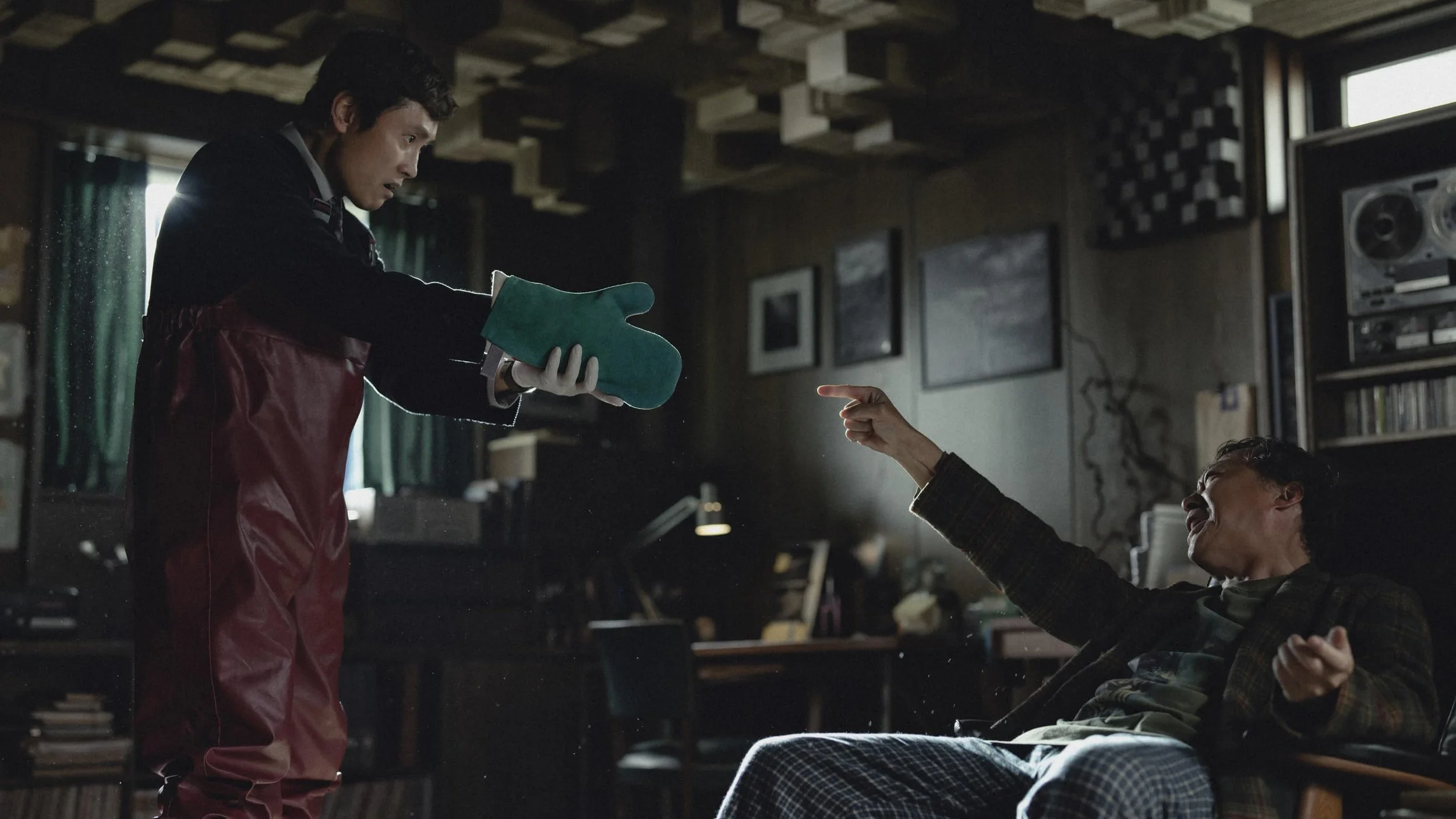
Man-su (Lee Byung-hun) has it all: a loving wife, two healthy children, a nice big house (his childhood home, which he was able to buy back after his family lost it), and a job he loves. Man-su takes pride in his labor, manufacturing specialty paper with care. That pride takes a hit when Americans take over his company and he becomes a casualty of workforce reductions.
Papermaking wasn’t just a job for Man-su, though; it was a purpose. You don’t get named “Pulp man of the year” unless you mean it. While Man-su endures a job hunt that plays like a series of humiliation rituals (begging, at one point, from the floor of a public bathroom), he makes do for a while with low-level, unskilled gigs. But the indignities mount: he can’t afford lessons for his cello-prodigy daughter, he defaults on his mortgage, and he even has to send the family’s two dogs to live with relatives because he can’t afford to feed the extra mouths. Openings in specialty paper manufacturing are few and far between and the competition is stiff. But what if Man-su could eliminate some of that competition? Like, with a gun?
“No Other Choice” will understandably receive a lot of comparison to Bong Joon Ho’s “Parasite,” another dark Korean satire at the intersection of class and capitalism. “No Other Choice” is even more gleefully madcap, going full Looney Tunes with tonal maximalism. Scenes will seesaw between, say, a fart joke and one of the bleakest murders you’ve ever seen committed on screen, along the way lampooning the fragility of male identities tied to work in a system that will never love them back.
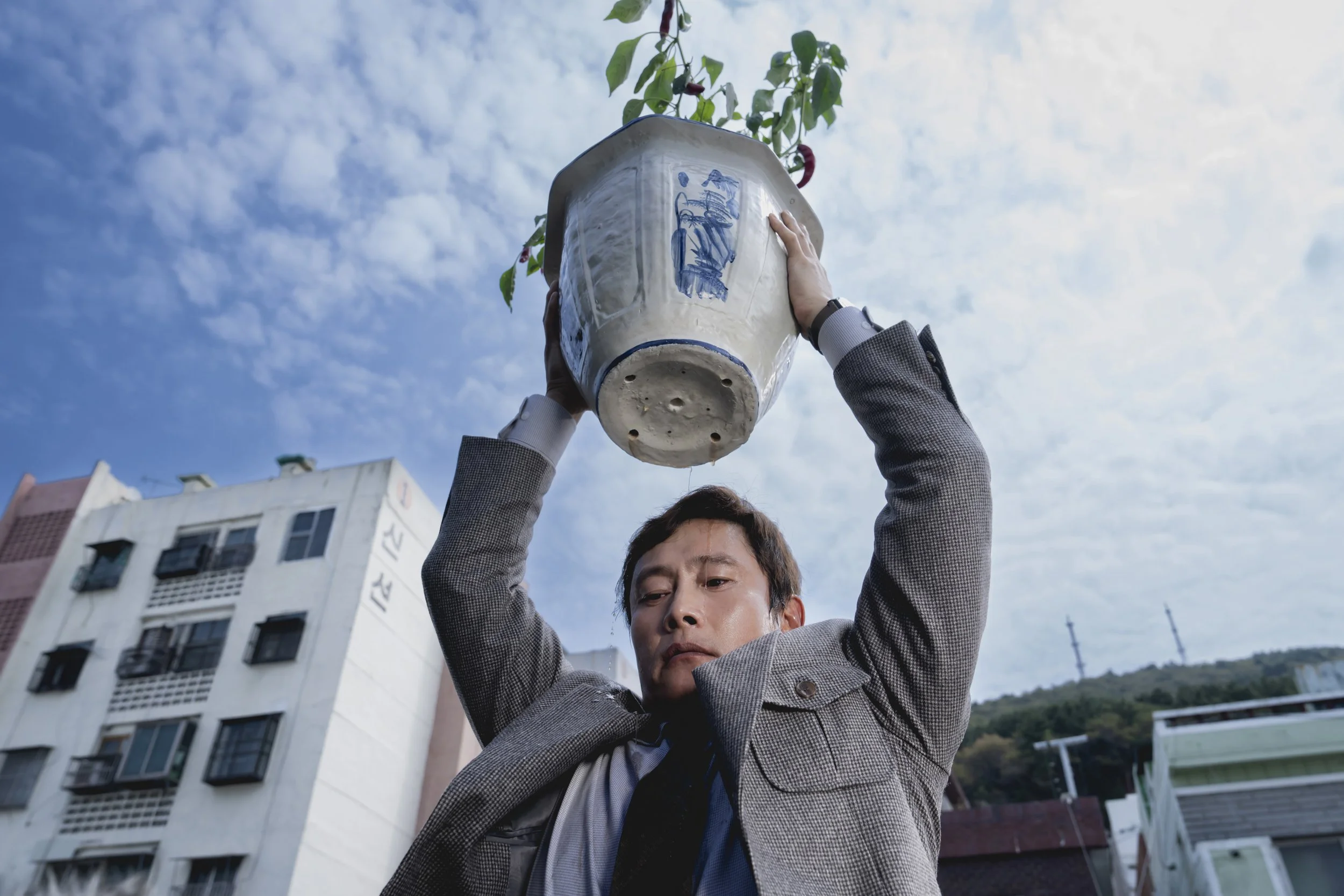
“No Other Choice” is certainly a film of the moment, but without the urgency and clear artistic vision of its thematic predecessor. The tonal whiplash can make it hard to find footing in “No Other Choice,” as do characters behaving incomprehensibly on their road to ruin. But even the more minor entries in Park’s filmography are a delight to watch. He can turn even the most mundane interaction into a piece of bravura filmmaking. There’s a shot here of a man drinking a beer that’s so creative, it will leave you marveling at how he shot it. It may not service a story in need of servicing, but who would deny Park the opportunity to show off a little?
“I am a good person. Losing my job is not my choice,” Man-su chants in a support group, his voice joining a choir of laid-off company men. But the choices he makes after that underline how we are all made complicit in an evil, dehumanizing system.
Barbara’s ranking
3/4 stars