
Directed and written by: Aaron Sorkin
Starring: Jeremy Allen White, Mikey Madison, Jeremy Strong, Billy Magnussen, Betty Gilpin, and Bill Burr
Runtime: 112 minutes
‘The Social Reckoning’: The message is important, but this pedestrian corporate drama doesn’t quite earn a ‘Like’

In 2019, “The Wall Street Journal” hires investigative reporter Jeff Horwitz (Jeremy Allen White) for a social media beat in their San Francisco bureau. He looks around and comments that the office seems quiet. It’s relatively empty and free of the boisterous bustle that one would associate with a newspaper’s workplace, but that’s the business these days or, in this case, seven years ago. The industry is in decline and peppered with a never-ending parade of cutbacks. (Just ask anyone in the newspaper biz.)

It’s smaller.
Compared to “The Social Network” (2010), its sequel, “The Social Reckoning”, is a smaller film.
“Reckoning” follows a narrow, true-life path of Facebook’s impact on its users by the platform encouraging more frequent use and recommending pages or groups with extremist views.
This combination can manipulate human behavior.
Director/writer Aaron Sorkin – who co-wrote “Network” – steers this social media whistleblower story, as Horwitz tries to work with Frances Haugen (Mikey Madison), a Facebook employee on the Civic Integrity Team, who wants to release the truth about her employer’s questionable practices.
Much of the movie’s runtime follows Jeff and Frances’ push-pull dance to retrieve the damaging information. The Emmy-winning White and Oscar-winning Madison are top-notch actors, and they play (for the most part) their roles well, as a determined journalist and a sometimes-reluctant, sometimes-steadfast informant. White is well-suited – and nicely dressed by costume designer Susan Lyall – as a resolute journalist, and the 27-year-old Madison convincingly plays a junior staff member of this 1.83 trillion-dollar (in 2026) social media corporation.

Frances is an office professional who isn’t taken seriously when speaking up to her supervisors or co-workers about concerning matters. A director-type (Billy Magnussen) and Frances’ colleague (Anna Lambe) treat her like a kid in a way, where children should be seen and not heard.
Hence, when Jeff reaches out to Frances, she responds.
She needs to be heard.
Haugen often dives into an “Are you getting all this, Jeff?” vibe as a form of concern but also teasing with Horwitz, and these exchanges lighten the mood on occasion, but other times, the act wears thin. These are spots when the unlikely pair attempts to share chemistry, but with mixed results.
Additionally, throughout Frances’ attempts to covertly share corporate data, there might be one moment in nearly two hours where suspense somewhat registers. So, the cloak-and-dagger narrative feels more like a pedestrian curiosity than an eye-popping race against corporate masters, as opposed to a classic white knuckler like Sydney Pollack’s “The Firm” (1993).
If only Madison and White sported a Tom Cruise-like running scene through Menlo Park, Calif.
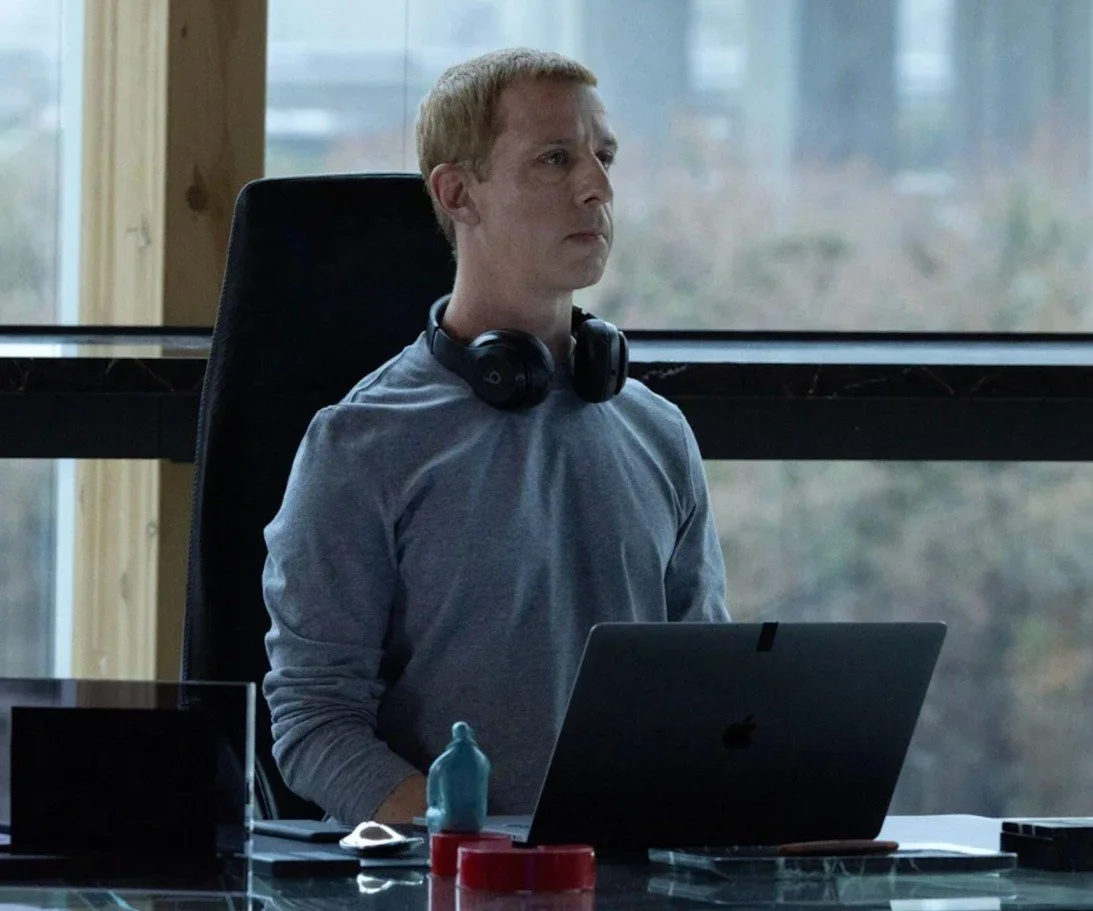
Speaking of corporate masters, Jesse Eisenberg – who earned an Oscar nomination for playing Mark Zuckerberg in “Network” (2010) – did not return for the sequel, but Jeremy Strong steps in and is fascinating as the socially (pardon the pun) awkward but brilliant, feared, and resolute CEO.
Strong is so convincing and brings his own robotic-like twist to Zuckerberg, one might completely forget Eisenberg’s portrayal during the 112-minute runtime. This critic did!
What is forgettable is an awfully lengthy exchange between Zuckerberg and Facebook/Zuckerberg detractor Charlie Garrigan (Bill Burr), where the two argue incessantly. It all takes place during a planning session for Mark’s congressional hearing, and whether that squabble occurred at that moment or not, the incident feels like a forced, tired, and ineffective plot device to portray Zuckerberg and his mindset.
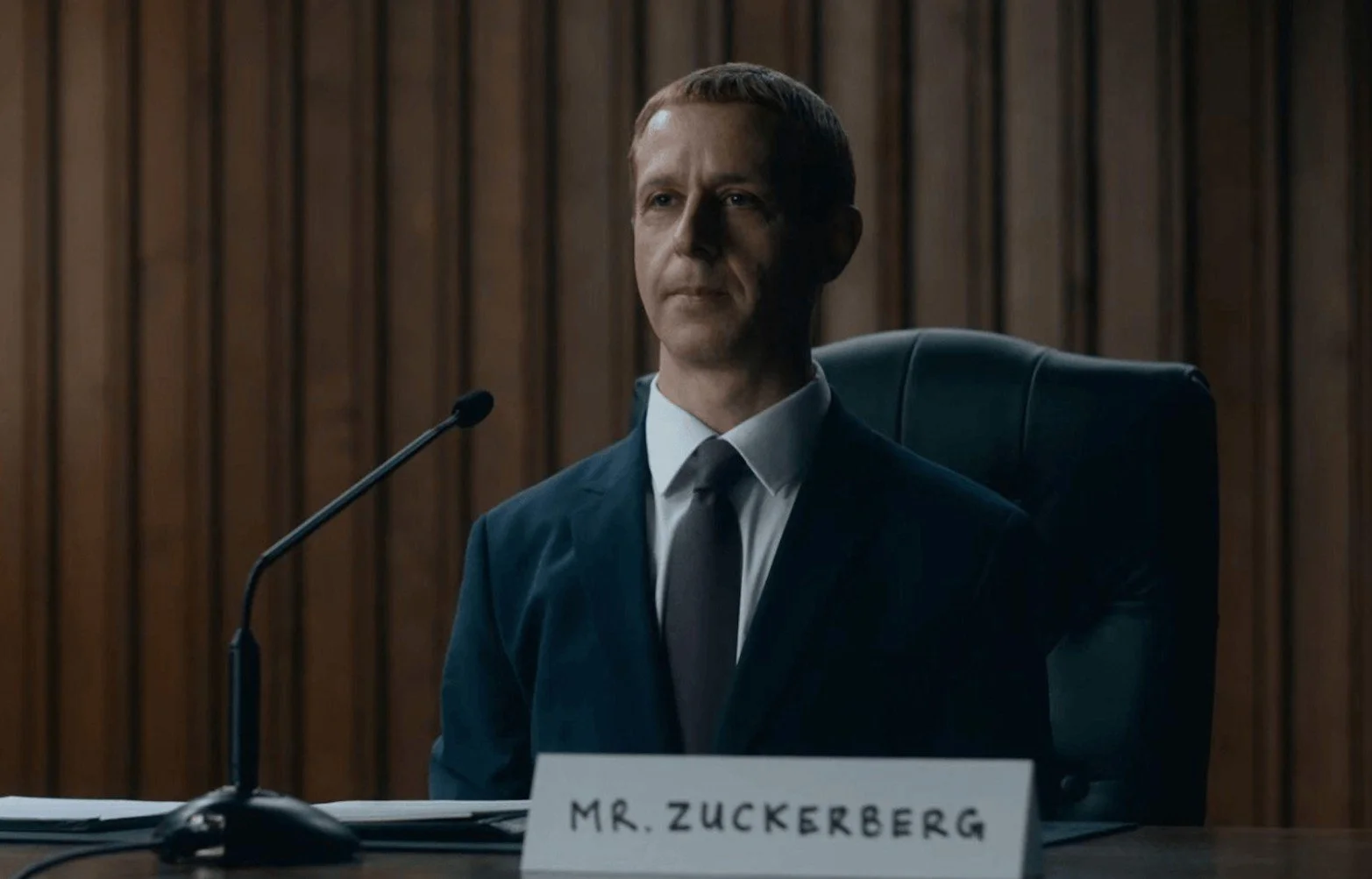
However, during an altogether different moment, a 5-minute delicious scene, a small collection of Facebook employees – including Frances – enter Mark’s office, and an executive makes a proposal that is shot down by Zuckerberg faster than a French Foreign Legion firing squad. The said manager might feel like she is dead...or wish she was.
That moment alone is all that Sorkin needed to depict Mr. Zuckerberg.
Sorkin, of course, is a masterclass screenwriter, and he nicely shifts the on-screen events back and forth between 2019, 2020, and 2021, and he pens an incredibly powerful and disturbing opening scene that conveys the warped impact social media can have on the human psyche.
He then bookends the opening with an infamous event in our nation’s history. The latter historical sequence drives home social media’s reach from one person’s radicalization to a mob scene to a significant portion of the country. Then again, the two scenes feature one political view, and social media’s impact can influence any partisan stance, not just one.
Well, here’s one stance that almost everyone – who doesn’t have a financial investment in social media – can agree upon: We should spend less time on our phones and more time touching grass and chatting with our friends, neighbors, family, colleagues, and guests the old-fashioned way…in person.
Jeff’s ranking
2 / 4 stars