
Directed and written by: Kirk Jones
Starring: Robert Aramayo, Maxine Peake, Shirley Henderson, Scott Ellis Watson, and Peter Mullan
Runtime: 120 minutes
‘I Swear’ is a staggering crowd-pleaser. It’s filled with humor, heartbreak, and tenderness.
“I can’t help it.” – John Davidson (Scott Ellis Watson)
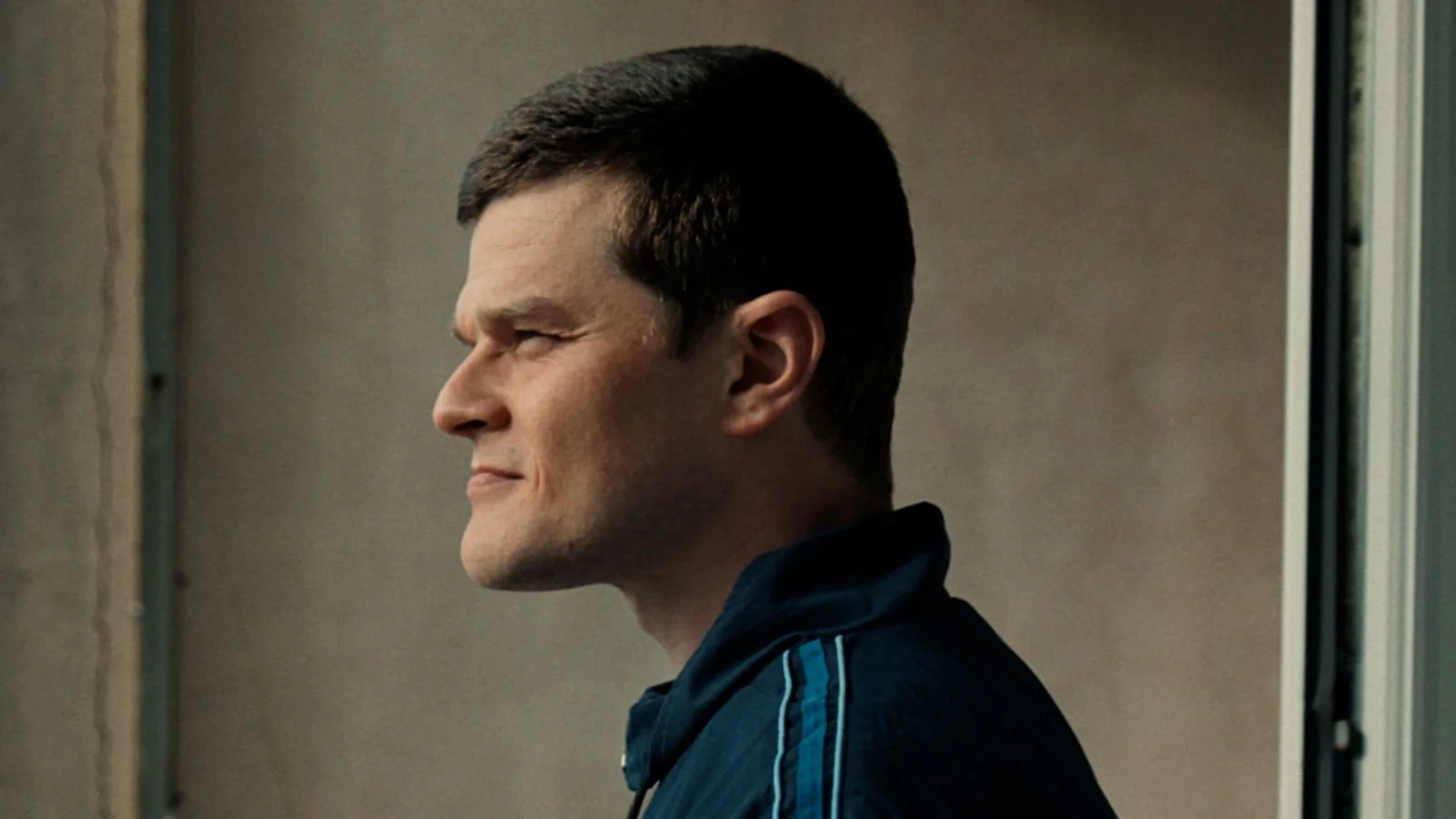
“I’m so tired.” – John Davidson (Robert Aramayo)
“I Swear”, written and directed by Kirk Jones (“Waking Ned Devine” (1998), “Nanny McPhee” (2005)), is a biopic about John Davidson, an ordinary Scottish man living with an extraordinary challenge.

He copes with Tourette syndrome, “a neurological disorder that may cause unwanted and uncontrolled rapid and repeated movements or vocal sounds called tics,” as defined by the United States’ National Institute of Neurological Disorders and Stroke.
In practical terms, John – through no fault of his own - involuntarily curses, shouts out wildly inappropriate declarations, or out of nowhere exclaims the word, “Hey,” in sudden, unexpected flashes that can make the most hardened of men or women jump with fright.
John’s verbal ticks are also accompanied by physical ones. For those – including this film critic - not intimately familiar with all the possible symptoms that accompany Tourette’s, some of John’s bodily movements, as played out in the film, are a bit staggering.
In a different sense, “I Swear” is a staggering crowd-pleaser of a film filled with humor, heartbreak, and tenderness. It’s proudly led by Robert Aramayo, whose miraculous performance earned him the 2026 BAFTA Best Leading Actor award.
The movie opens in 2019 – for a few minutes - with a landmark event in Davidson’s life, but then immediately time-travels back to 1983 in Galashiels, Scotland, a modest village of 10,000 or so that’s nestled in the waving green countryside and sits about 35 miles southeast of the Scottish capital of Edinburgh. Not only does Jones jettison the audience back 36 years, but he also sets the mood for a more innocent, nostalgic period (one that is also less forgiving).

This critic didn’t recall seeing leg warmers, mohawk haircuts, and fluorescent headbands on-screen (well, maybe one headband is present, if we look closely), but Jones does employ a familiar, catchy New Order track. The song is actually from 1987, but let’s not quibble with these details.
John – a teen, played by Scott Ellis Watson – rides his bike around town, attends school, serves as a goalie on a soccer team, and chats up girls. Money isn’t a current luxury in the Davidson house, as evidenced by John and his mom’s (Shirley Henderson) bus ride back from the city, but he enjoys a happy existence with his parents, brother, and two sisters.
Watson and Jones set a clear perspective of Davidson’s conventional life before Tourette’s, as John exists in the world like any kid his age, until he doesn’t.
Tourette’s first sign appears in a classroom, and the disorder’s occupancy soon wreaks havoc on the unsuspecting, confused teenager with unrelenting frequency, as family, classmates, and an unforgiving principal are equally bewildered.
The young John frequently interrupts peaceful decorum through vulgar outbursts and a benign but startling “Hey!” It all feels like a 10-ton weight pushing down on his spine while attempting to trek on the unstable road of adolescence.
Everyone surrounding John – and including himself - figuratively screams incomprehension about his behaviors, while our young protagonist – unfortunately - completely grasps a brand-new sensation called hopelessness. There’s a scene where John attempts to escape from school and home life by walking in a field adjacent to a nearby stream to collect his thoughts, but there is no peace, as he randomly yells, “Hey,” into the ether.

Fast forward to 1996, and Aramayo is first seen as John, a 20-something staring into the bathroom mirror after shaving. He gives us a couple of seconds of melancholic stillness, but John’s ever-present condition celebrates its actuality with an abrupt, “Hey!”
He’s aged 13 years, but – emotionally - much hasn’t changed. One might ask, “How does he interact with the world?”
The answer is he tries to keep his distance when possible, and the screenplay establishes this fact when his adult anxiety prevents him from (easily) eating a simple meal at an old schoolmate’s house for fear of subjecting his friend Murray (Francesco Piacentini-Smith) and his family to vulgarities, spitting food, or domestic mayhem.
This devastating sequence plainly explains Davidson’s reluctance to engage in friendships, relationships, or a career.
The turmoil or the potential for it impacts movie audiences too. John’s behavior is unpredictable. At any moment, he may smack himself in the head, strike someone else, or utter the most inappropriate proclamations, like walking toward two policemen and yelling, “Pigs,” or addressing someone with a cancer diagnosis by frankly stating that they will die soon.
John curses throughout much of the 120-minute runtime, and this reality granted the film an R-rating, which, quite frankly, is a shame, because the core, tone, and empathetic messaging are PG-13 appropriate, but inevitably, too many “f-bombs” will earn the “under-17 viewers require an accompanying parent or guardian” grade.

Aramayo is a transformative, empathetic marvel on the screen and is entirely convincing as this real-life individual suffering from self-exile and societal reactions.
It’s a performance that will leave audiences gutted and brought to tears.
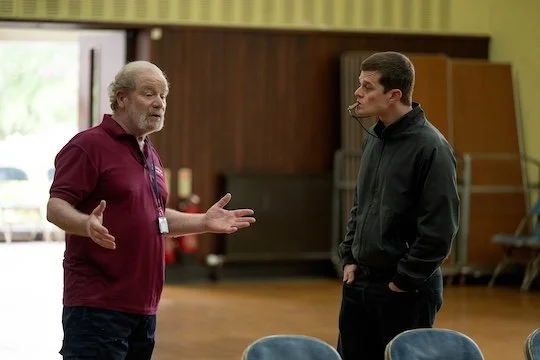
In a 2025 interview with “The Upcoming” (on YouTube), Robert said, “I met a lot with John. I based myself in Galashiels, and tried to work a lot with John, and just understand him, and be in different situations with him, and just shadow him really in his life. Go to the community center with him, watch football with him.”
Robert also said there was improvisation with both ticks and dialogue, which would surely initiate surprise reactions from his co-stars as well as the audience.
Speaking of co-stars, Watson merits plenty of praise for his portrayal of the teenage John during the first portion of the first act, and Maxine Peake and Peter Mullan are on-screen godsends as they play John’s steadfast friends/supporters, Dottie Achenbach and Tommy Trotter, respectively. The good-natured Dottie exudes bottomless patience with John’s condition, and this nurse-by-trade offers a gentle hand and simple kindness, which are exactly what the doctor ordered. Tommy is a consummate bachelor, but he shows a similar serenity. Previously, John felt completely ostracized, but these two blessings in the form of two everyday Galashiels citizens are the comrades everyone should have.
Meanwhile, Henderson plays a dramatically less likable character as Heather Davidson, John’s mom, but Shirley is effective in generating both angst and sympathy for a woman who muddled through Tourette’s from an unenviable parental lens.
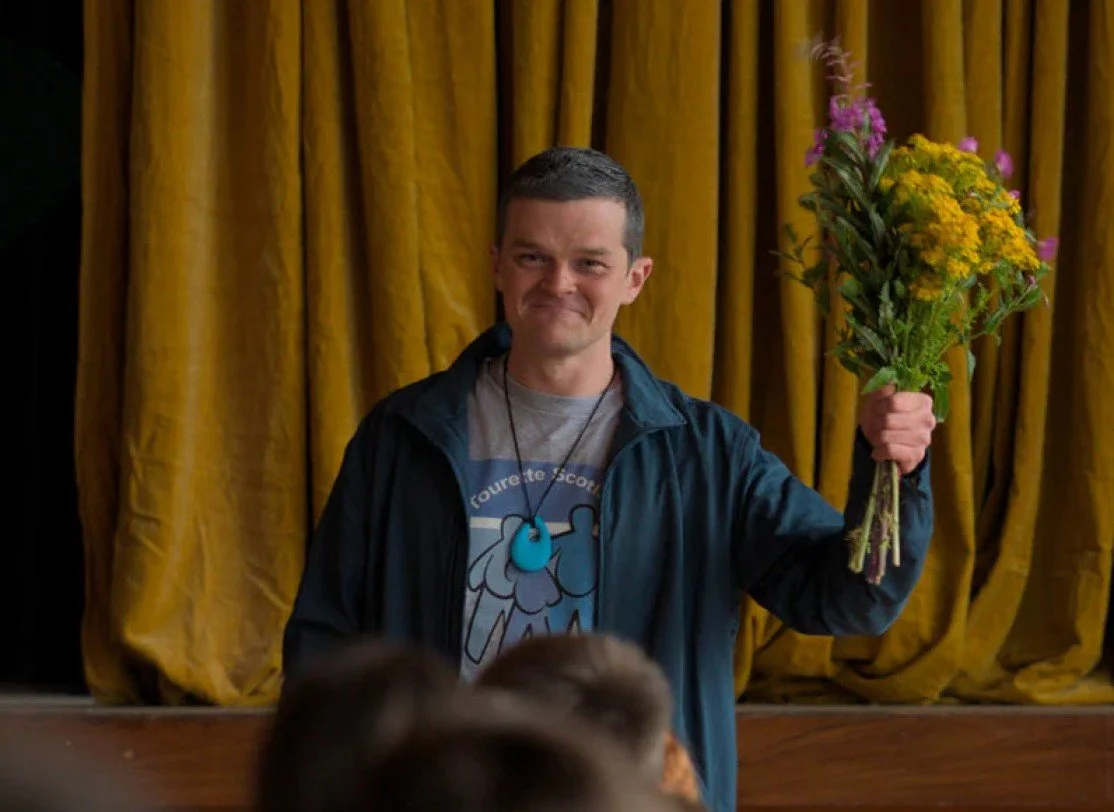
The obvious strength of “I Swear” is captured through all the aforementioned performances. Jones grants the gifted thespians room to breathe and the freedom to shine, while he provides a rock-solid biopic structure. Jones plays it straight with the on-screen presentation, which mostly occurs in 1983 and 1996, but he also subtly shifts from 1996 to 2019 (and beyond) without fanfare. This allows the audience to catch up with John’s life through just about the present day, while the skilled make-up and hair departments every so slightly add believable wrinkles to Aramayo’s/John’s face and increasing sprinkles of salt to his previously pepper hair.
Kudos also go to composer Stephen Rennicks’ moving score, which doesn’t overwhelm the narrative. Instead, Rennicks finds the most suitable moments to add his soft touches, which perfectly complement several key emotional exchanges that will affect John Q. Public, Jane Q. Public, and their tear ducts.
In a pair of emotional moments, teenage John and 20-something John say, “I can’t help it,” and “I’m so tired,” respectively.
The gift of “I Swear” is that it gives movie audiences incalculable volumes of understanding and compassion when those words are spoken. I swear it does.
Jeff’s ranking
3.5 / 4 stars