
Directed by: Christopher Nolan.
Written by: Christopher Nolan.
Starring: Matt Damon, Anne Hathaway, Tom Holland, Zendaya.
Runtime: 172 minutes
Christopher Nolan does the cinema gods proud with ‘The Odyssey’
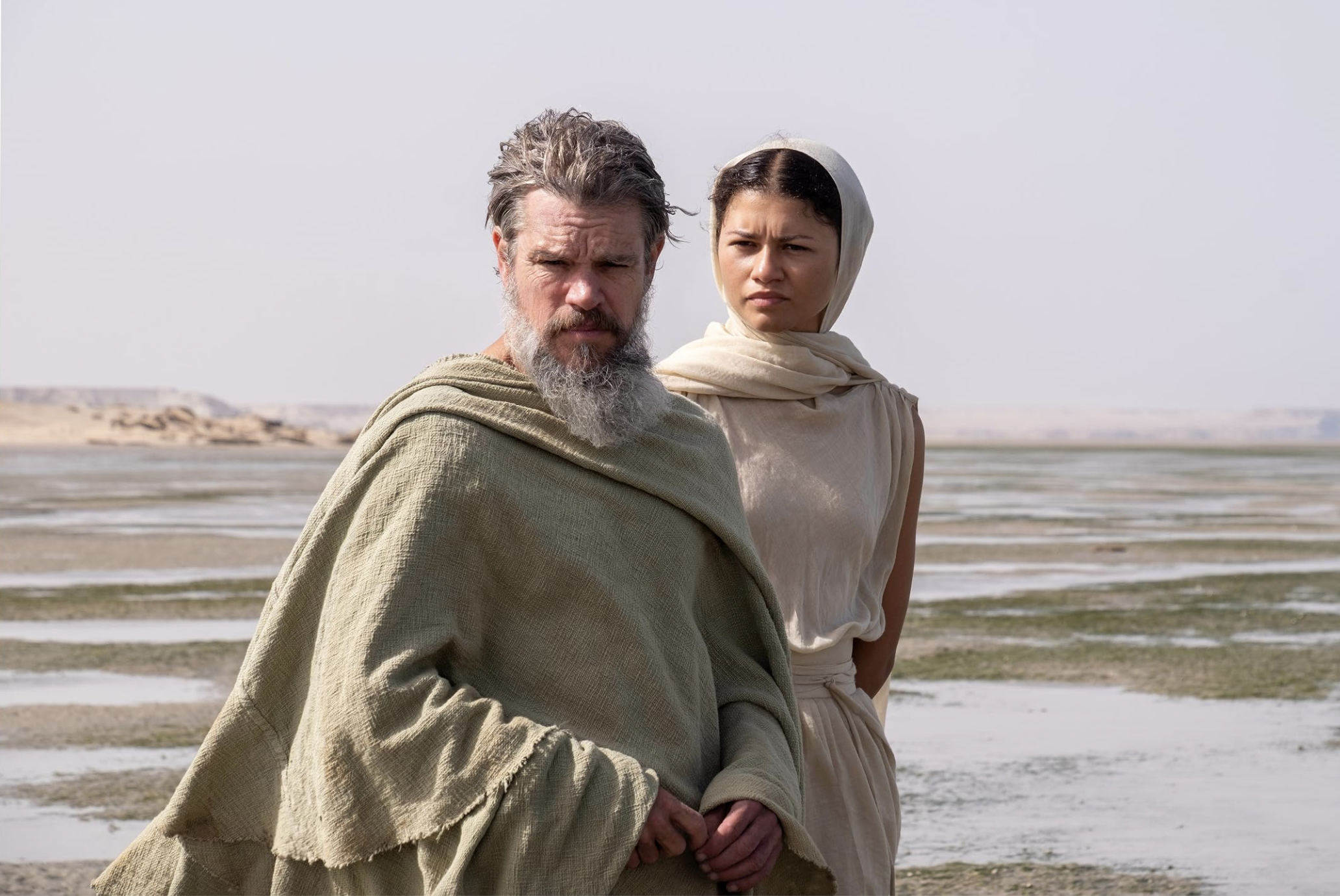
How do you go bigger than the atom bomb?
With “The Odyssey,” Christopher Nolan turns to antiquity for inspiration, bringing to life the fabled wars of old on the largest canvas he could find, with IMAX cameras and 70mm film projected onto 70-foot-wide screens.
His 2023 film “Oppenheimer” won the Oscar for best picture for its portrait of a man ruined by his own brilliance, ambition and ego, his atom bomb still threatening to end the world entire generations after his death. Homer’s epic poem about the heroic king of Ithaca provides another such man – and in Nolan’s adaptation of the text, another such moral failing – for study.
Odysseus (Matt Damon), king of Ithaca, veteran of the great Trojan War – that of the Trojan Horse, one of the legendarily great tricks of warfare – has long been stranded on an island with the nymph Calypso (Charlize Theron), unable to remember what happened after the war or how to get home, and even who awaits him there.
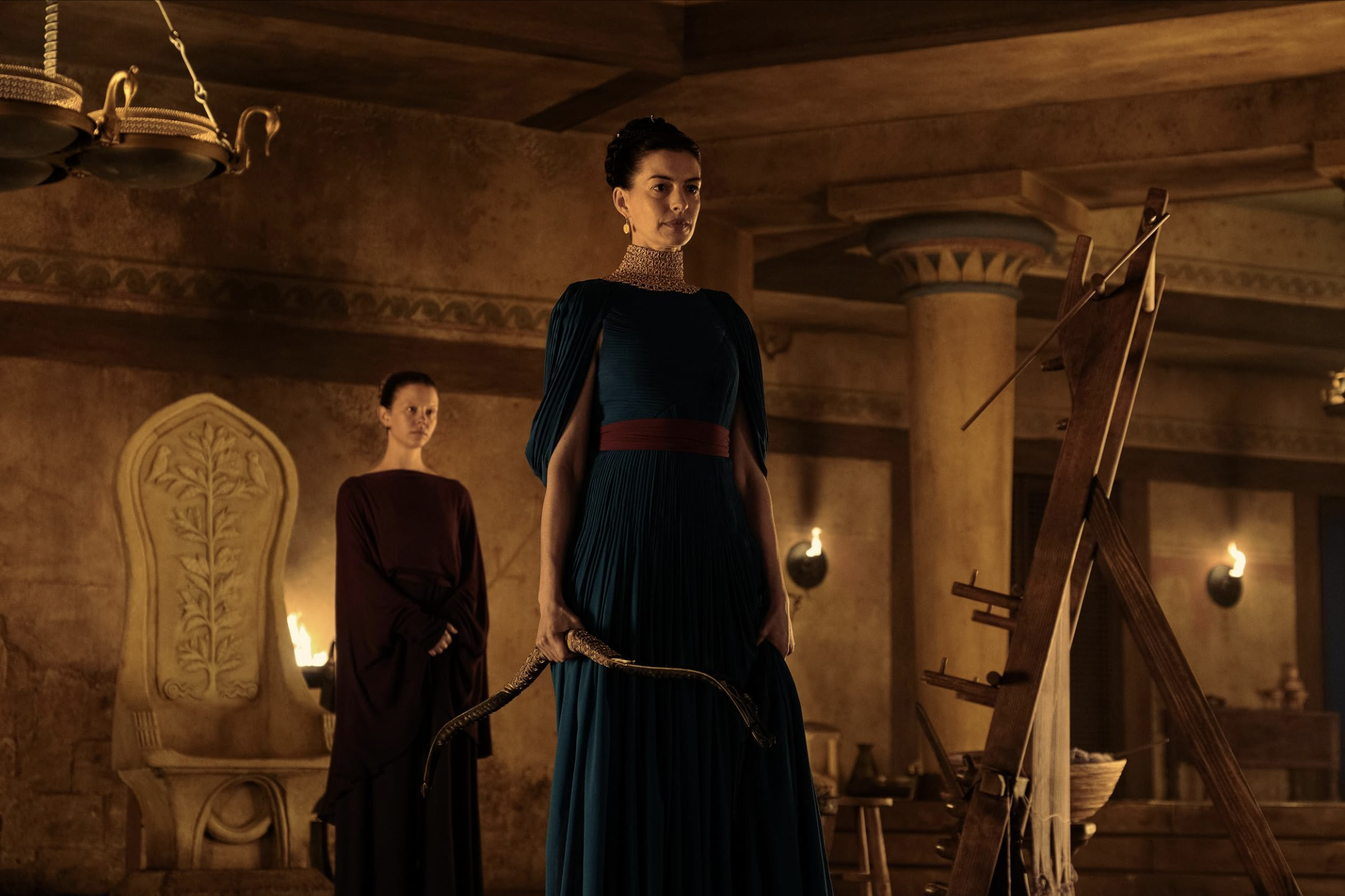
It’s been years since the war’s end, and his family, the steadfast and loyal Queen Penelope (Anne Hathaway) and young Prince Telemachus (Tom Holland) hold out hope for his return, denying the increasingly volatile group of suitors who have taken residence in the palace, eager to win Penelope’s hand and thus ascend the throne and take control of Ithaca.
“The Odyssey” is a big film. Literally, of course, in length (at nearly three hours) and in form (it’s the first feature-length film to be shot entirely on IMAX film). It’s big in experience, placing the viewer in combat that feels real and urgent, the air of the movie theater and seat beneath you vibrating with the clang of swords against helmets. It’s big in adventure as Odysseus’ memories of his attempted voyage home return – memories of a giant man-eating cyclops, the many-headed creature Scylla and sirens serenading men to their doom, monsters brought to life with elemental, almost eldritch horror.
It’s big, too, in meaning. Odysseus and Telemachus, separated by time and an ocean, grapple with the meaning of Zeus’ law as they fulfill or break it. Zeus’ law is an edict and a sacred duty to welcome those who cross your threshold, from the lowliest beggar to the loftiest king – with food, drink, safety and compassion. It’s essentially the Golden Rule but with the Bronze Age twist that any person, however downtrodden, could be a god in disguise.
What does it do to a man’s soul to break Zeus’ law? What does it do to the soul of an entire people when a king break’s Zeus’ law, or his army?
Nolan’s “Odyssey” is not just a sister in ambition to “Oppenheimer,” but a spiritual and thematic companion piece, asking just as urgently what of our humanity is lost when our weapons and our rage outstrip our compassion. As Odysseus’ memories come back, his family frantically searching for news of him, he’ll have to decide if remembering them is worth also remembering past actions he’s tried so hard to forget.
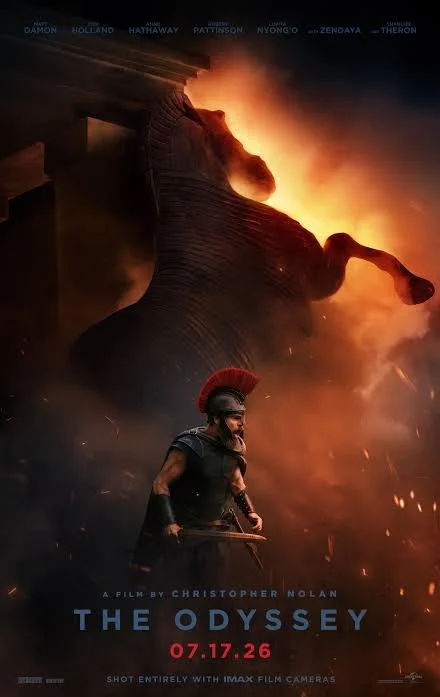
It's fascinating that Nolan, one of Hollywood’s most powerful directors, is so laser-focused on moral questions of men’s ambition and ego, as he himself has had to invent a bigger canvas to contain his own ambition, down to the creation of a new IMAX camera system specially designed to muffle the deafening noise of the gargantuan camera.
There’s something to be psychoanalyzed there. But it’s also incredibly moving. Not just the story beats, which are affecting – Holland and Hathaway are resonant in their delayed mourning, and John Leguizamo as blind servant Eumaeus and Samantha Morton as rage-filled Circe steal the show – but also the human effort that went into creating something so big.
In a cultural and historical moment when so much art and creativity is being sacrificed to the gods of convenience and the oracles of AI, Nolan turns to humanity in theme and craft.
Think of all the skilled hands Nolan’s 70mm film ran through on its way to the projector, loaded into specially made cameras, developed in tanks by chemists, cut by hand by editors, and loaded into cans and shipped. Think of Ludwig Göransson, the Swedish composer who sourced ancient Greek instruments – bronze gongs and lyres and aulos flutes, instruments far outside his ken or comfort – to create a score that make viewers feel they were on ancient Greek battlefields. Think of production designers creating a 40-foot Trojan horse, and of location scouts finding caves in Greece instead of green screens against which to film.
If there’s a Zeus’ law of cinema, Nolan has fulfilled it.
Barbara’s ranking
4/4 stars