
Directed by: Gus Van Sant.
Written by: Austin Kolodney.
Starring: Dacre Montgomery, Bill Skarsgård, Colman Domingo, and Al Pacino.
Runtime: 105 minutes.
Gus Van Sant returns with stylish hostage thriller ‘Dead Man’s Wire’
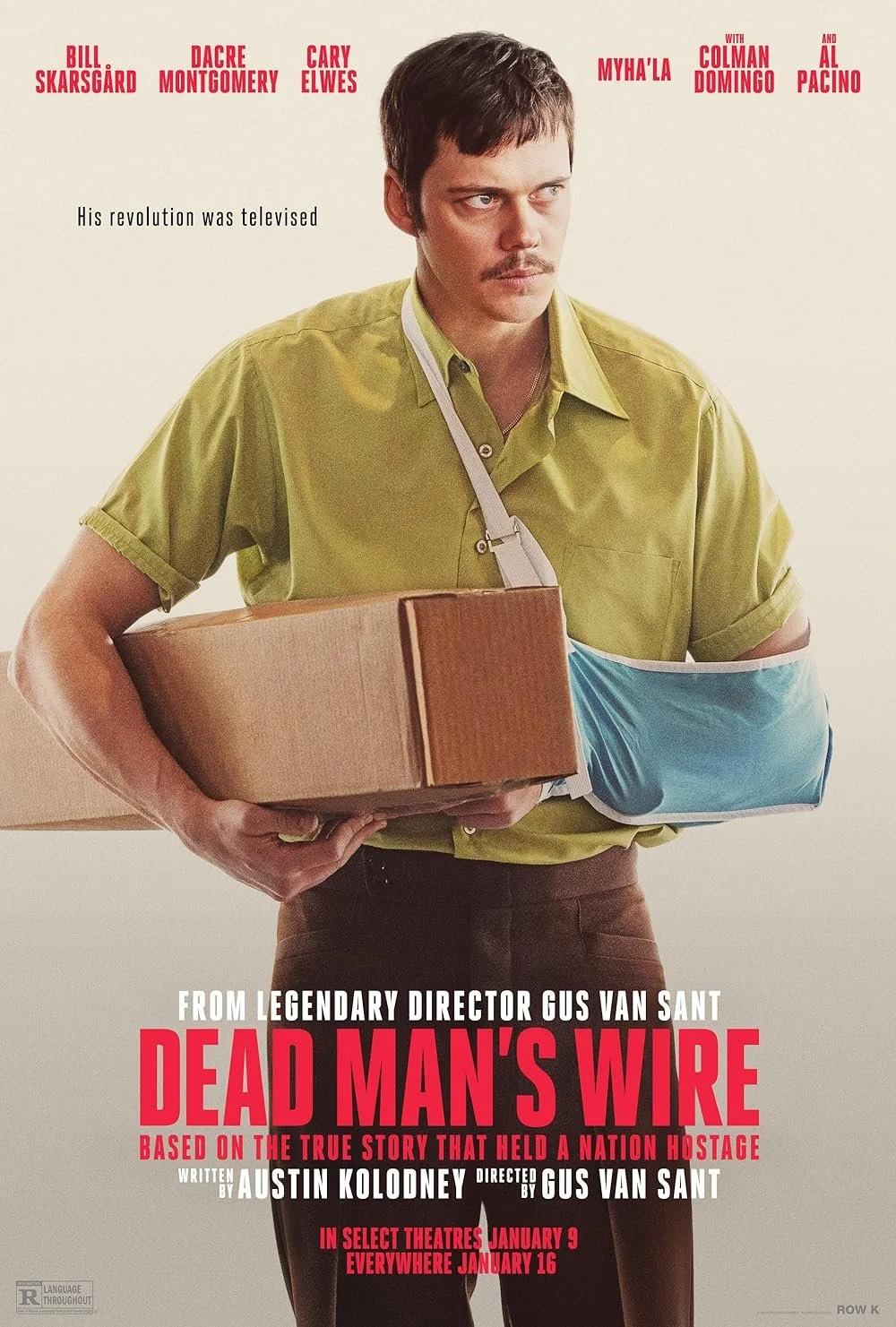
Just how crazy does a downtrodden everyman holding an avaricious mortgage broker hostage have to be to lose your sympathy? Depending on your own moral calculus, perhaps just about as crazy as Bill Skarsgård plays Tony Kiritsis in “Dead Man’s Wire.”
Director Gus Van Sant (“Good Will Hunting,” “Milk”) has been fairly fallow the past decade, directing a handful of episodes of Ryan Murphy’s “Feud: Capote vs. The Swans” since his last feature film, 2018’s little-noticed “Don’t Worry, He Won’t Get Far on Foot.” “Dead Man’s Wire” doesn’t take us back to the halcyon days of Van Sant’s Oscar-nominated turn with “Milk,” it does entertain as another ‘70s-set historical drama based on a real-life story.
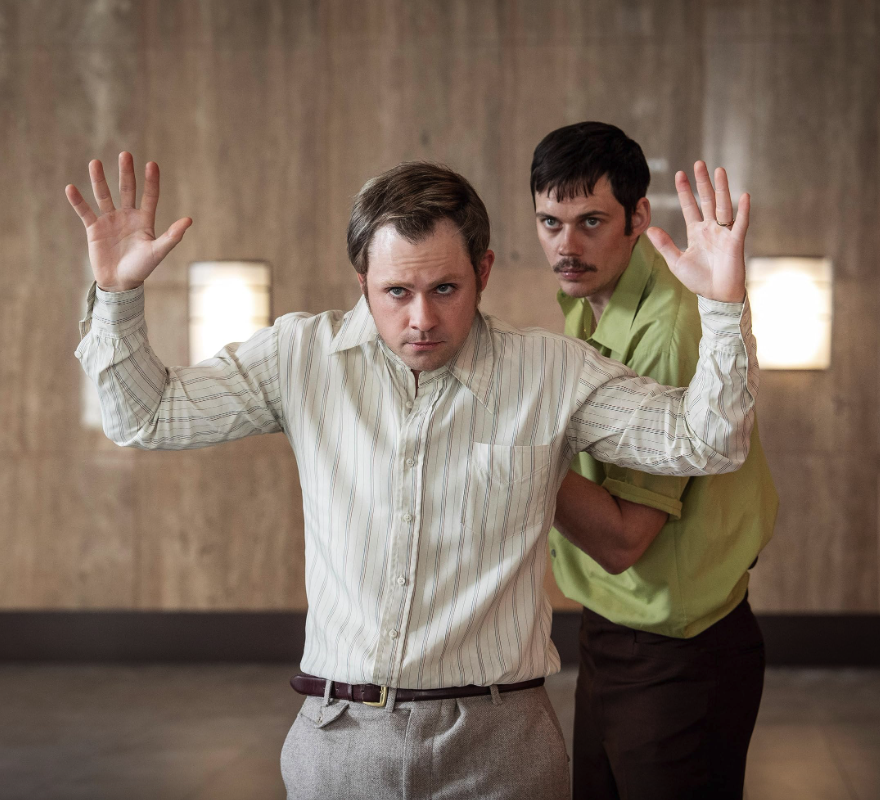
“Dead Man’s Wire” is set in the gray and dreary Indianapolis of February 1977, when would-be real estate developer Tony Kiritsis (Bill Skarsgård) strolls into Meridian Mortgage with a grievance and a shotgun. He’s there to confront the big boss, M.L. Hall (Al Pacino), whom he discovers took a surprise trip to Florida. Kiritsis pivots, setting his sights instead on the man’s son, mortgage broker Dick Hall (Dacre Montgomery). Before Hall knows what’s happening, Kiritsis has him in a dead man’s wire, a crude device fashioned with wires and a loaded shotgun pointed at Hall’s head. If anything happens to either man – say, if Hall tries to run or if Kiritsis gets tackled by the cops – the gun goes off and Hall dies.
Skarsgård plays hall twitchy and unpredictable, coming across very convincingly as a man who could shoot off someone’s head between quips (“I call shotgun!” he says, leading Hall by, well, shotgun to the getaway vehicle). But he’s also sincere in his belief that Meridian Mortgage ripped him off, financing land for him to develop and then undercutting him so he’d default, getting both pieces of the pie.
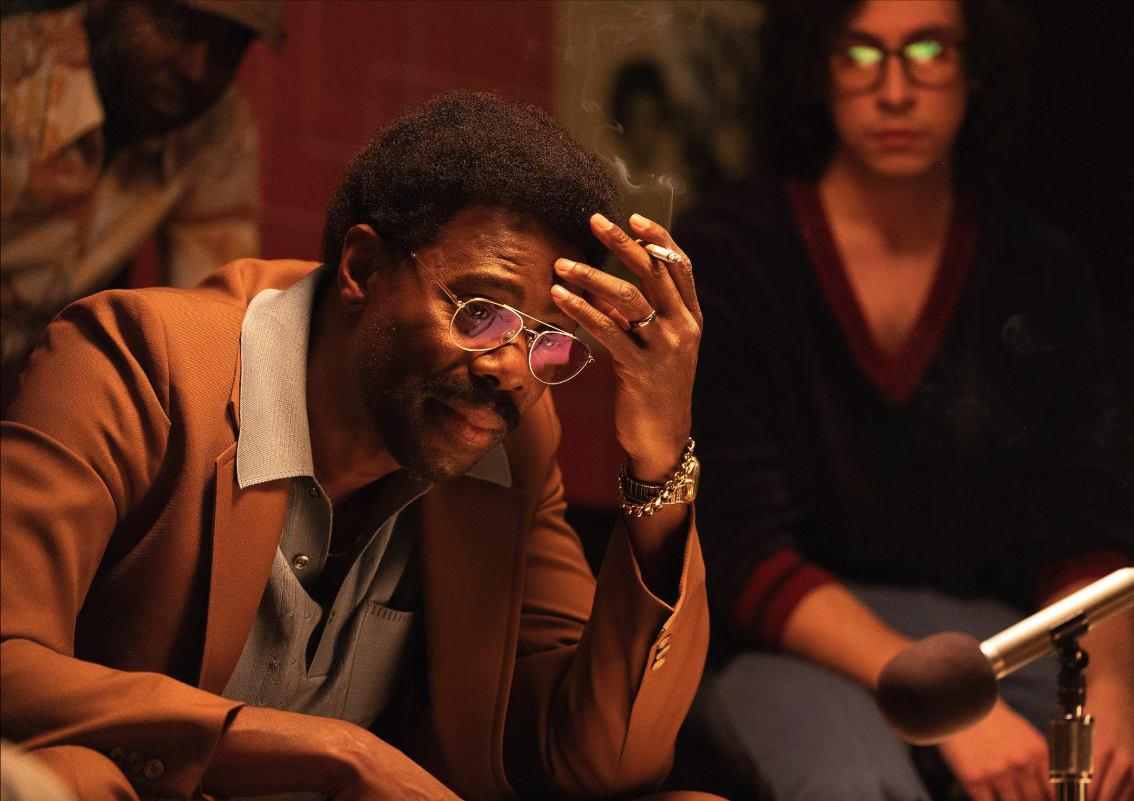
“I’m gonna let the world know what you and your dad have done to me,” Kiritsis tells Hall. And he does, with a little media savvy, calling radio DJ Fred Temple (Colman Domingo), a velvet-voiced local legend who lends a sympathetic ear and his airwaves to the kidnapper’s grievances. Soon, there’s a media frenzy, and Kiritsis the everyman fighting the powers that be begins to turn into an unlikely folk hero even as he gets more deranged with bravado.
“Dead Man’s Wire” has an old-school stylishness about it, handsomely outfitted in period accoutrements and a ‘70s earth-toned palette. The vibe carries it further than characters; while everyone turns in fine performances (especially stylish Domingo, who makes you believe in the power local radio DJs once wielded), the film doesn’t have much to say beyond, “Hey, can you believe this happened?” Kiritsis especially gets lost in the mix, the film showing you too little of his backstory and innerworkings to get you on his side (which it really needs to do if he’s going to be holding a shotgun to a man’s head the whole film).
The biggest mark against “Dead Man’s Wire” is how willfully it draws attention to other, better films. It’s just a stroke of bad luck that Van Sant deploys Gil Scott-Heron’s “The Revolution Will Not Be Televised” within months of the release of “One Battle After Another,” whose own use of the song is so memorably pivotal amid a cultural zeitgeist of revolutionary politics. But it’s borderline malpractice to cast a phoning-it-in 85-year-old Al Pacino in what’s essentially a discount-bin “Dog Day Afternoon.”
You can find fun stuff in the discount bin, though, and while “Dead Man’s Wire” doesn’t ascend to the lofty heights of “Dog Day Afternoon,” it’s still an engagingly offbeat hostage thriller that seems too wild to be true had it not been televised.
Barbara’s ranking
2.5/4 stars