
Directed by: Brian Duffield
Written by: Brian Duffield, based on Daniel Kraus’ novel
Starring: Austin Abrams, Josh Brolin, Elisabeth Shue, and John Ortiz
Runtime: 106 minutes
‘Whalefall’ is a stressful, frightening experience for those who buy the story hook, line, and sinker
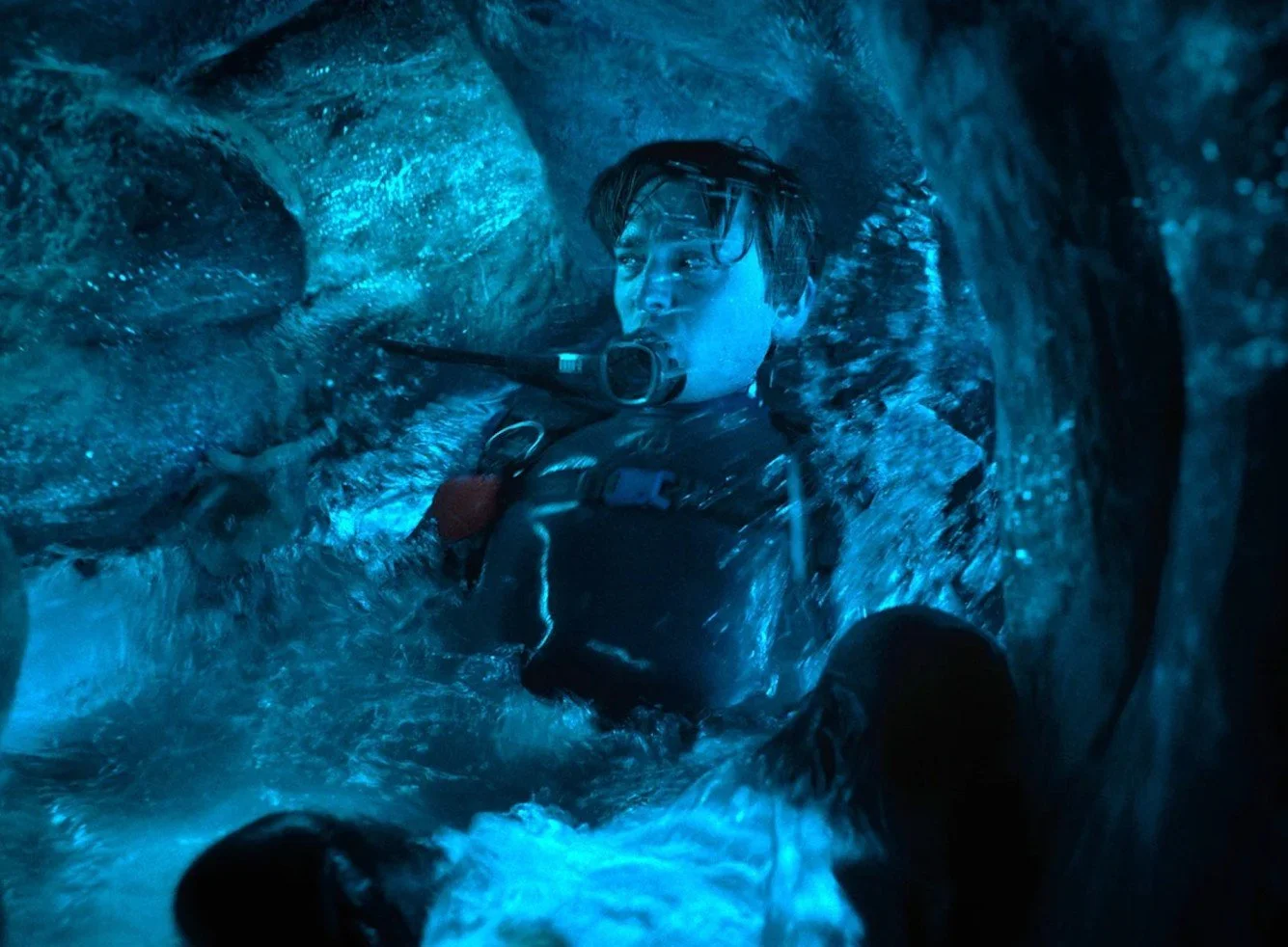
Jay Gardiner (Austin Abrams) is in trouble!
Not in a 10-minutes-late-for-work kind of trouble, but a colossal case of death-seems-certain trouble!
In an attempt to find his late father’s (Josh Brolin) remains, the college-aged Jay straps on scuba gear, walks onto a Monterey, Calif. beach, and steps into the bay. His dad, Mitt (Brolin), and he struggled with a contentious relationship before Mitt committed suicide, but Jay feels compelled to locate his dad while home from school.
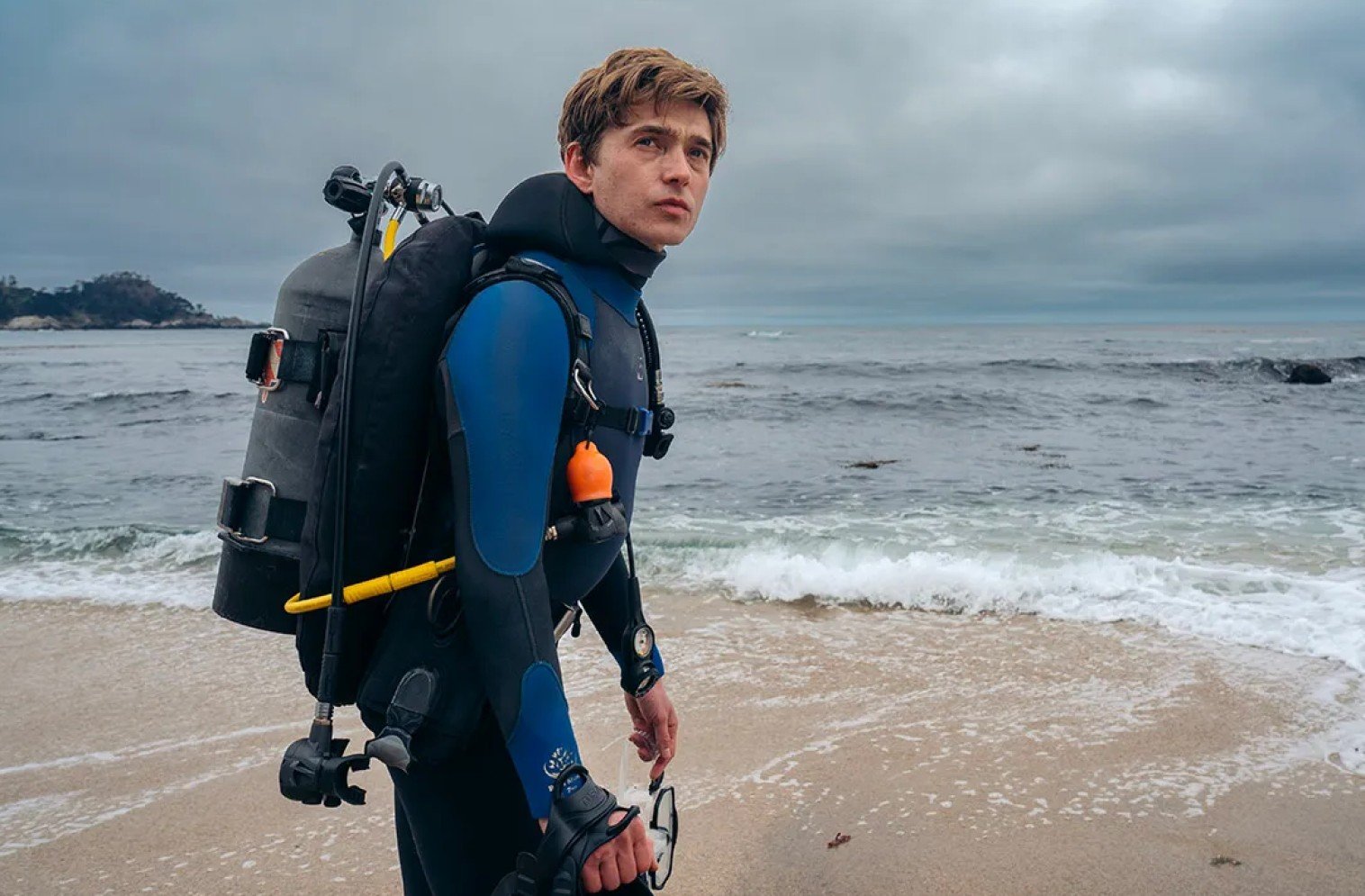
Jay attends the University of Iowa, just about the farthest college from the Atlantic or Pacific Ocean that one could find to leave his past (and his father) behind. Mitt was passionate about the sea.
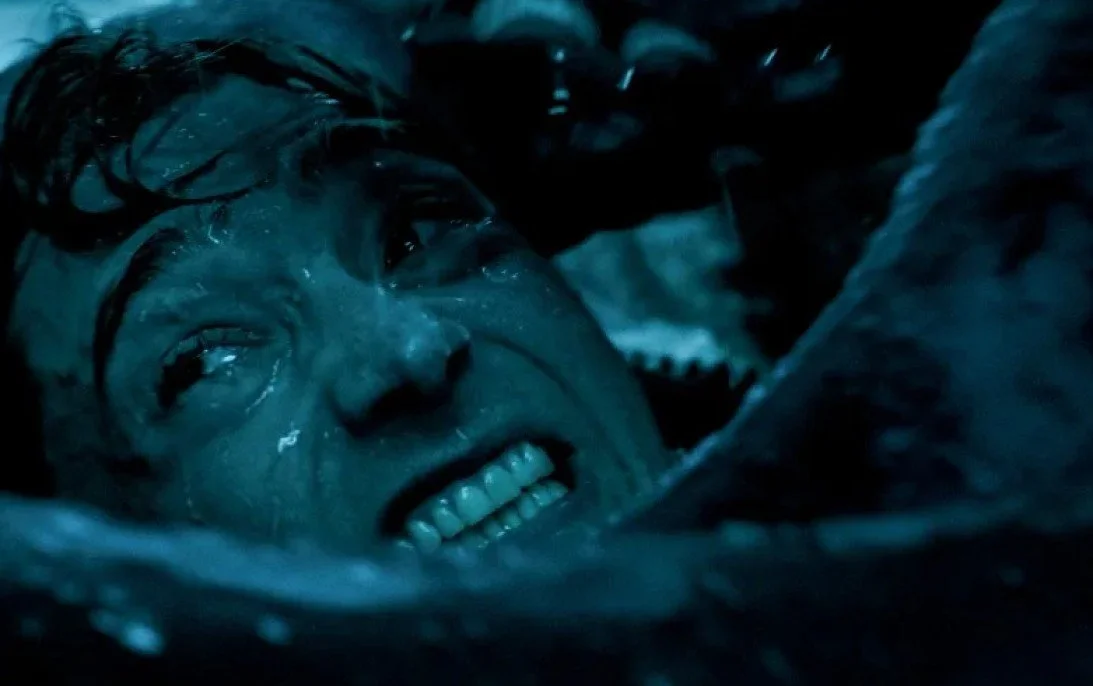
Dealing with regret and grief, Jay scuba dives in the bay for only a few minutes of screen time, when he unceremoniously confronts a giant squid and then a sperm whale. In a sequence filled with unbridled terror, the whale swallows Jay whole, and this Iowa Hawkeye is still alive and faced – along with the movie audience - with an impossible circumstance of catastrophic proportions.
How can Jay stay alive? How can he escape?
These are raw, visceral questions that director Brian Duffield poses in the immensely stressful thriller “Whalefall”, also written by Duffield and based on Daniel Kraus’ 2023 novel of the same name.
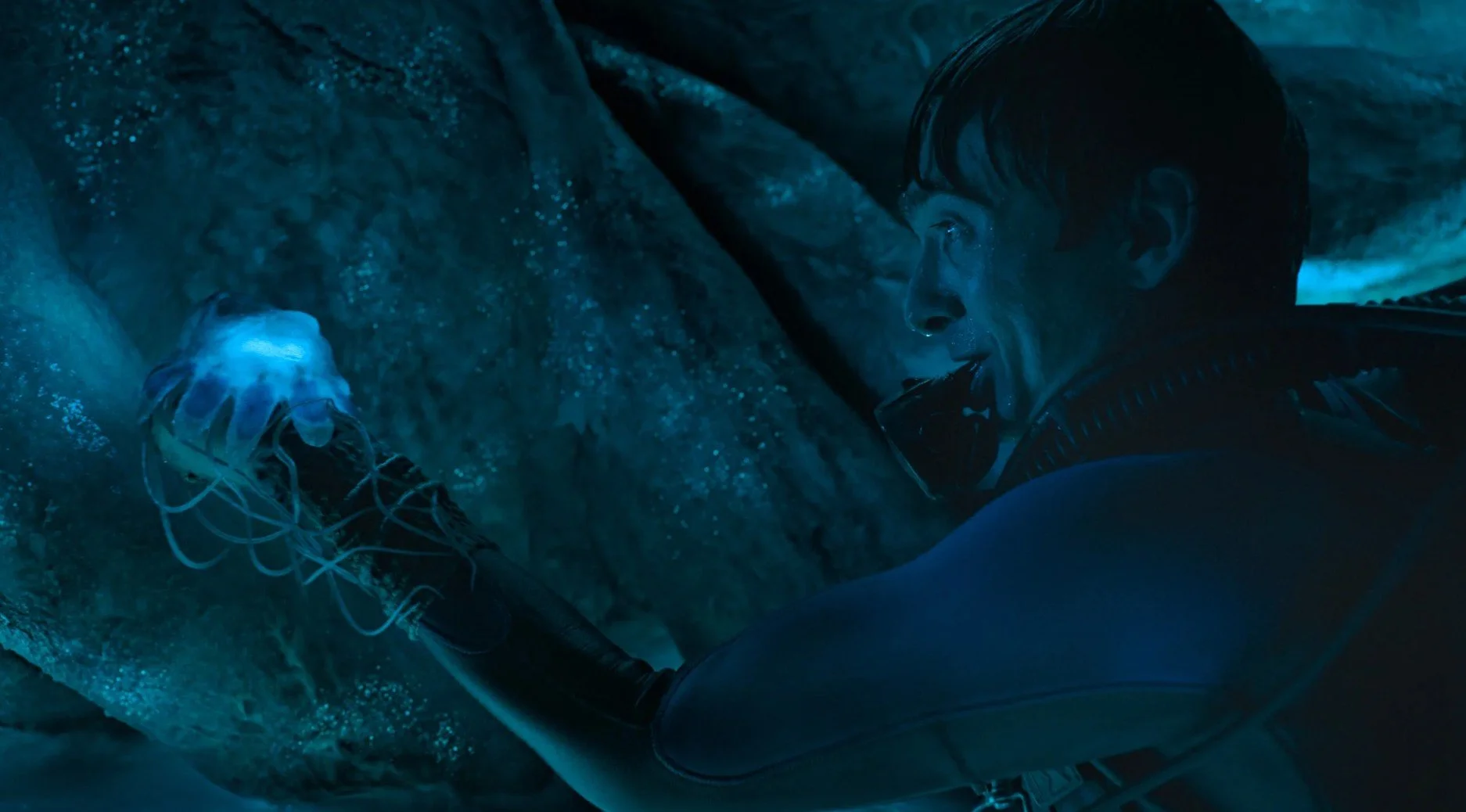
Sperm whales can reach 60 feet in length, but without any anatomy training of the said marine mammal, the audience has no exact idea of Jay’s location within the whale (and for the sake of this review, let’s call the whale “Murphy”) other than he’s uncomfortably situated with Murphy’s digestive tract.
Kudos to the film’s set decorators, art department, special and visual effects teams, cinematographer Aaron Morton, Duffield, and anyone else on the crew who helped engineer a terrifying, claustrophobic setting inside Murphy.
The same applause should go to Abrams, who is completing convincing as a man in shock that he has suddenly become Murphy’s breakfast.
Jay, horrified beyond belief, frantically looks around this unreal, cramped setting. He is surrounded by misshapen, moving, soft, fleshy innards that are covered with clammy enzymes and juices. Without context, it looks as though our young hero is trapped in a cave, but we know better, as strange crevices and openings randomly appear.
Which direction is toward Murphy’s mouth, and which way is his other end? It’s impossible to know, and with his oxygen tank only having enough breathable air for an hour, Jay is forced to think against the clock and Murphy’s bodily functions.
This critic bought this unnerving premise hook, line, and sinker. If you do as well, expect to squirm, hold your breath, and throw your hands in the air while fidgeting in your theatre seat during a vast majority of the time Jay spends inside Murphy.
To give the audience some needed reprieves from Jay potentially becoming a krill substitute, Duffield intermittently reaches back into Mr. Gardiner’s memory with flashbacks of his overbearing, demanding dad.
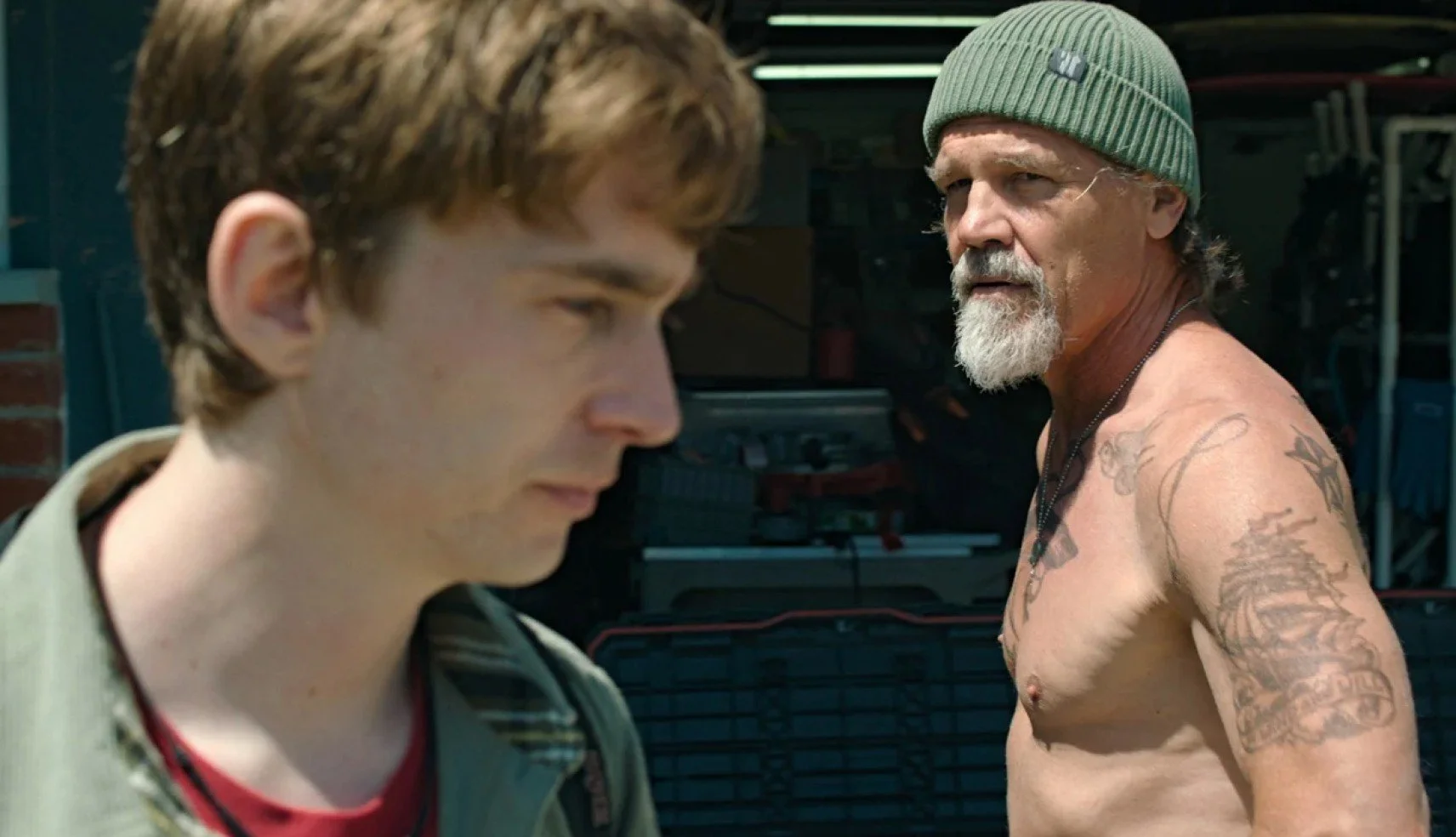
Brolin – who was a volunteer fireman in real life – is perfectly cast as a gruff, no-nonsense alpha male, and these repeated, troublesome callbacks aren’t easy to witness, as Mitt did not win any Father of the Year awards during Jay’s childhood. Still, Jay remembers moments of Mitt’s wisdom about ocean life, boating, scuba diving, and whales. Mitt deeply endears this oceanic habitat, and through Jay’s race to survive, memories of this combative relationship include valuable morsels that could prevent him from becoming one.
This effective cinematic device to repeatedly flashback – during Jay’s predicament - is reminiscent of Danny Boyle’s “127 Hours” (2010), which featured the true-life story of Aron Ralston (James Franco), who was trapped by a boulder in Utah.
In “Whalefall”, Jay Gardiner is a fictional character, but thoughts about truth or fiction may be thrown out the window/coughed up during the 106-minute runtime.
On the other hand, Duffield leans into Jay and Mitt’s relationship a bit too often, especially during the last act, which drives the narrative into some eye-rolling stretches of oversentimentality. While hoping for Jay’s ultimate survival, one might also wish to dodge some of Mitt’s recurrent words from beyond the grave in a case where less of Mitt’s wisdom would be a better fit for the movie.
Then again, we are talking about a whale of a story here, so “Whalefall” earns some leeway while also frightening those willing to believe it.
Jeff’s ranking
2.5 / 4 stars