
Directed by: Nathan Fielder and Lance Oppenheim
Starring: Nathan Fielder, Elizabeth Holmes, and Billy Evans
Runtime: 174 minutes
Two lunatics meet their match in miraculous ‘You Can See Everything’
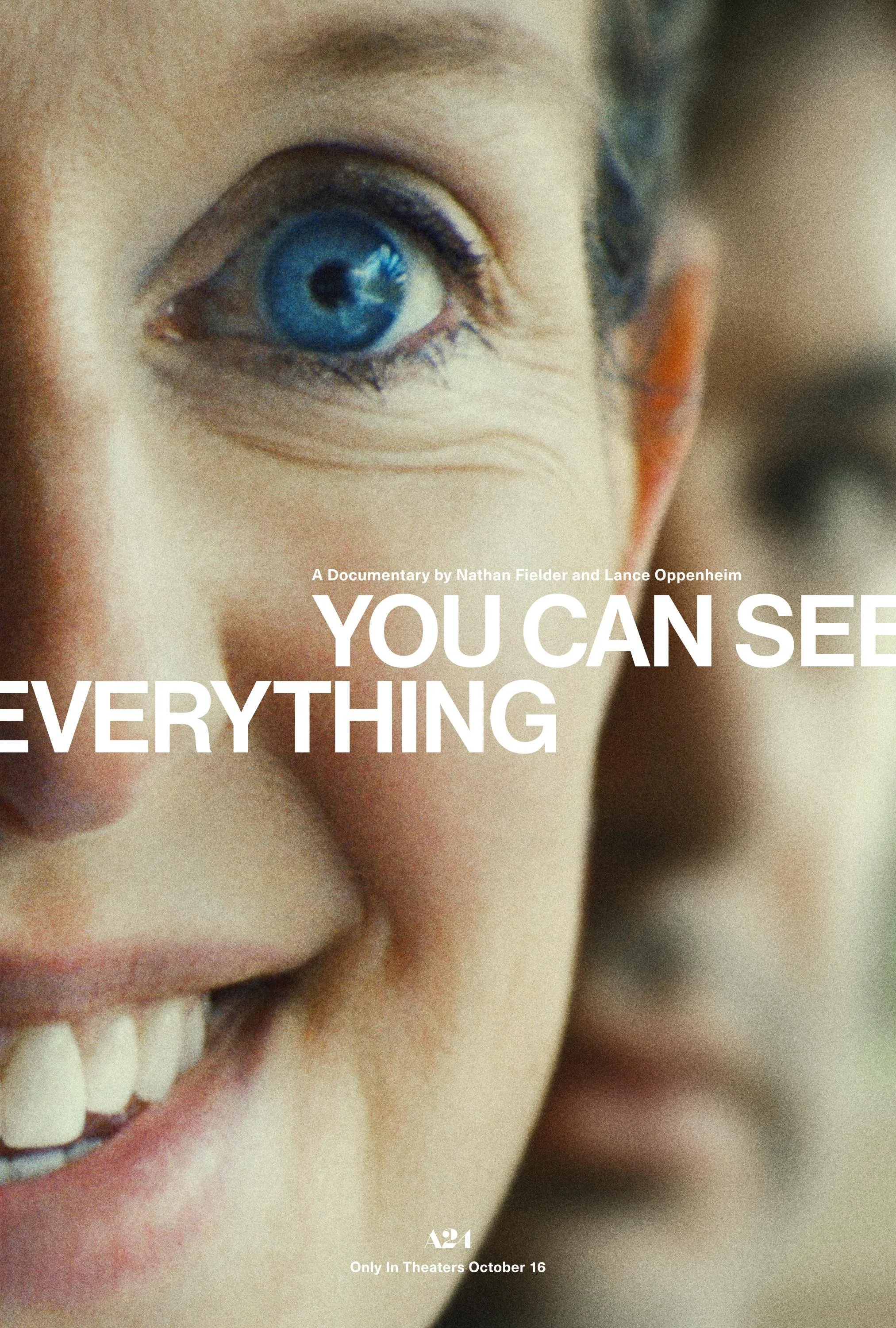
The irresistible force paradox asks what happens when an unstoppable force meets an immovable object. It’s less a question than a thought exercise because both things could not simultaneously exist in the same universe: an irresistible force by definition cannot be resisted, and an immovable object by definition unfailingly resists. Two such objects could therefore never meet, or else one would not be irresistible or the other would not be immovable.
And yet “You Can See Everything” exists.
It shouldn’t. Two brains as divergent and personalities as unbudging as Nathan Fielder’s and Elizabeth Holmes’ shouldn’t exist in the same universe, never mind in the same film frame. That Holmes, the disgraced Theranos tech entrepreneur currently serving a sentence for fraud in a federal penitentiary, should invite Fielder, a prank comic who blurs the line between fact and fiction for laughs, into her home in her waning days of freedom to tell her side of the story after years of silence is incomprehensible.
Yet this three-hour-long A24 documentary sends Fielder and co-director Lance Oppenheim (who also directed this year’s excoriating “To Catch a Predator” drama “Primetime”) to Holmes’ beachside Del Mar house 34 days before she’s scheduled to go to prison. Holmes gives Fielder, of all people, intimate access to herself and her family – her grieving parents, her manic husband Billy Evans, and her two agonizingly young children, one of whom is an infant – as she makes her peace and says her goodbyes… and hatches plans to launch Theranos 2.0 from behind bars, with Evans running the show.
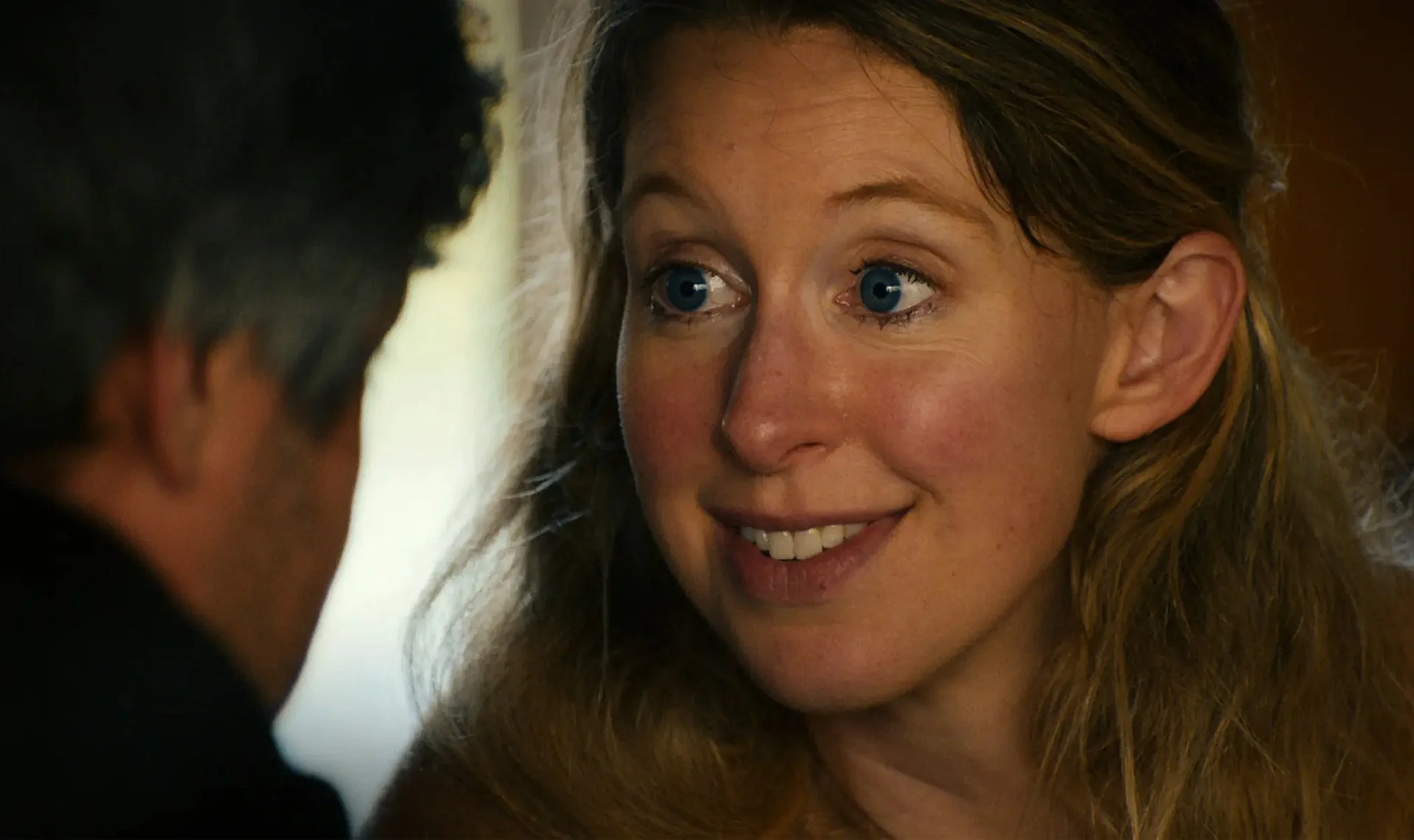
Don’t come to “You Can See Everything” looking for smoking guns or definitive answers about Holmes and her whole deal, because you won’t find them. “You Can See Everything” is more a documentary about the making of itself and the battle royale of Fielder and Holmes realizing they’ve met their match, each trying to get the other to blink. Because as different as their lives are, they have a shared superpower: the ability not to break character under the greatest stress and scrutiny.
Fielder has used that power for good in shows like “Nathan for You” and “The Rehearsal,” which puts his preternatural powers of self-control to work getting laughs as he creates increasingly awkward situations with deadpan precision. He creates vacuums of cringe that feel like dread and never rushes to fill the space, as if he were born without the chip in his brain that registers embarrassment.
“What did she have to gain from me?” Evans says, waxing rhapsodic about his deep spiritual connection to Holmes, claiming they fell in love at first sight.
“Well, isn’t your family rich?” Fielder deadpans.
Holmes’ character is less entertaining for those who lost everything investing in the Stanford dropout’s sham startup Theranos, a portmanteau of “therapy” and “diagnosis” that claimed it was revolutionizing the medical industry with a device that could test for innumerable illnesses with a single drop of blood. The character Holmes played contributed as much to her celebrity as the invention on which she built – and then lost – her wealth in a dizzying fall from grace as she cosplayed as a tech genius, artificially lowering her vocal register, donning Steve Jobs-inspired black turtlenecks, and hypnotizing investors with her disquieting million-yard stare.

But is it a character? She swears unflinchingly in her too-deep voice that it isn’t. She insists still that the device she invented works, despite all evidence to the contrary. Her parents say she was never the same after she was raped at Stanford, that the trauma caused her to seek romantic solace in controlling men like former Theranos president Sunny Balwani, who is also serving time in prison. Is Evans, with his twitchy paranoia, controlling behavior, hair-trigger temper, and tech bro aspirations just another Sunny? Is it possible that Holmes is just a very damaged, vulnerable woman?
Or is she the greatest con artist in the world?
The cameras keep rolling after Holmes goes to prison, and there’s a second-act twist I won’t spoil here – it deserves the delight of discovery. But that twist is what makes an otherwise fascinating meeting of the minds into a miracle of a documentary that turns the camera on itself in its desperate bid to overcome the fundamental unknowability of other people.
Holmes and Evans let Fielder get so close: into the shower as Evans scrubs his naked body, at the table where Holmes takes a breast out to feed her infant child, into the bedroom where husband and wife hold one another and cry, Holmes’ nose dripping snot. It’s a disquieting intimacy, shot like a horror film, faces peering around shadowed corners where monsters lurk.
You can see everything, but still see nothing at all.
Barbara’s ranking
4/4 stars