
Directed and written by: Emerald Fennell
Starring: Margot Robbie, Jacob Elordi, Hong Chau
Runtime: 136 minutes
“Wuthering Heights” is a smutty good time for degenerates with a sense of humor
You will know within the first 30 seconds if Emerald Fennell’s “Wuthering Heights” is for you. Not to spoil the joy of discovery, but there is a cheeky rug pull before the credits even roll, a feint that makes you think you’re experiencing one nasty thing only to reveal it’s another, much nastier thing. If the fake out delights you, congratulations, you’re a degenerate with a sense of humor and you’re in for a fun ride. If it repels you, well, you’ll always have the 1939 Laurence Olivier “Wuthering Heights.”
If you take your glasses off and squint, the bones of the film are roughly the same as Emily Brontë’s oft-adapted Victorian gothic romance: There’s the brutish orphan Heathcliff (Jacob Elordi) taken in by the Earnshaws, who falls in love with his tempestuous adoptive sister Catherine (Margot Robbie), who must marry into a neighboring family for status instead of love, setting off a vengeful chain of events with no happily ever after.
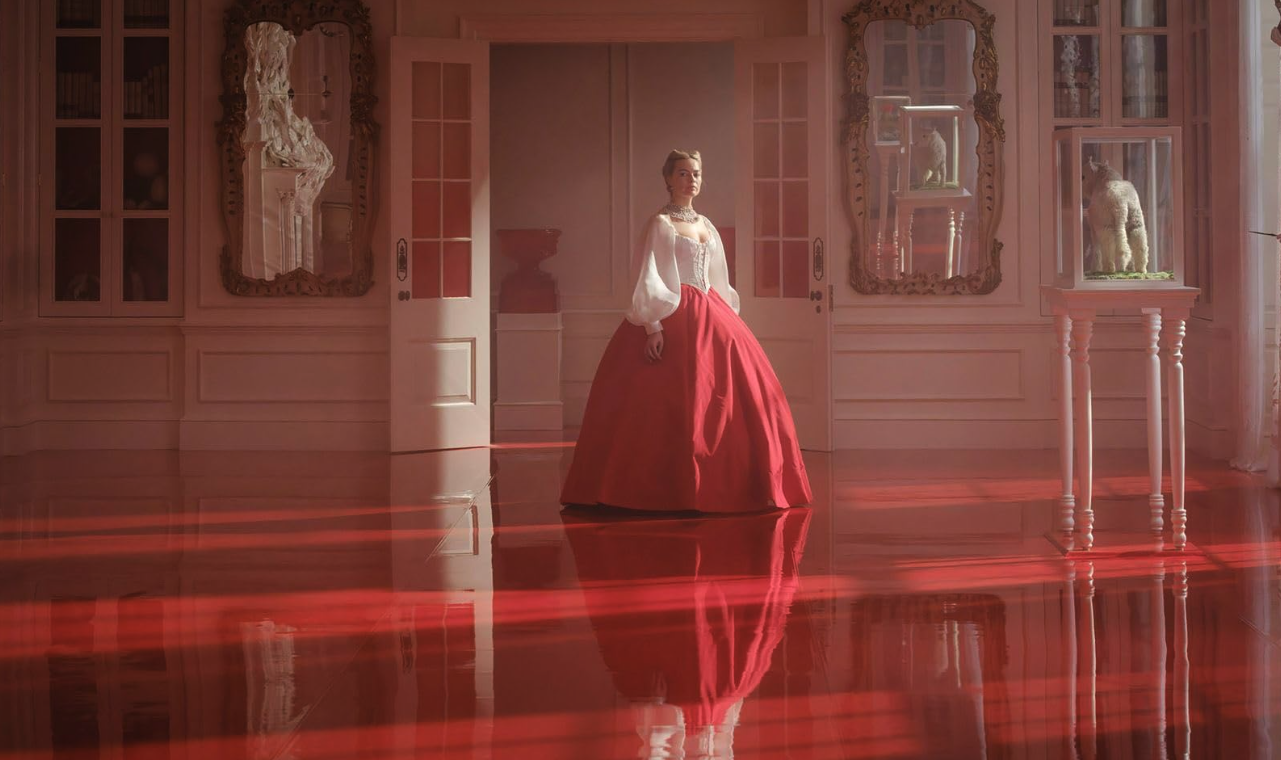
But that’s the extent of the shared DNA between Brontë’s and Fennell’s works. Gone are the second half of the book, the narrative nesting doll of secondhand flashback and literary craft. In its place is unapologetic smut, a tawdry bodice-ripper paperback shot with the excess of giallo. Fennell’s “Wuthering Heights” is rife with grotesque details and upsetting textures offending good taste: egg yolks smeared on silk sheets, a finger plunged into a cube of aspic to wriggle suggestively in a fish’s open mouth, a bedchamber with walls of pale freckled skin and a fireplace made of overlapping plaster hands, the whole sordidly lascivious affair anachronistically soundtracked by Charli xcx.
It's a sumptuously filthy backdrop for Heathcliff and Cathy to molest one another with dirty fingers under voluminous skirts. Elordi and Robbie both too old and too pretty (and in Elordi’s case, likely too white) to faithfully play the parts of Cathy and Heathcliff. But Fennell is pointedly not going for faithfulness; she’s using “Wuthering Heights” as a mood board for unabashed smut, reducing Heathcliff and Cathy into a pair of messy emotional terrorists who can’t quit each other even when their lives depend on it.
Robbie and Elordi admirably lean into the lunacy, even though the Oscar nominees are both too famous to get as dirty as the world around them. While servants bridle each other like horses in the barn during sex and Heathcliff chains a woman round the neck and makes her bark like a dog, Robbie and Elordi themselves remain oddly clothed and vanilla in their assignations, too A-list and brand-managed to fully wallow in the filth with all the rest. But gosh, they’re gorgeous to look at, biting their lips and heaving shirtless or in tightened bodices on the mist-shrouded moors.
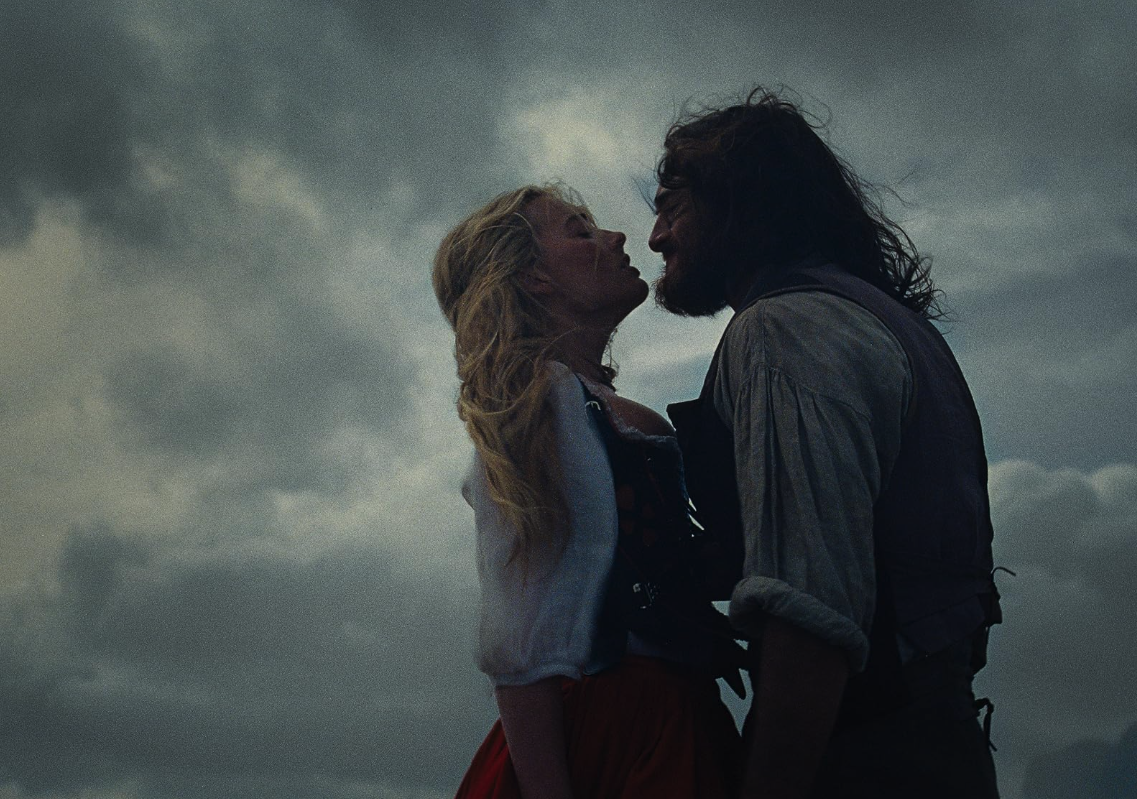
Fennel is playing dolls with Cathy and Heathcliff, eschewing adaptation and textual investigation for the feeling and fantasy of Victorian gothic romance in a way that reads like trolling. And really, the Oscar-winning writer/director has always been a troll, making creative decisions explicitly to get a rise out of people. It’s been evident throughout the “Wuthering Heights” rollout, down to insisting that press include cheeky quote marks around the title “Wuthering Heights” in every mention. She wants you to know this isn’t your high school English teacher’s “Wuthering Heights,” or even Brontë’s.
All of Fennell’s work to this point has been driven by that same impulse – doing things to get a rise – to either delight or irritation, often both simultaneously. Think of Barry Keoghan licking a soiled bathtub and engaging in improper relations with a freshly filled grave in “Saltburn” (2023) or the entire third act of “Promising Young Woman” (2020). Here, though, for the first time in Fennell’s work, that impulse feels artistically realized, evoking the giddy lunacy of Baz Luhrmann’s “Romeo + Juliet” and the ahistorical playfulness of Sofia Coppola’s “Marie Antoinette.”
Those films annoy plenty of purists, as “Wuthering Heights” certainly will. But what Fennell’s doing here to get a rise out of her audience (literally and figuratively perverting the adaptation of a literary classic) reveals how many readers remember the book making them feel when they read it young and dumb and full of hormones. It’s an experience rooted in lizard-brained feminine pleasure and desire. Don’t think about it; give yourself over to it.
Just don’t invite your book club. And definitely don’t take your mom.
Barbara’s Ranking
3/4 stars